Context
Standard Bank International relied on a paper-based onboarding process used by customers, Independent Financial Advisors, and internal teams across multiple regions. While the process was well understood internally, it was slow to complete, difficult to scale, and heavily dependent on manual handling.
The lack of a digital foundation limited visibility, consistency, and operational insight. This was particularly challenging in regions with distributed teams and variable infrastructure, where accurate data capture and reporting were essential to downstream systems and compliance.
A paper onboarding process that worked in isolation, but struggled to scale, adapt, or provide reliable data across regions.
My Role
Senior UX & UI Designer, responsible for end-to-end UX across onboarding and advisor-facing experiences.
I was responsible for problem framing, end-to-end journey design, interaction design, accessibility strategy, and design system contribution. I worked closely with client stakeholders, engineers, and compliance teams throughout delivery.
The work was led and overseen by Design Manager Noel Mallet, who provided strategic direction, design review, and formal sign-off, and guided the overall testing approach.
Collaborators

Estelle Martinson
Head of Client Experience


Noel Mallet
Creative Manager

Clovie Knight
Senior Feature Analyst
Onboarding channels
Standard Bank's internal analysts and research identified these as existing onboarding channels.
Customer self-service
24%
Customers found and completed the application independently, with no IFA involvement.
Shared completion
64%
IFAs and customers collaborated on the same application, with shared visibility and handover between parties.
The challenge
Paper onboarding created friction at every layer:
Average completion time was measured in weeks, with a drop-off rate above 60%
Applications required manual re-entry across 3 separate internal systems
Inconsistent data quality across regions
High compliance risk driven by user error
Errors, drop-off, and operational rework were symptoms of the same issue: a process designed around forms instead of decisions and automation.
UX Strategy & problem framing
Rather than simply digitising existing forms, we reframed onboarding as an end-to-end digital service, supported by automation and system integration.
This wasn’t about running a longer discovery phase, but about recognising the difference between the channel and the existing design format. The forms and processes had been built for paper, and recreating them straight into a digital interface would have preserved many of the same constraints.
Reviewing competitor onboarding journeys helped stakeholders to understand this, highlighting how structure, sequencing, and interaction naturally evolve in a digital environment. Once that difference was clear, the conversation shifted away from digitisation and towards designing an experience that was optimised for digital channels.
This reframing aligned UX, compliance, and engineering teams around a shared outcome: faster onboarding with fewer errors, aligned with regulations.
Defining the experience model
With onboarding reframed as a service rather than a set of documents, the next question was how best to structure the experience to support both self-service customers and advisor-led onboarding at scale.
Several viable models were explored:
Digitised forms only
Where customers and IFAs would access the same forms without any additional orchestration or management layer.
Separate customer and IFA systems
Where advisors would use a dedicated onboarding tool distinct from the customer-facing experience.
A shared application layer with an advisor-facing portal
where a single set of forms would be reused across journeys, with additional tooling for IFAs layered on top.
Each option was assessed against a consistent set of requirements:
Consistent compliance and validation rules across regions
Data quality and reduction of manual re-entry
Support for both self-service and advisor-assisted journeys
Operational scalability without duplicating systems or logic
Technical feasibility within existing platform constraints
The comparison below summarises how each option performed against those requirements:
The onboarding experience was built around a single set of digitally optimised application forms. These forms acted as the shared core, handling validation, data capture, and compliance consistently, regardless of whether onboarding was completed directly by a customer or with advisor support.
An advisor-facing portal sat alongside this core experience. Rather than introducing a separate onboarding journey, the portal allowed IFAs to manage multiple applications, track progress, and support customers through completion, all while using the same underlying forms.
This approach made it possible to support both self-service and advisor-assisted onboarding without duplicating logic, creating parallel systems, or increasing operational risk.
Research, testing & validation
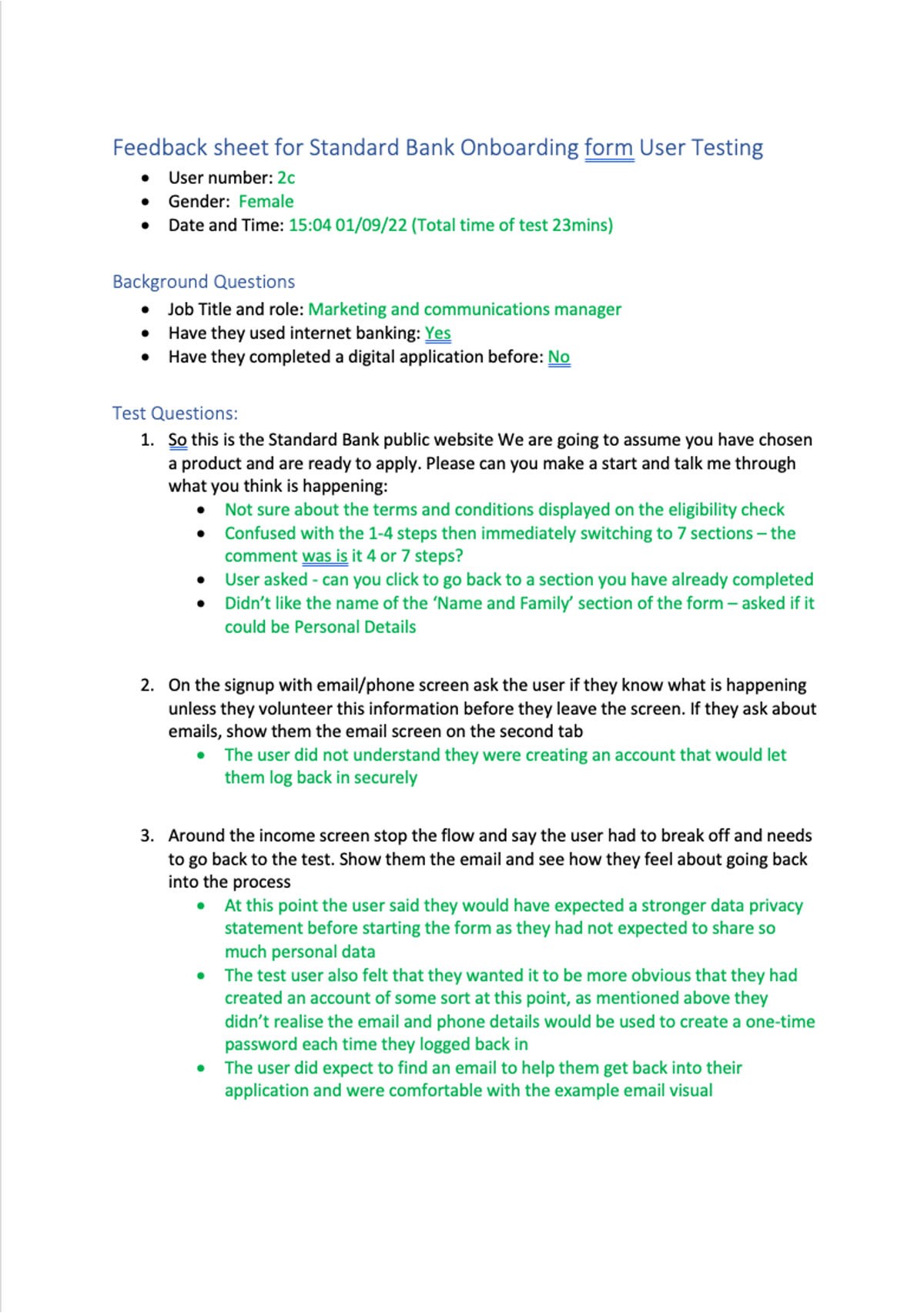
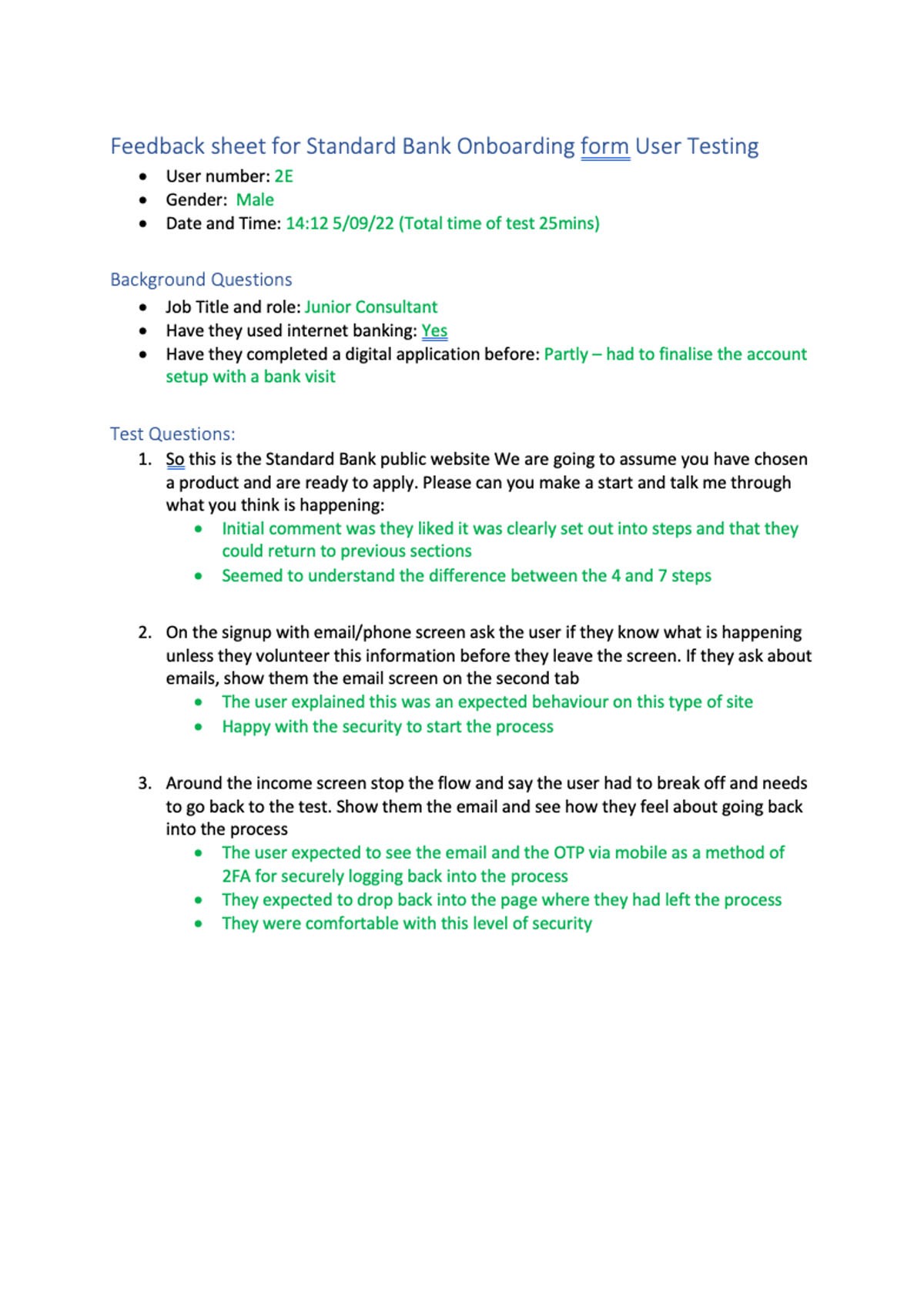
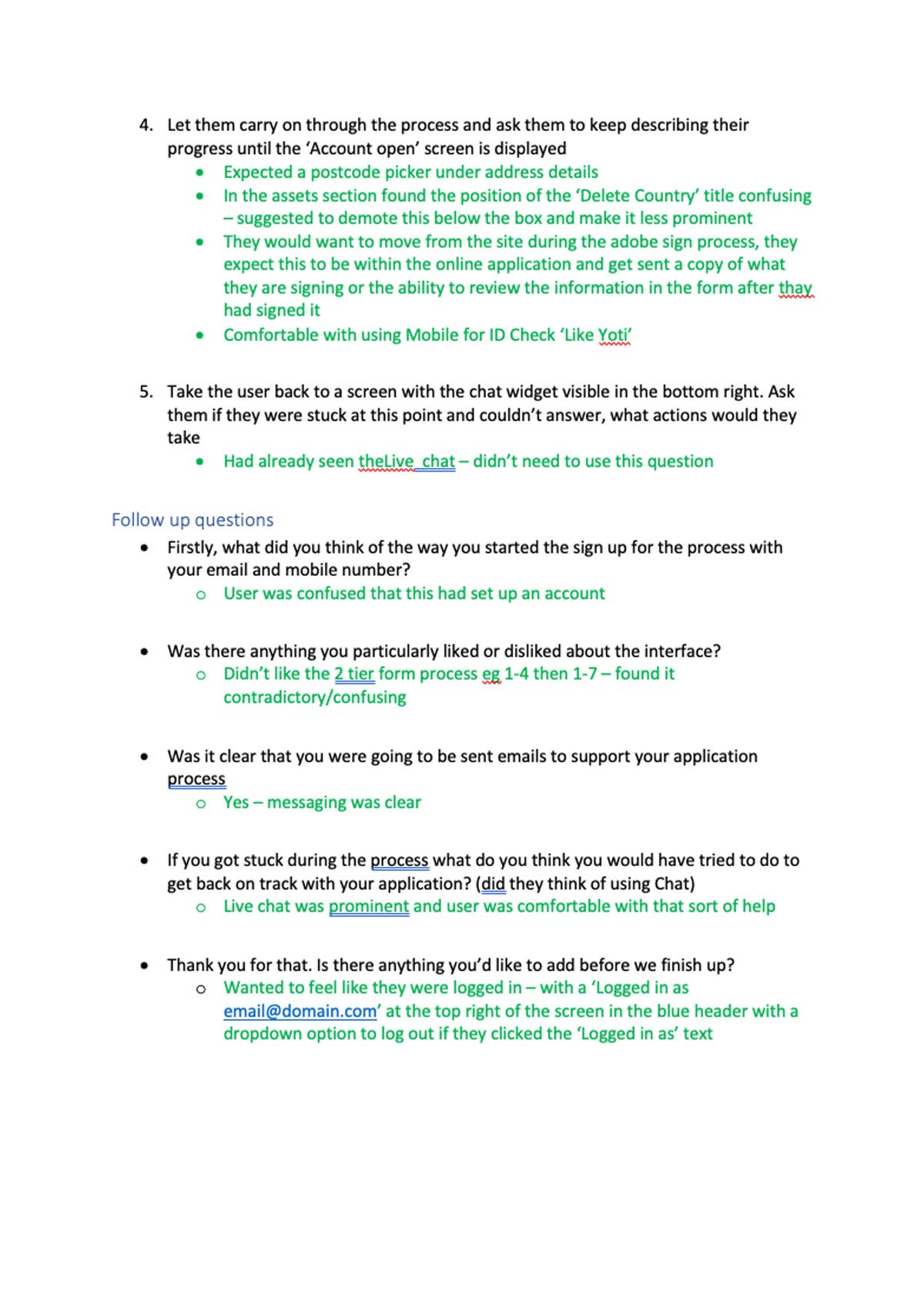
Rather than starting from scratch, I built on existing research and validated designs throughout delivery, working with Design Manager Noel Mallet to shape the testing structure and approach.
Iterative testing across low, mid, and high-fidelity designs, with test questions and structure shaped collaboratively.
End-to-end journey testing with IFAs and internal operational users.
Structured sessions in controlled environments, with behavioural observation and recorded feedback. I conducted the sessions and analysis, with oversight and guidance on testing methodology.
Existing research found operations staff were spending time correcting formatting inconsistencies, things like date formats and address structures, that could be eliminated through input constraints and inline validation.
Brand & accessibility
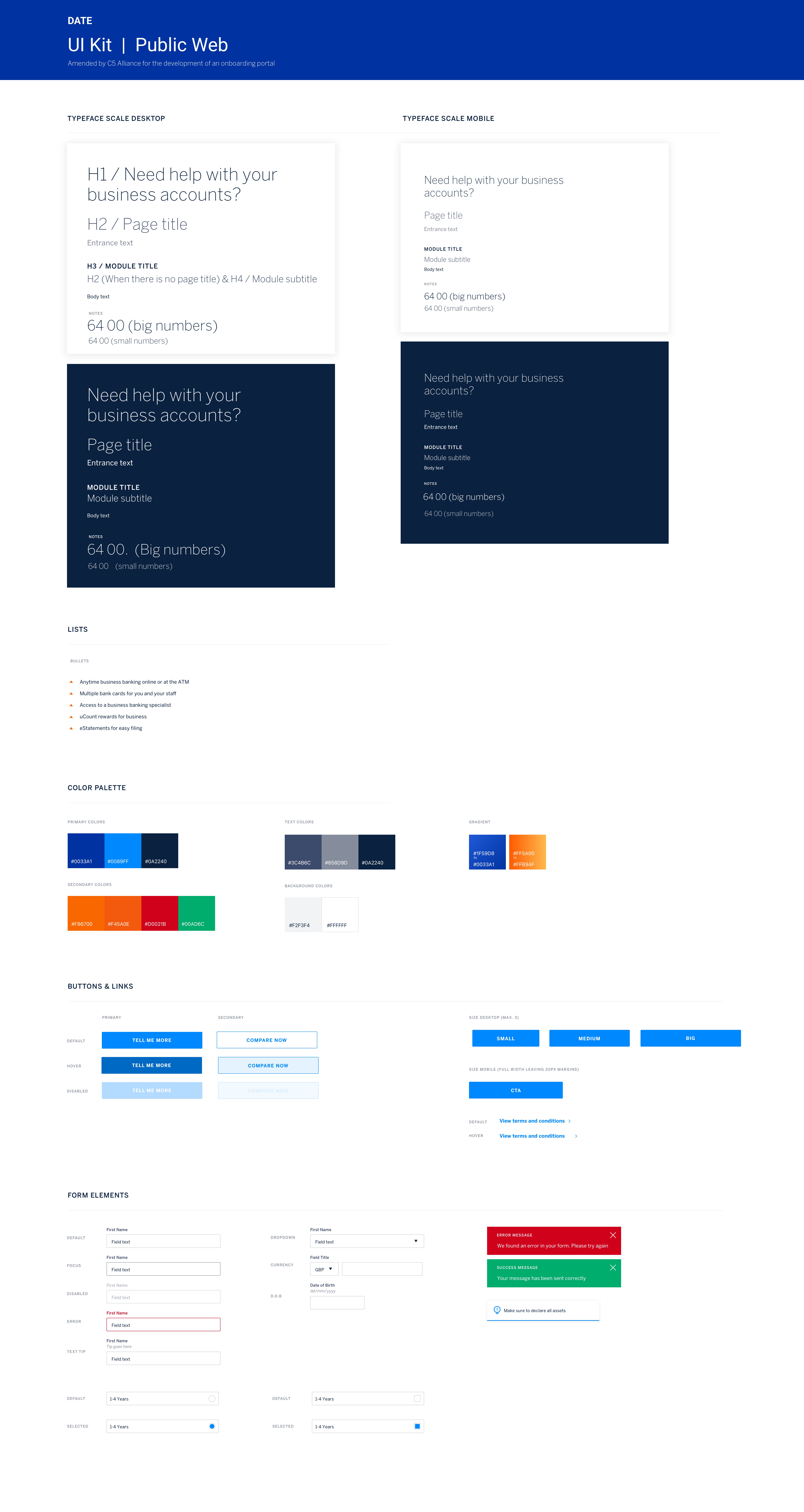
All work was delivered within Standard Bank's existing brand framework.
Where the system fell short, I extended it.
New accessible form components
Contrast-safe colour usage
Scalable typography
Mobile-responsive interaction patterns
These updates were captured in a lightweight component library to support consistency across teams.
Accessibility constraints shaped component and interaction design from the outset, particularly in form inputs, validation states, and typography.
Extending the existing design system ensured accessibility improvements were reusable, not one-off fixes.
Working with and extending UI kit
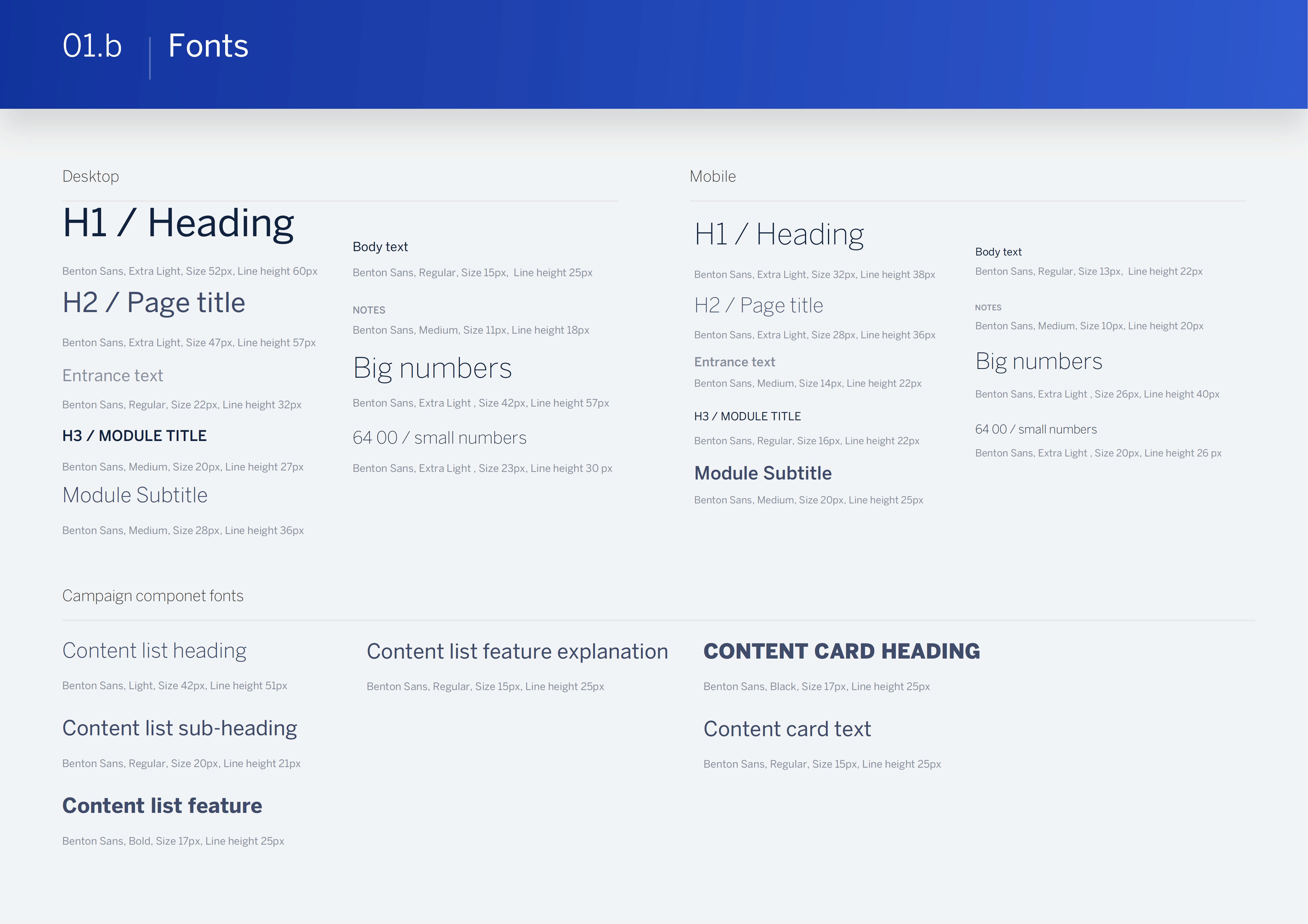
Working with and extending typography
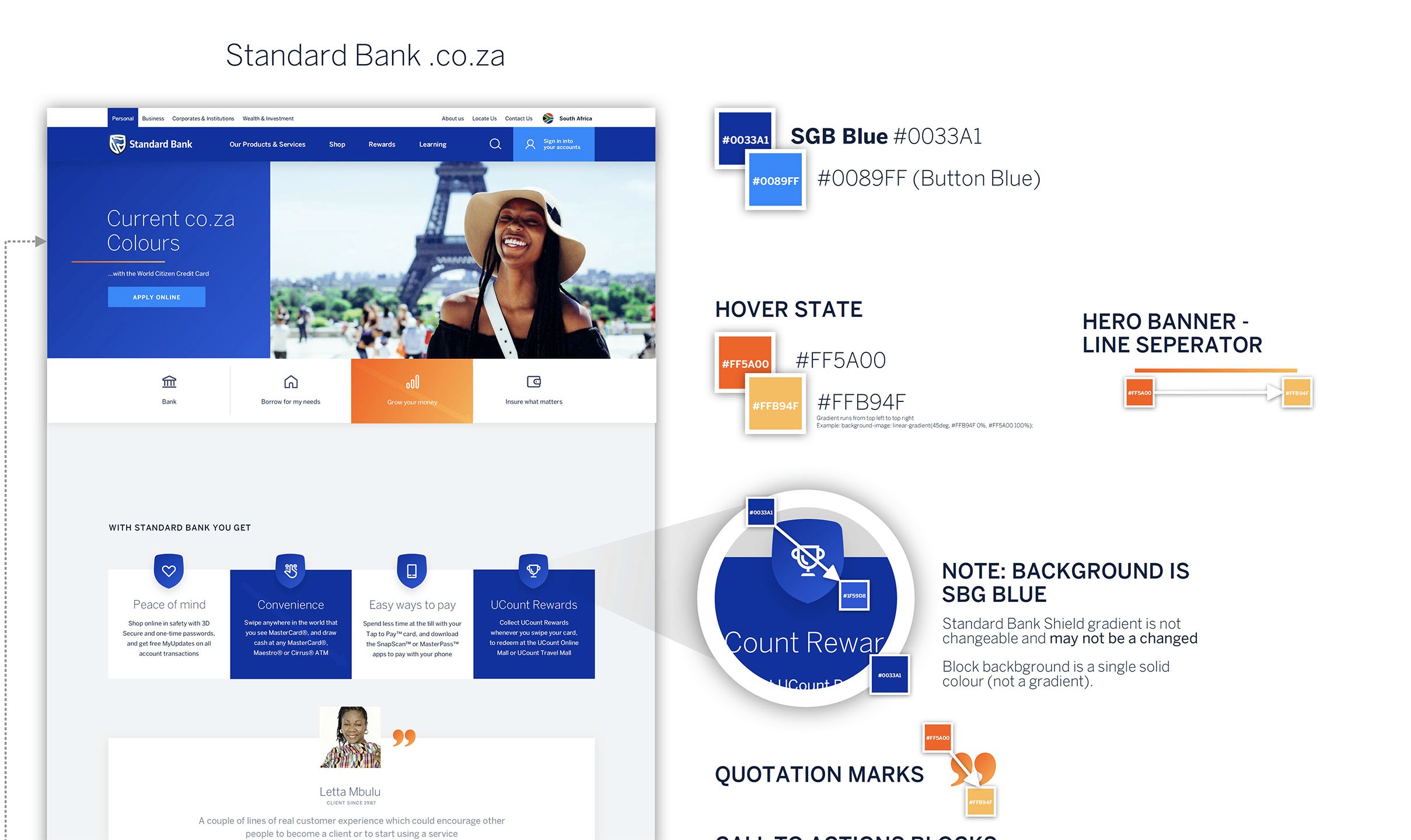
Working to Standard Bank's interaction patterns
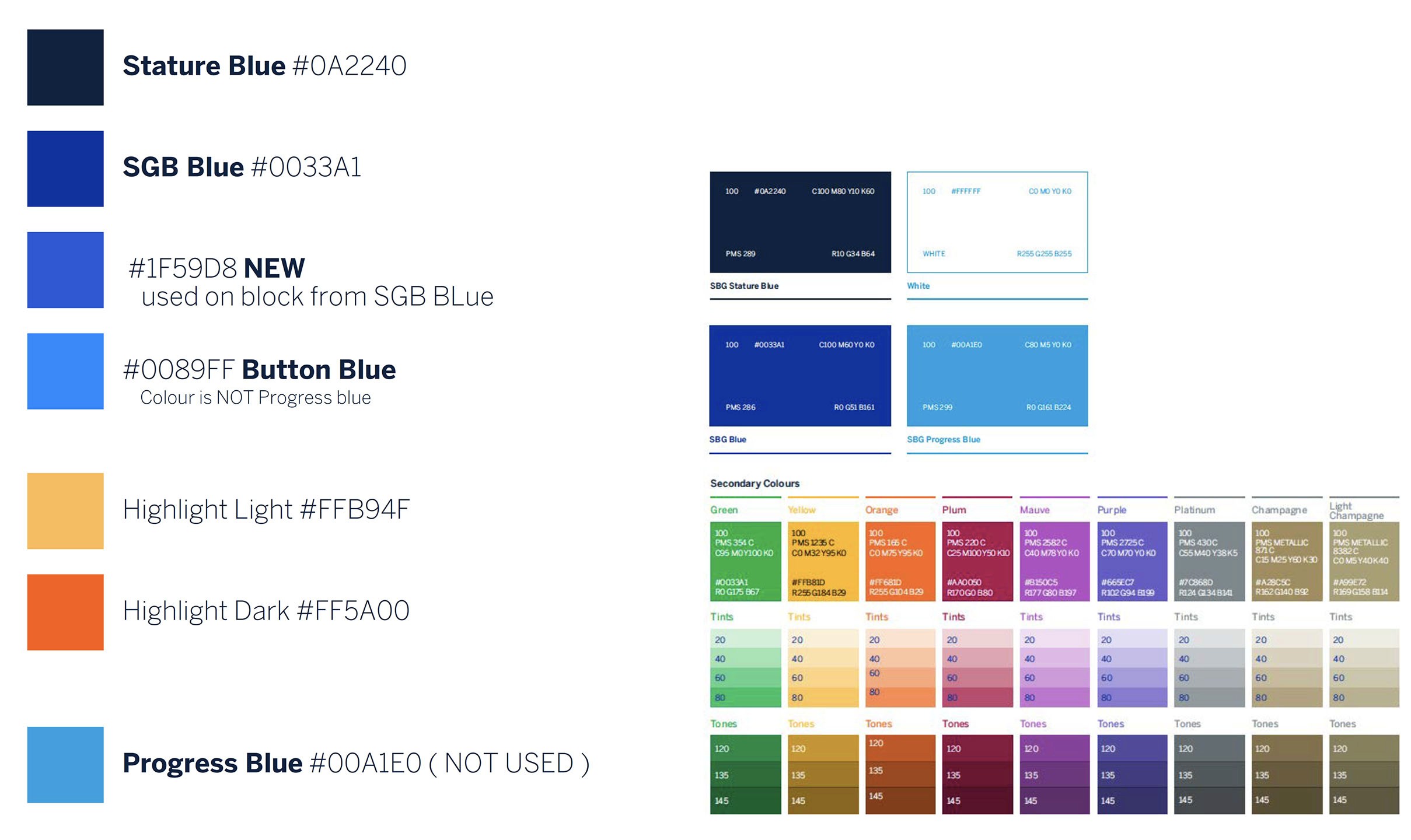
Working with Standard Bank's colour palette
Technical collaboration & journey design
I worked closely with engineering and platform teams to ensure designs reflected technical reality.
Early mapping of API dependencies.
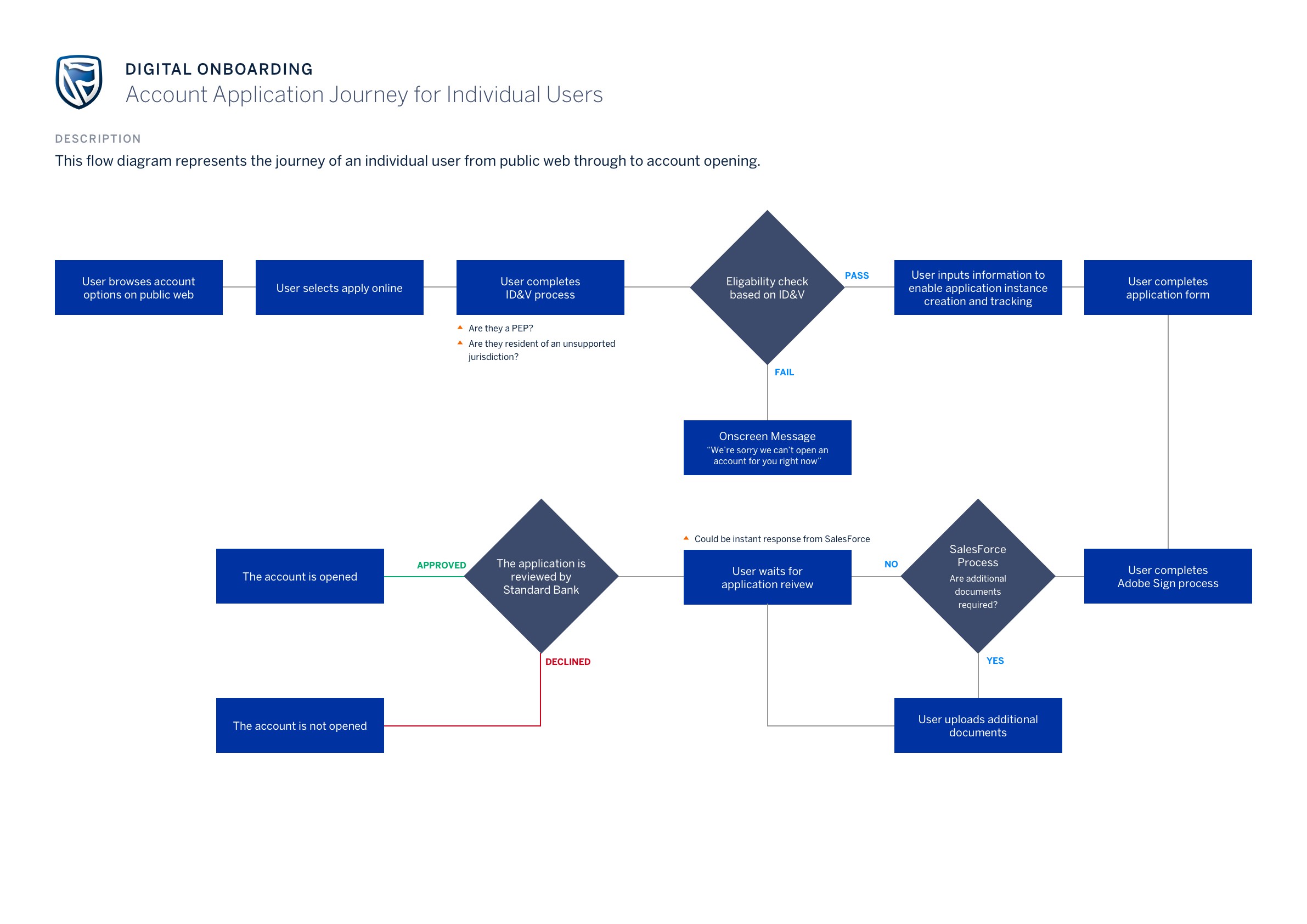
Journey design aligning UX, legal, and system flows - especially Salesforce state/processes.
Workshops to surface assumptions and integration risks.
Technical constraints directly shaped the experience. Designing around system realities, rather than against them. This prevented rework later in delivery.
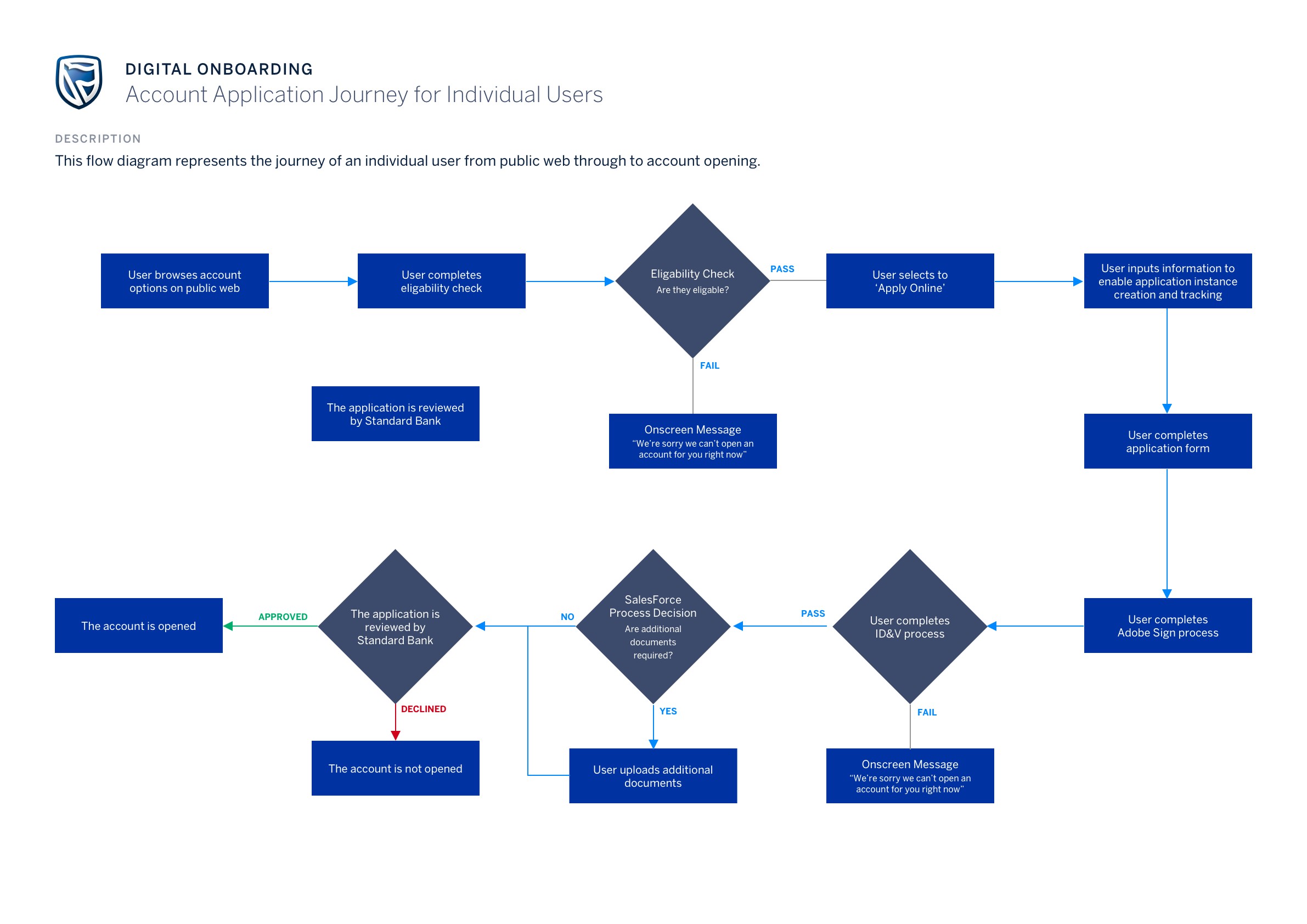
Designing the experience
Application journeys
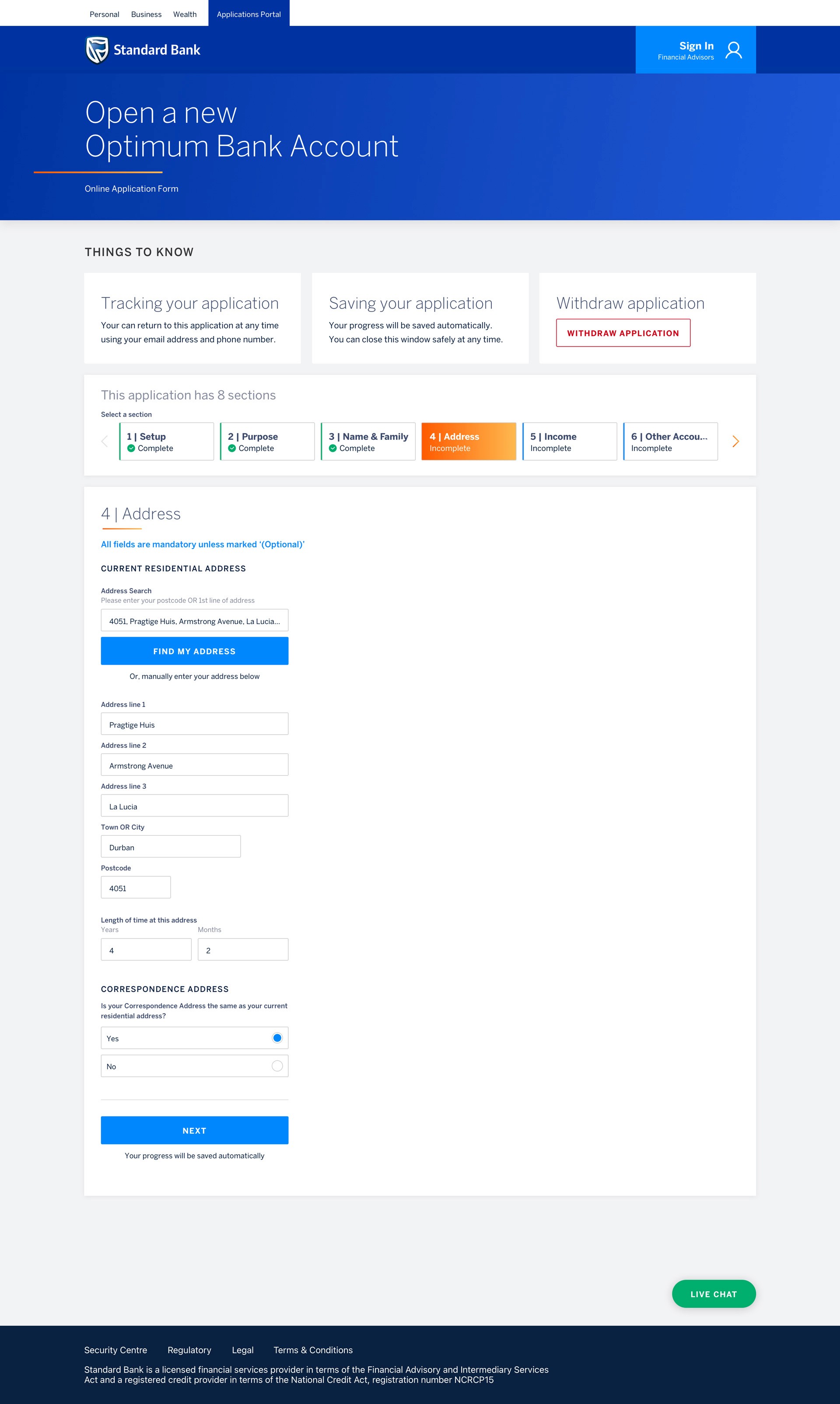
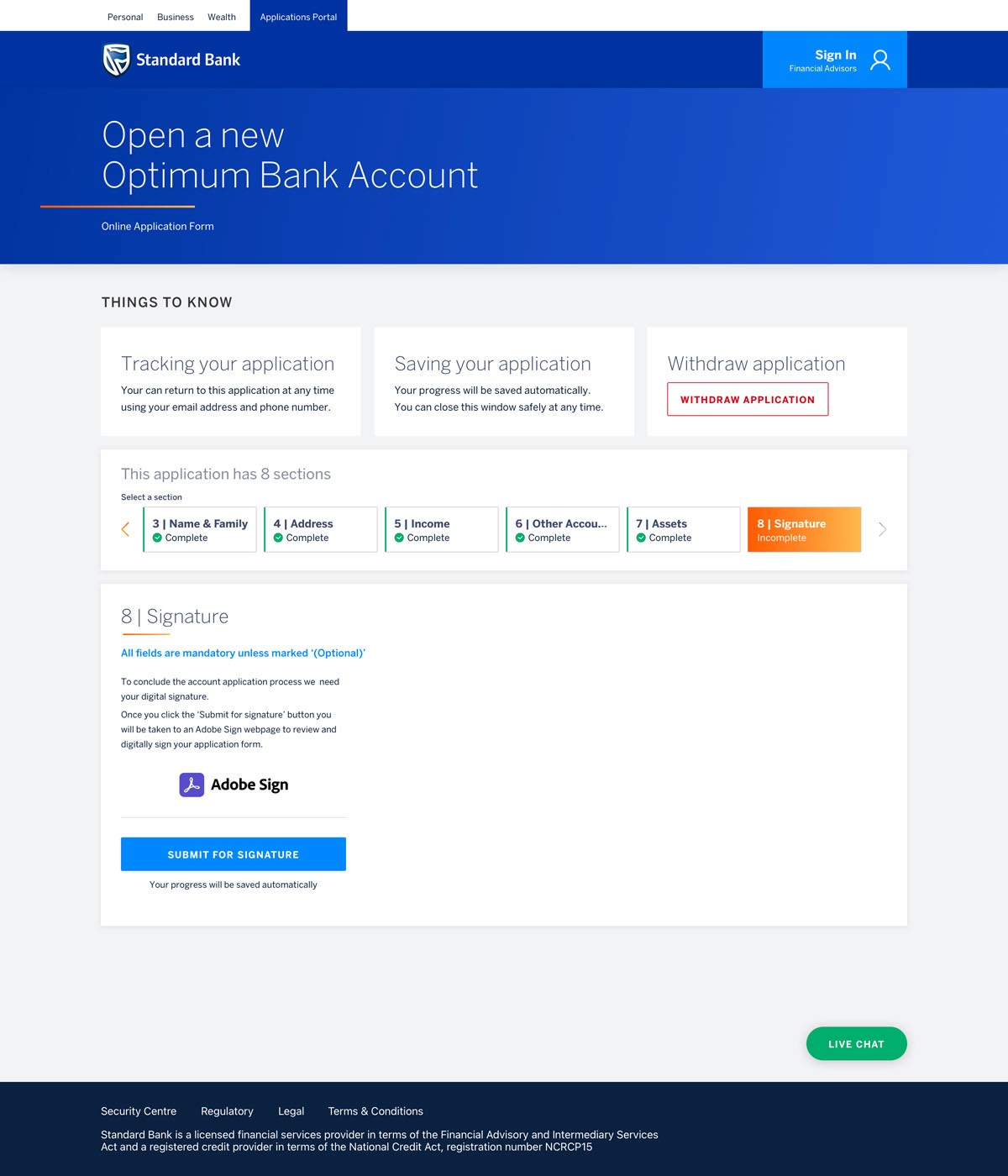
I designed the customer onboarding journeys, focusing on clear flow, sensible sequencing, and accessibility.
Design priorities:
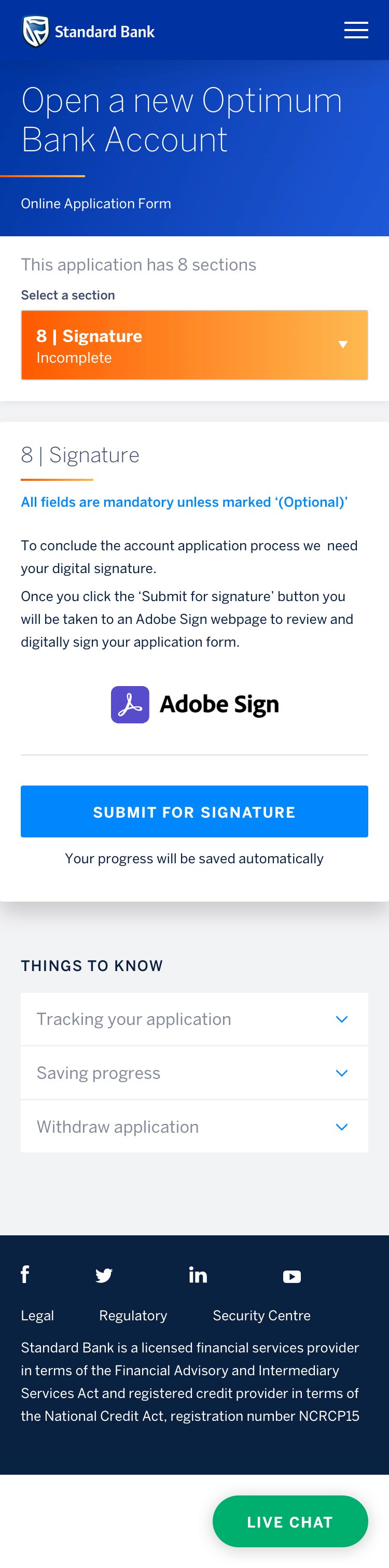
Desktop-first layouts with defined mobile behaviour.
Progressive disclosure to reduce cognitive load.
Clear validation and error handling to prevent downstream issues.
Wireframes progressed through multiple fidelity levels, evolving based on testing and stakeholder feedback.
Low-fidelity wireframes
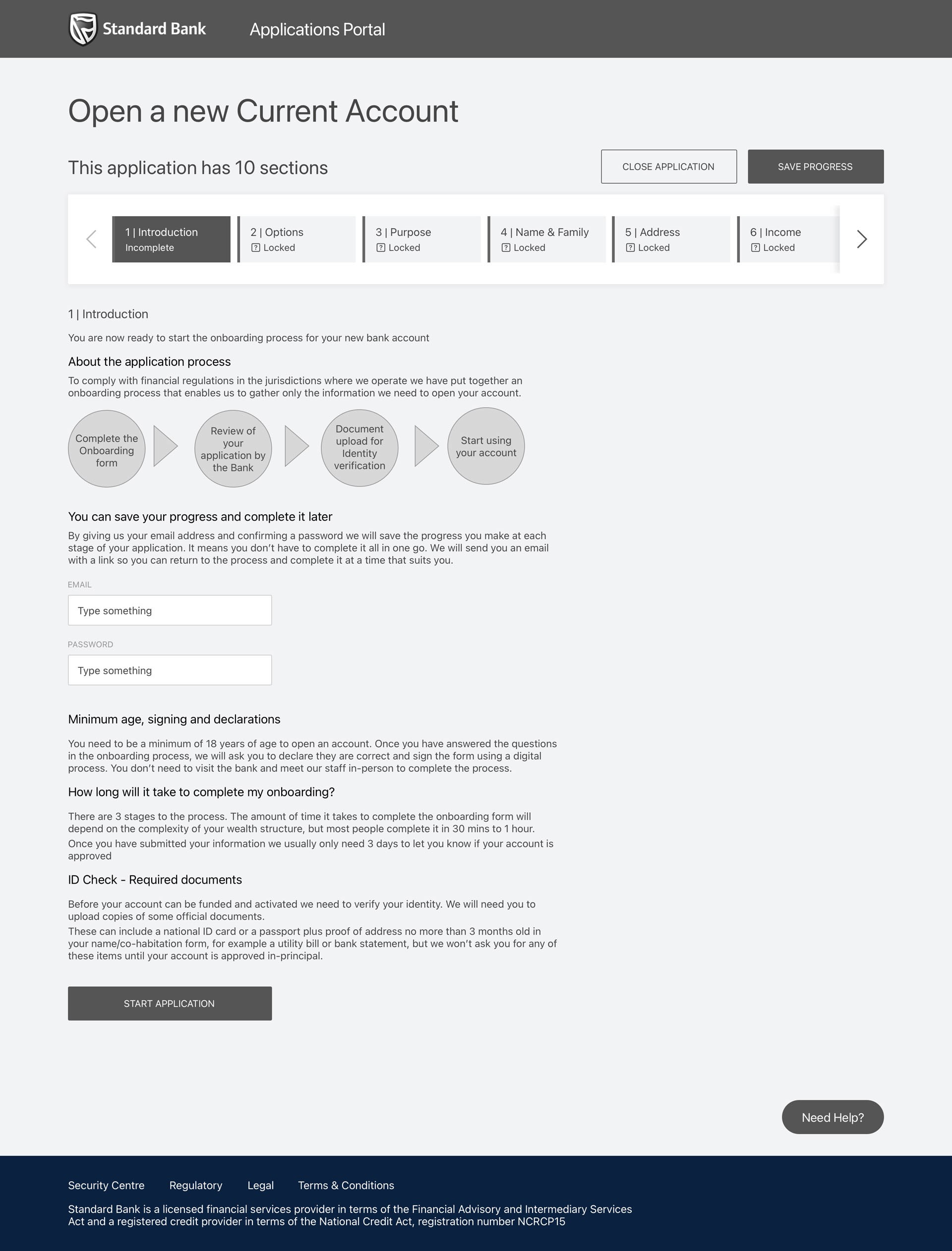
Introduction v1
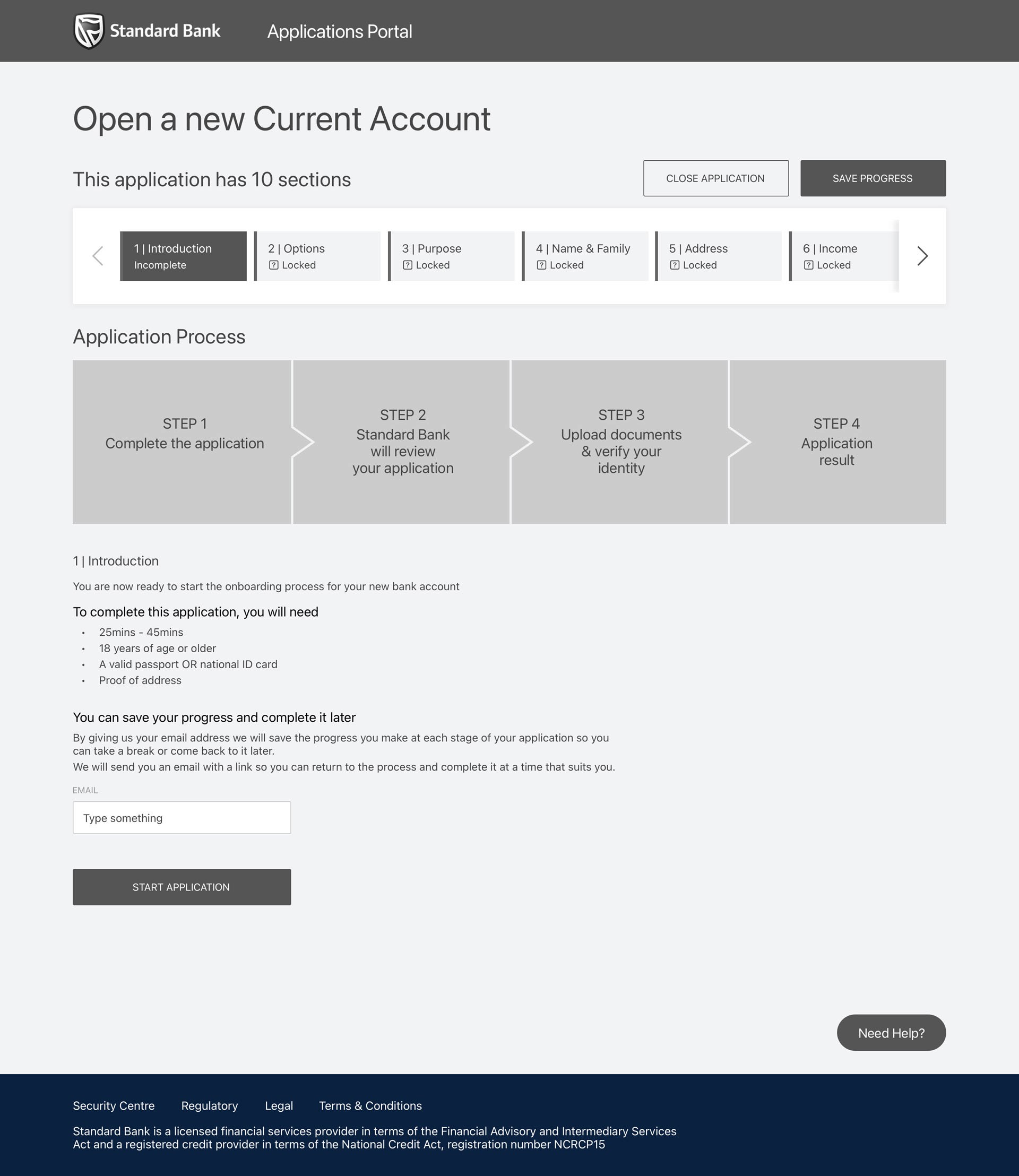
Introduction v2
Mixed-fidelity wireframes
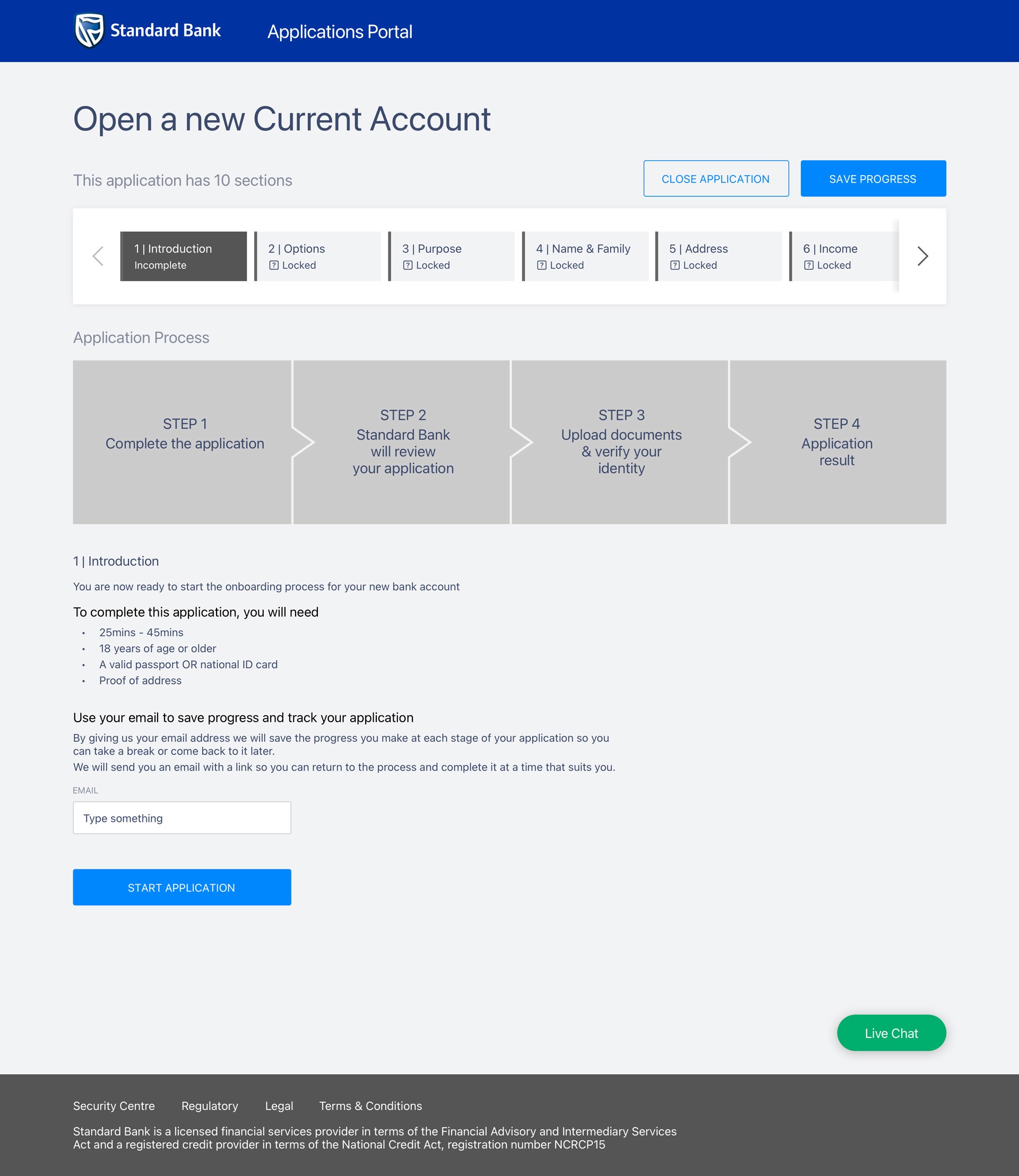
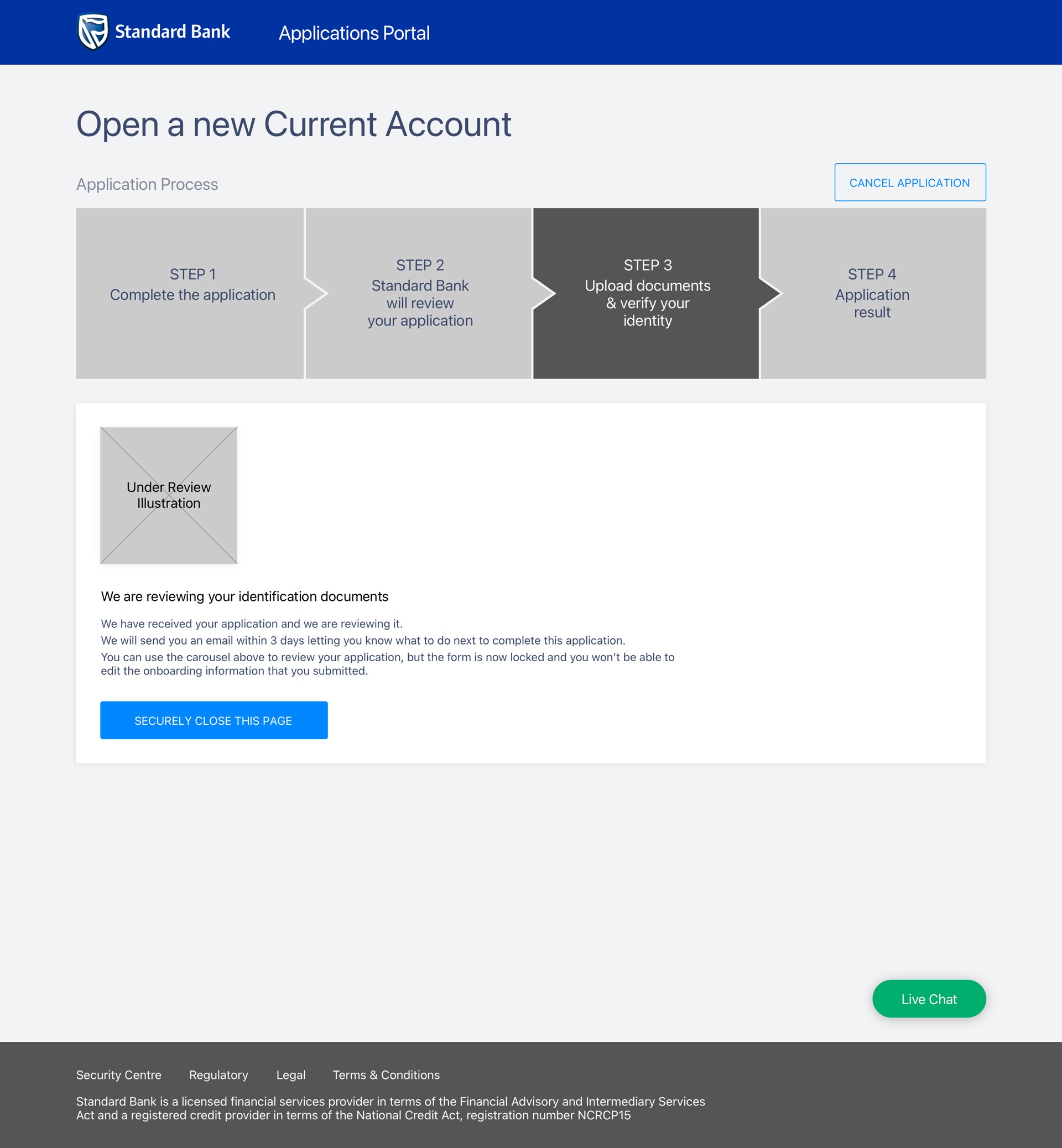
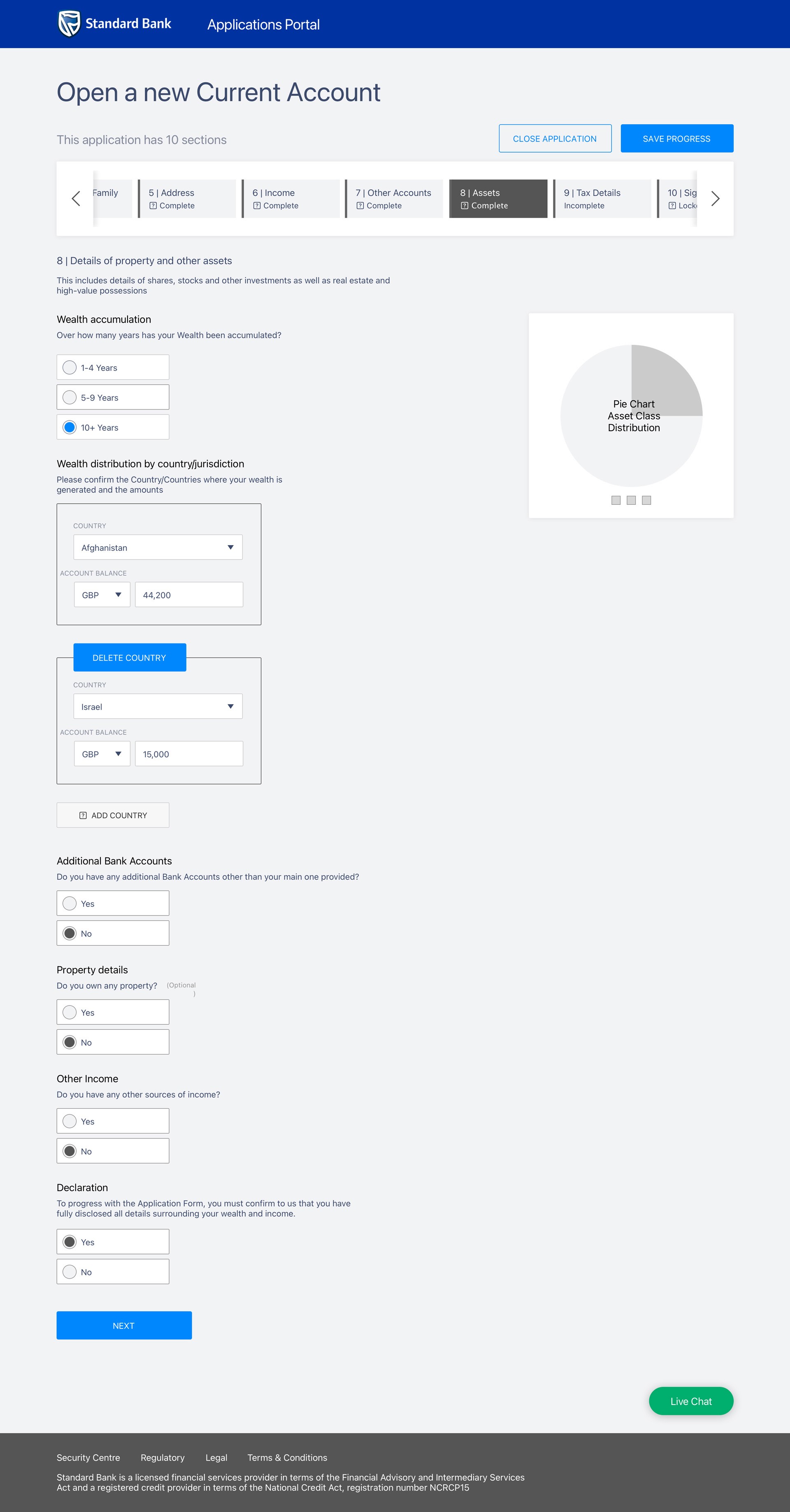
Mixed-fidelity compared to final design
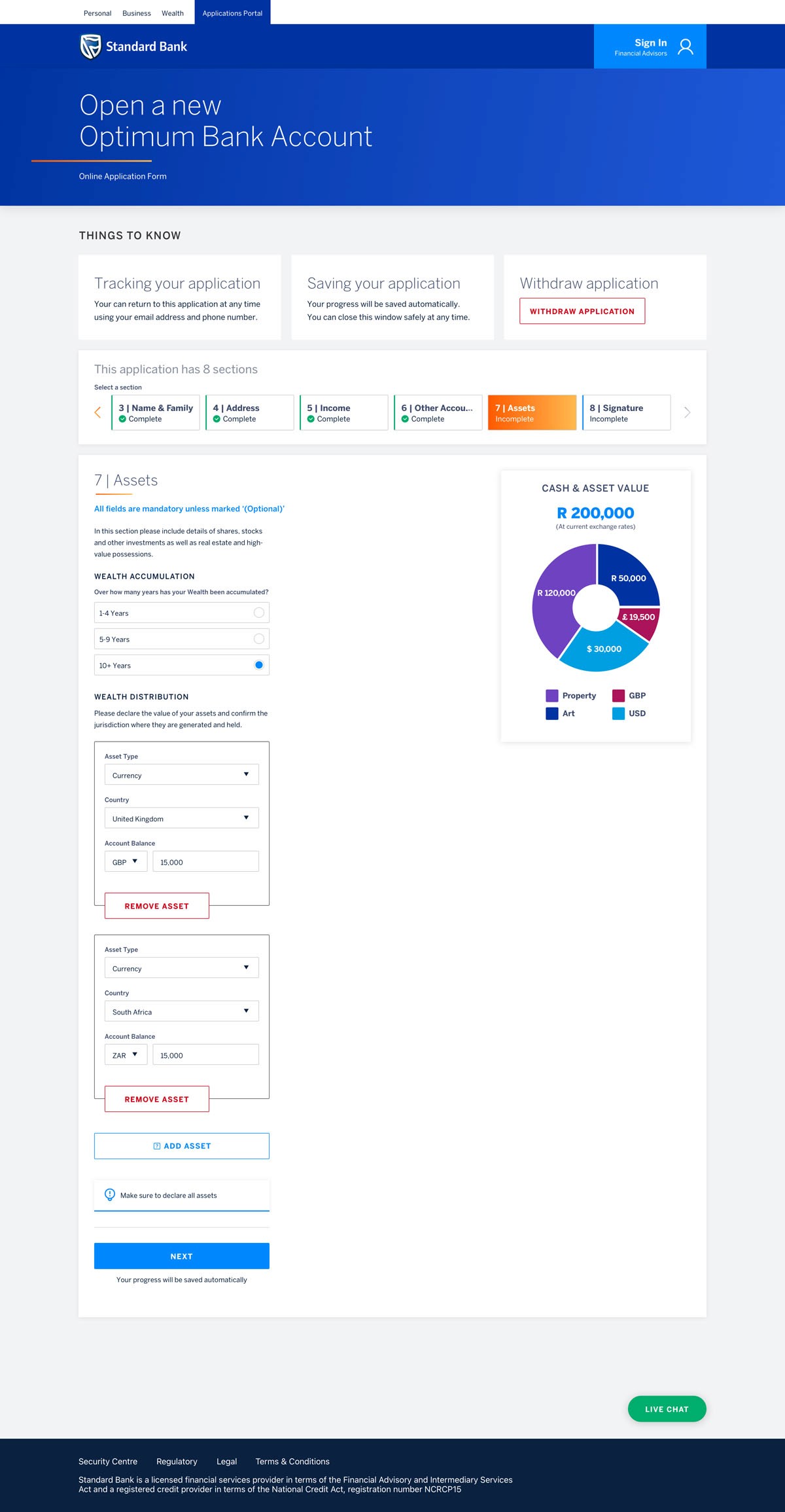
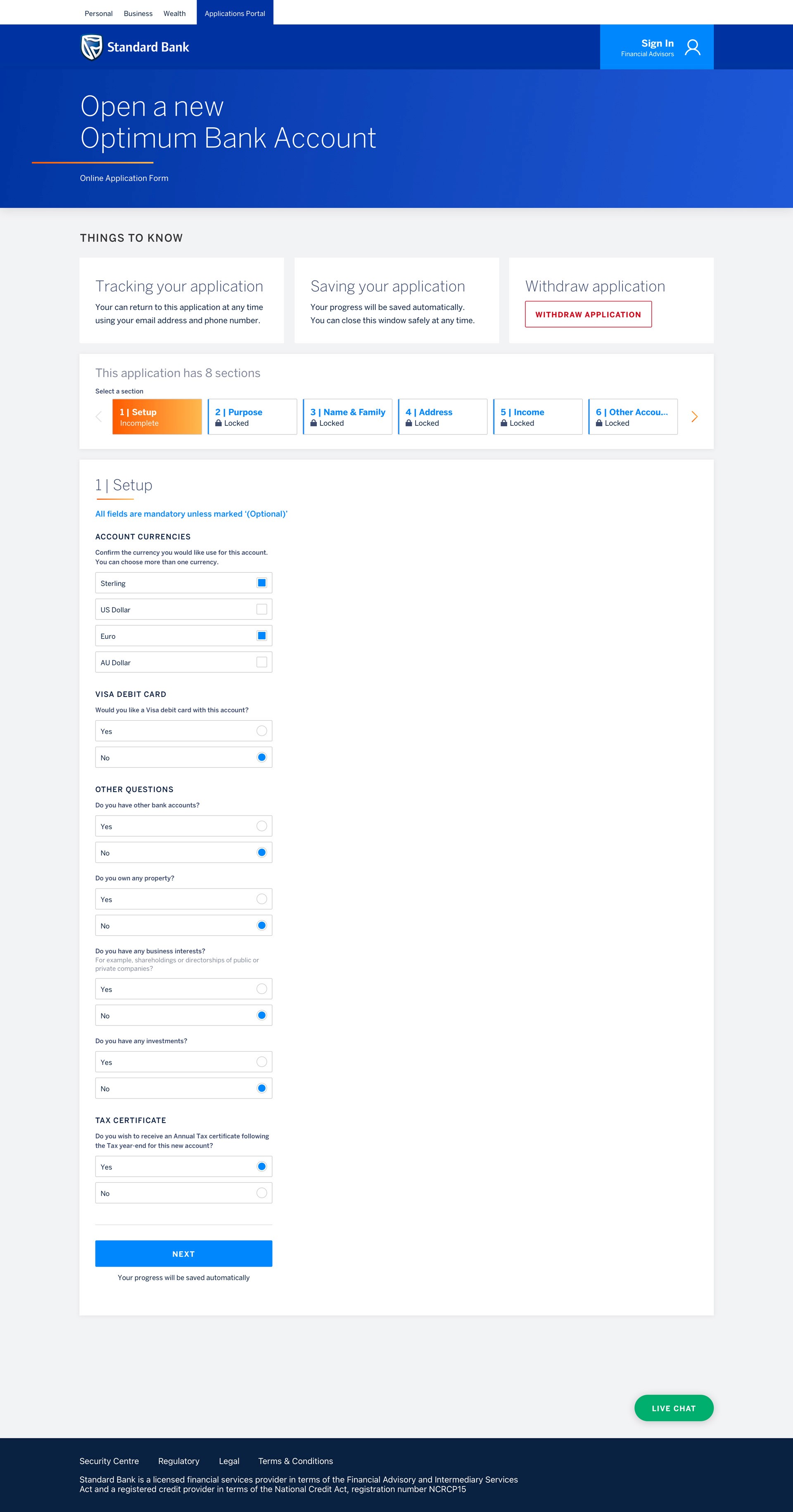
Final application form designs


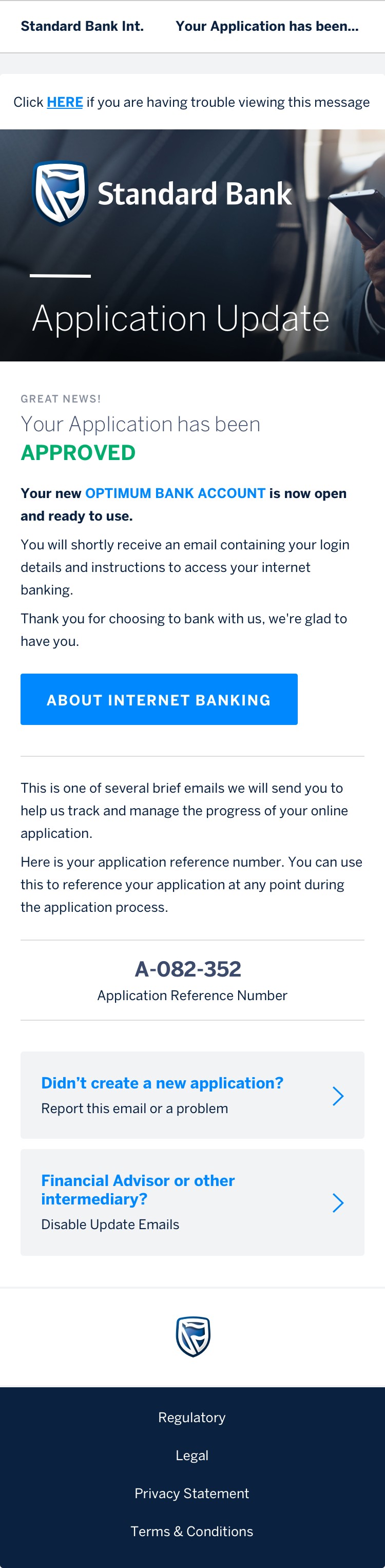
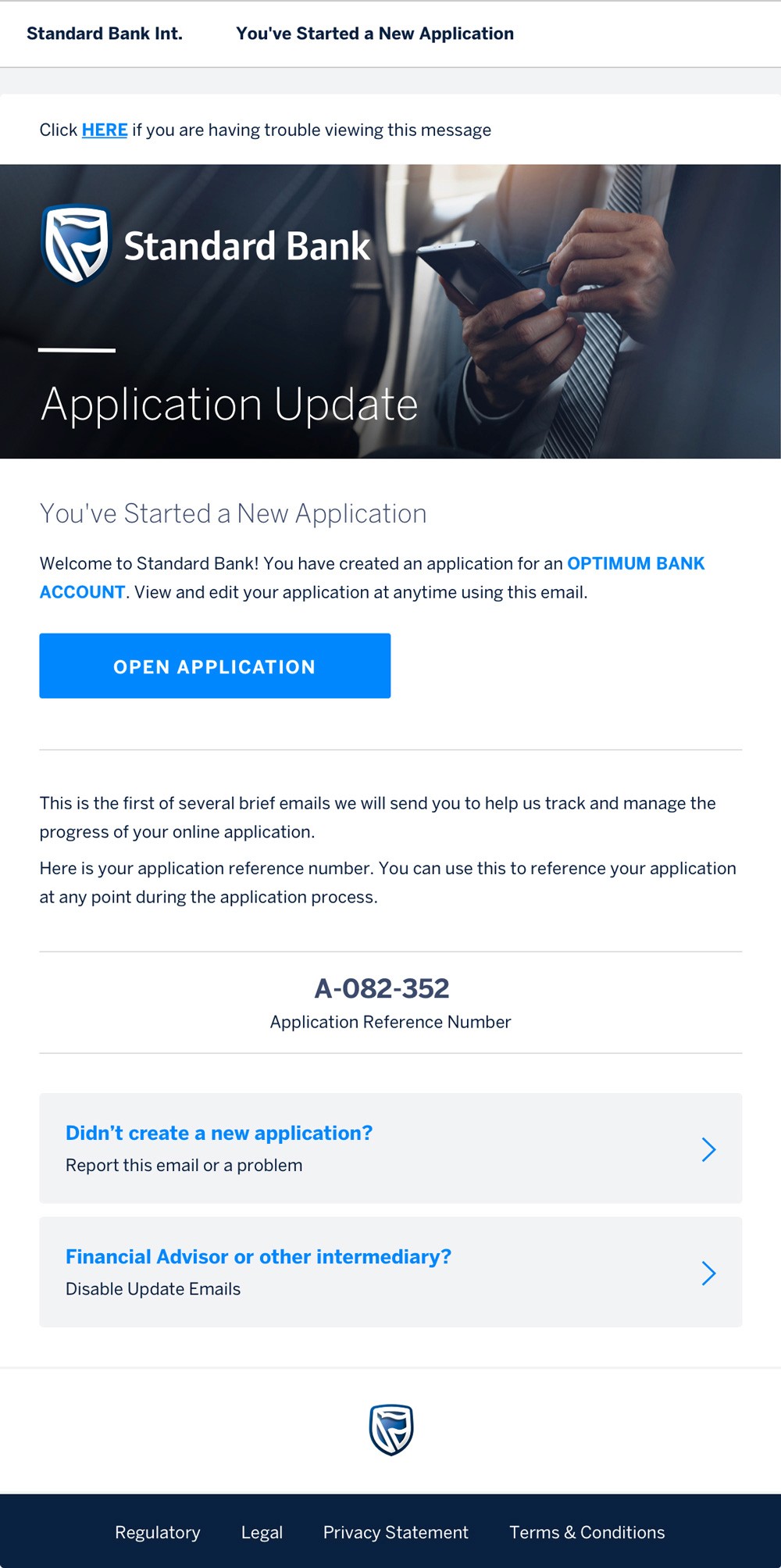
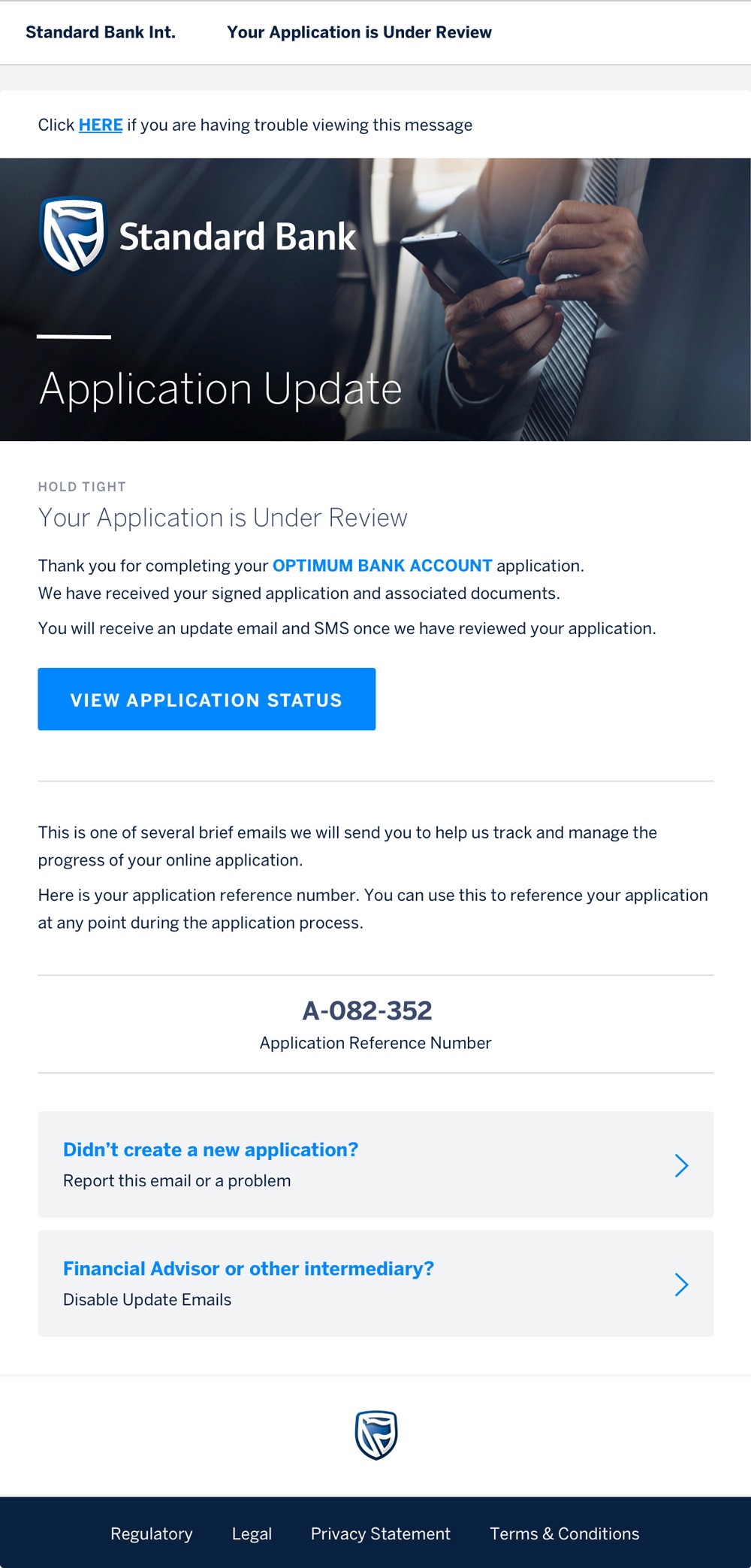
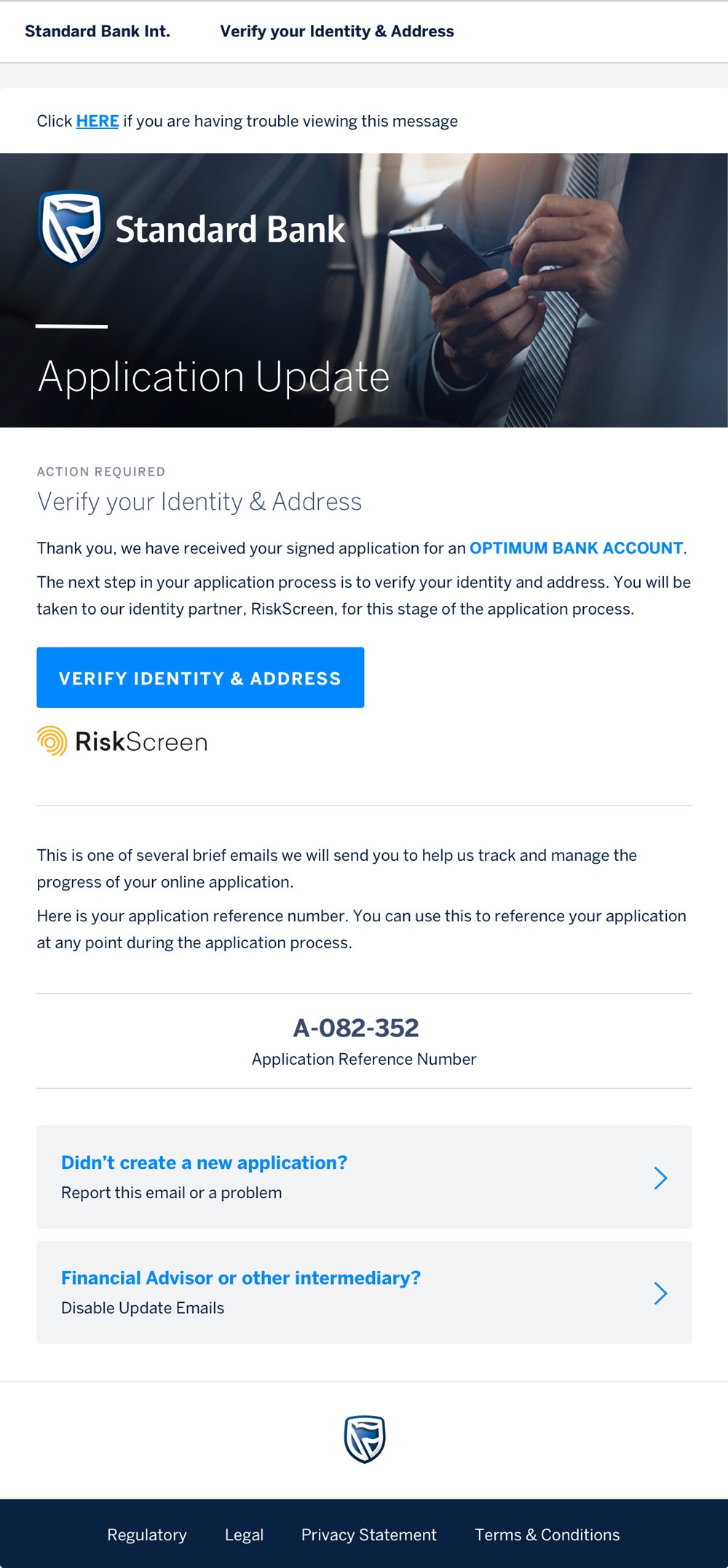
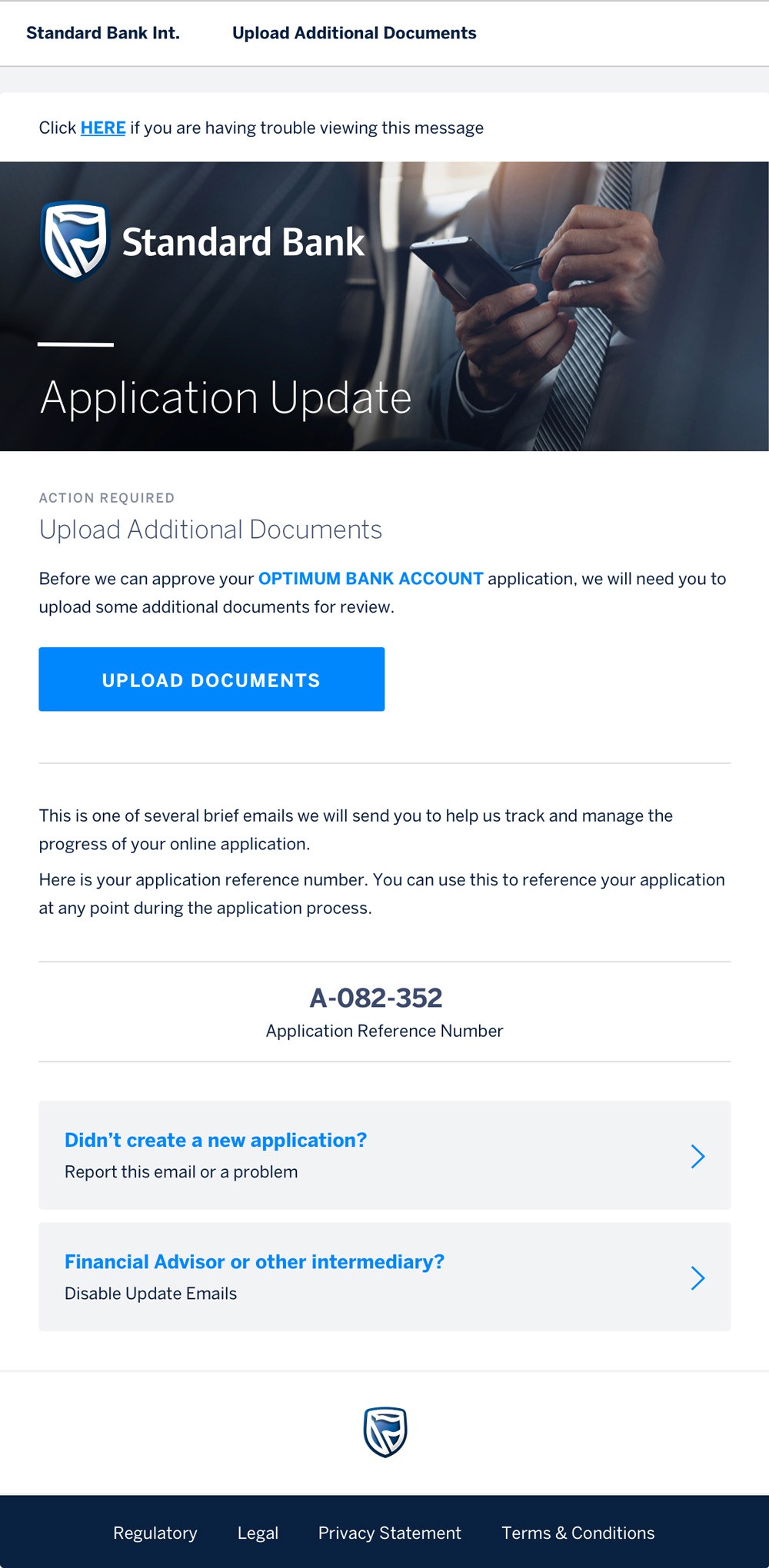
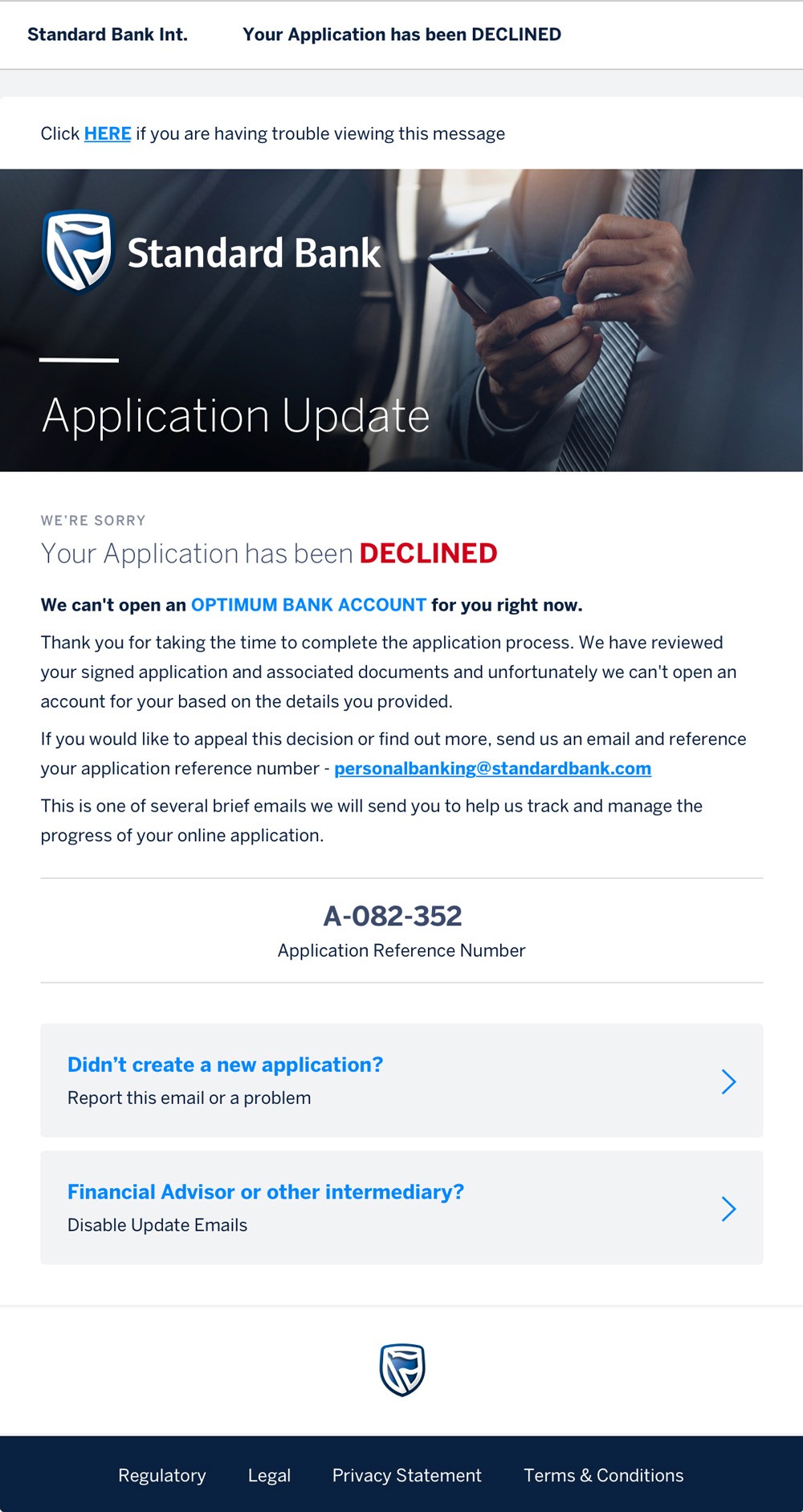
Update emails
IFA Portal
Research showed IFAs primarily used desktop and tablet devices, often in challenging environments.
Design priorities:
Clear application management and status visibility.
Support for offline or interrupted workflows, (auto-save triggered on every field change, with a visible "last saved" timestamp so advisors trusted they wouldn't lose progress).
Reduced duplication between customer and advisor actions.
Wireframes
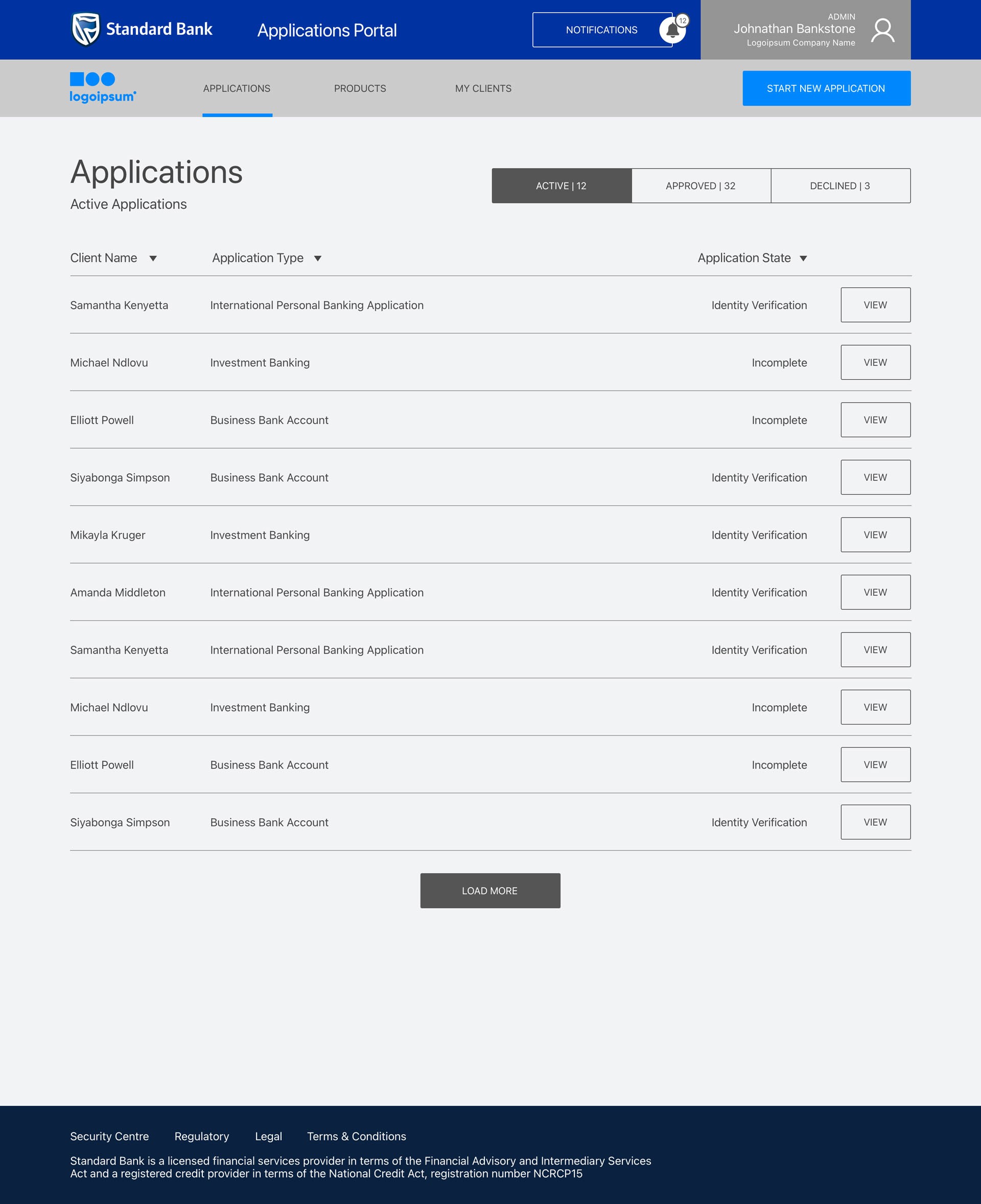
'Applications'
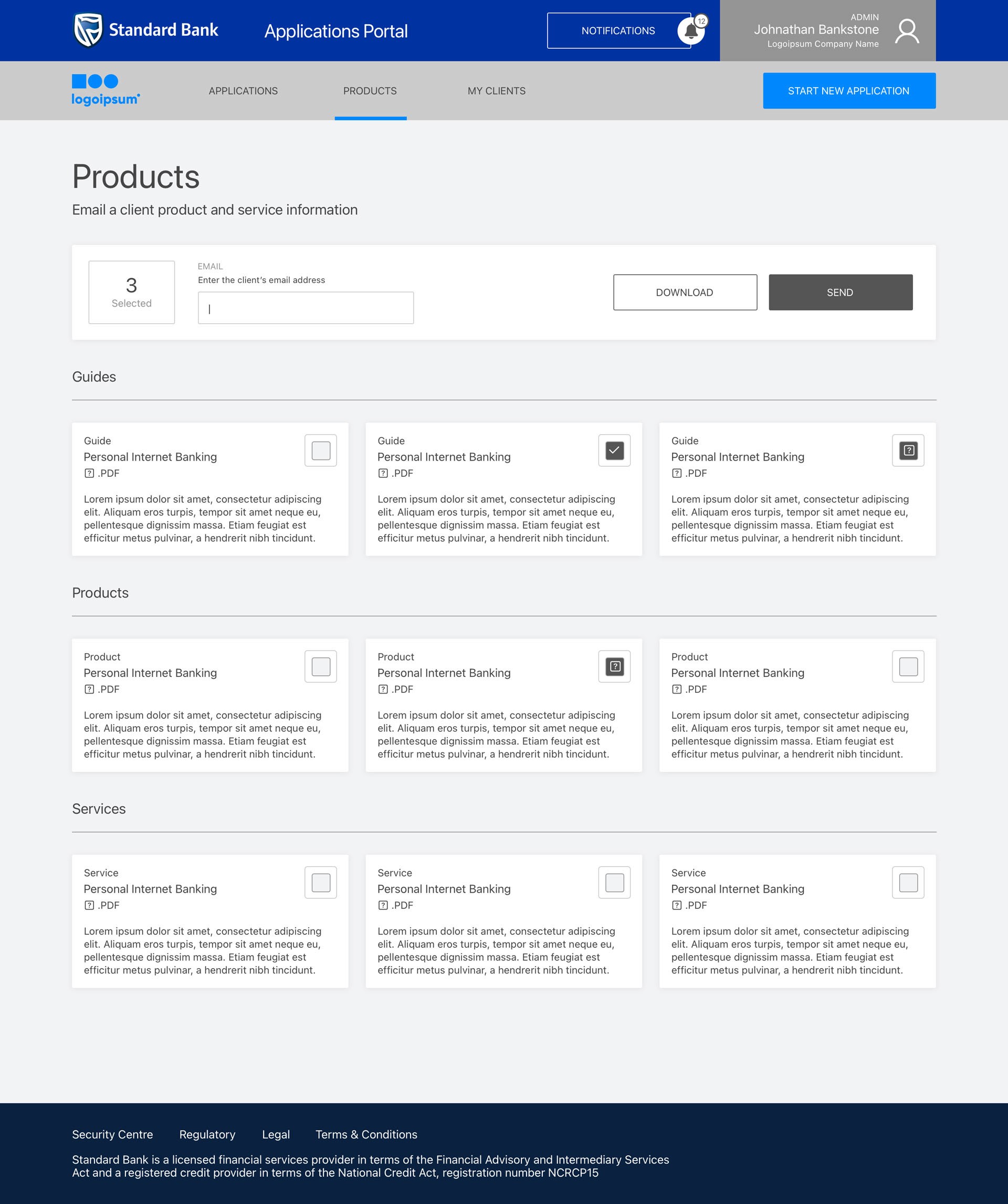
'Products'
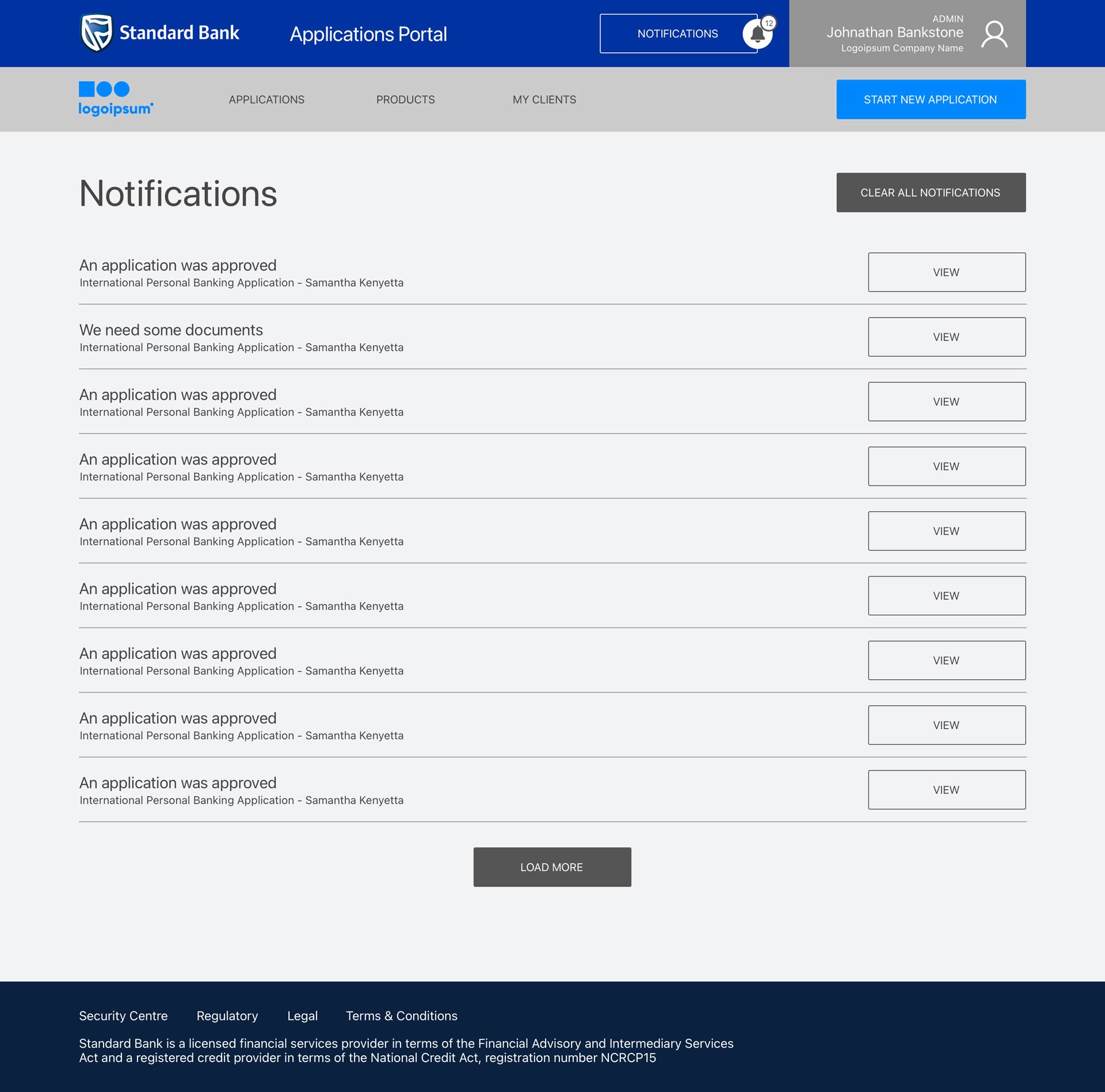
'Notifications'
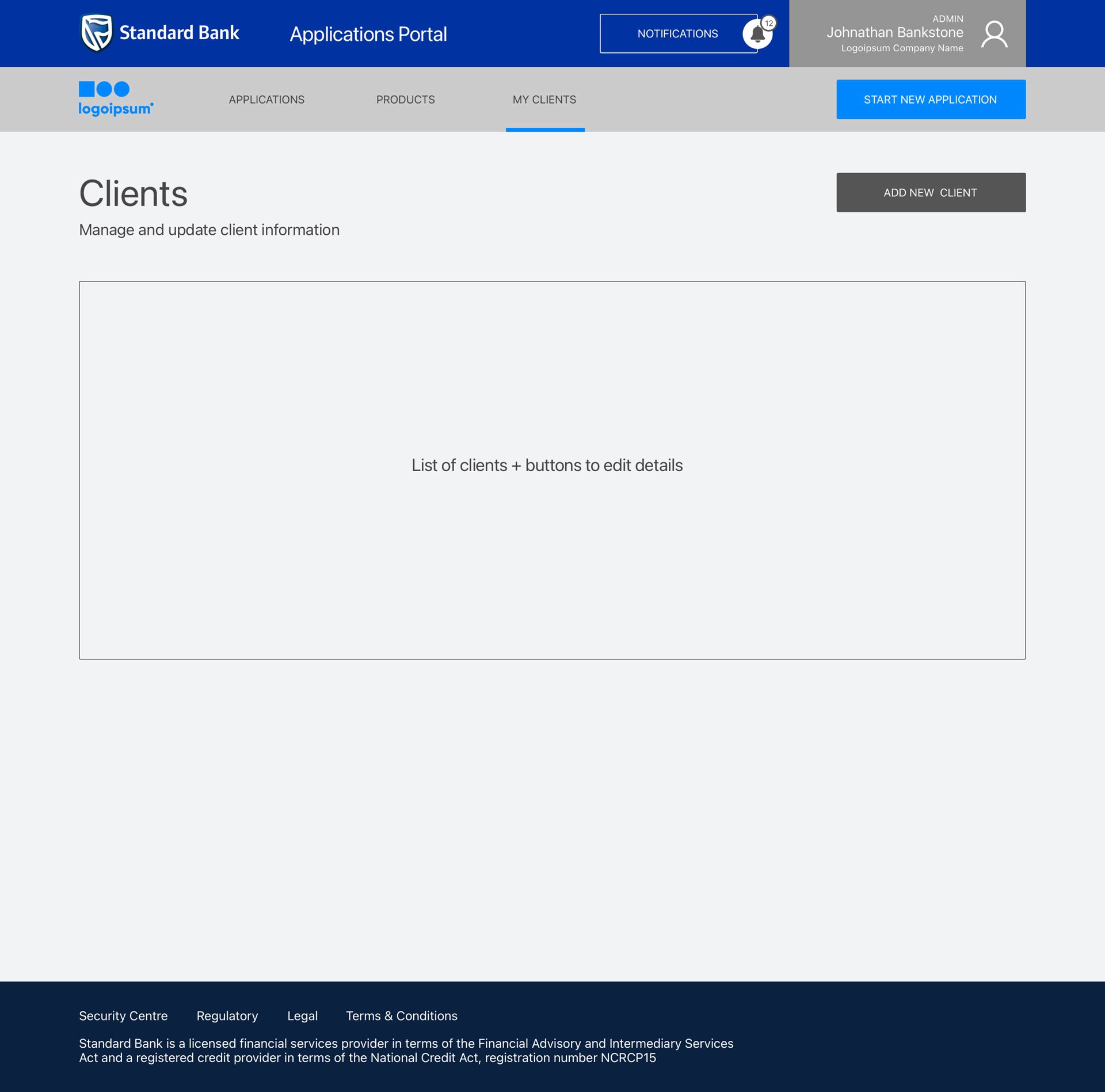
'Clients'
Testing affecting final design
List view
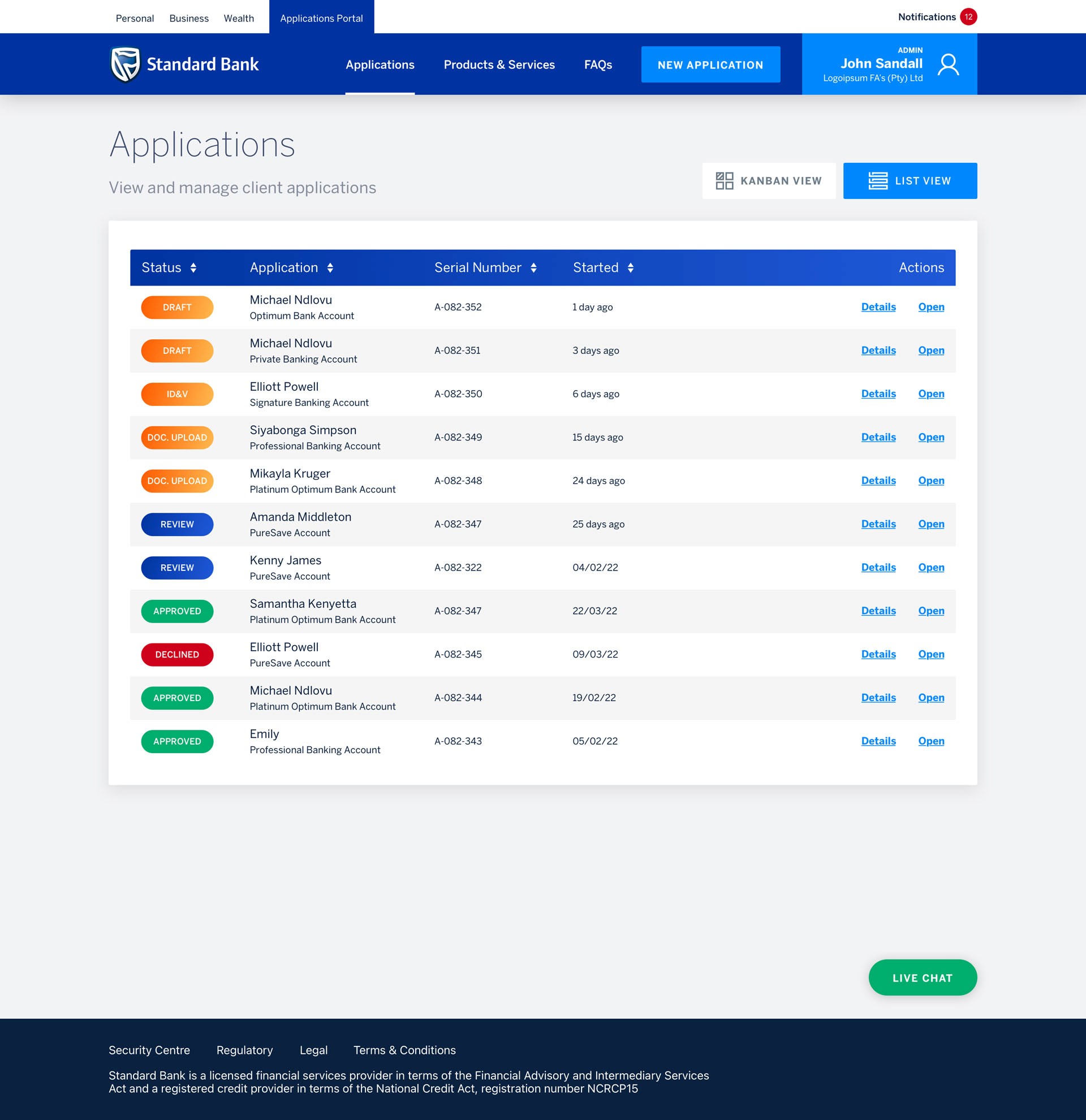
Final list view + kanban toggle
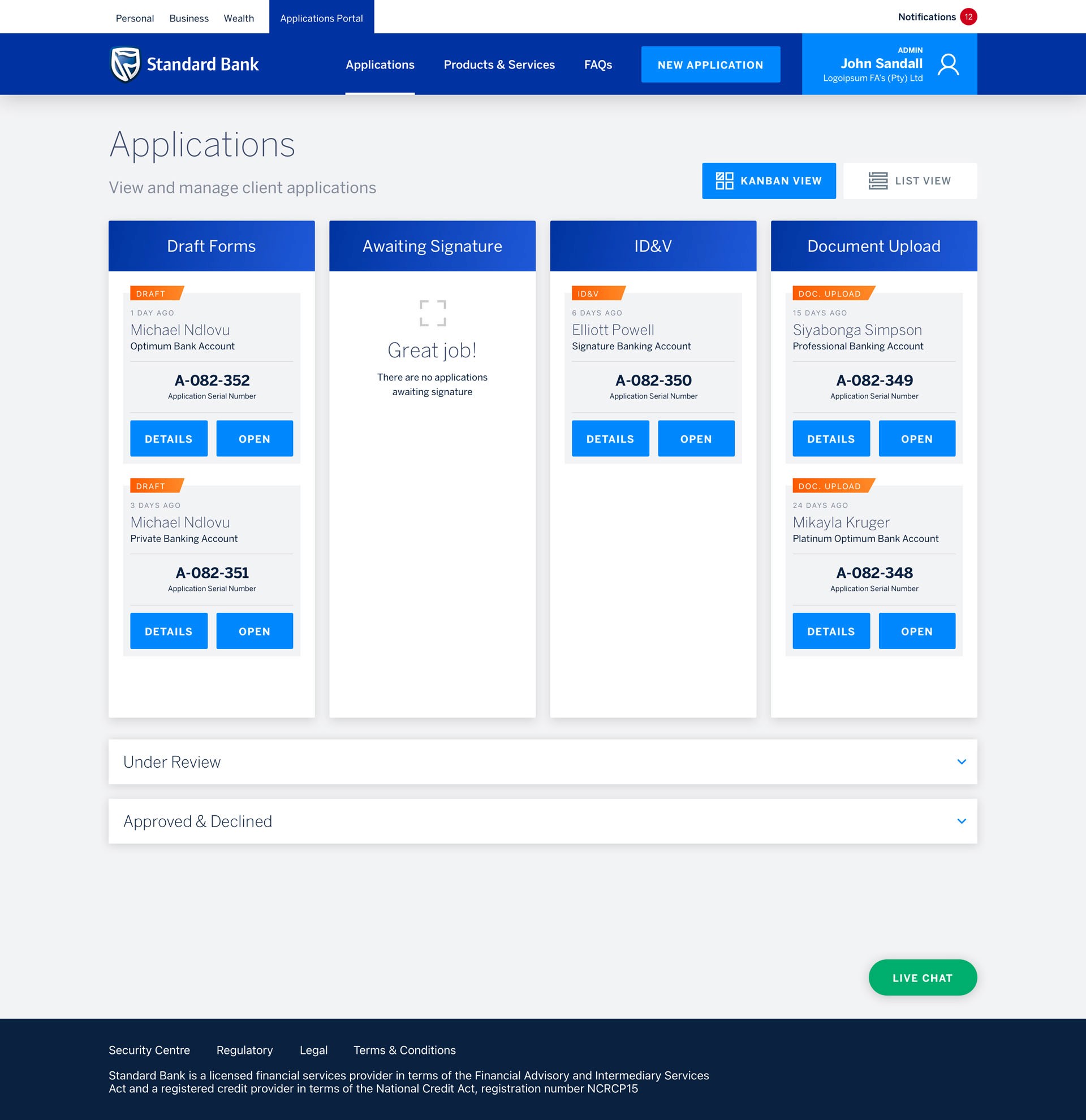
Kanban view
Final designs
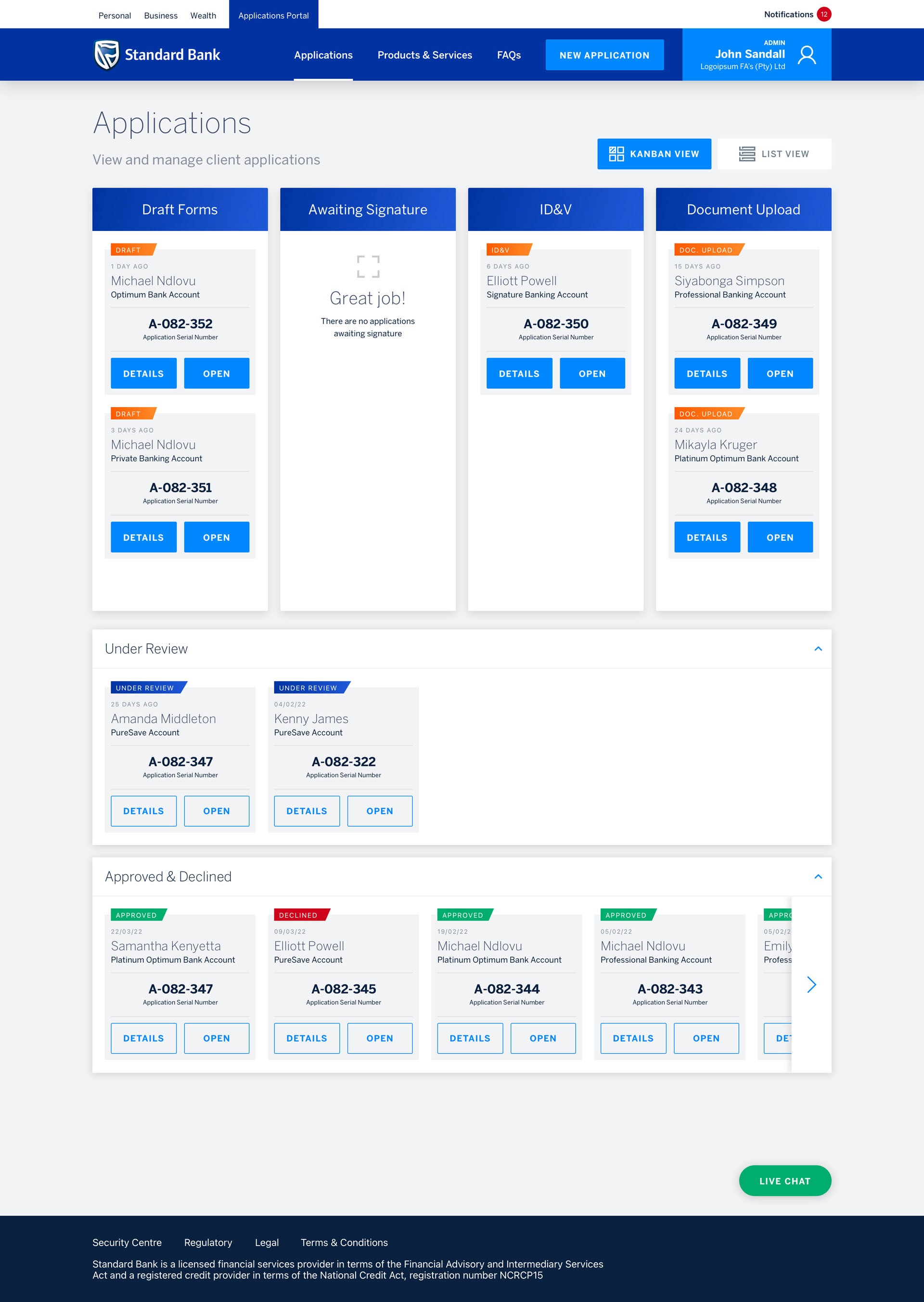
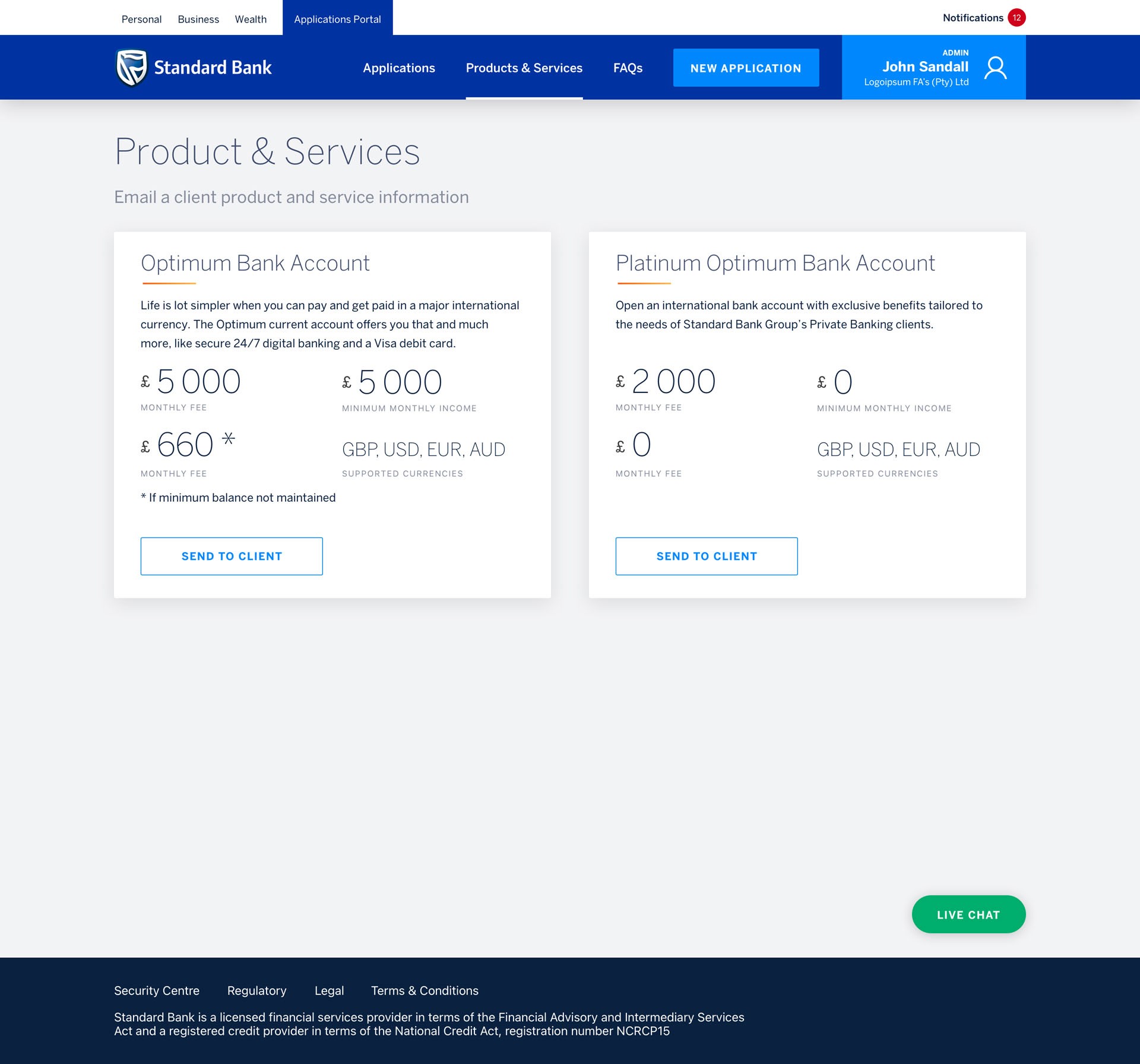
'Products & Services'
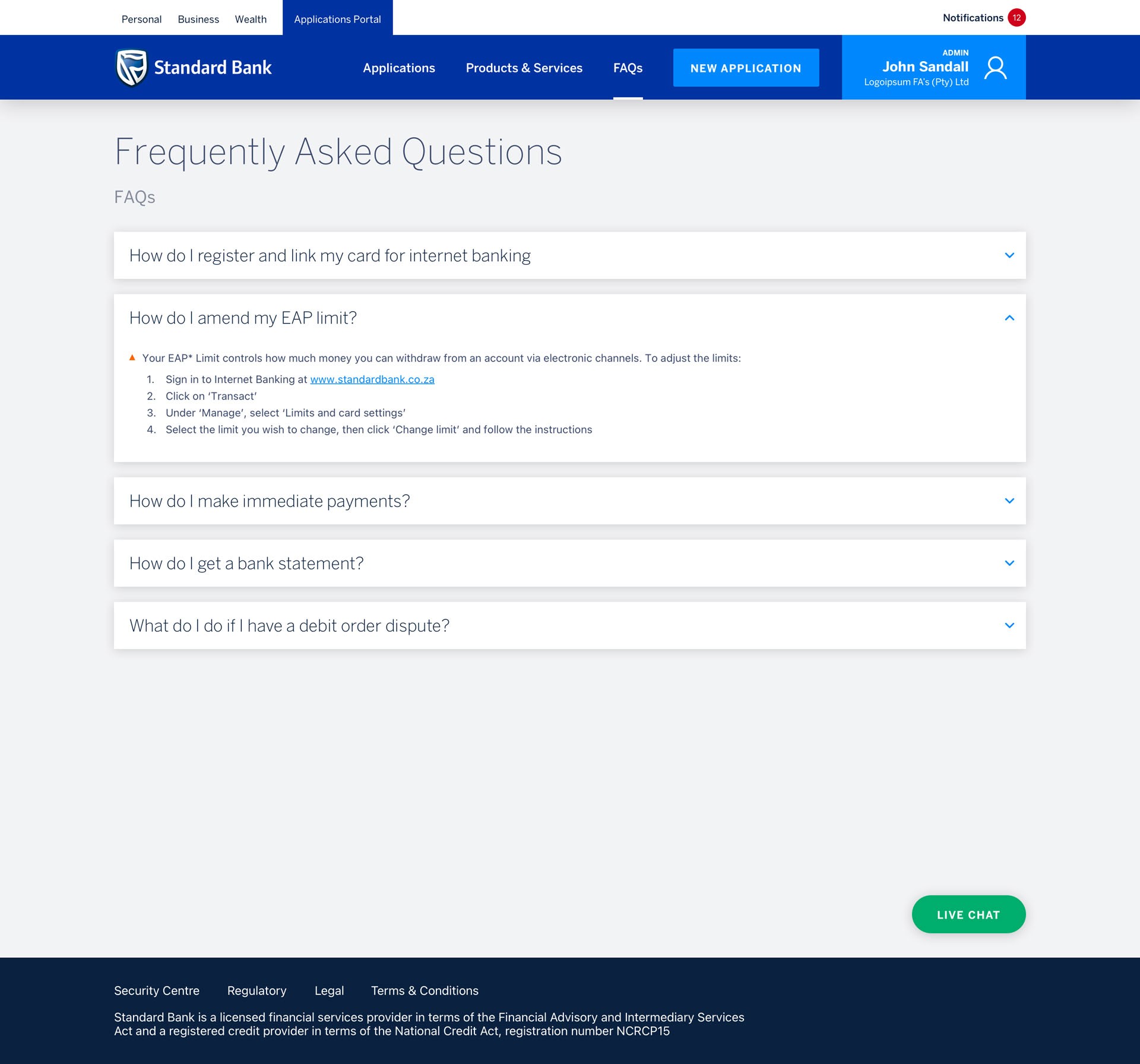
'Frequently Asked Questions'
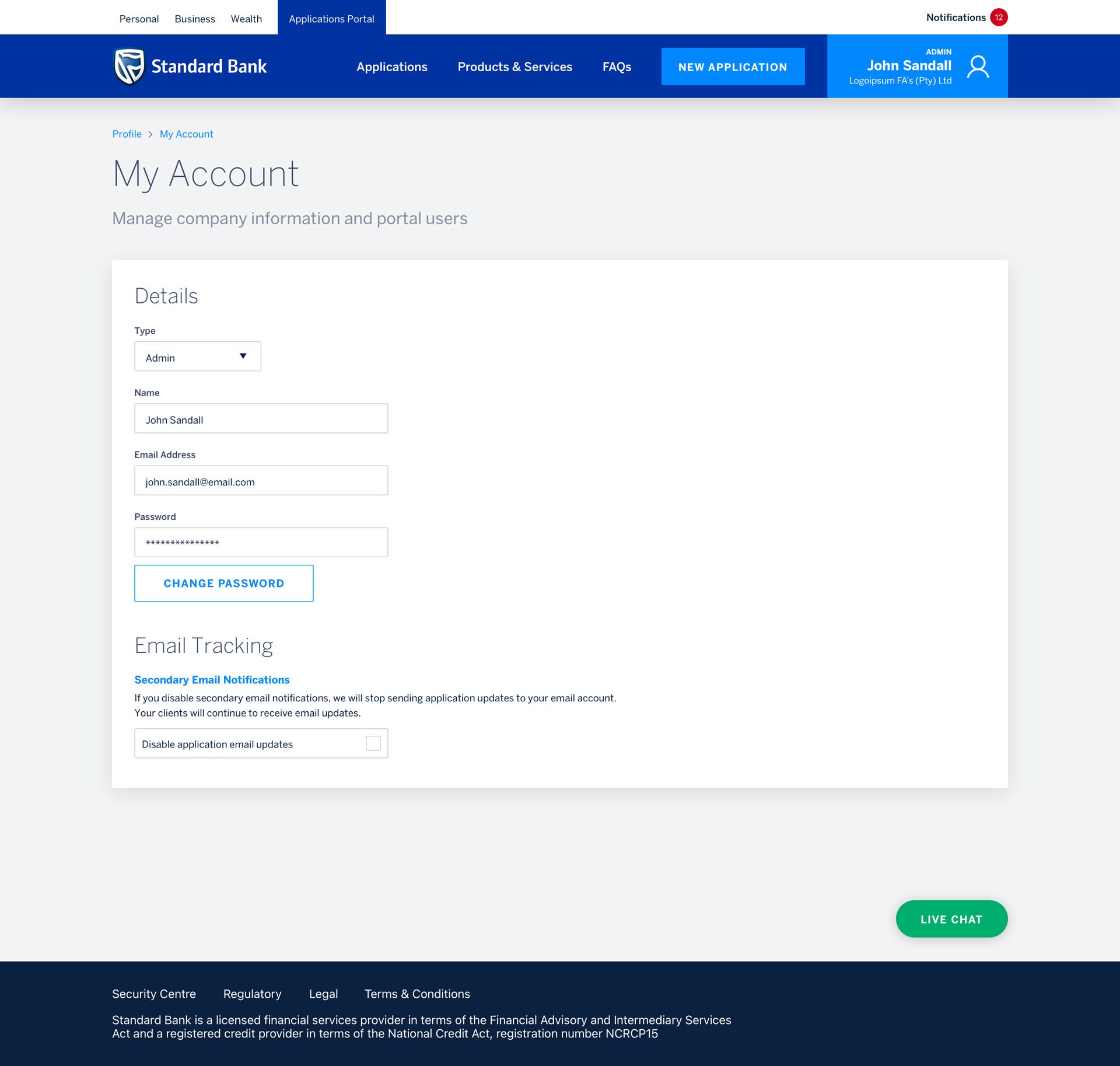
'My Account'
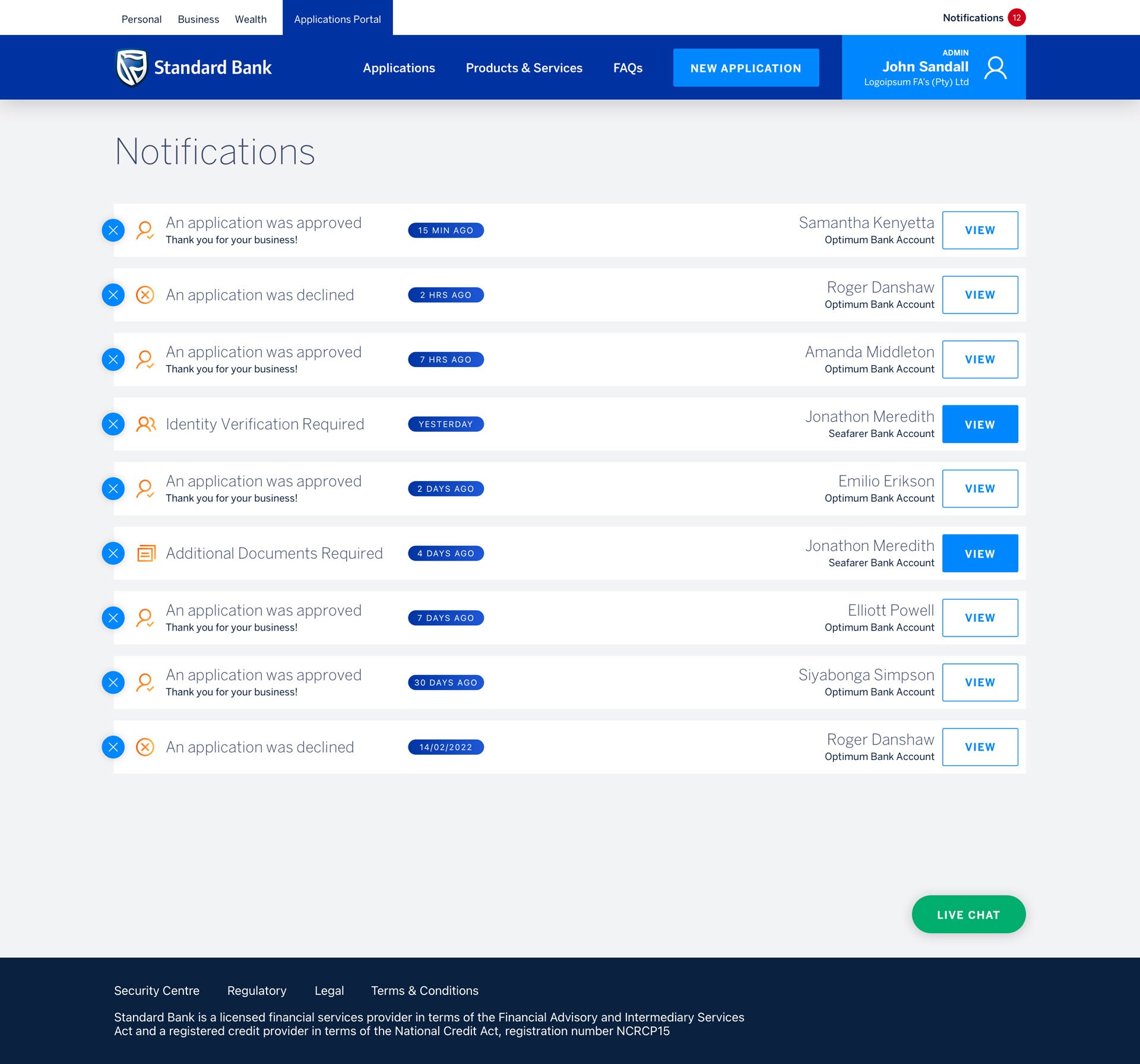
'Notifications'
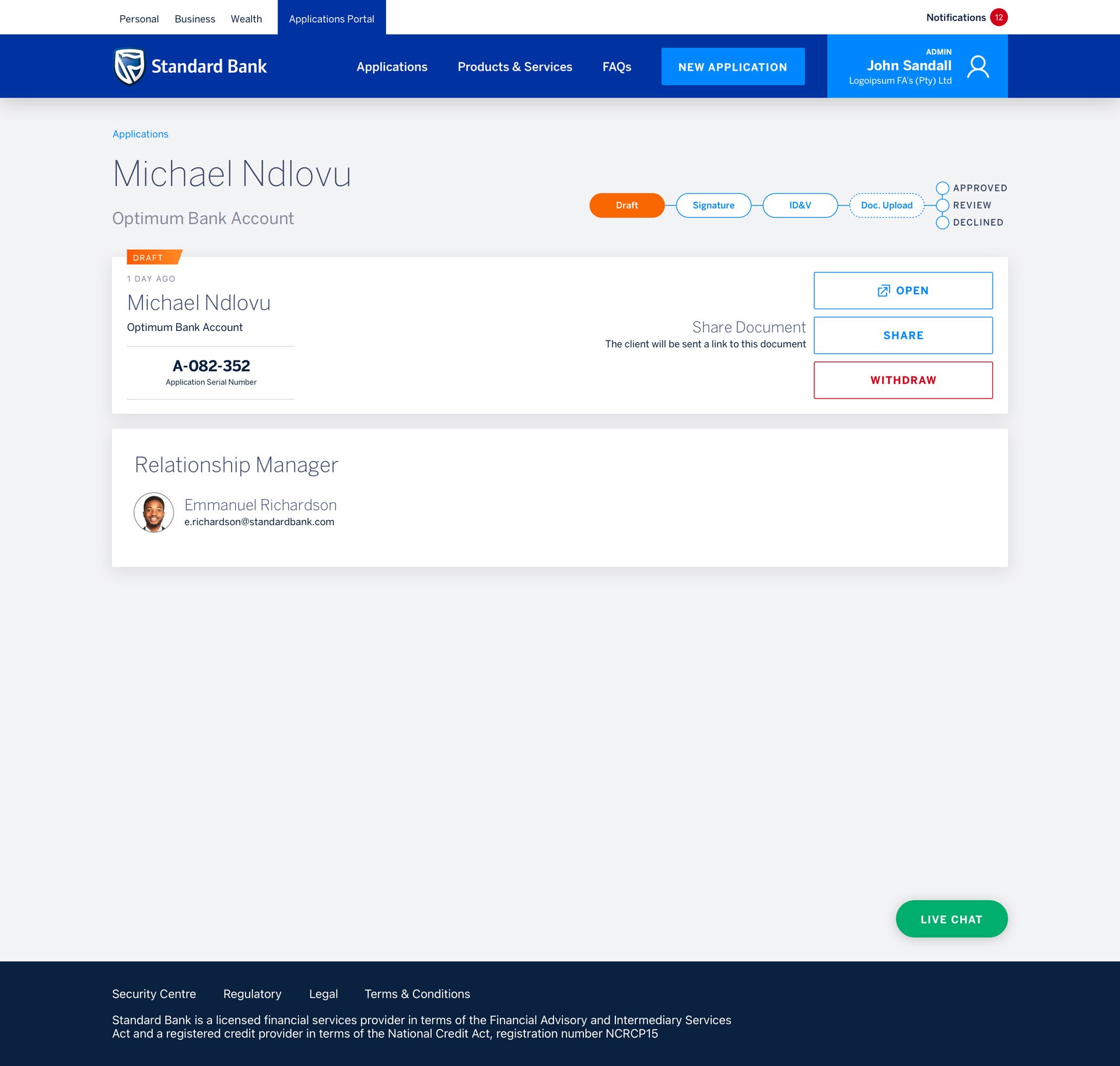
IFA User application details
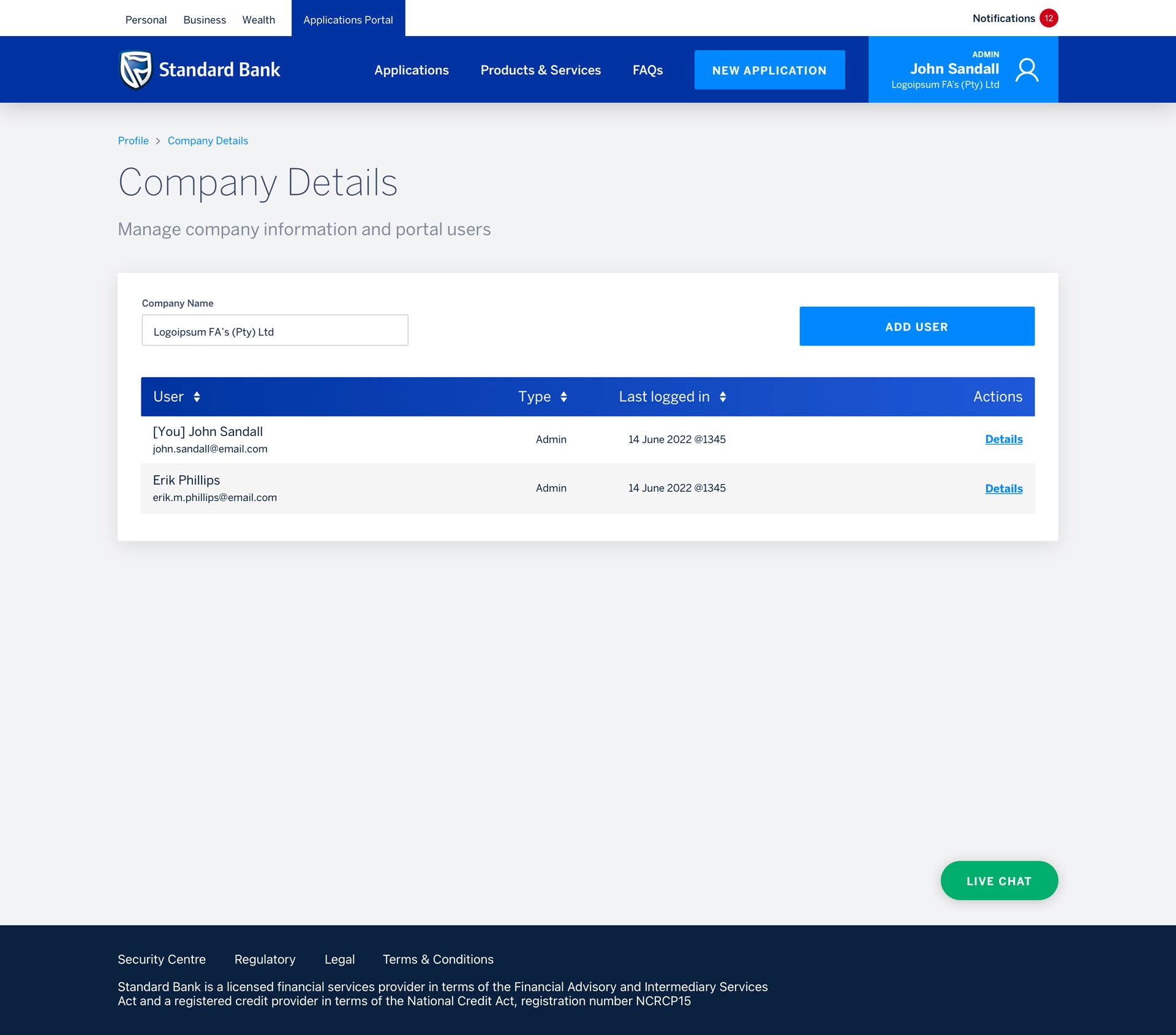
'Company Details'
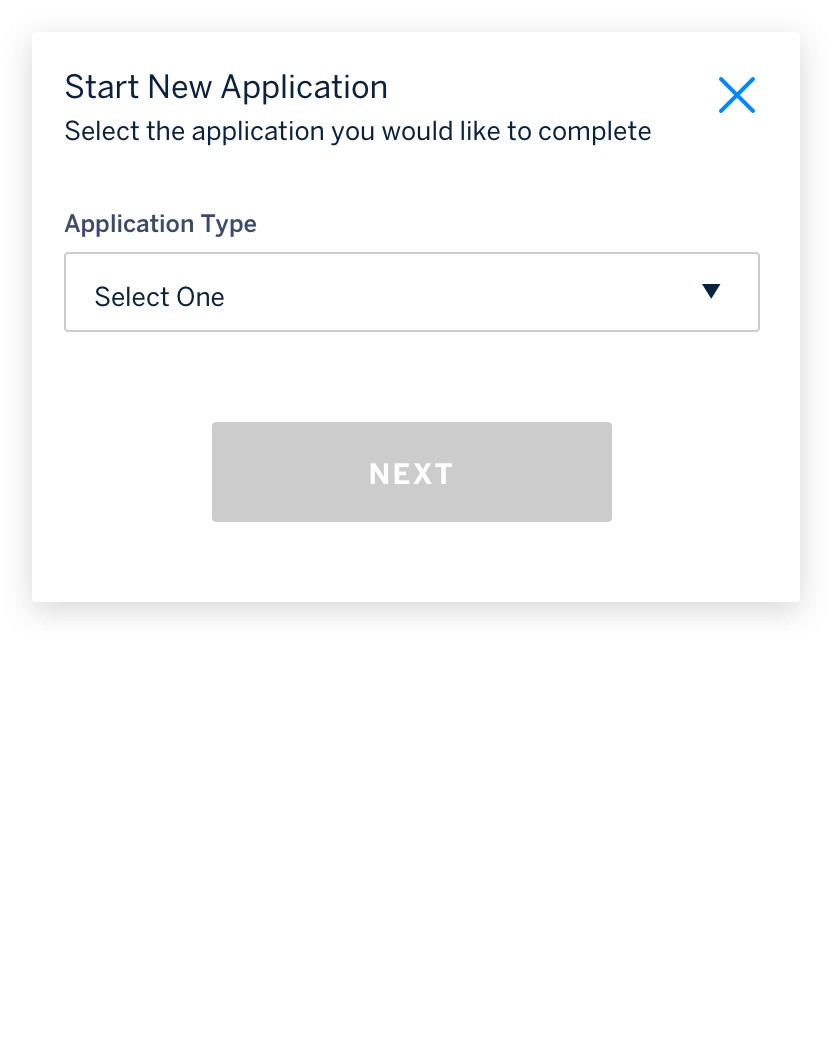
'Start New Application' Global modal
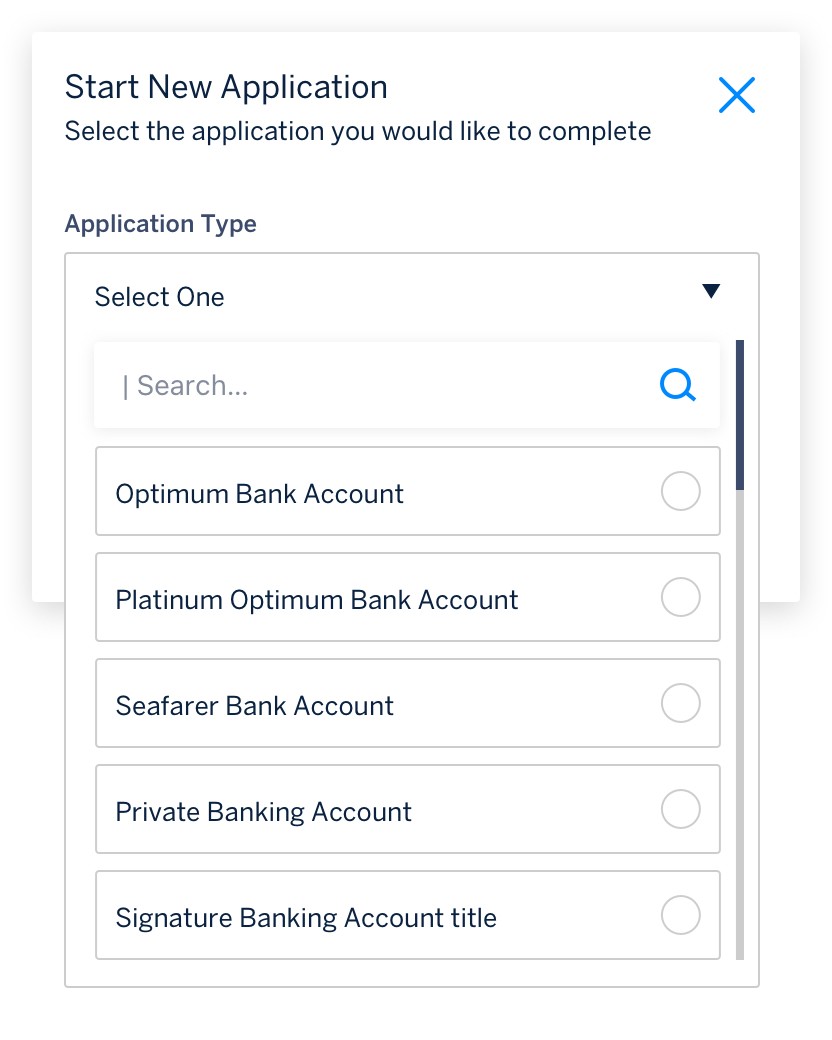
Application dropdown + search
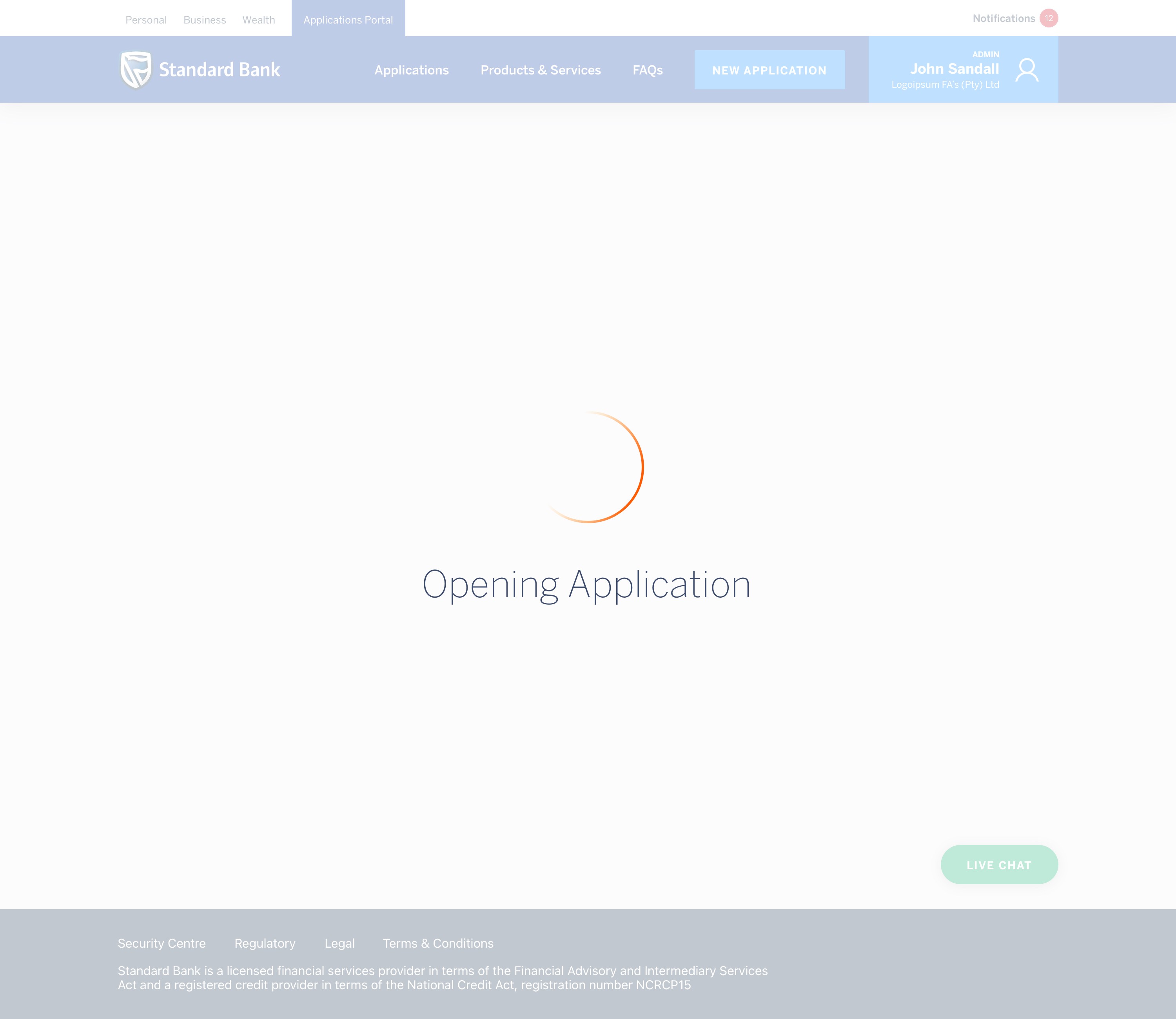
IFA Entering application view
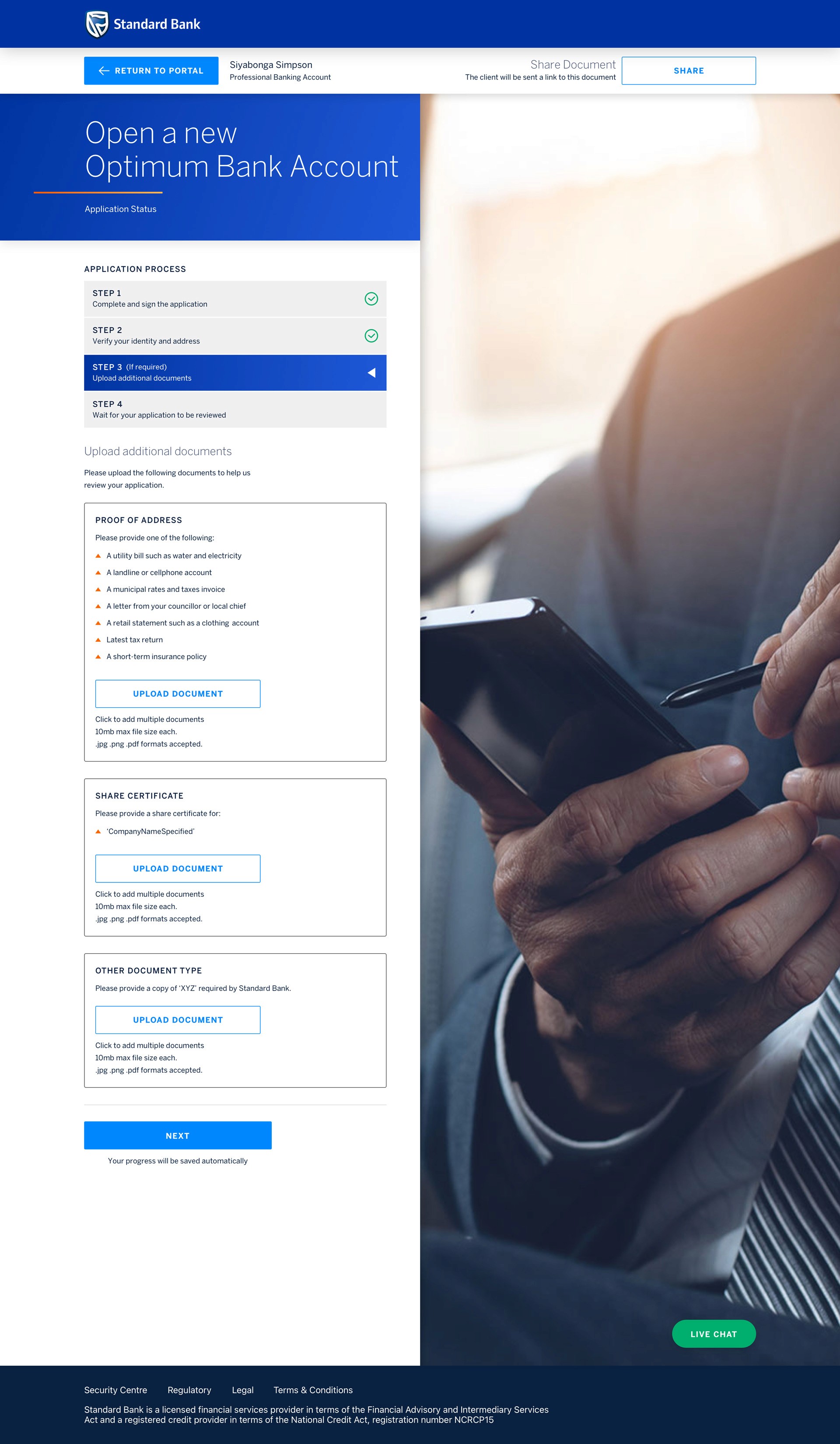
Application + IFA controls
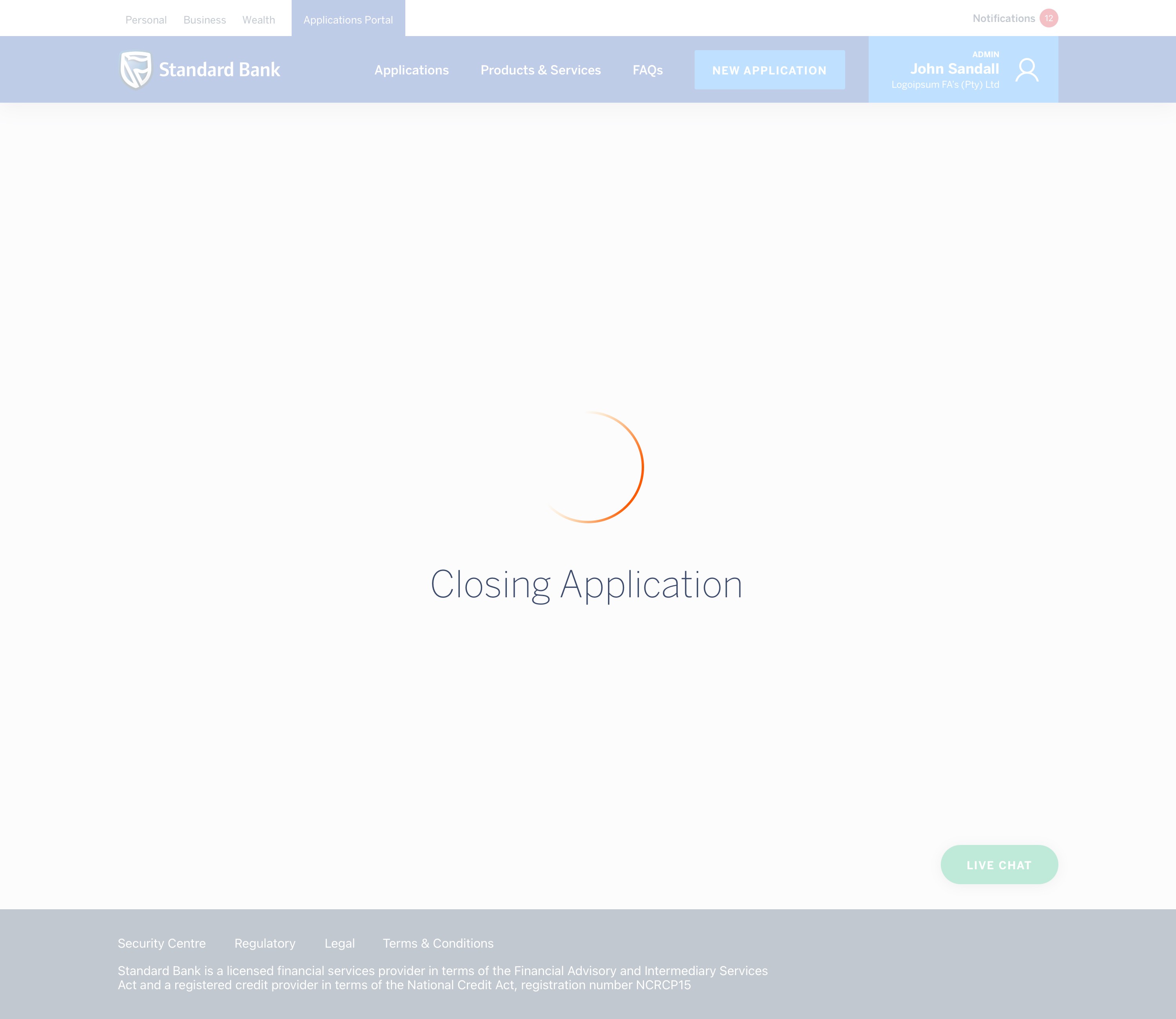
IFA exiting application view
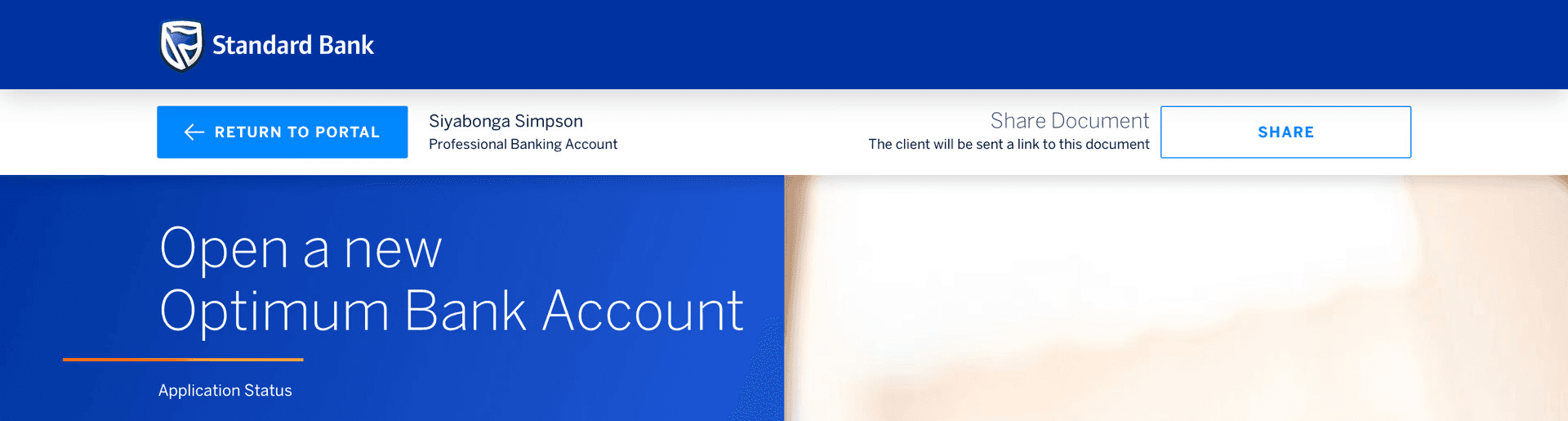
IFA Controls highlight
Challenger bank concept
After the core workstreams were delivered, the client asked for a forward-looking exploration: what would onboarding look like if legacy constraints were removed?
I produced concept designs that reduced the journey to 5-10 minutes by mirroring the journey design of challenger and neo-banks such as Revolut and Monzo, removing redundant data collection where the system could infer or pre-fill with exisitng data sets or APIs, and front-loading the decisions that determined which fields were actually required.
This wasn’t a redesign of the existing flow, but a way to show how onboarding could change once the focus shifted from collecting information to designing around the user experience.
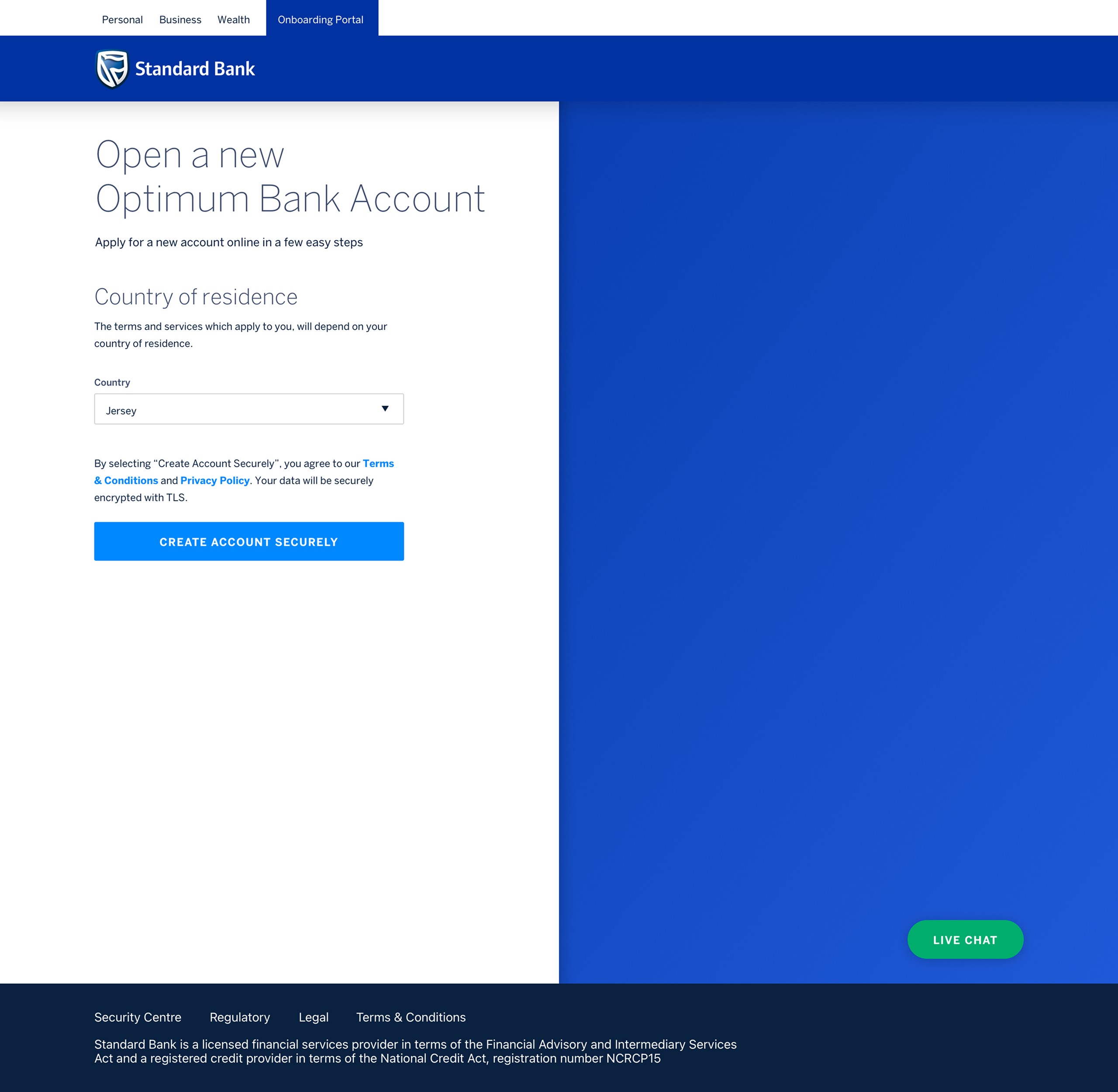
Responsive challenger bank concept
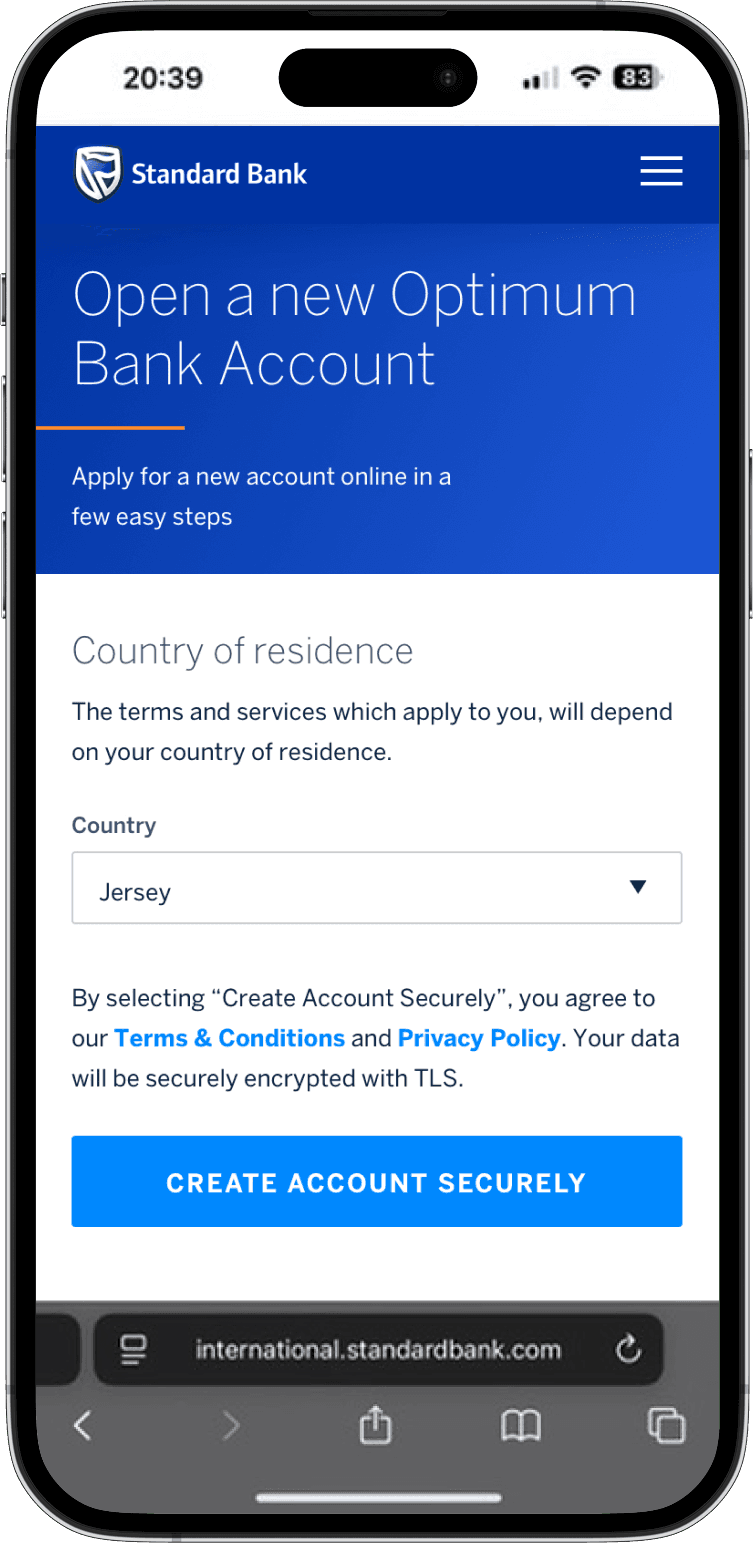
Responsive challenger bank concept
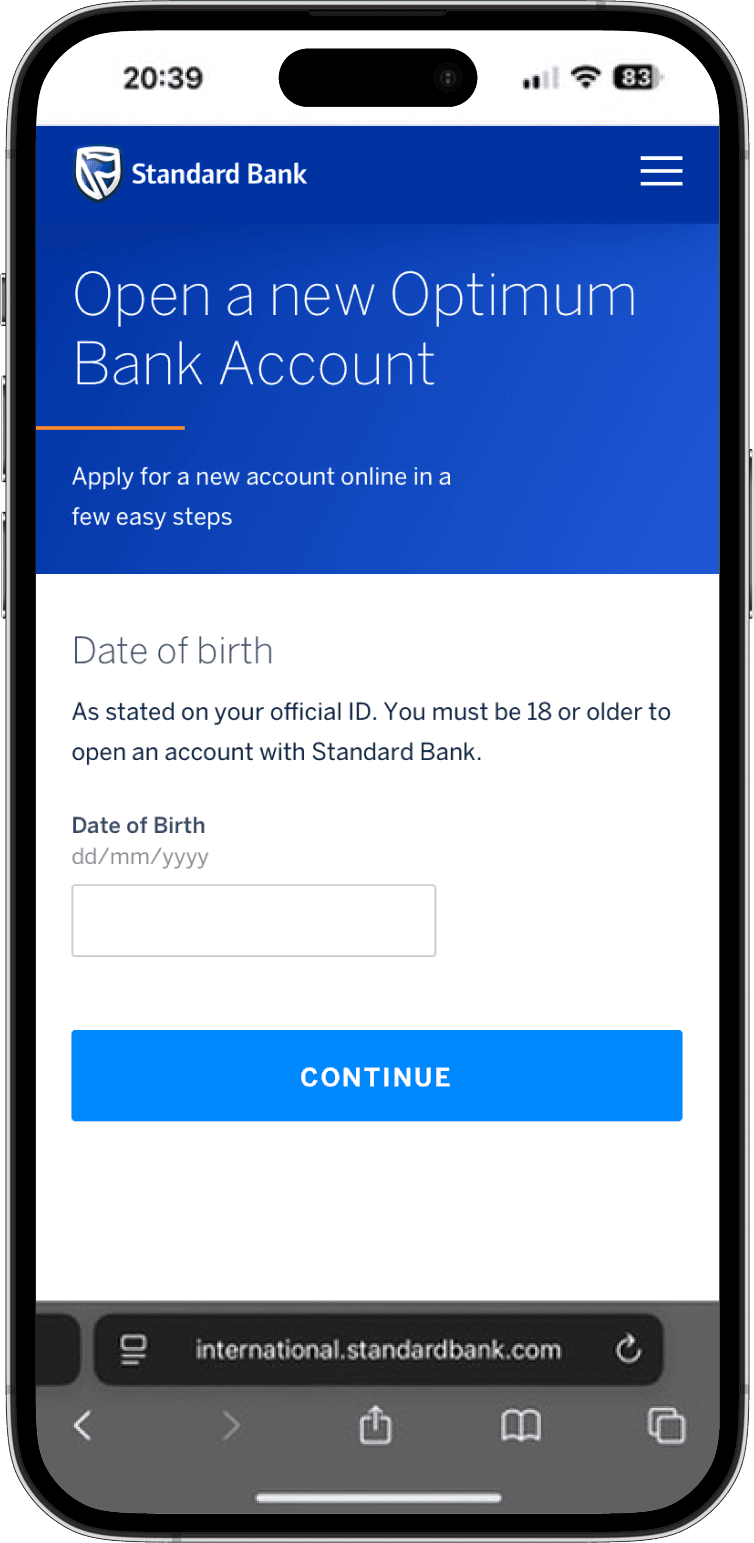
Date of birth
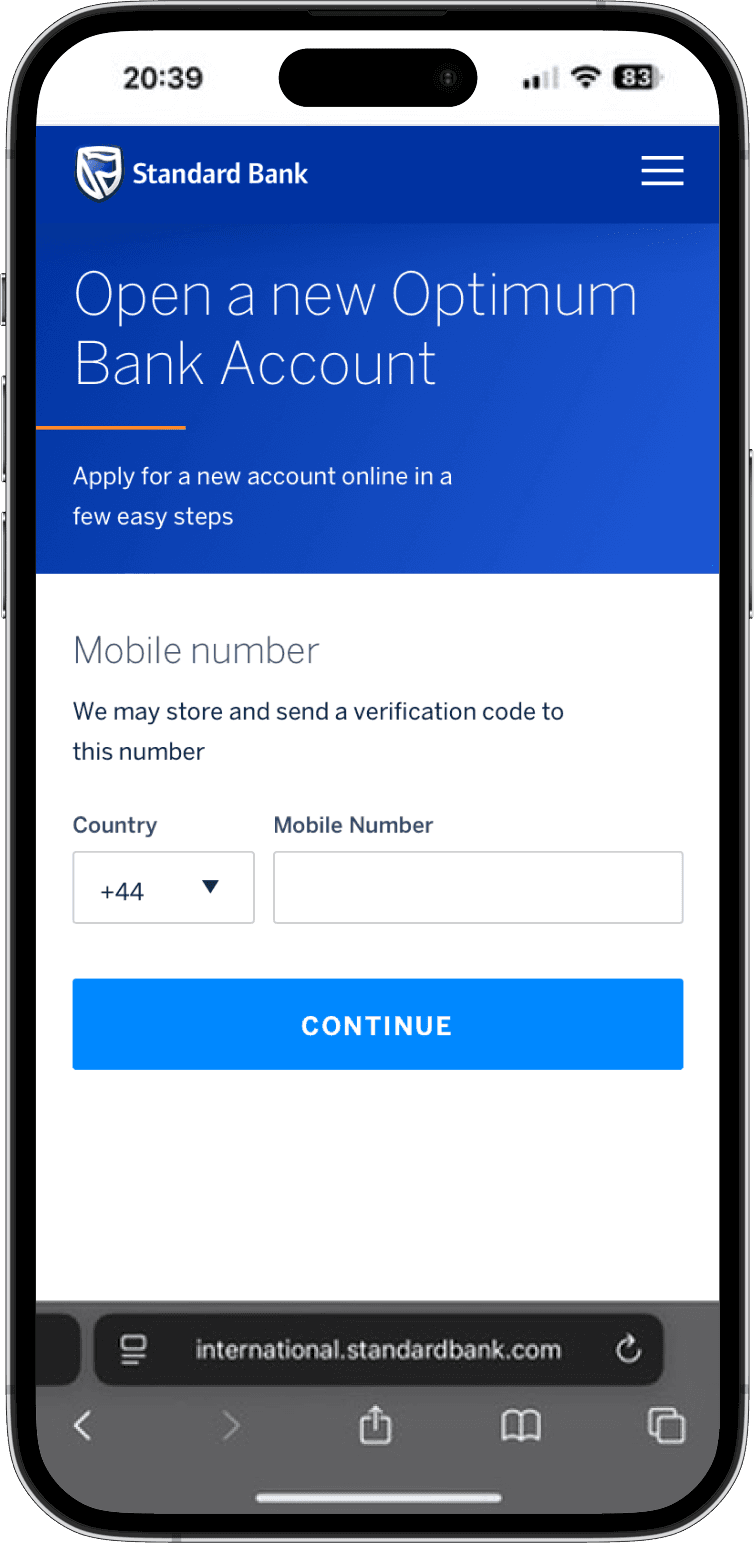
Mobile number
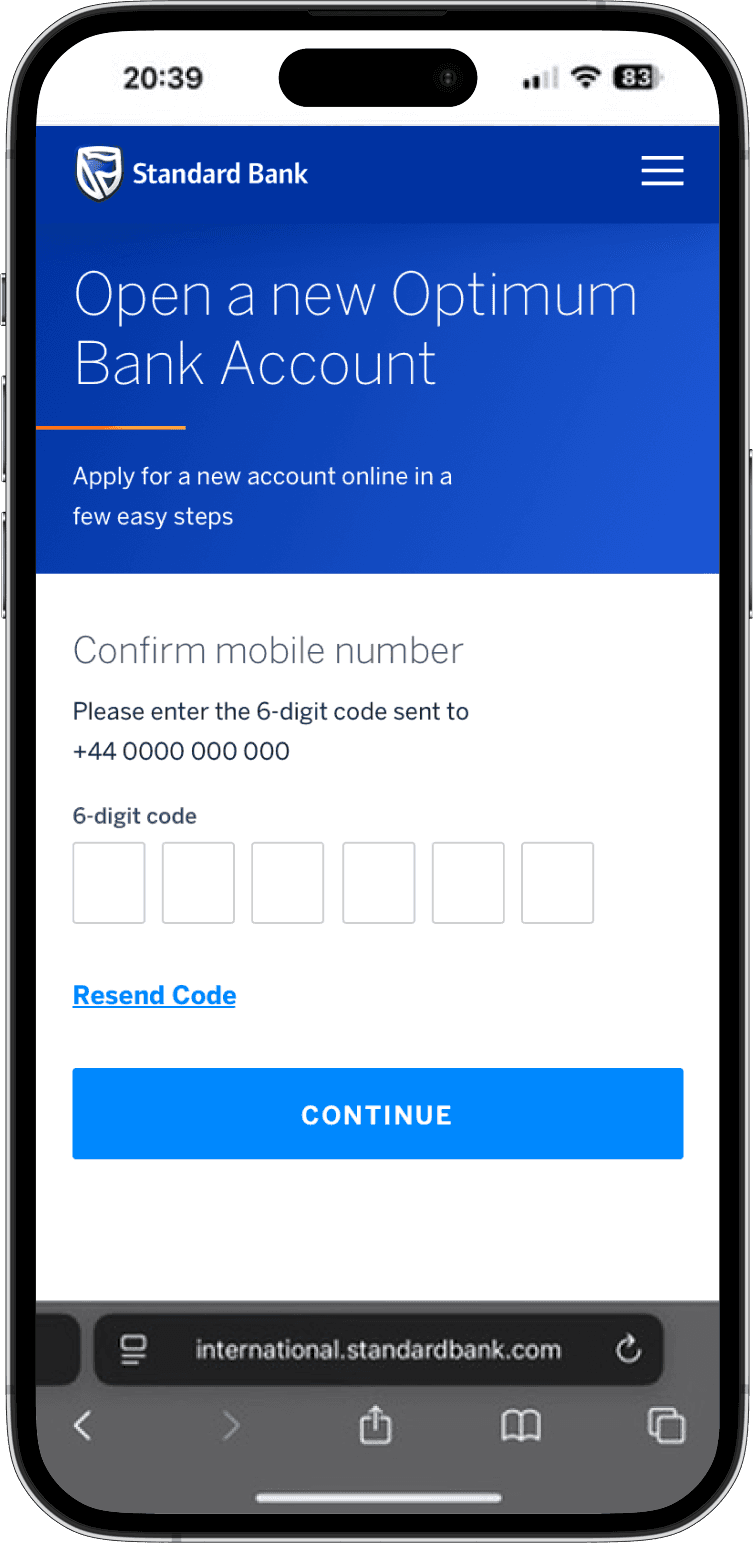
Confrim mobile number
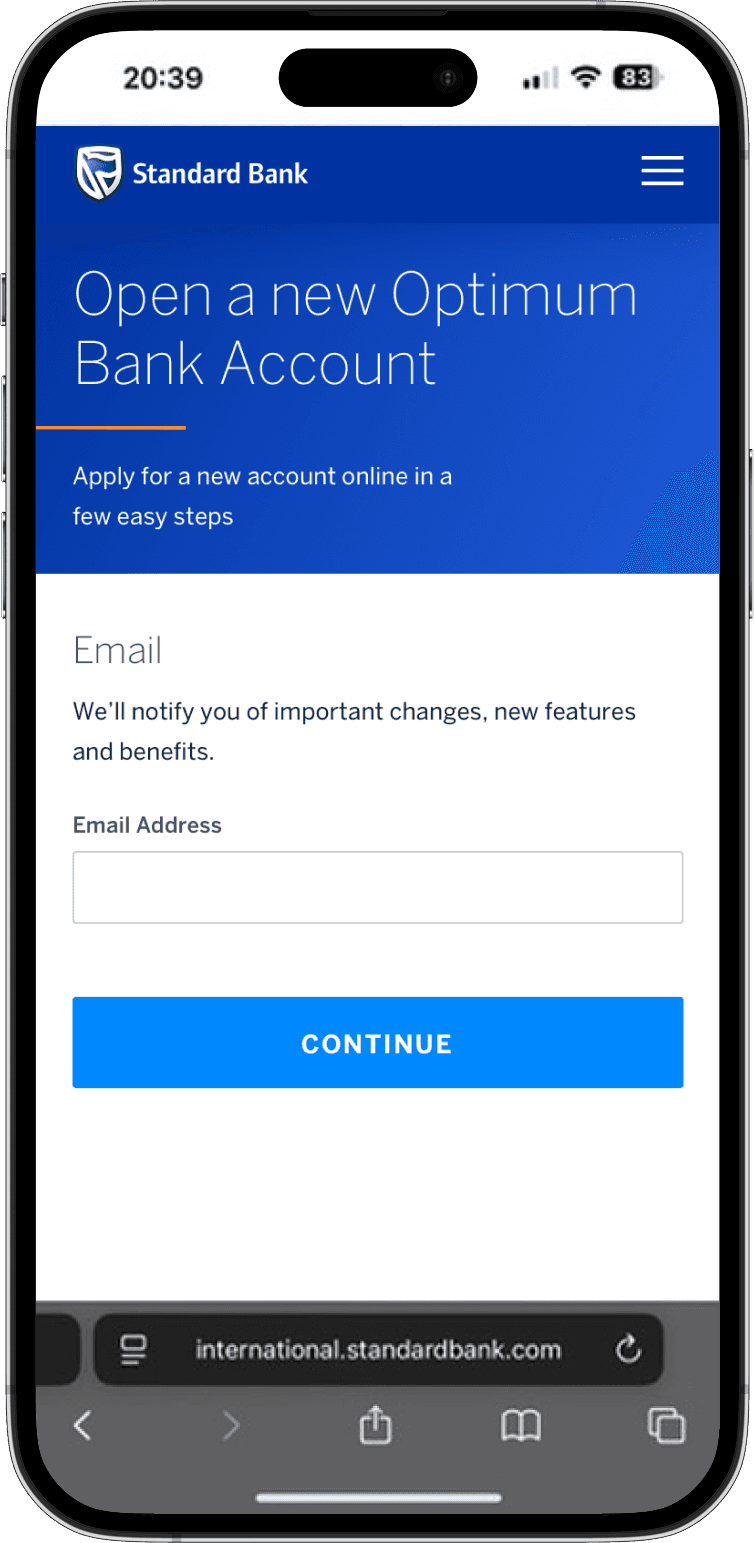
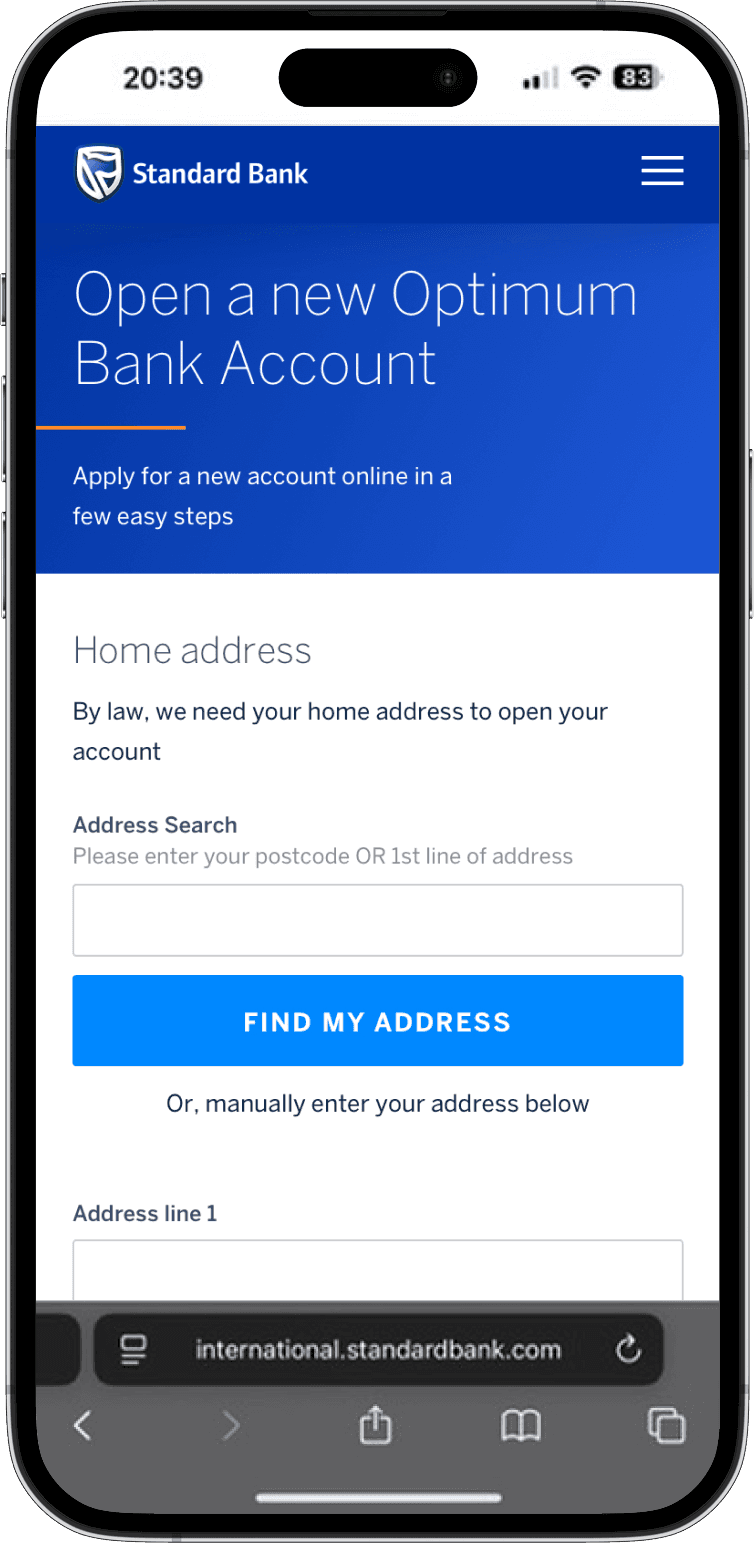
Home address
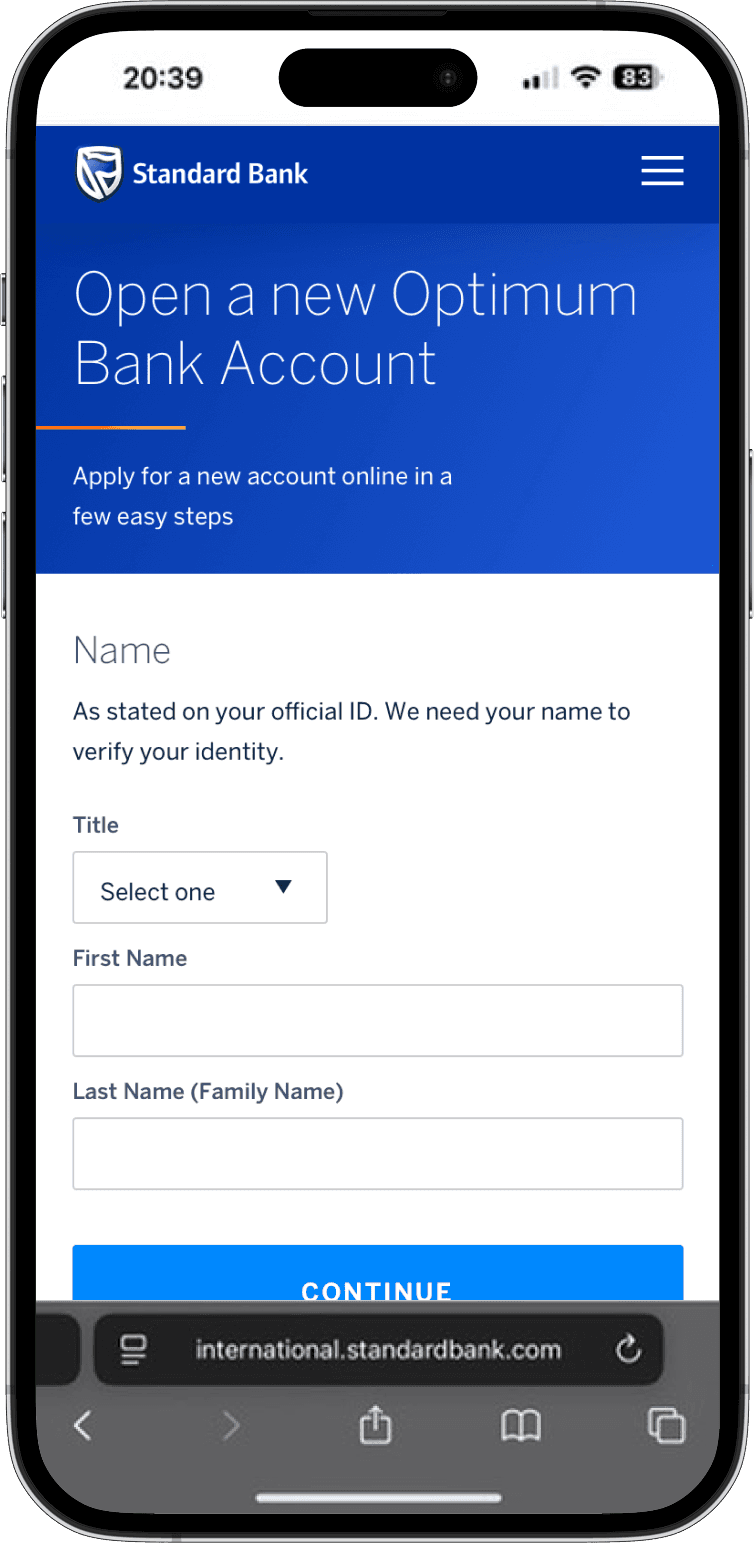
Name
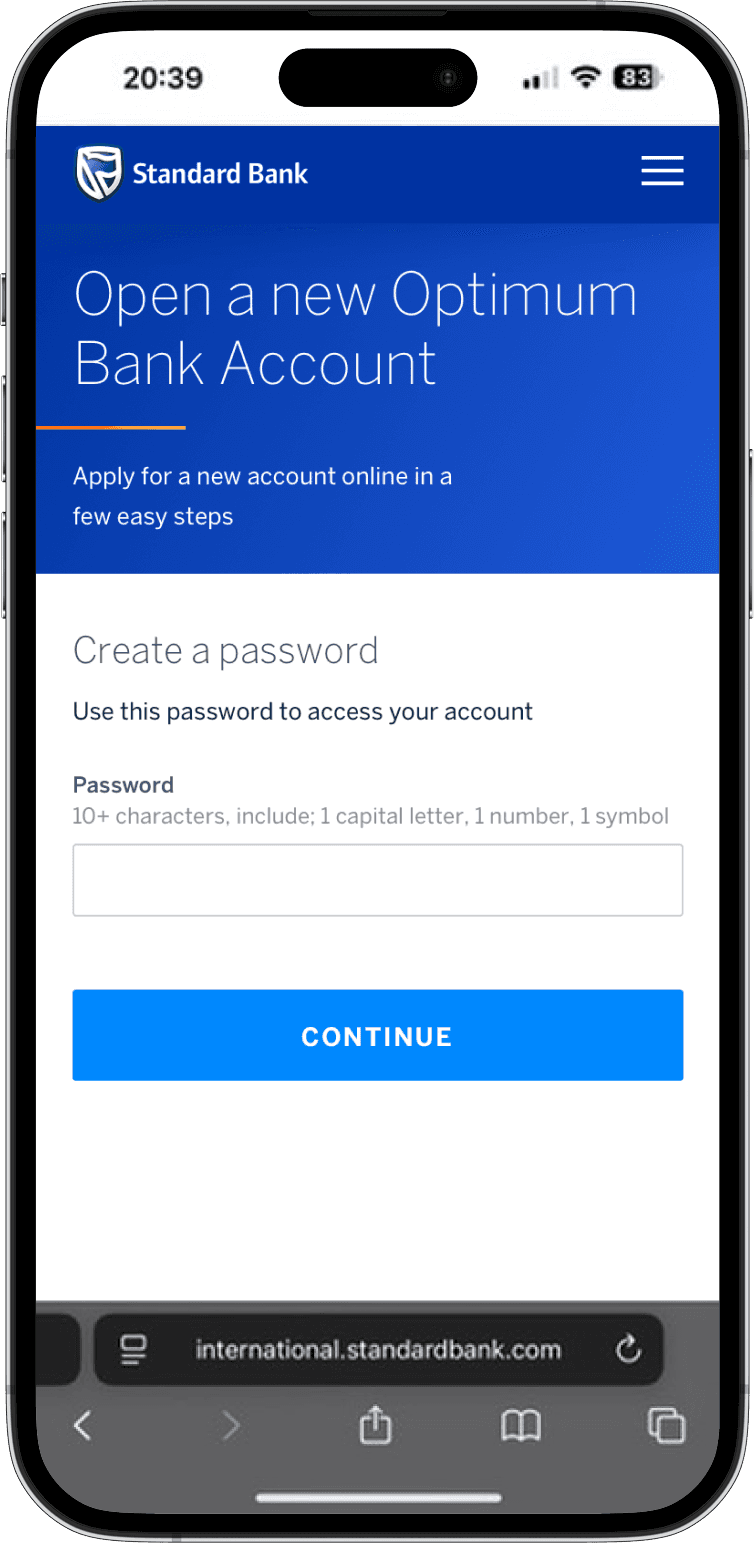
Create password
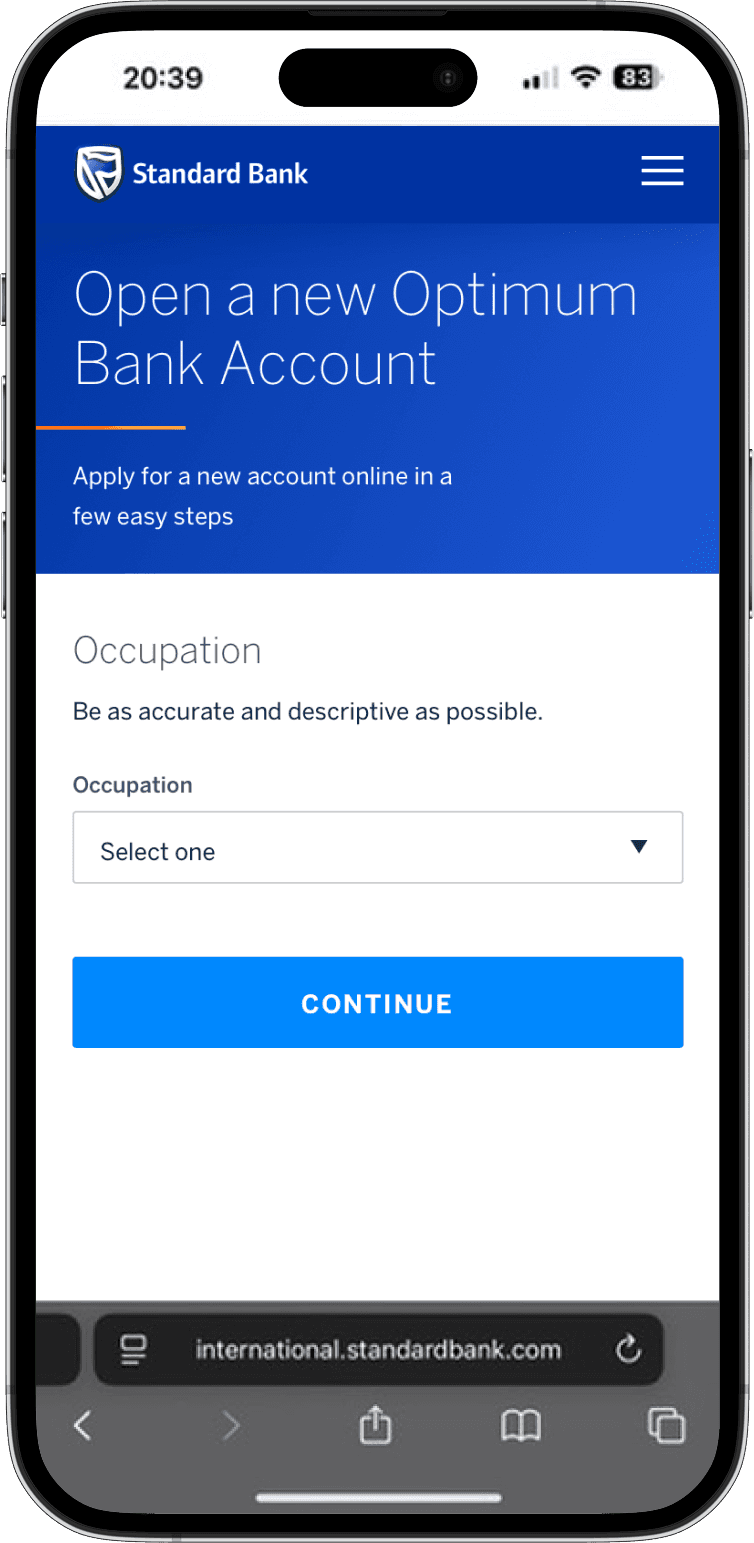
Occupation
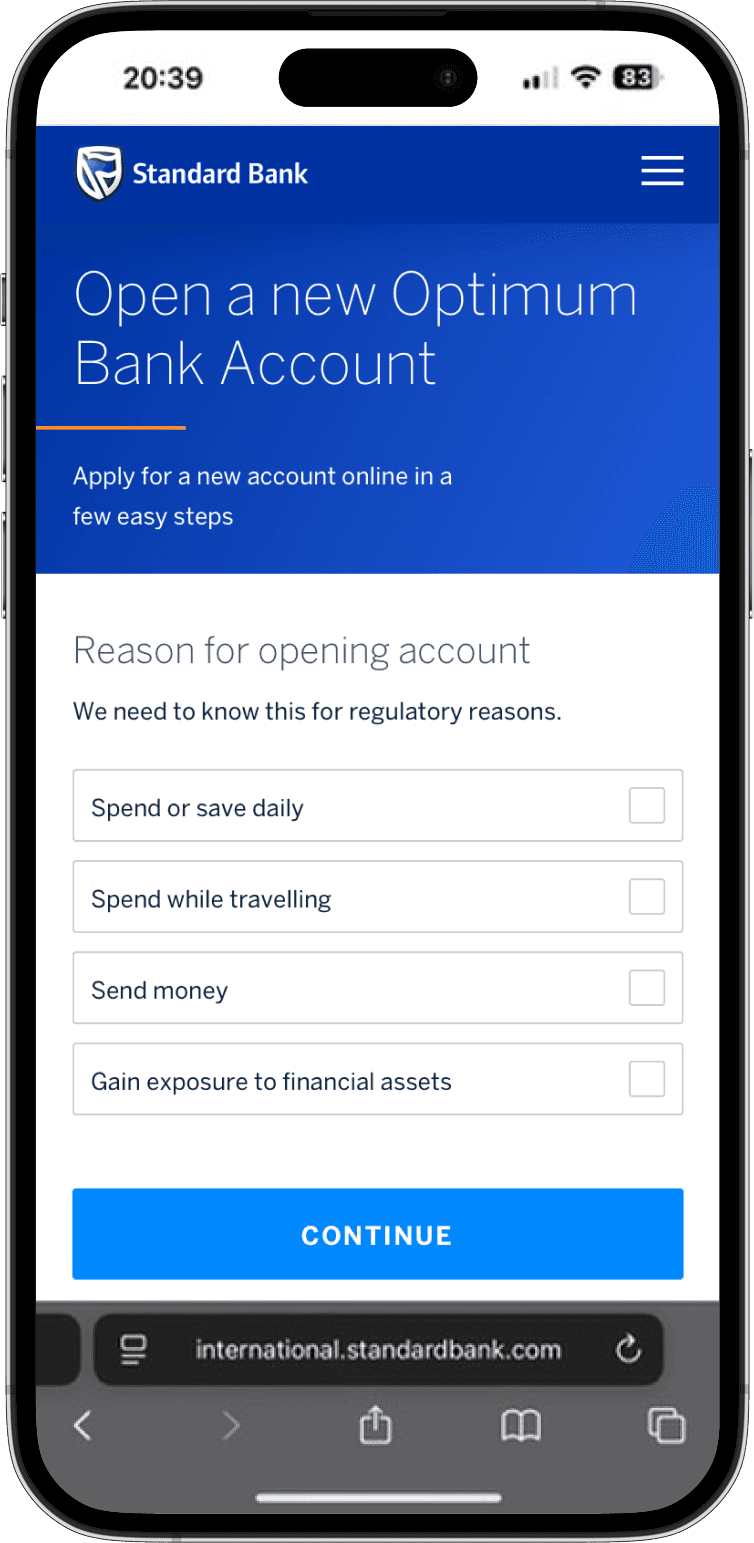
Account reason
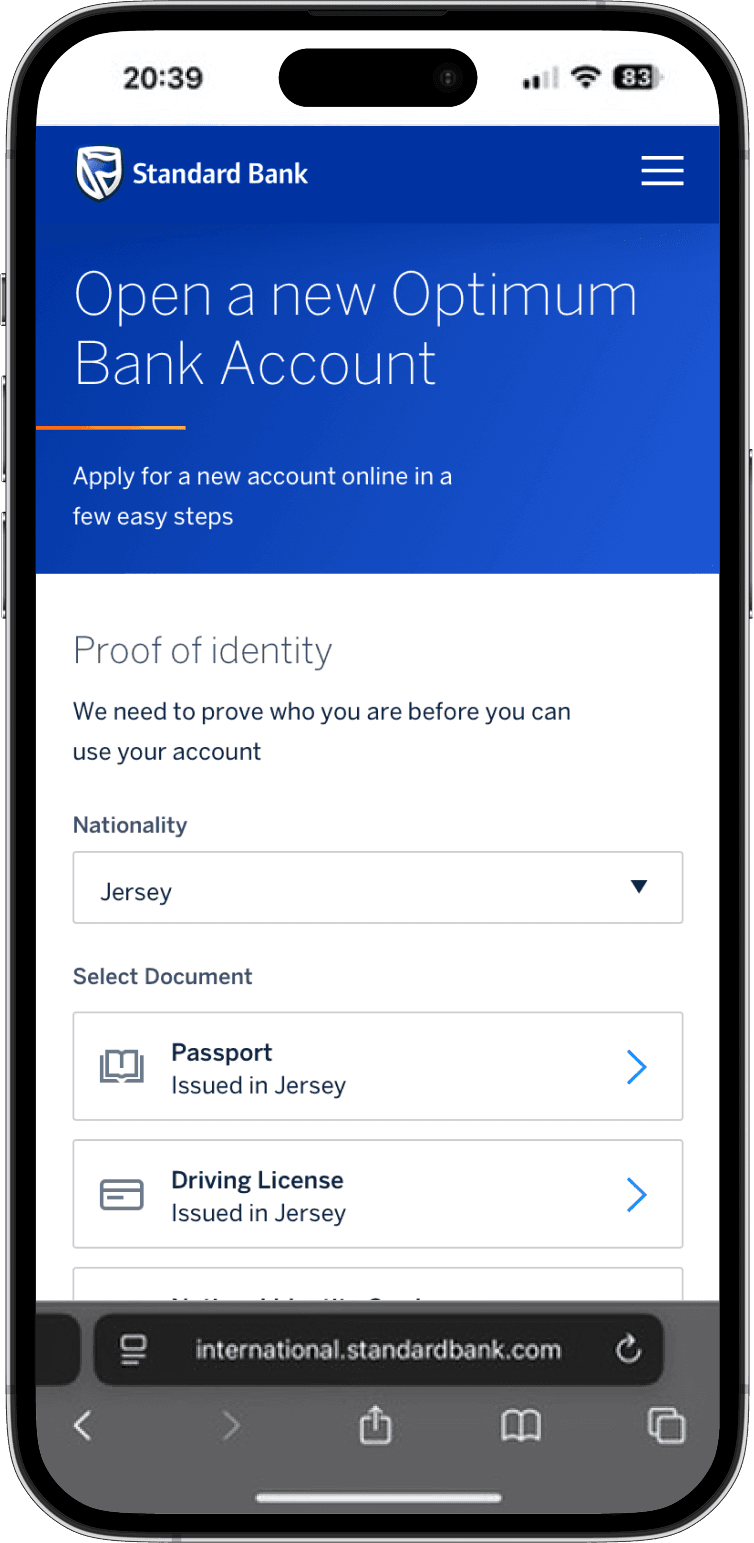
Proof of identity
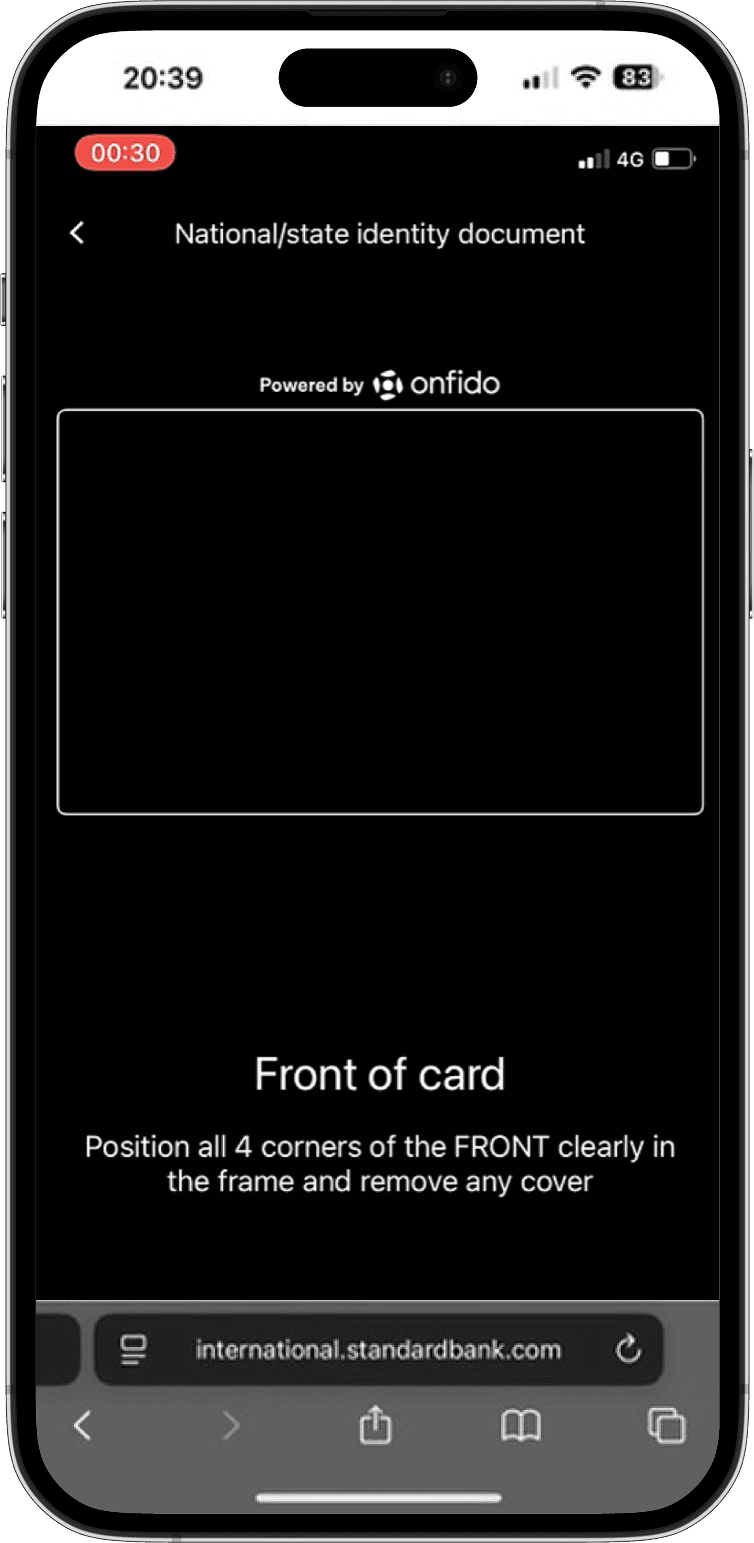
Scan front of card
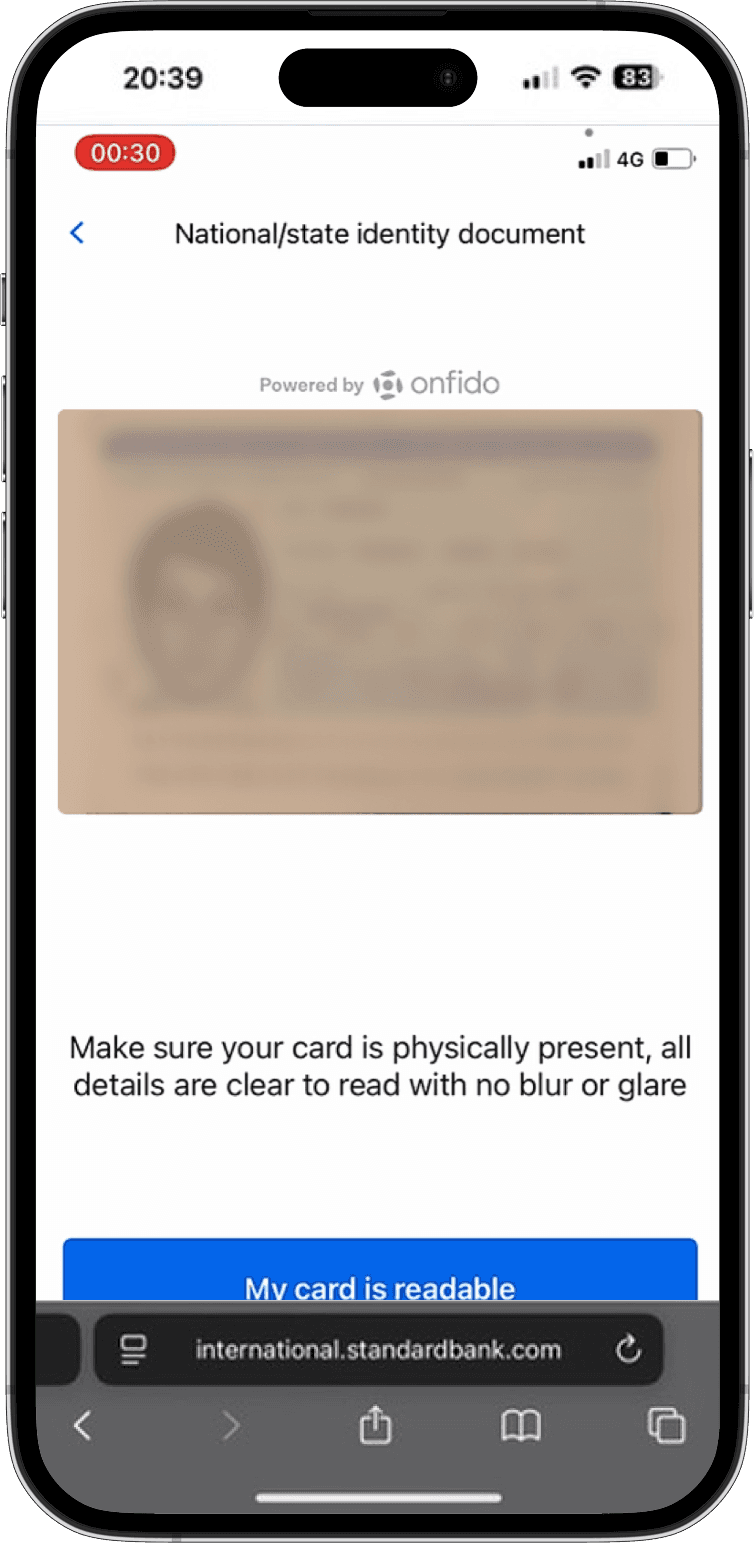
Check front of card
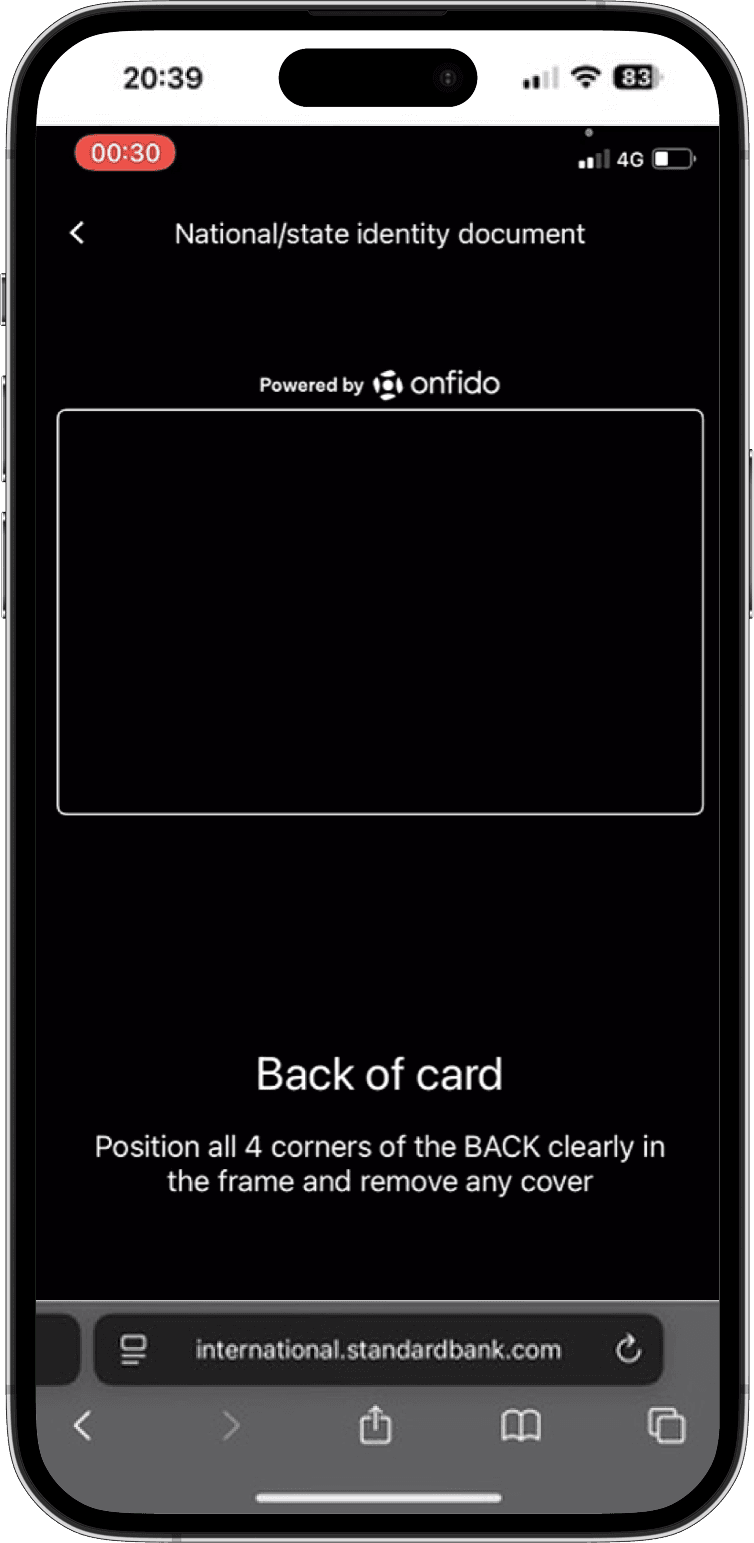
Scan back of card
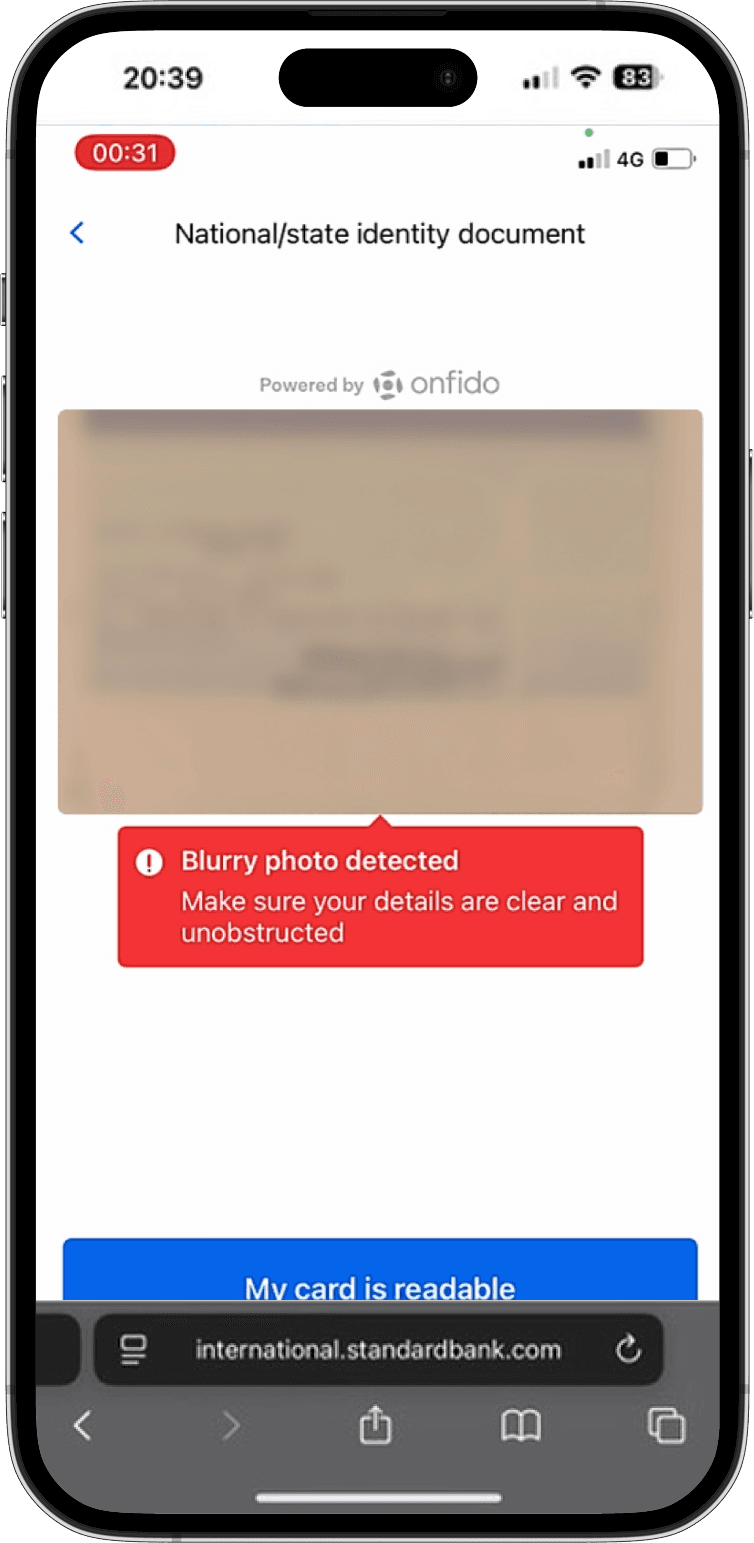
Check back of card
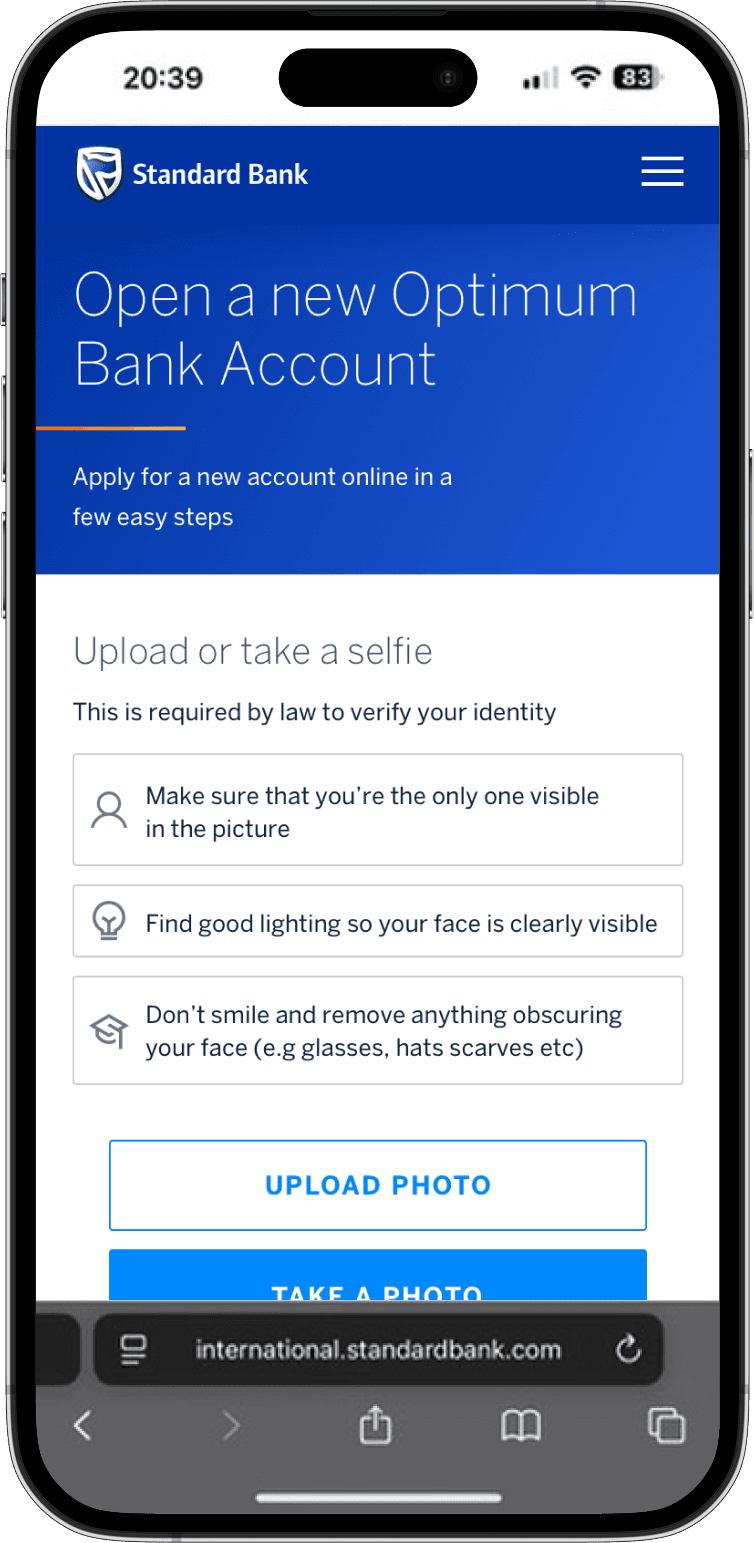
Take a selfie
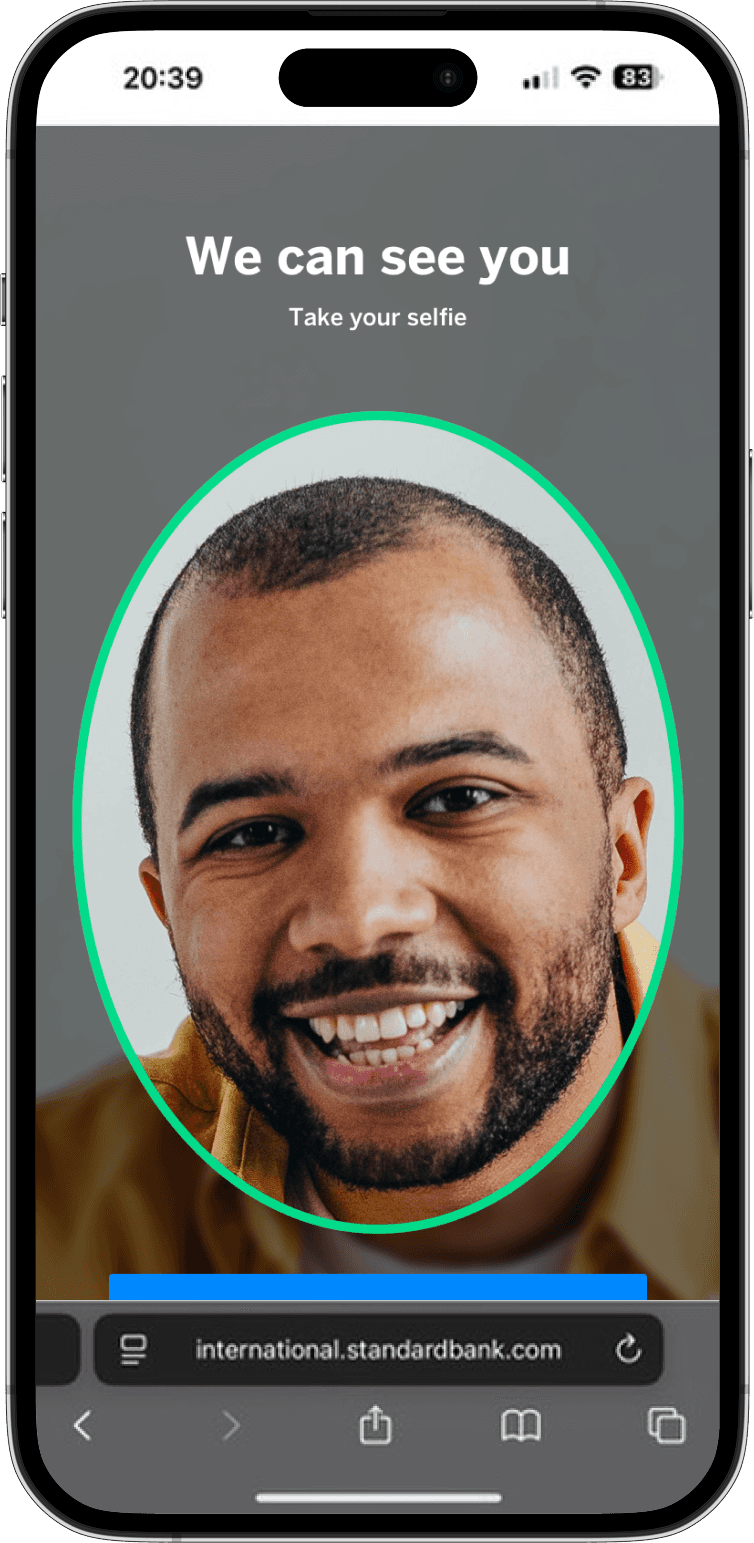
Capture selfie
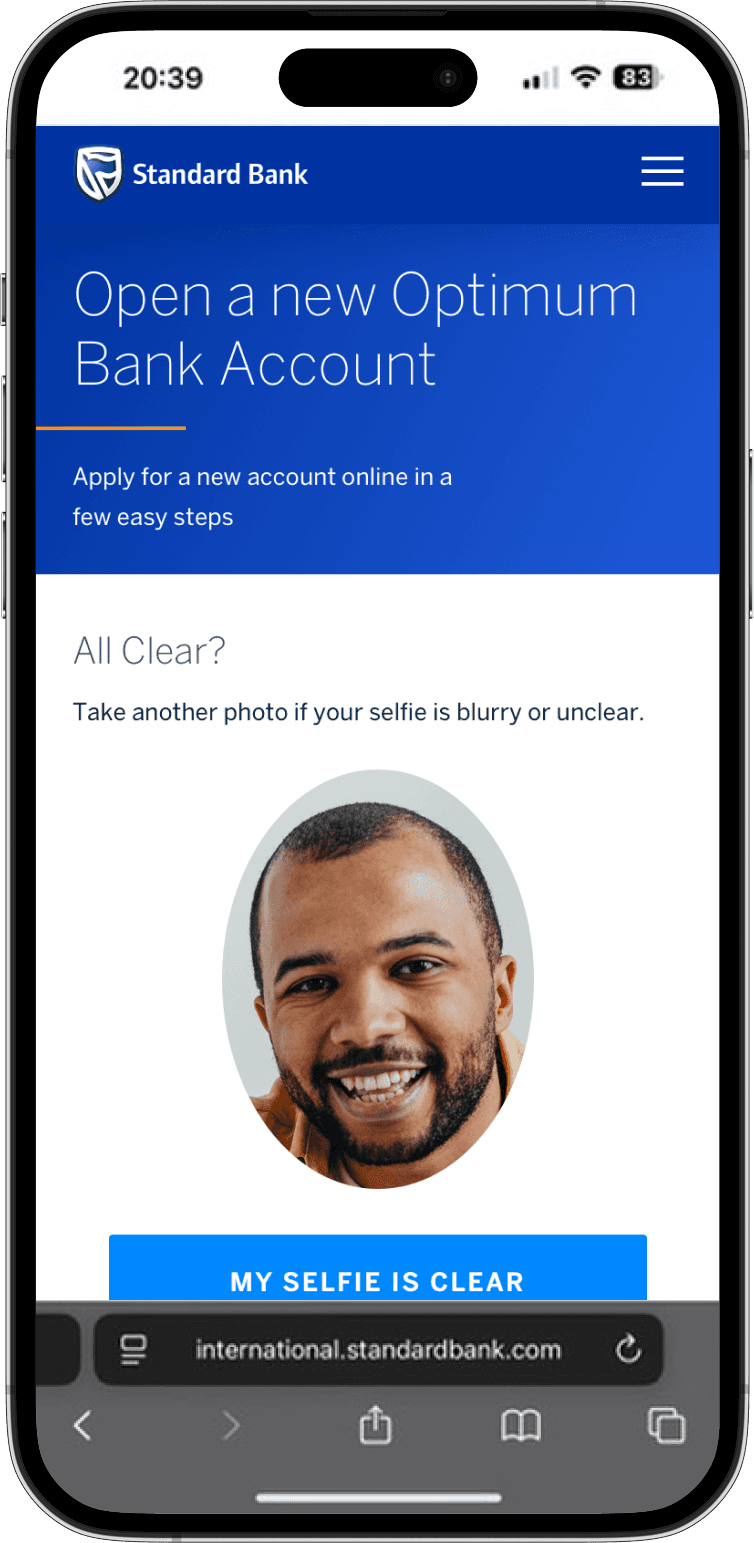
Check selfie
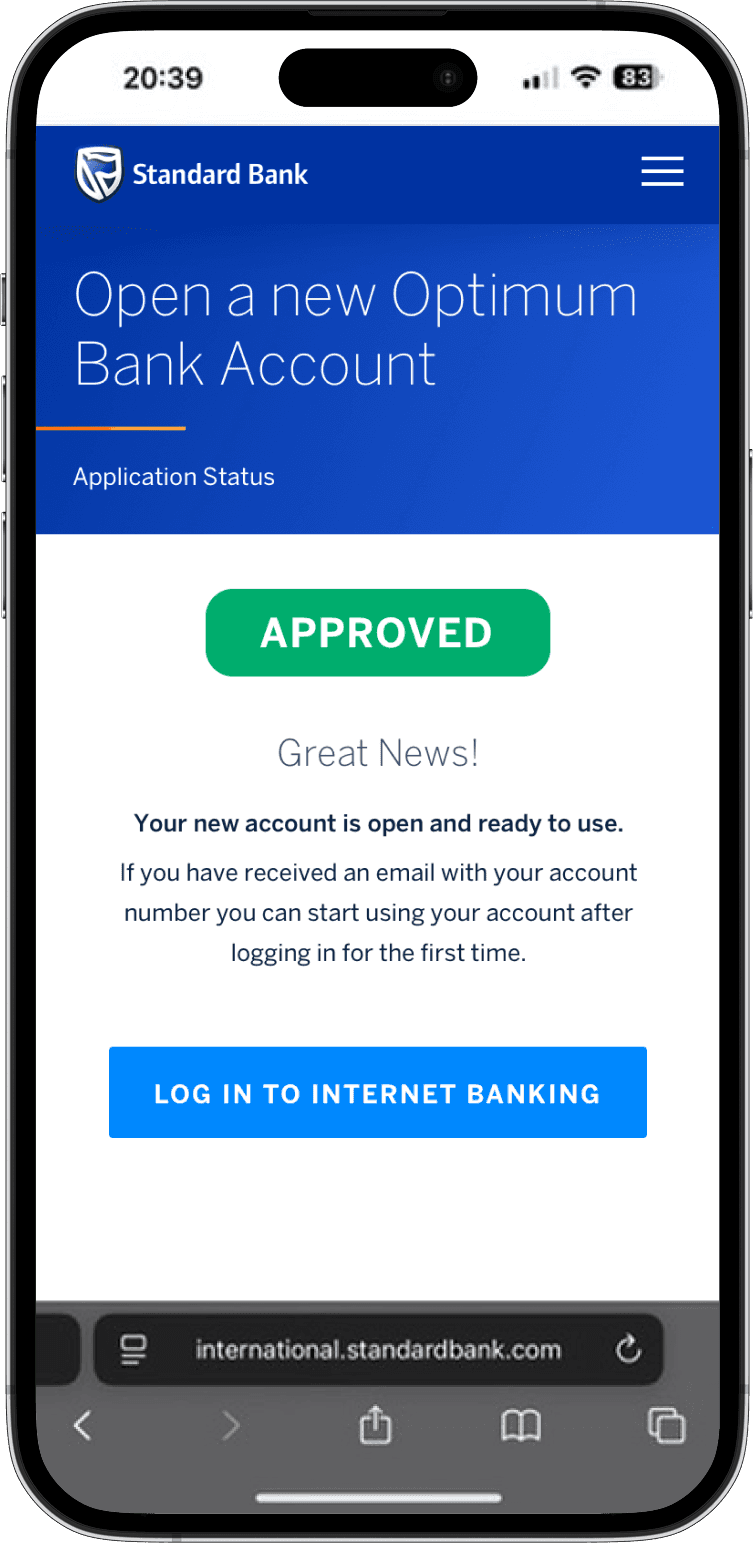
Account approved
Handover & enablement
Beyond design delivery, I supported rollout and adoption.
Internal workshops and documentation
Stakeholder alignment and handover presentations
Design rationale captured to support future iteration
To support long-term adoption, design decisions were documented and handed over with clear rationale, not just final screens, so internal teams could evolve the experience without reintroducing earlier issues.
Presentation cover
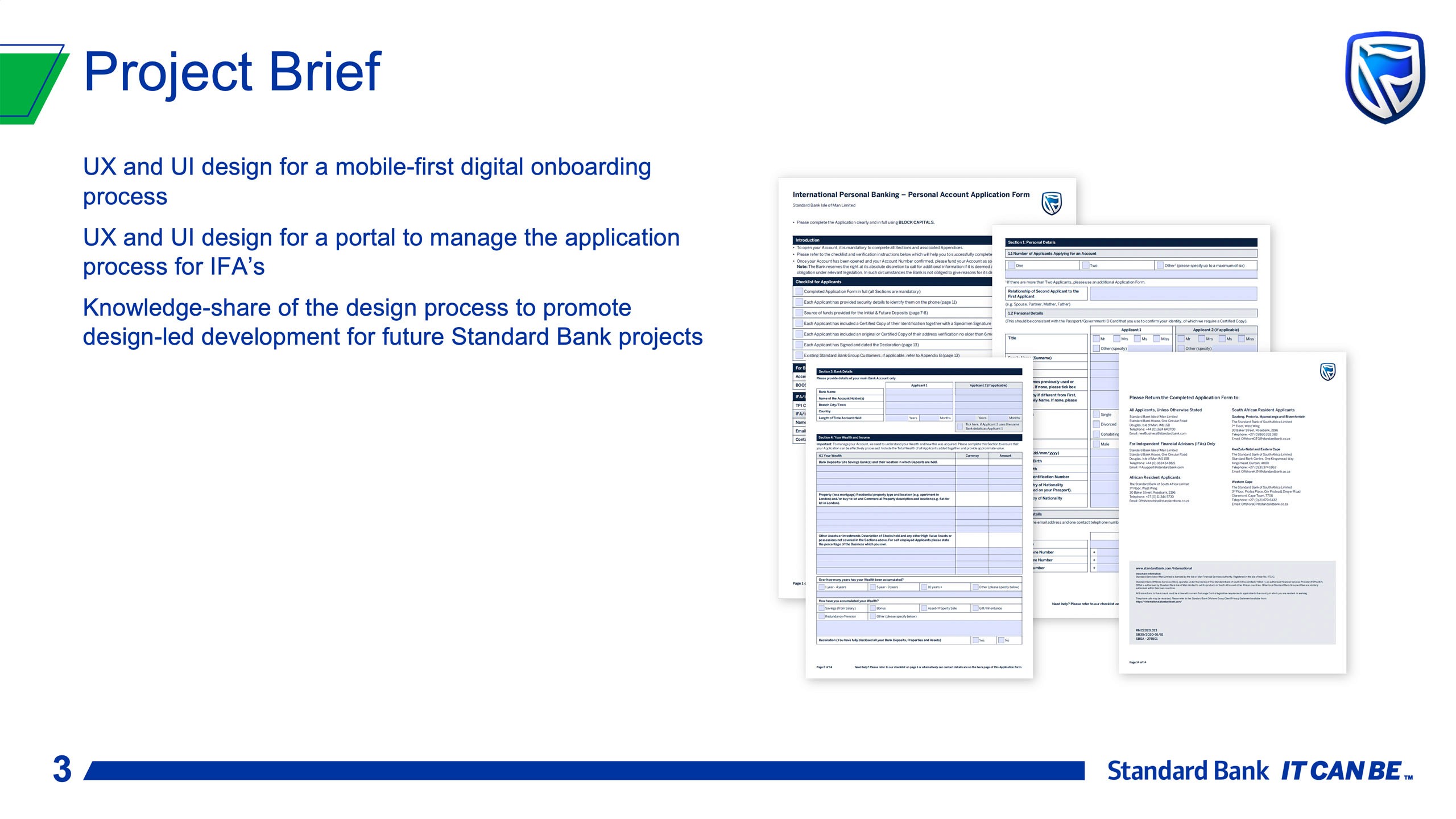
Project brief (simplified))
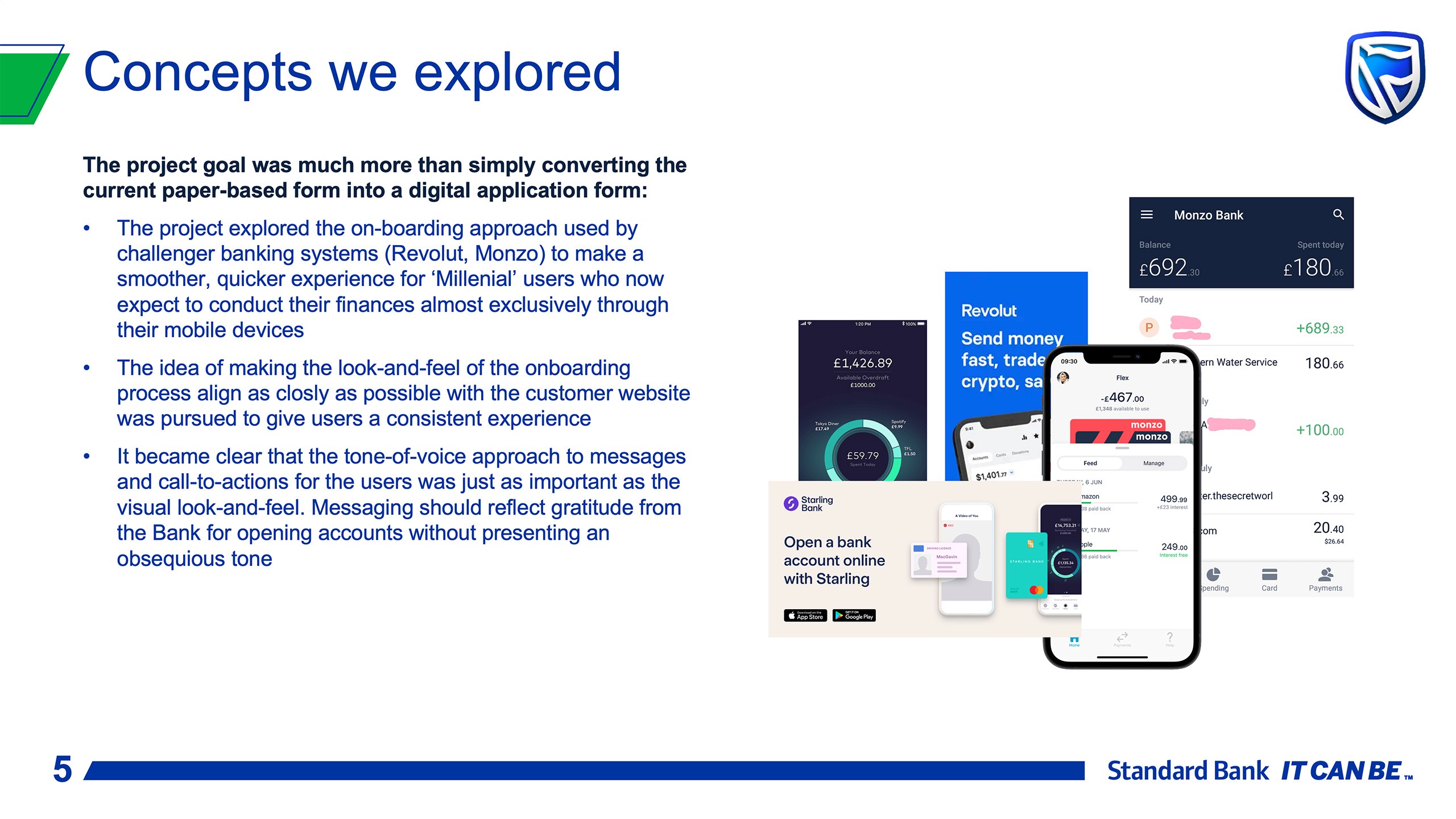
Concepts explored
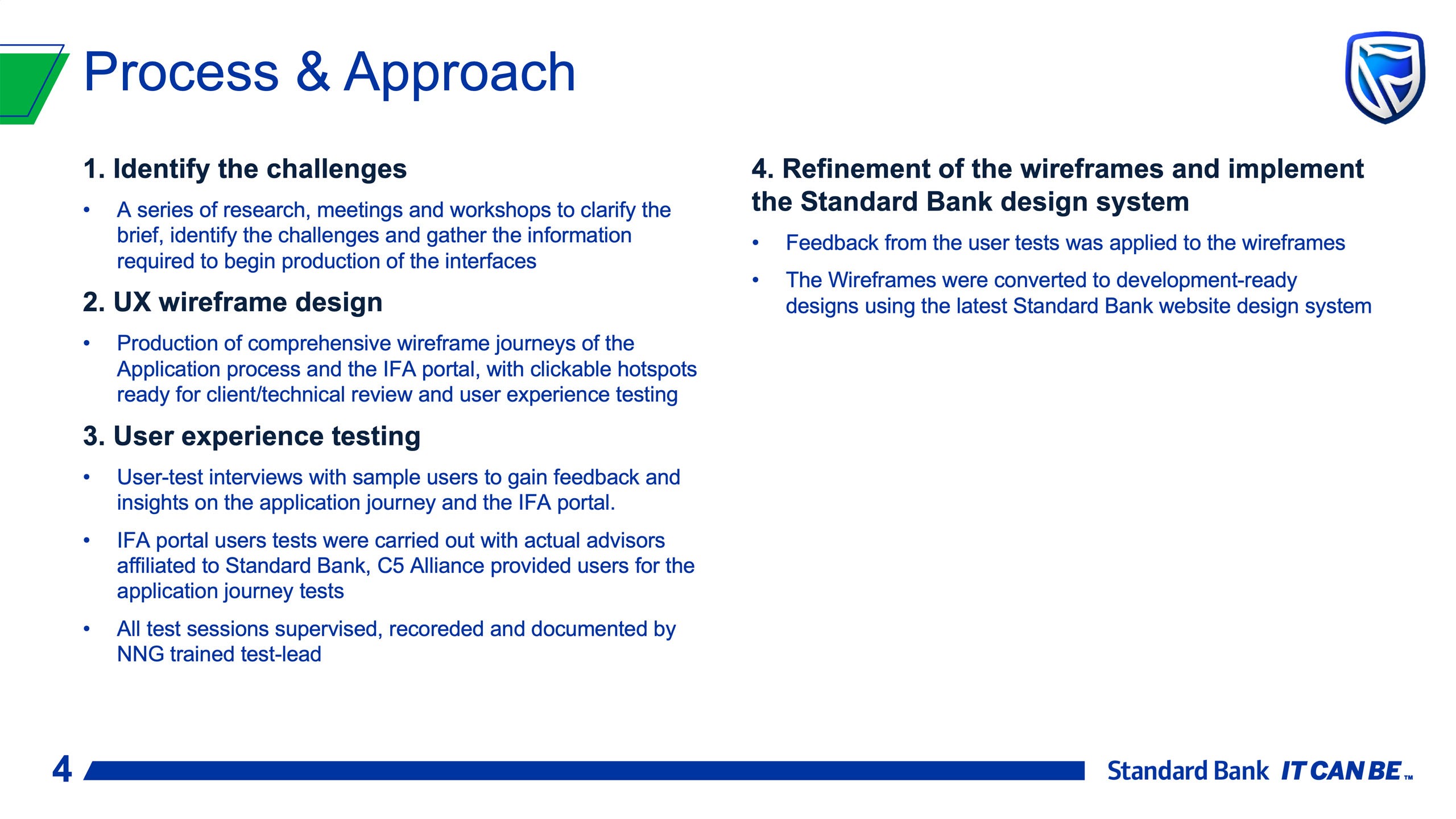
Process & approach
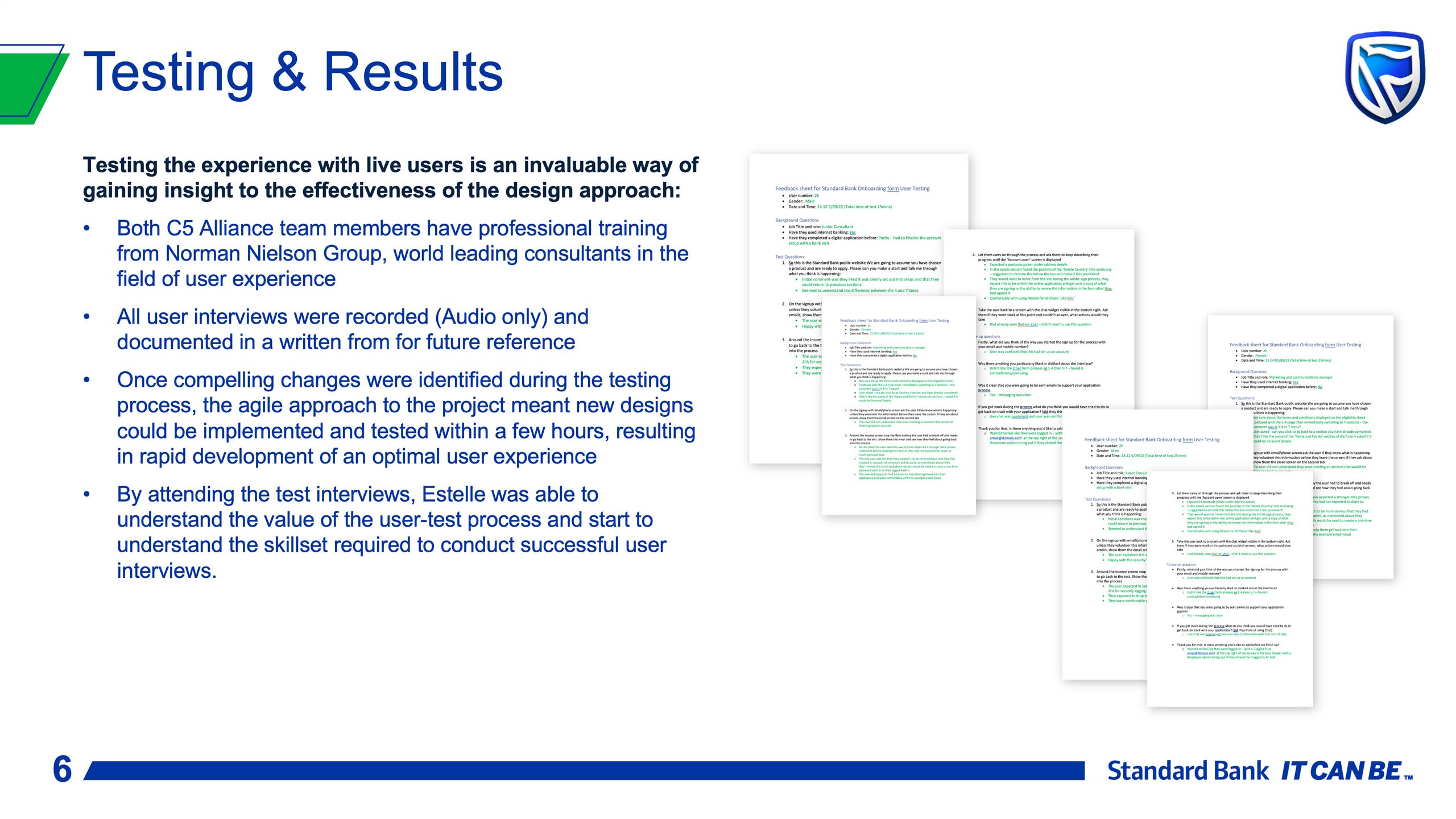
Testing & results
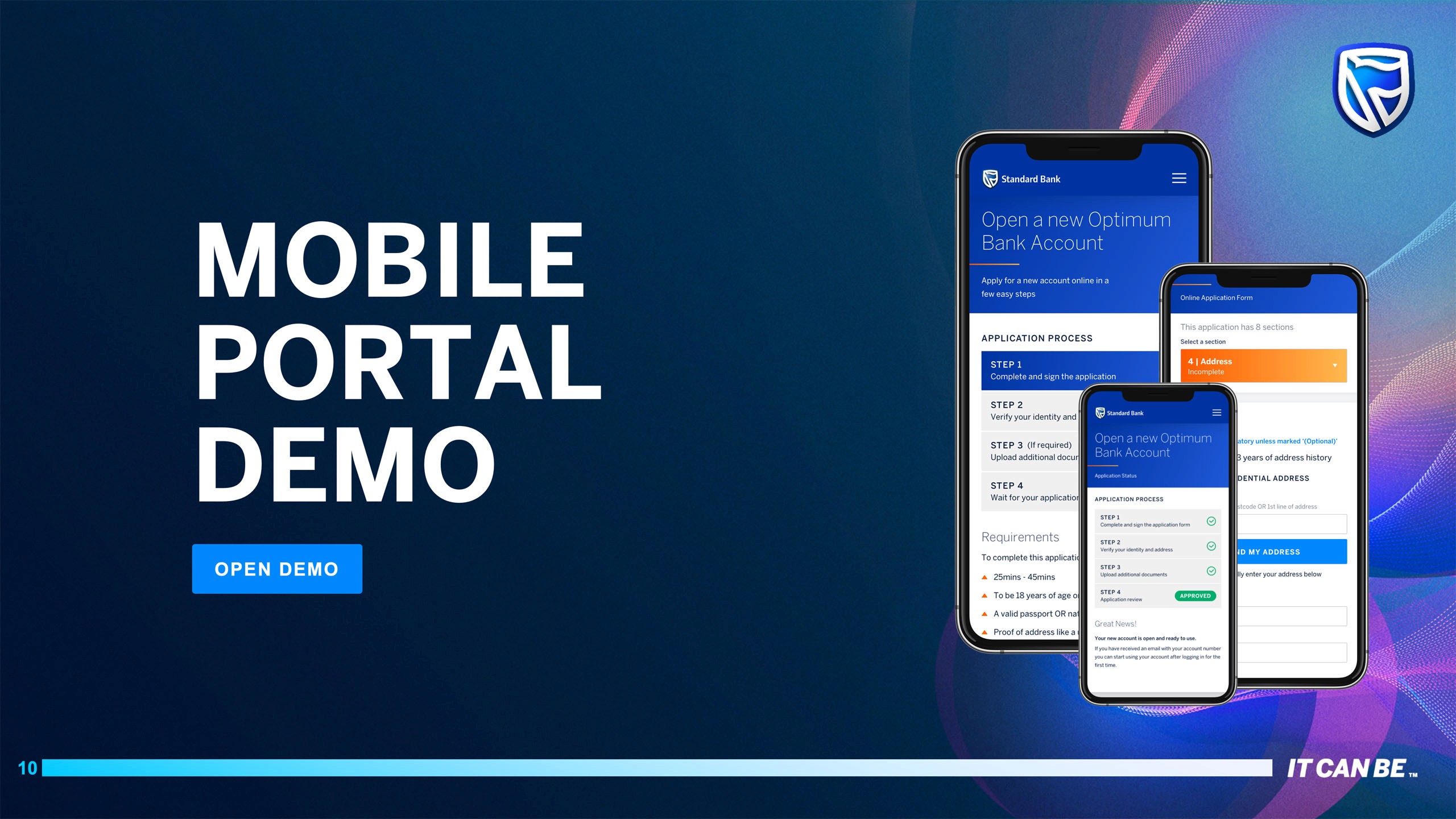
Applications form demo
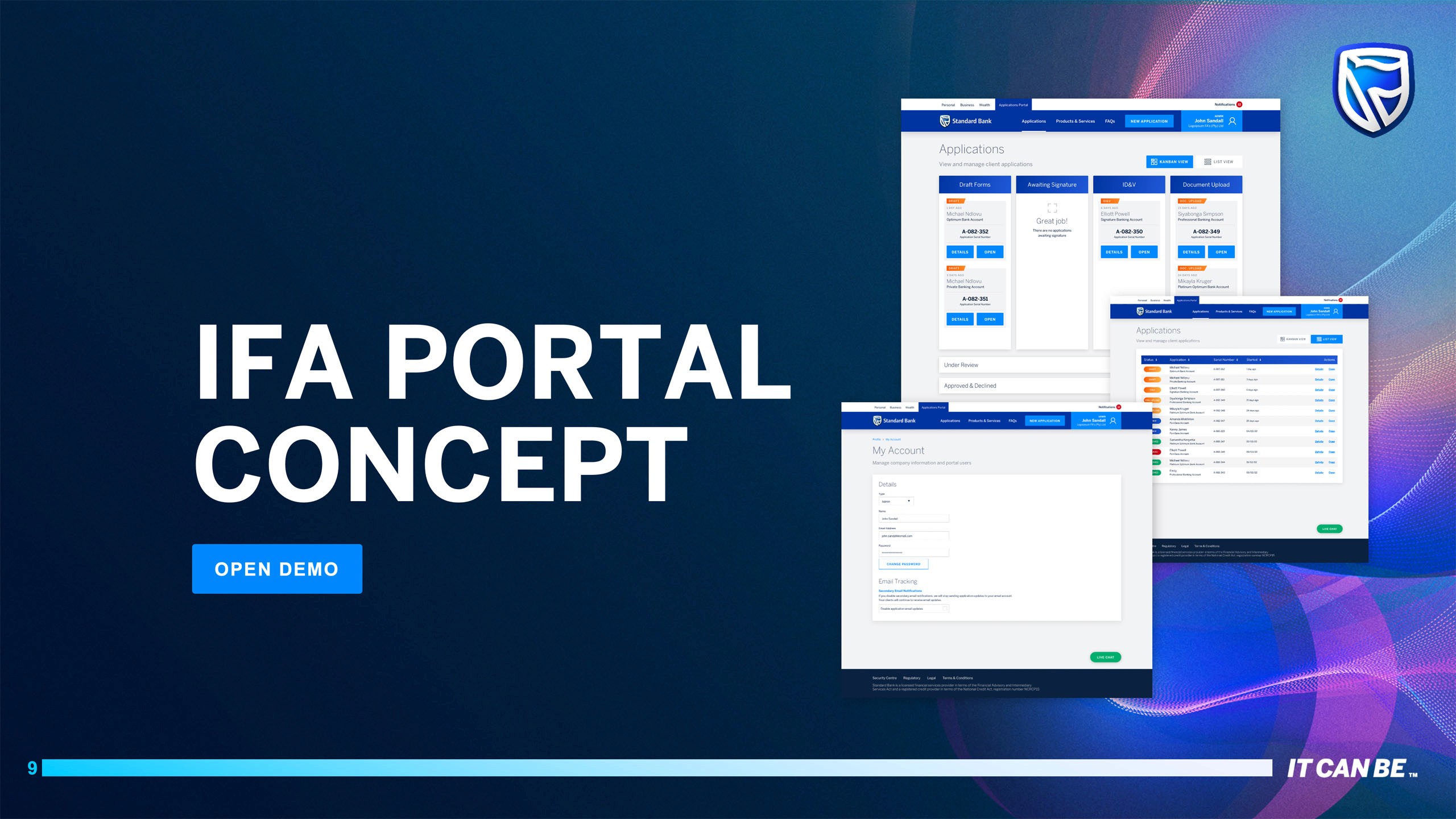
IFA Portal demo
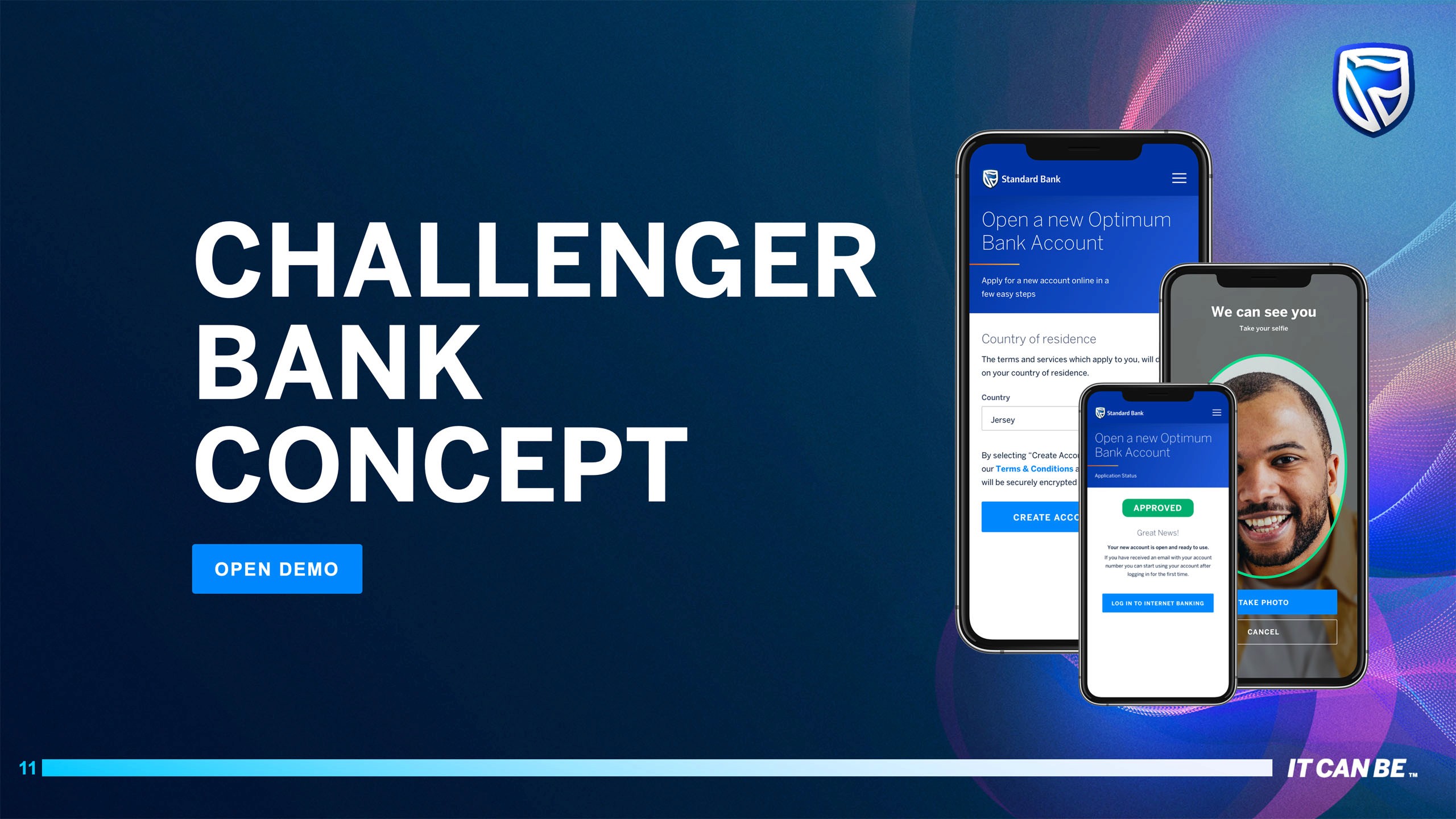
Challenger bank concept demo

Thank you, closing slide
Outcomes
Projected onboarding completion time reduced from days to under 45 minutes.
Estimated 70% reduction in manual data re-entry for operations teams.
Error rates in submitted applications dropped measurably in pilot testing.
Stronger alignment between UX, compliance, and engineering teams.
A shared vision for how onboarding could evolve beyond legacy constraints.
Onboarding became faster, clearer, and less error-prone, reducing operational rework and improving data quality across regions.
More importantly, teams aligned around a shared understanding of onboarding as a system, not a sequence of forms.