Contents
Introduction
Mystery Quest was an experiment in designing for the real world.
I founded and led Mystery Quest to explore whether a hybrid digital-physical experience could create deeper engagement than traditional entertainment formats like escape rooms, treasure hunts, or purely digital games. The product combined mobile UX, narrative design, and location-based mechanics to encourage people to explore real places while solving puzzles and progressing through a story.
This case study focuses on product strategy, UX design, real-world validation, and the trade-offs involved in building a zero-to-one platform under startup constraints.
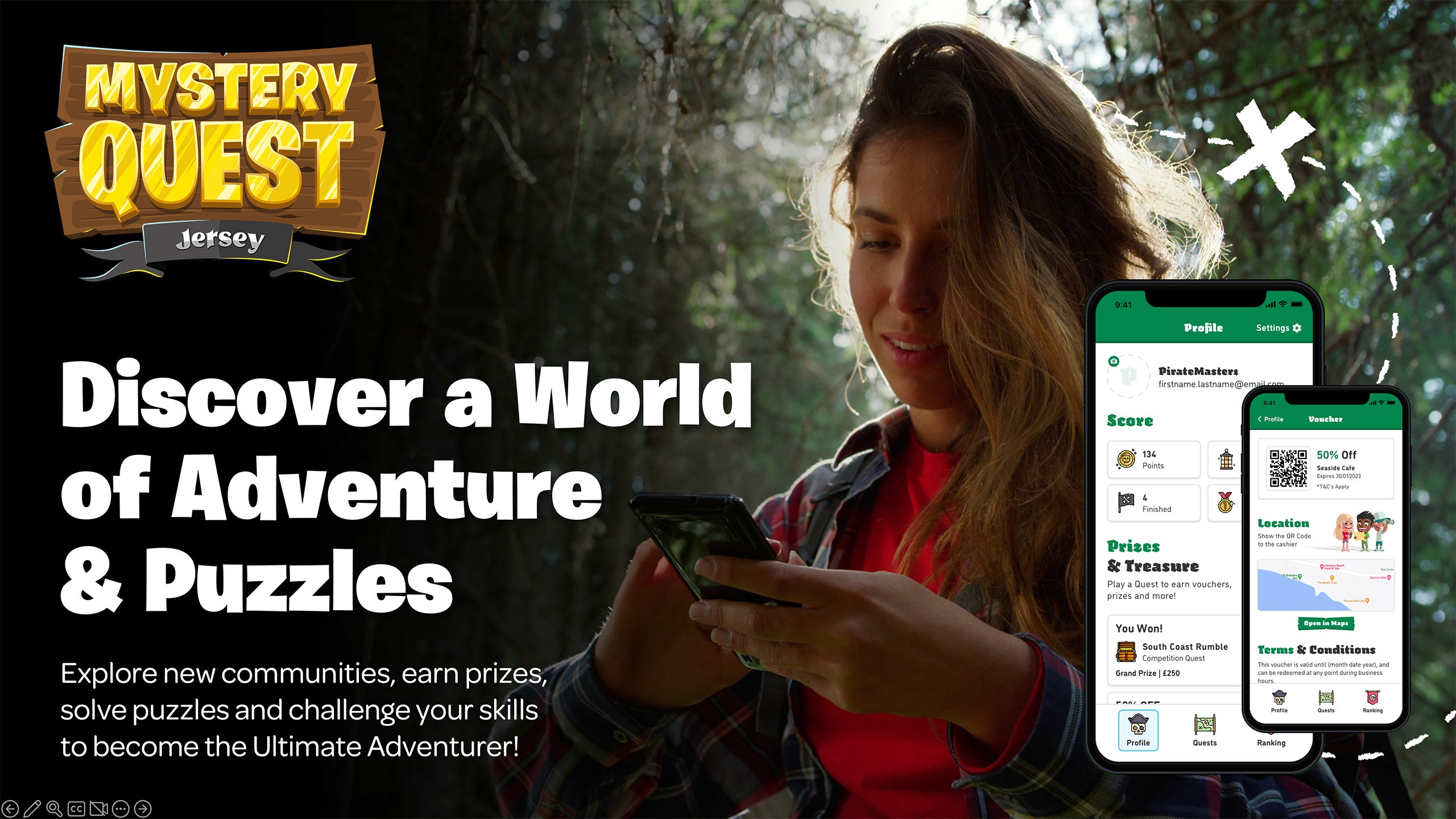
Pitch presentation cover
The challenge
Local entertainment options were declining, repetitive, or difficult to scale.
Existing alternatives fell into two camps:
Physical experiences offered immersion but were operationally heavy and hard to iterate.
Digital games scaled easily but lacked emotional connection to place, people, and community.
The challenge was to design a product that:
Encouraged outdoor exploration and social play.
Scaled beyond one-off events.
Balanced narrative depth with usability in uncontrolled environments.
Could be commercially viable, not just novel.
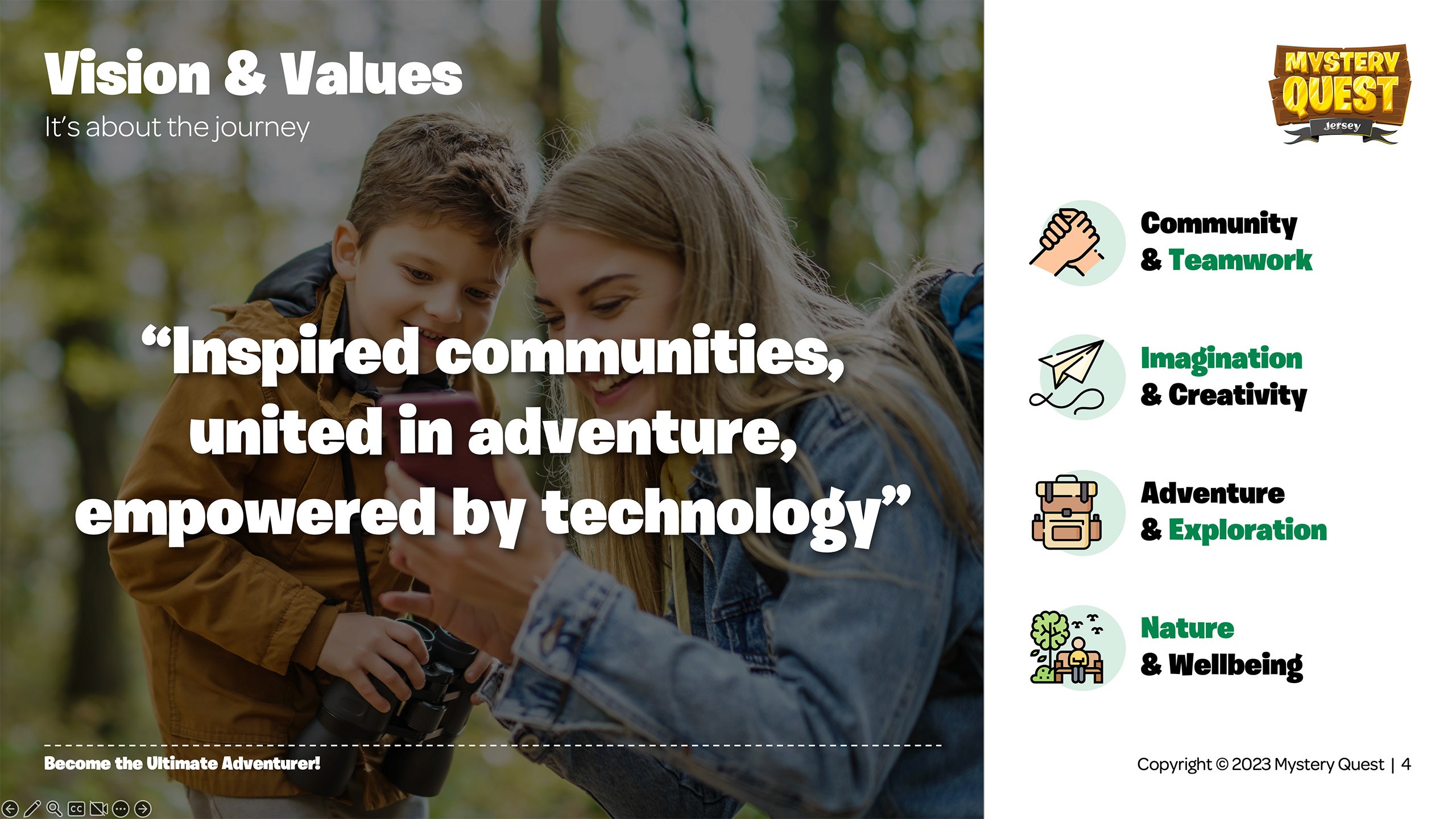
Vision and values slide
My role
As founder and product lead, I owned the end-to-end lifecycle of Mystery Quest:
Defined product vision, positioning, and roadmap.
Designed all core UX flows across mobile, web, and physical touchpoints.
Led brand, narrative, and experience design.
Planned and conducted private and internal testing in controlled real-world scenarios.
Collaborated with external developers and creative agencies.
Oversaw delivery, QA, and iteration cycles.
Managed business, legal, and operational considerations.
Team
2 x F&F Investors
2 x Angel Investors
2 x Developers (External Partner)
1 x Marketing Agency (External Partner)
Product strategy & direction
The early product strategy focused on validating one core hypothesis:
Would people engage more deeply with a game that blended real-world exploration, narrative, and digital interaction than with traditional entertainment formats?
Key strategic decisions included:
Location-first design
Real places drove the experience, not AR gimmicks.
Narrative as structure
Story provided motivation and pacing, not just flavour.
Progressive rewards
Small wins throughout the journey to reduce abandonment.
Focused scope
Early development prioritised core gameplay and navigation, while more speculative features (AR, multiplayer, community creation) were deferred.
A formal business plan and pitch materials were produced to align stakeholders and secure early investment, however, in hindsight the MVP was not lean enough.
Business plan cover
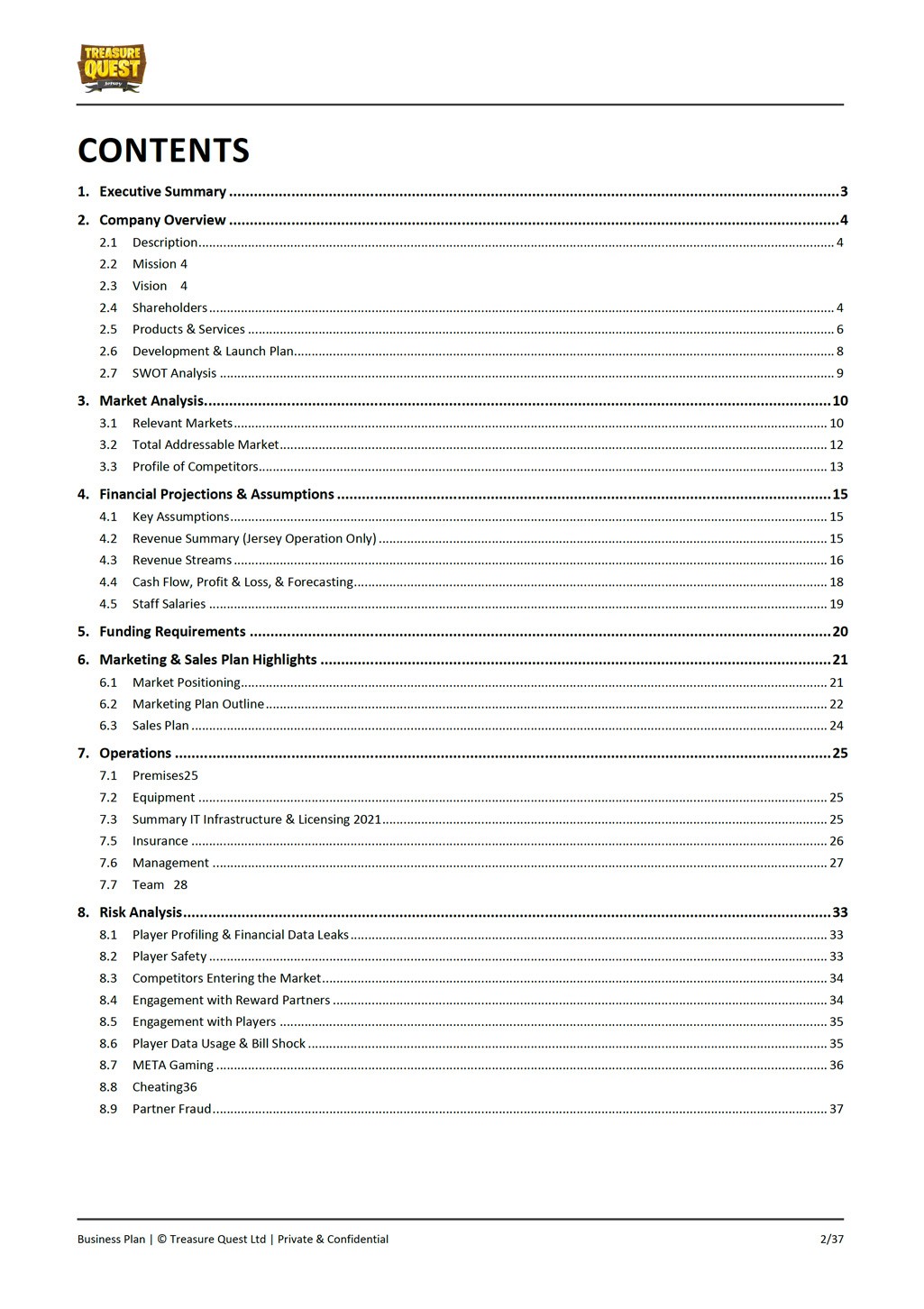
Business plan contents
What we thought was an MVP still carried too much platform, brand, and technical complexity to enable rapid validation.
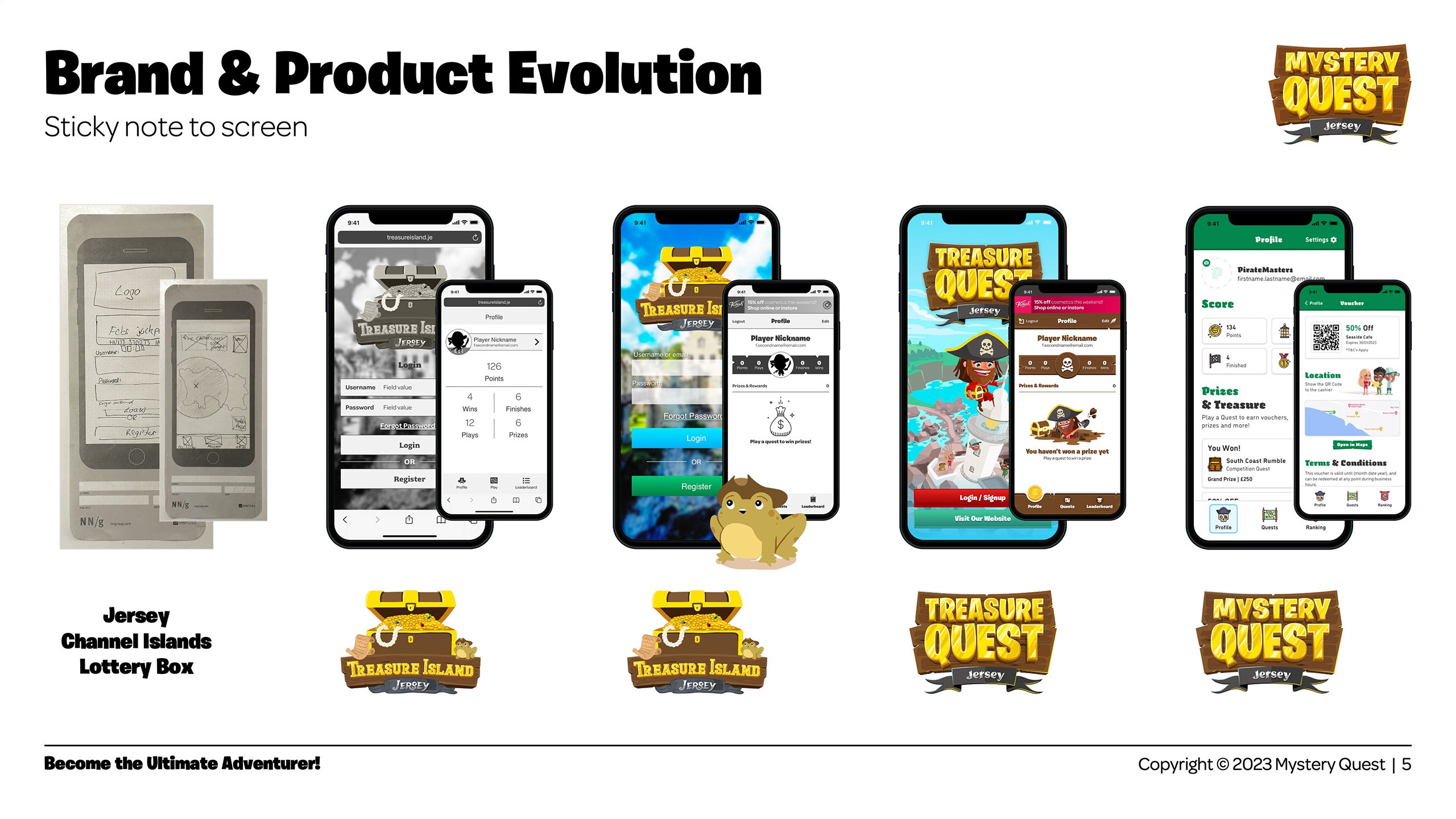
Early concepts went through several iterations before development began, primarily to remove practical and operational risk. Initial ideas involving physical objects were discarded in favour of GPS-based verification to improve fairness, scalability, and maintainability.
Brand & creative direction
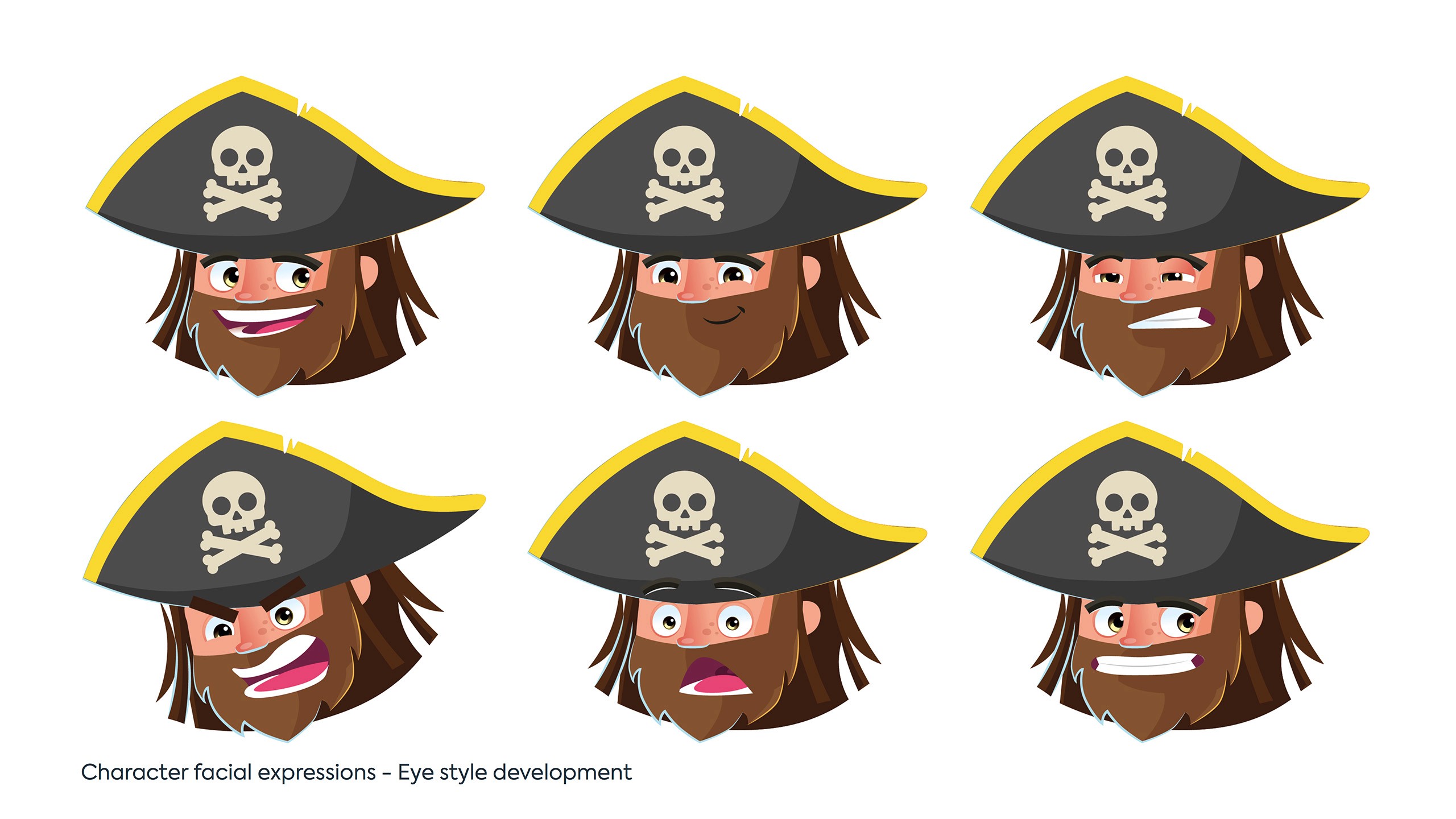
Brand and narrative were treated as functional UX components, not surface decoration.
The brand needed to feel:
Inviting, not intimidating
Playful, but credible
Inclusive across ages, abilities, and experience levels
I led brand exploration and development by setting creative direction and quality standards, including:
Defining the overall brand vision, tone, and positioning
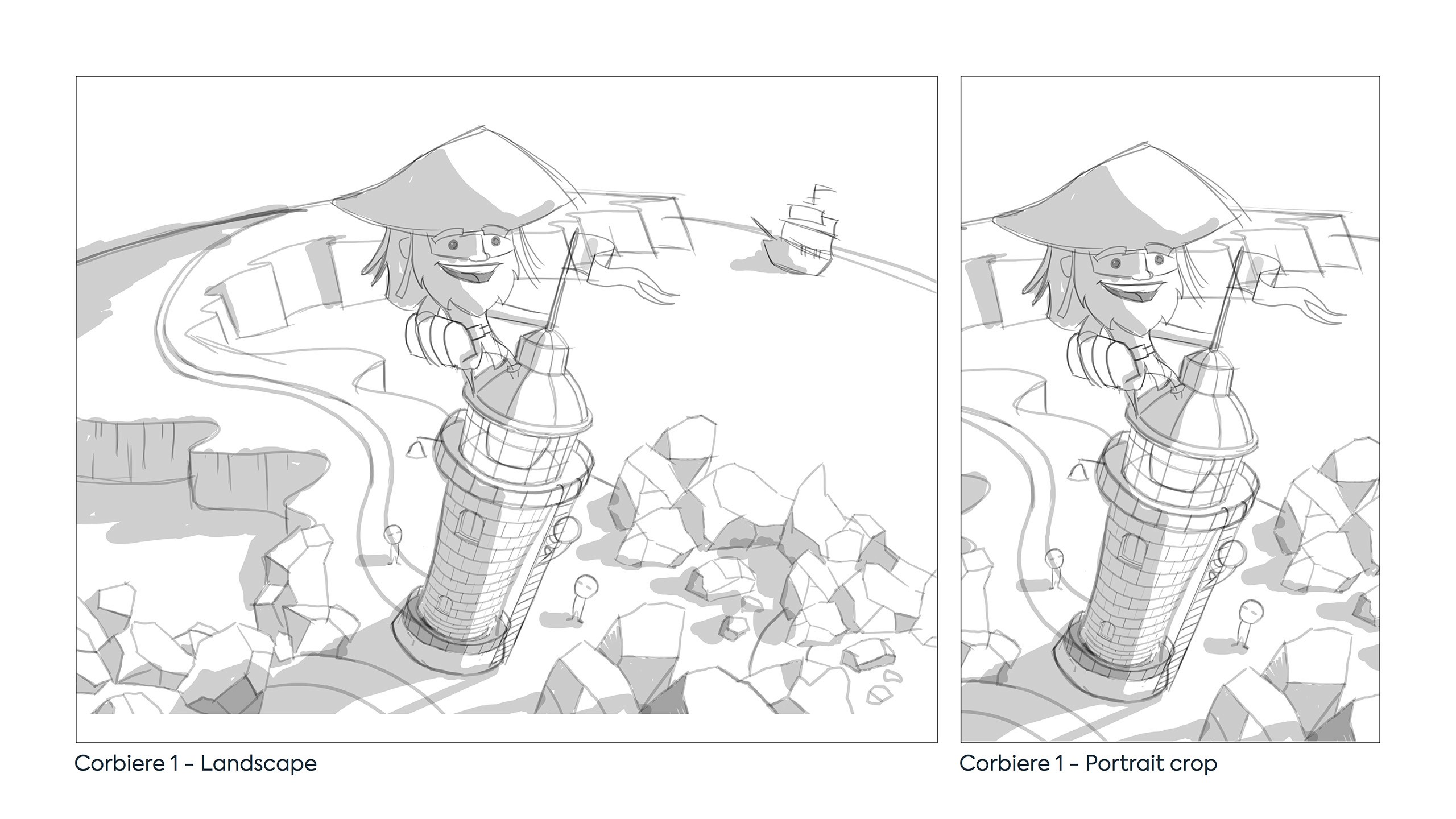
Producing early sketches, ideas, moodboards, and references
Guiding logo, illustration, character, and iconography exploration
Shaping narrative tone and storytelling principles
An external creative agency executed and iterated on the final visual assets, working closely to my vision, direction and feedback.
These elements informed UI decisions, onboarding language, in-game prompts, and even how clues were written.
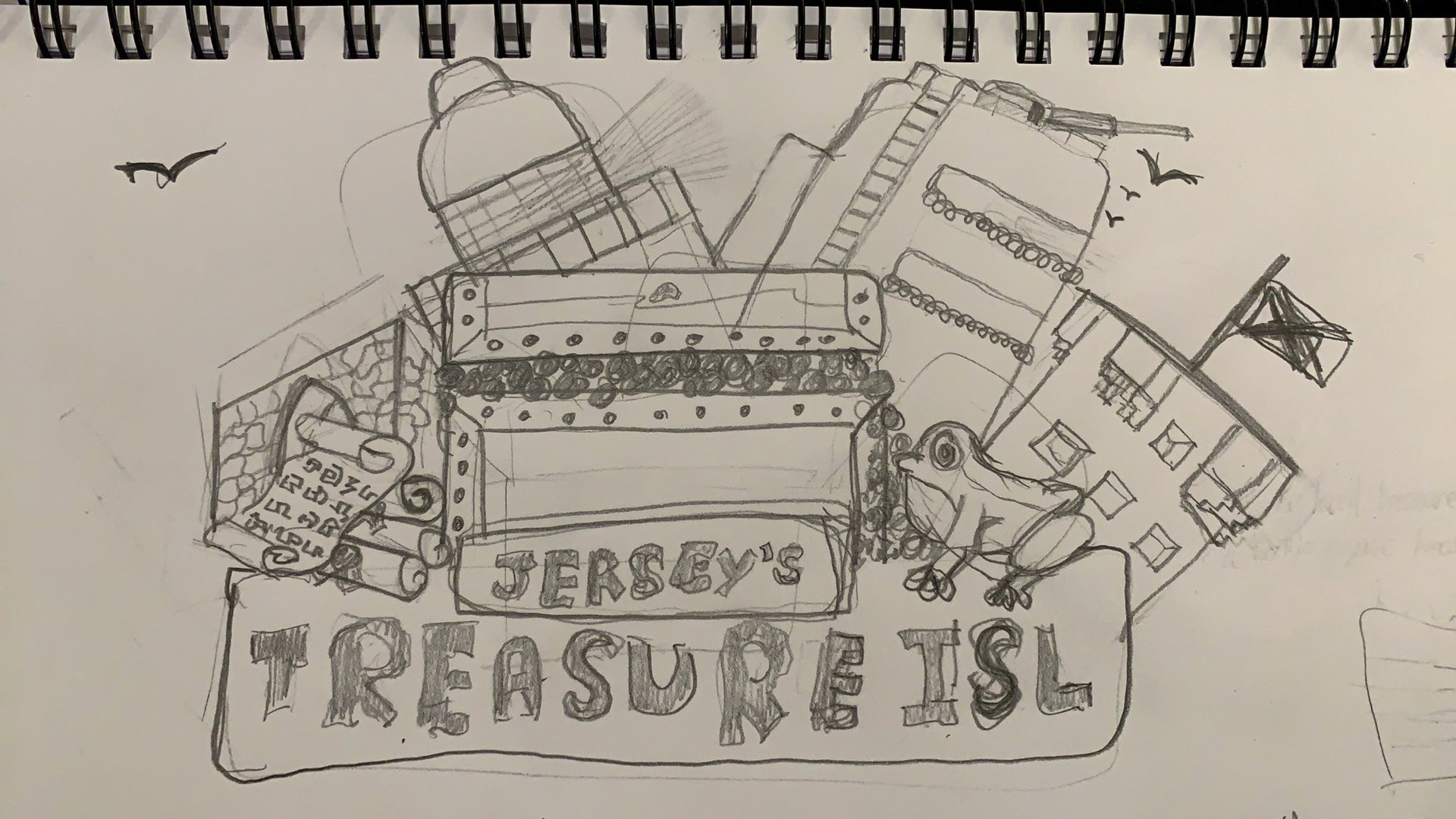
Logo first sketch
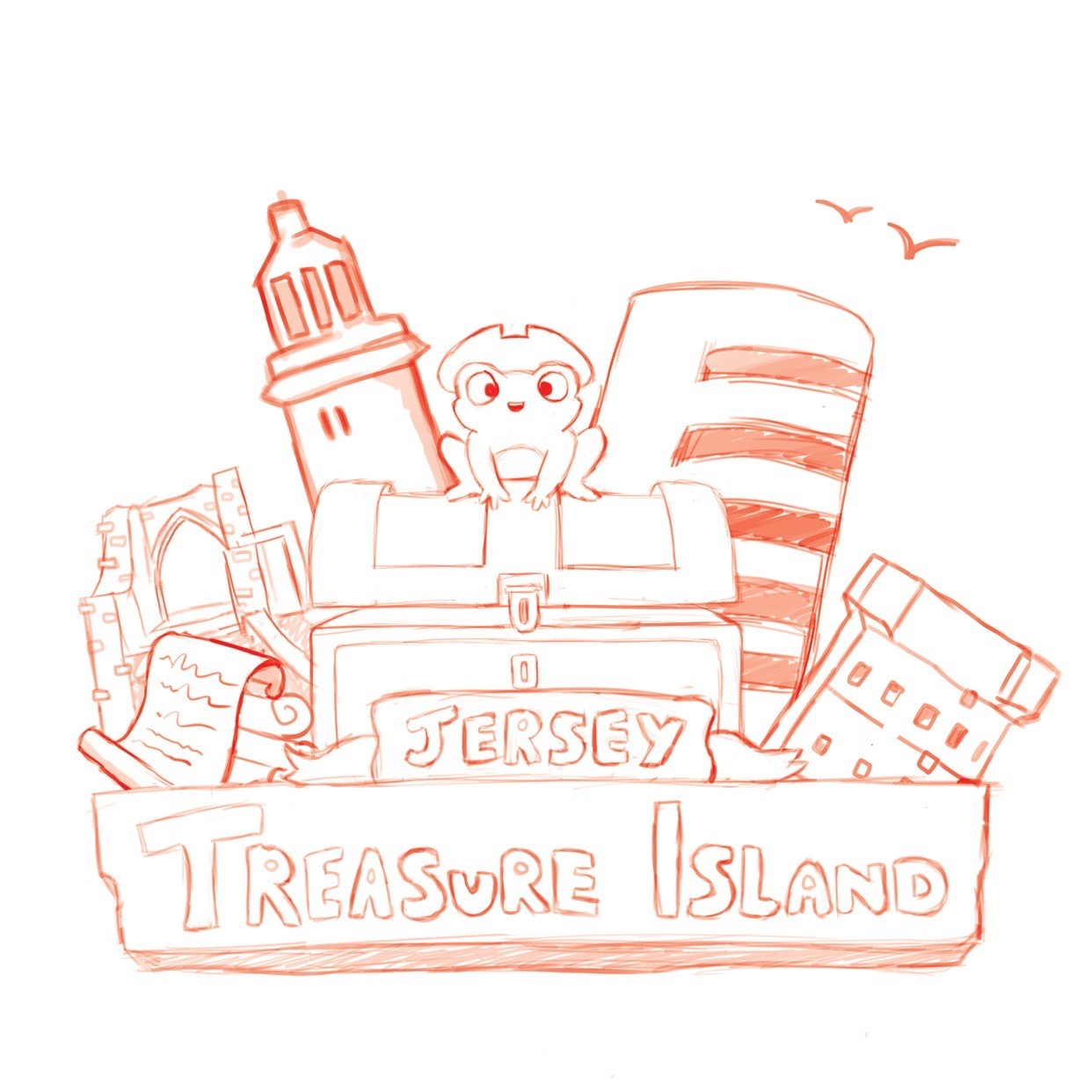
First digital sketch
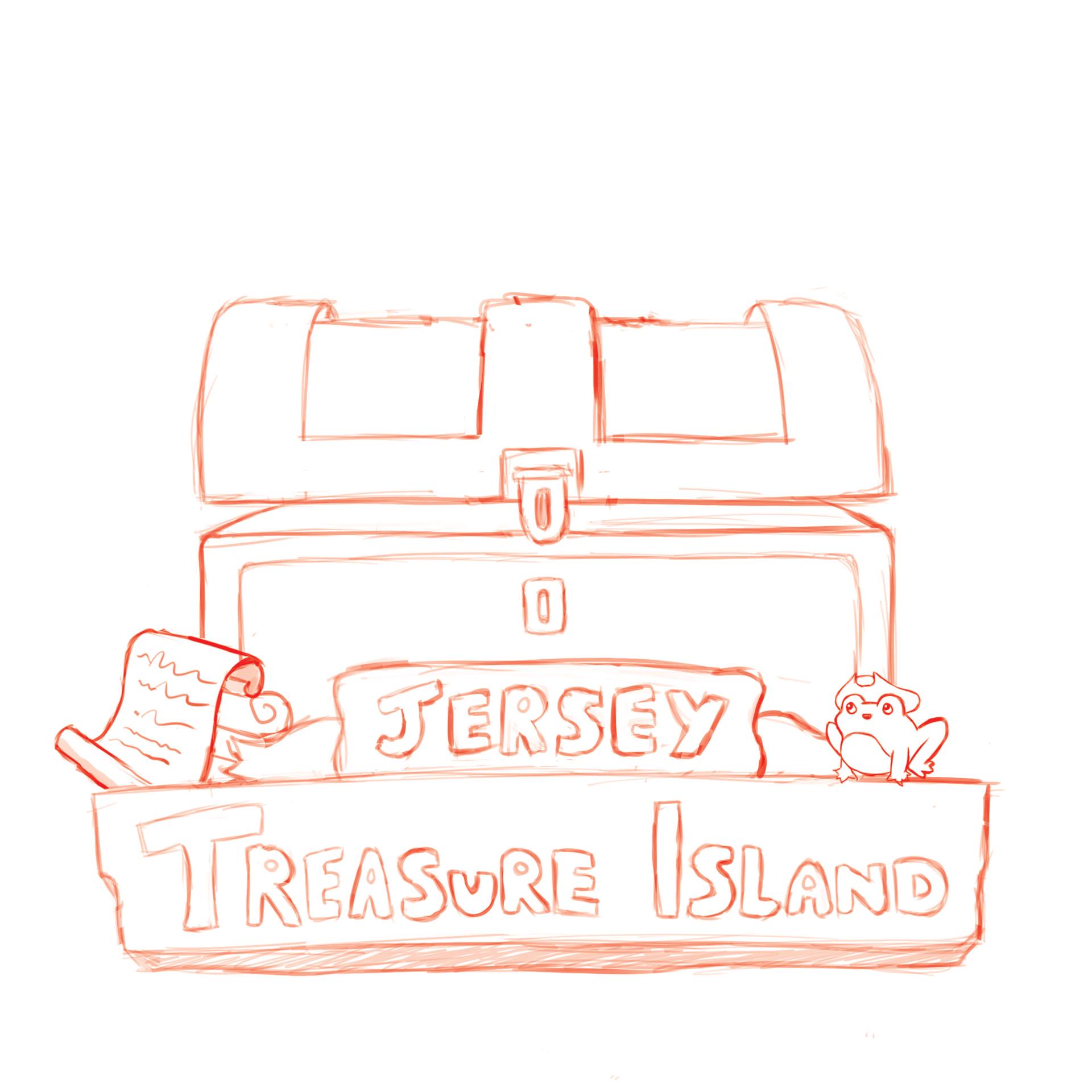
Digital sketch, exploring other options
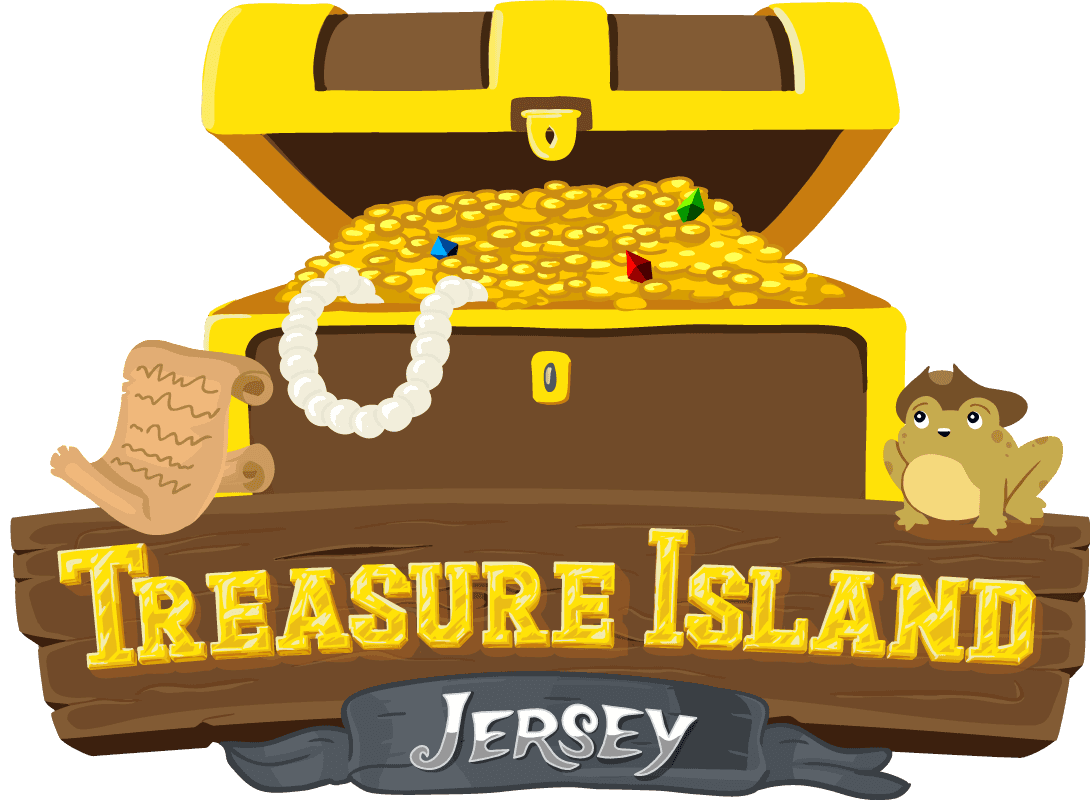
Early digital render
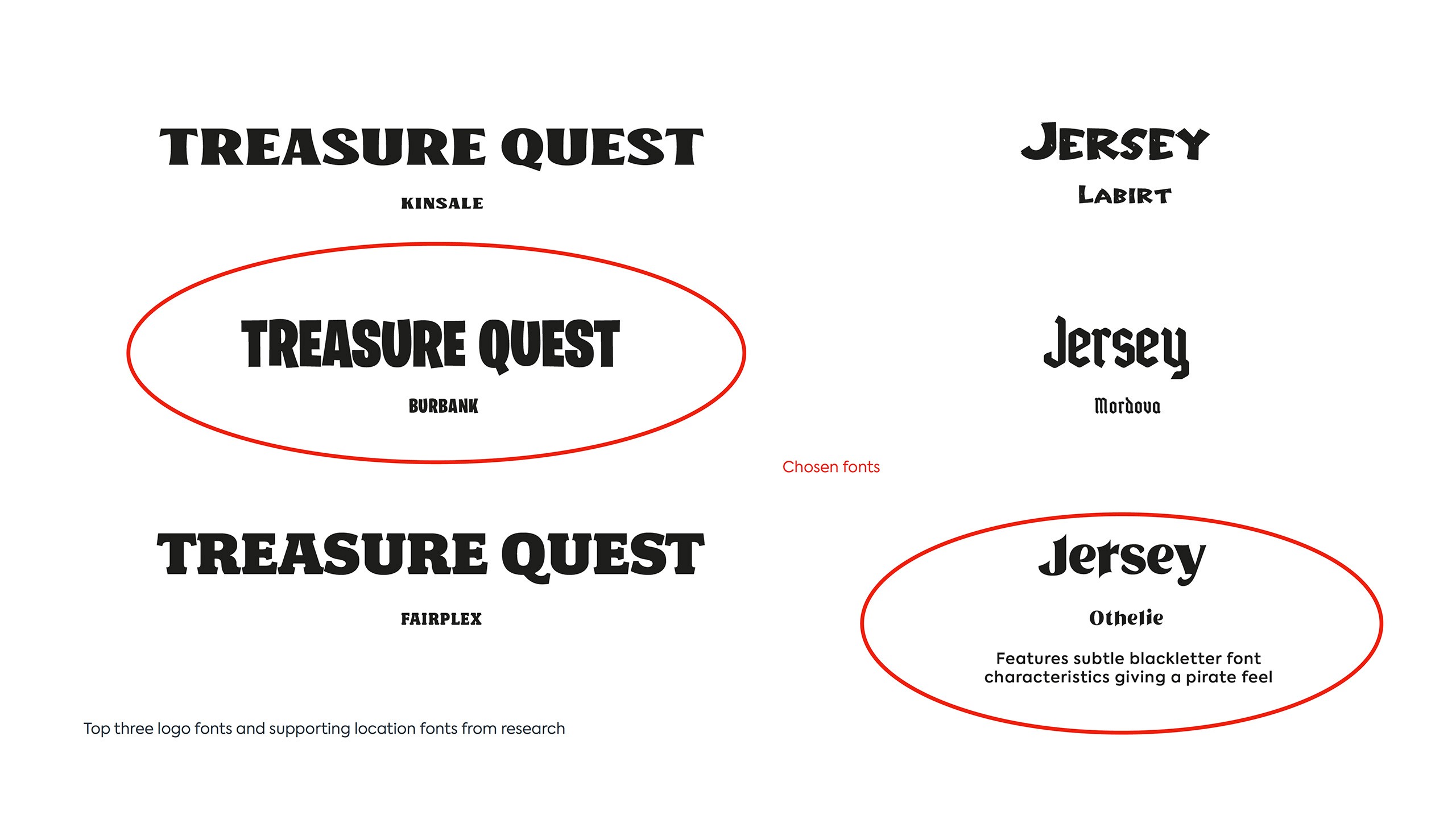
Typography exploration
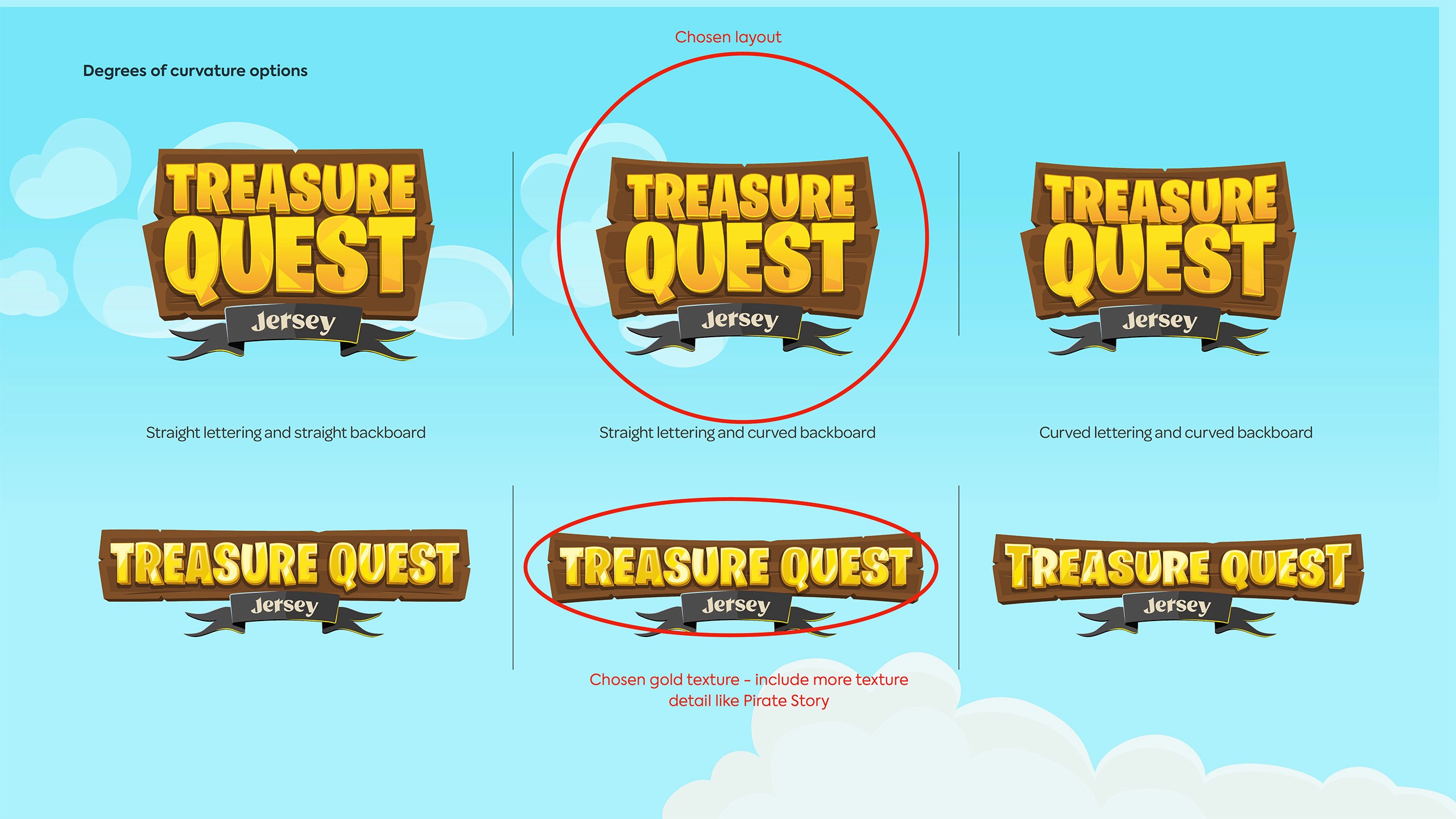
Typography exploration
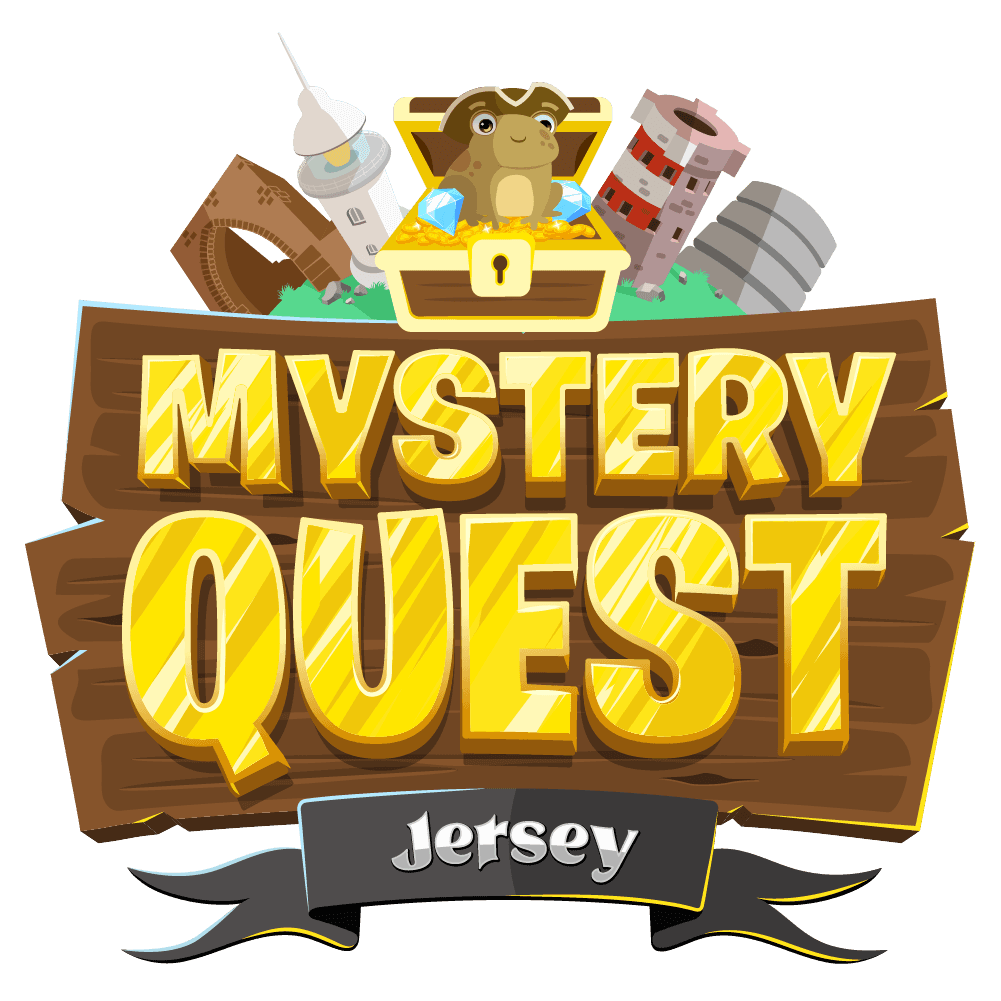
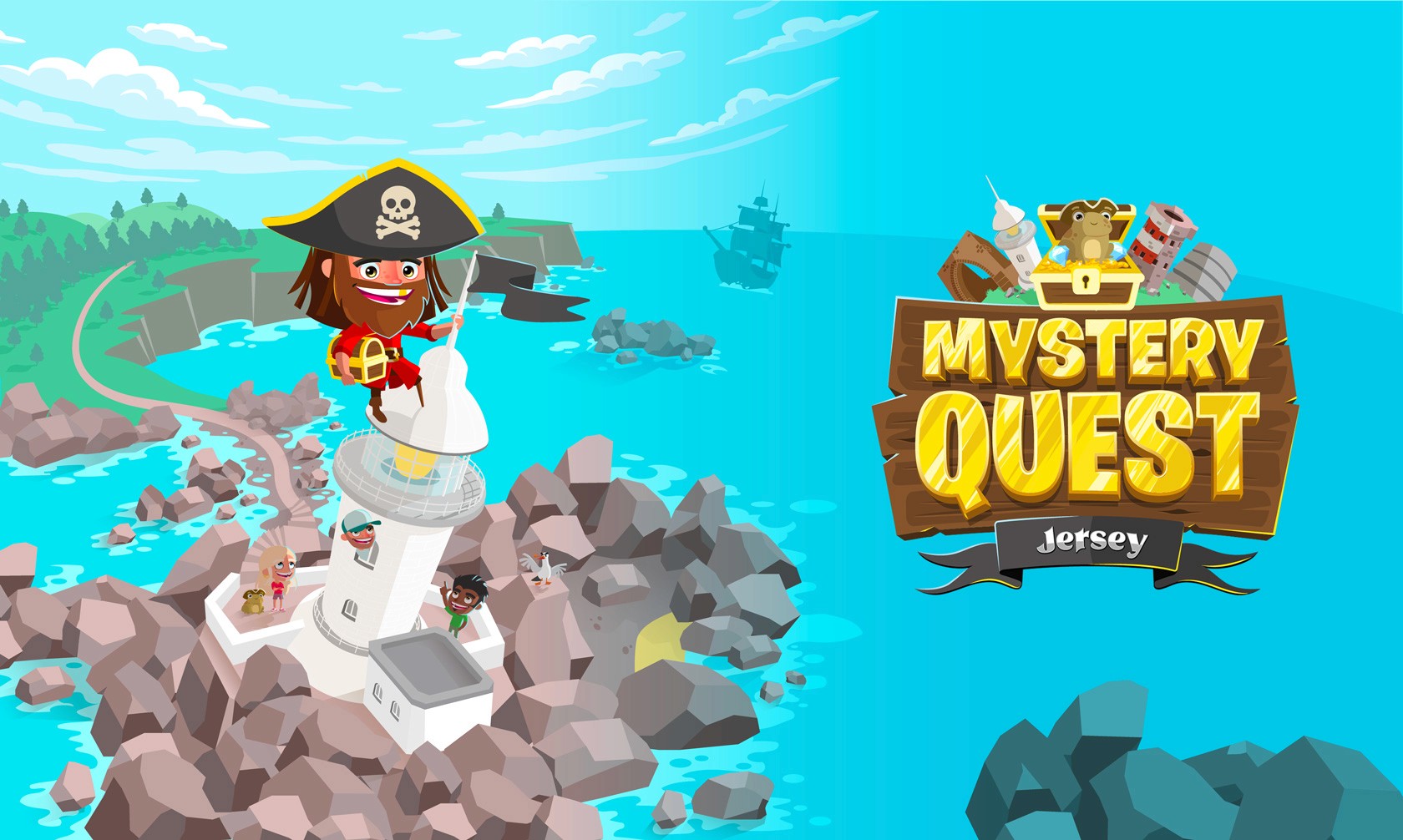
Full logo with illustrations
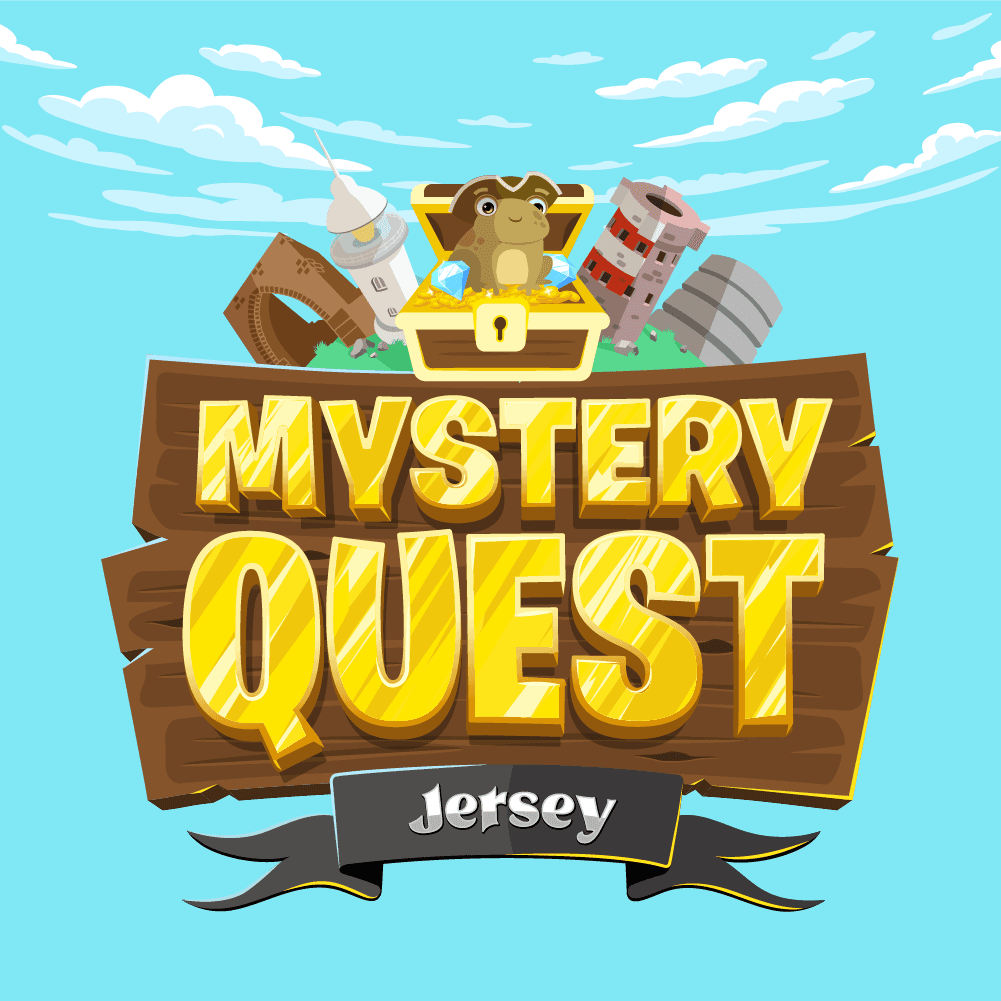
Full logo on sky background
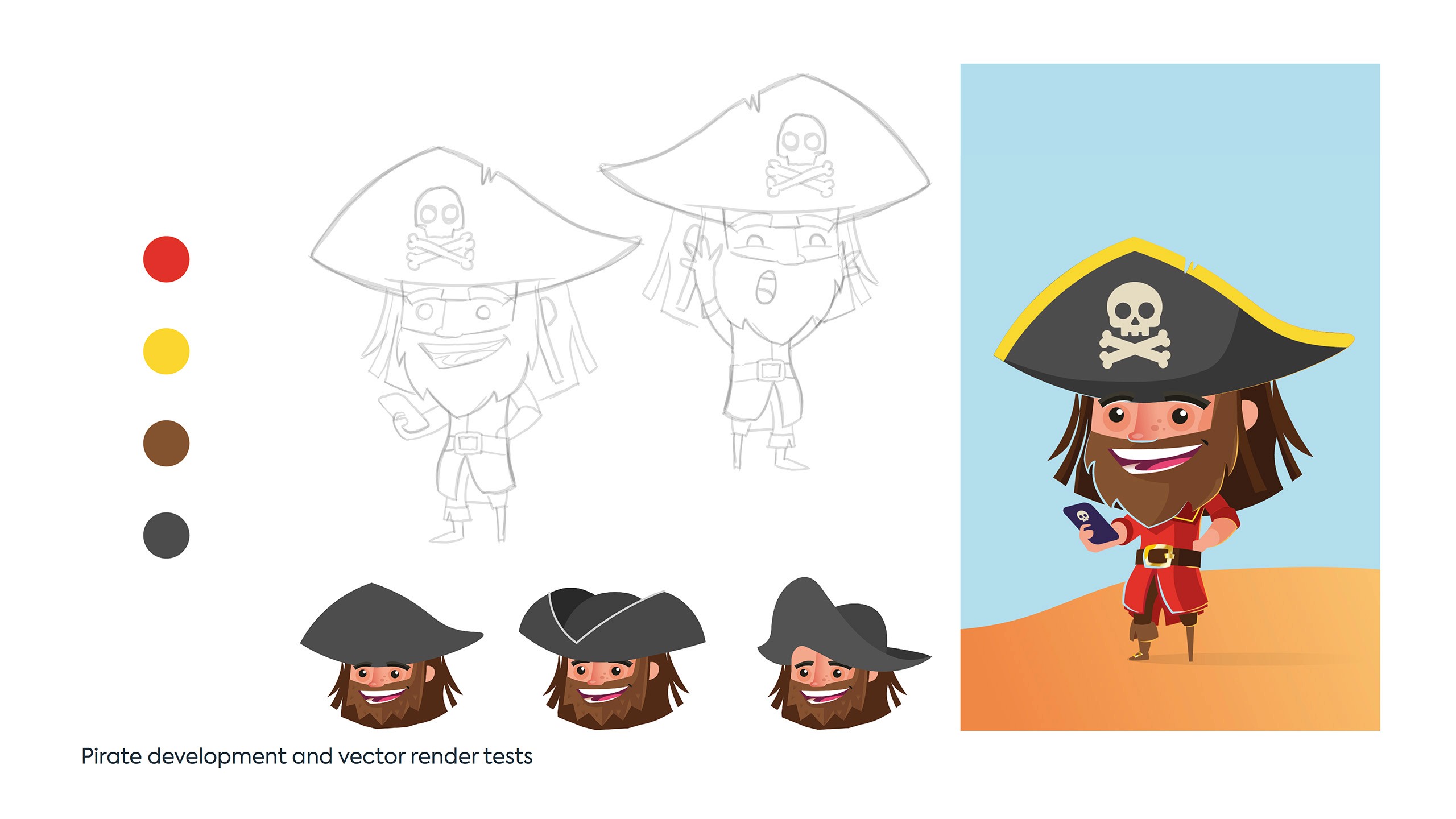
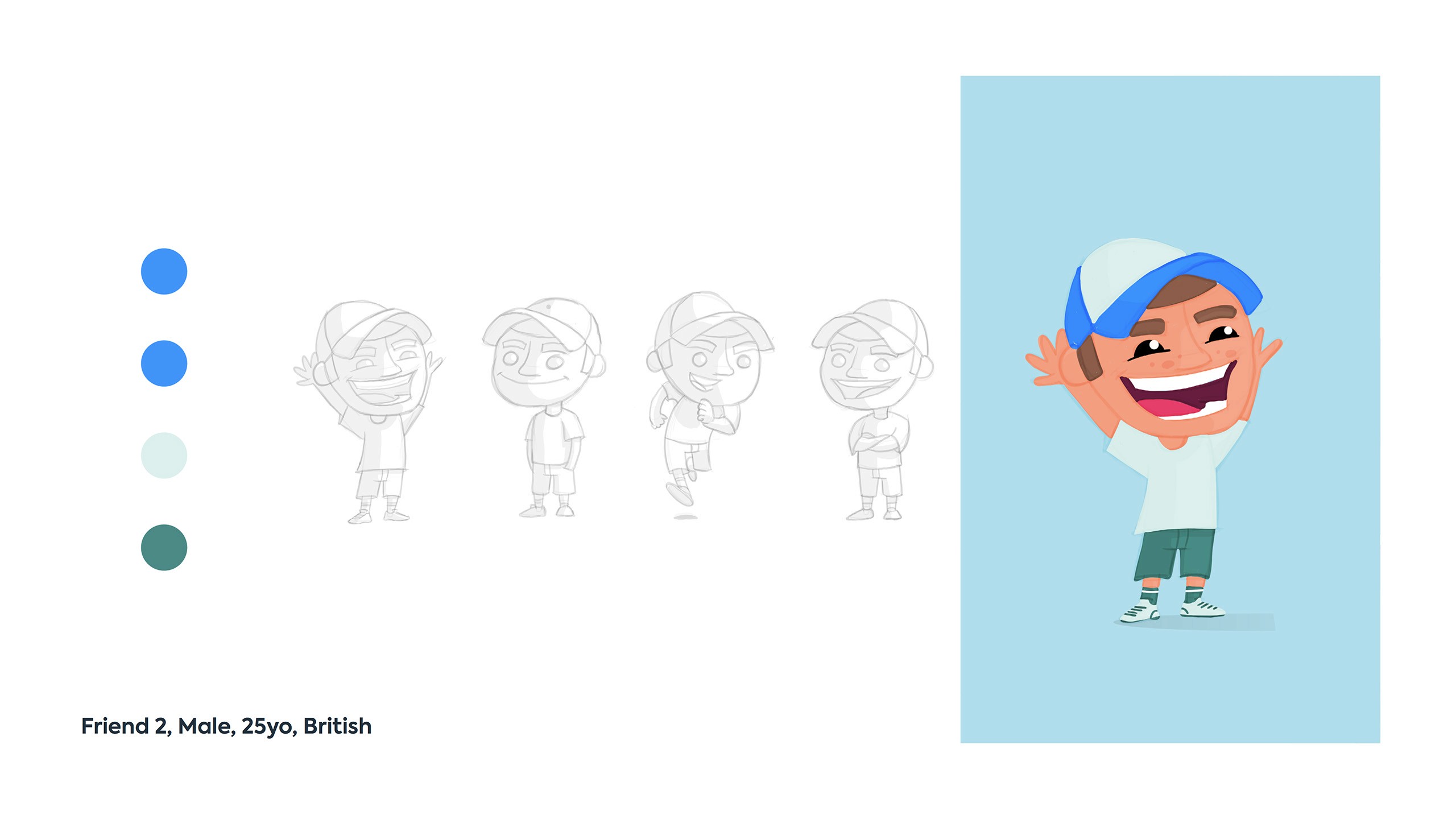
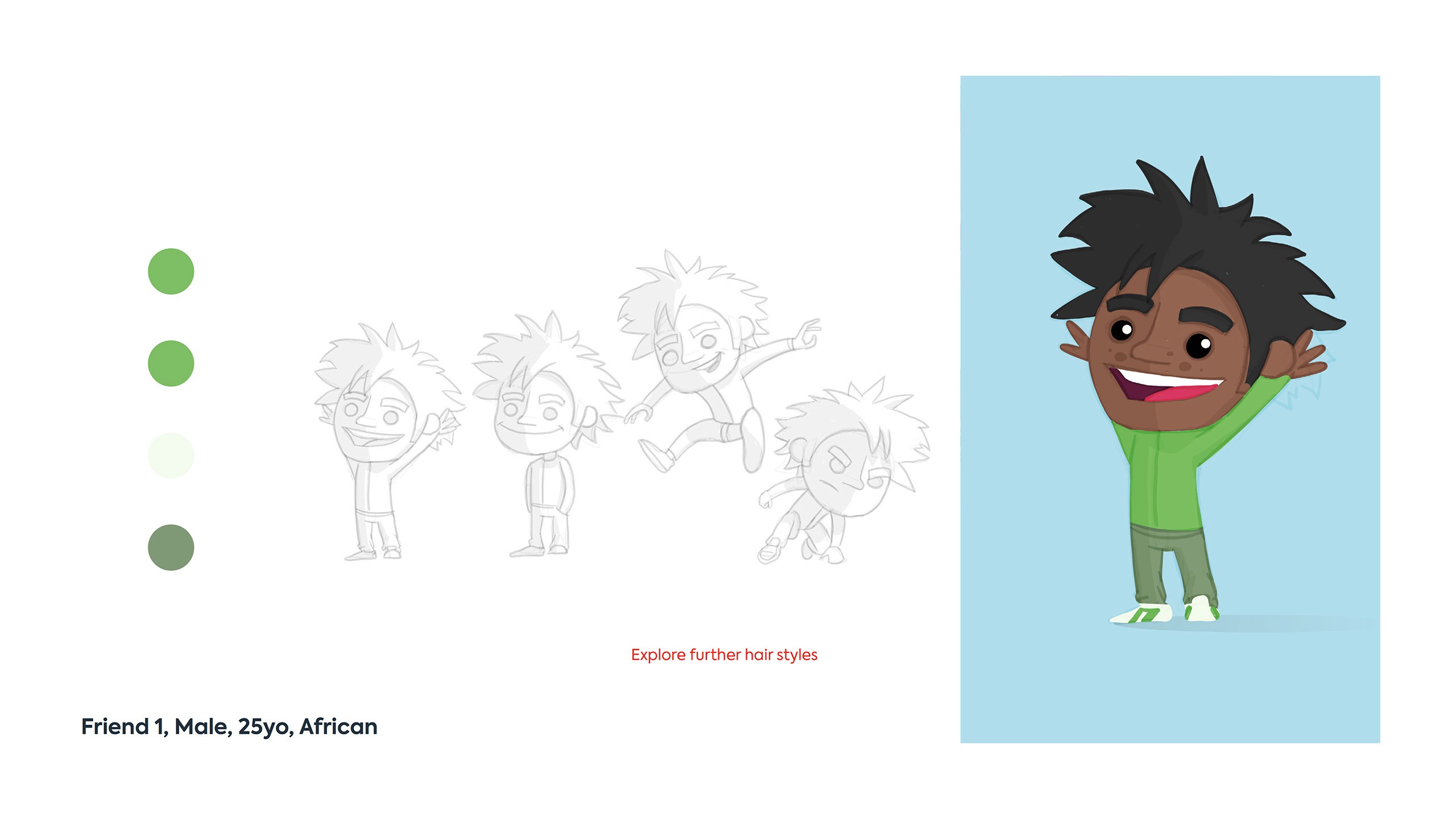
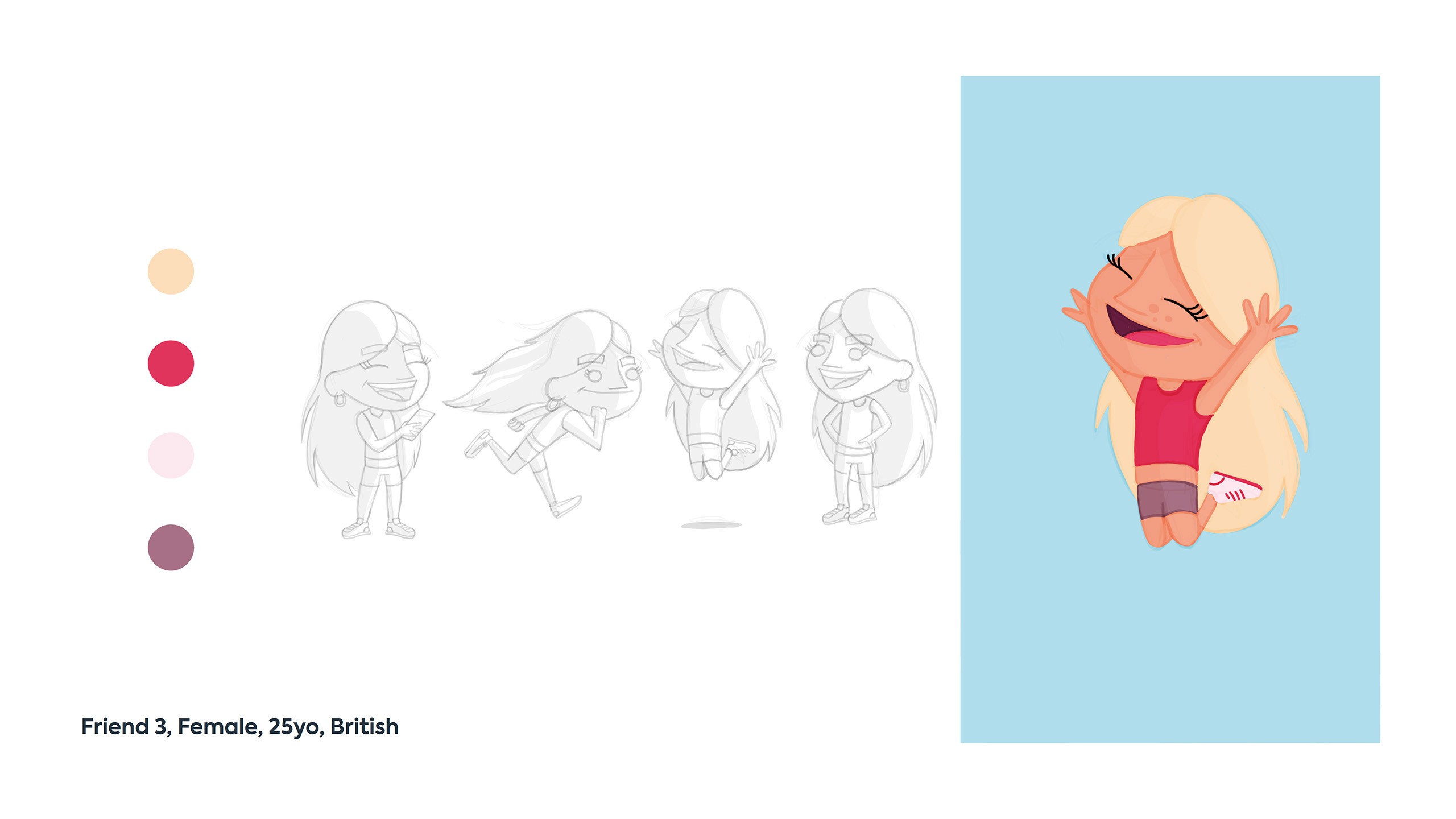
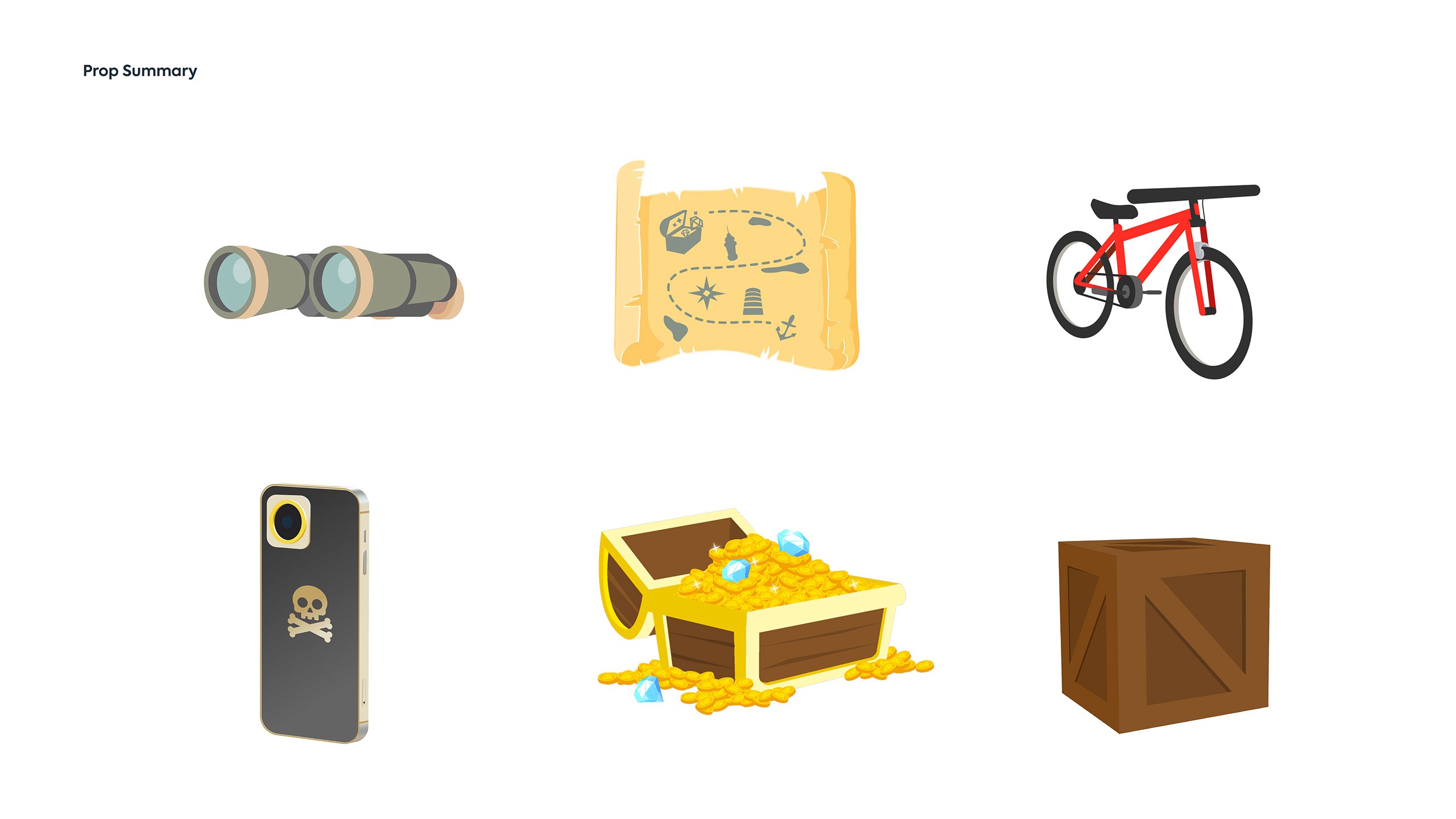
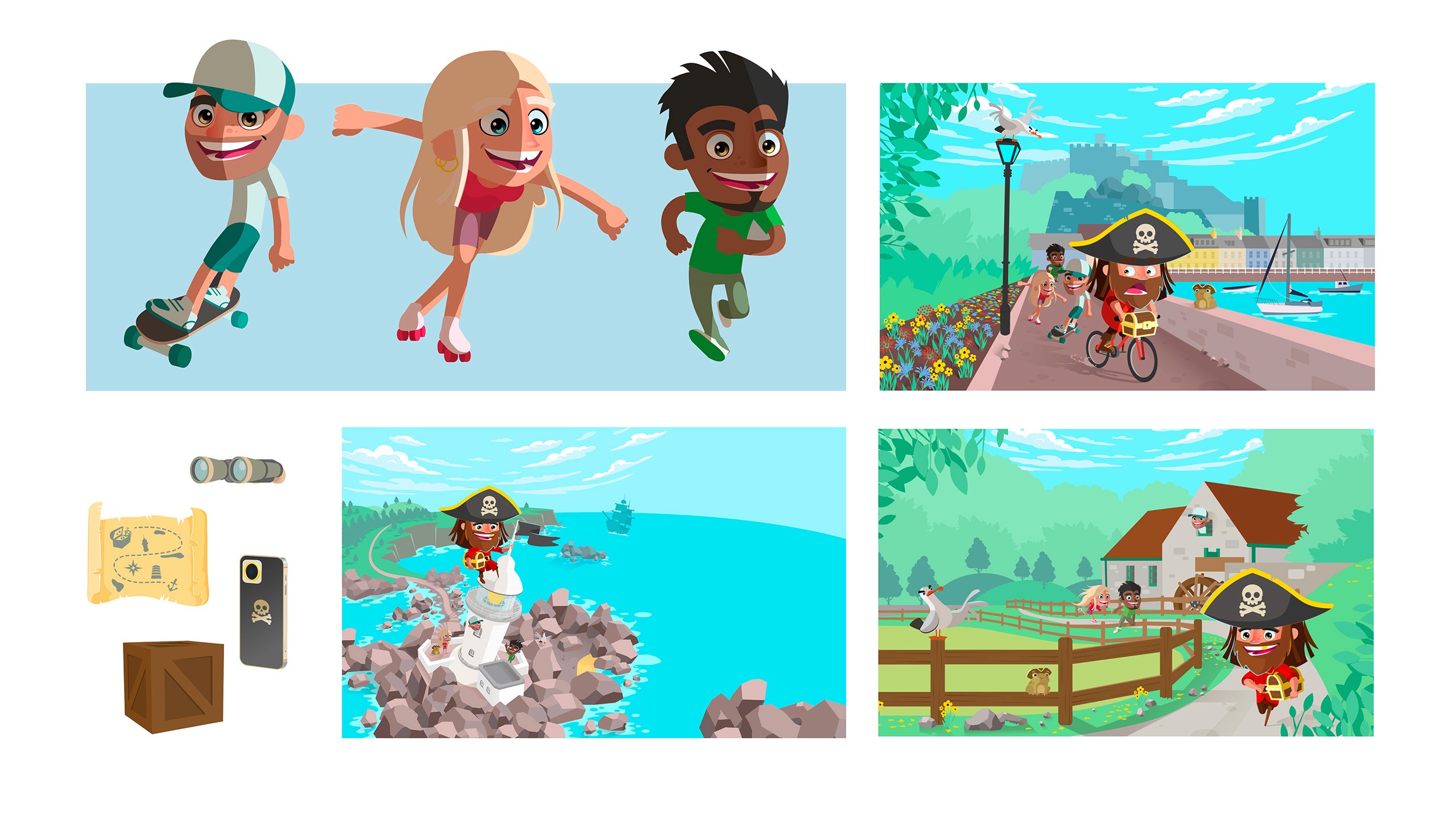
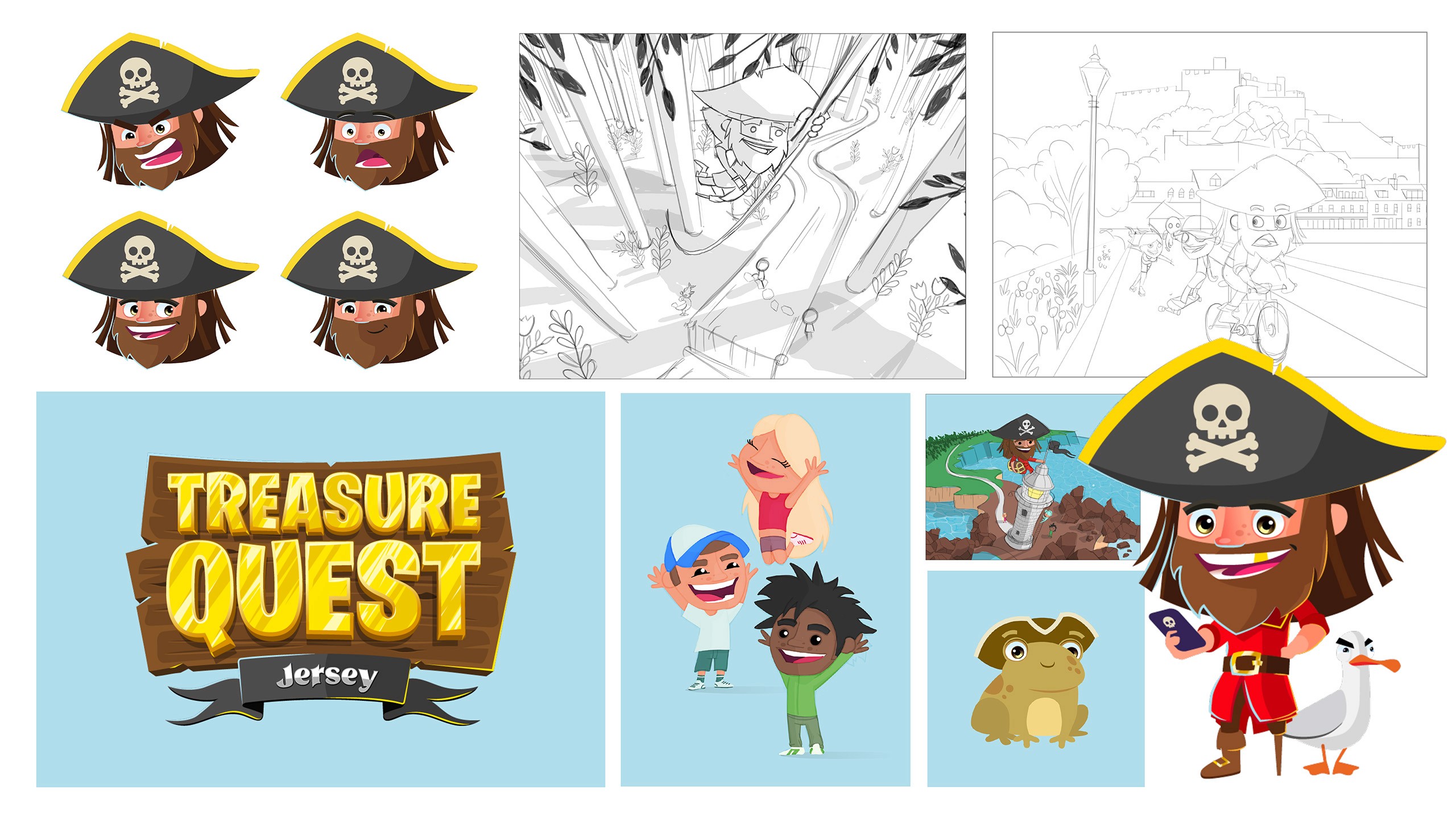

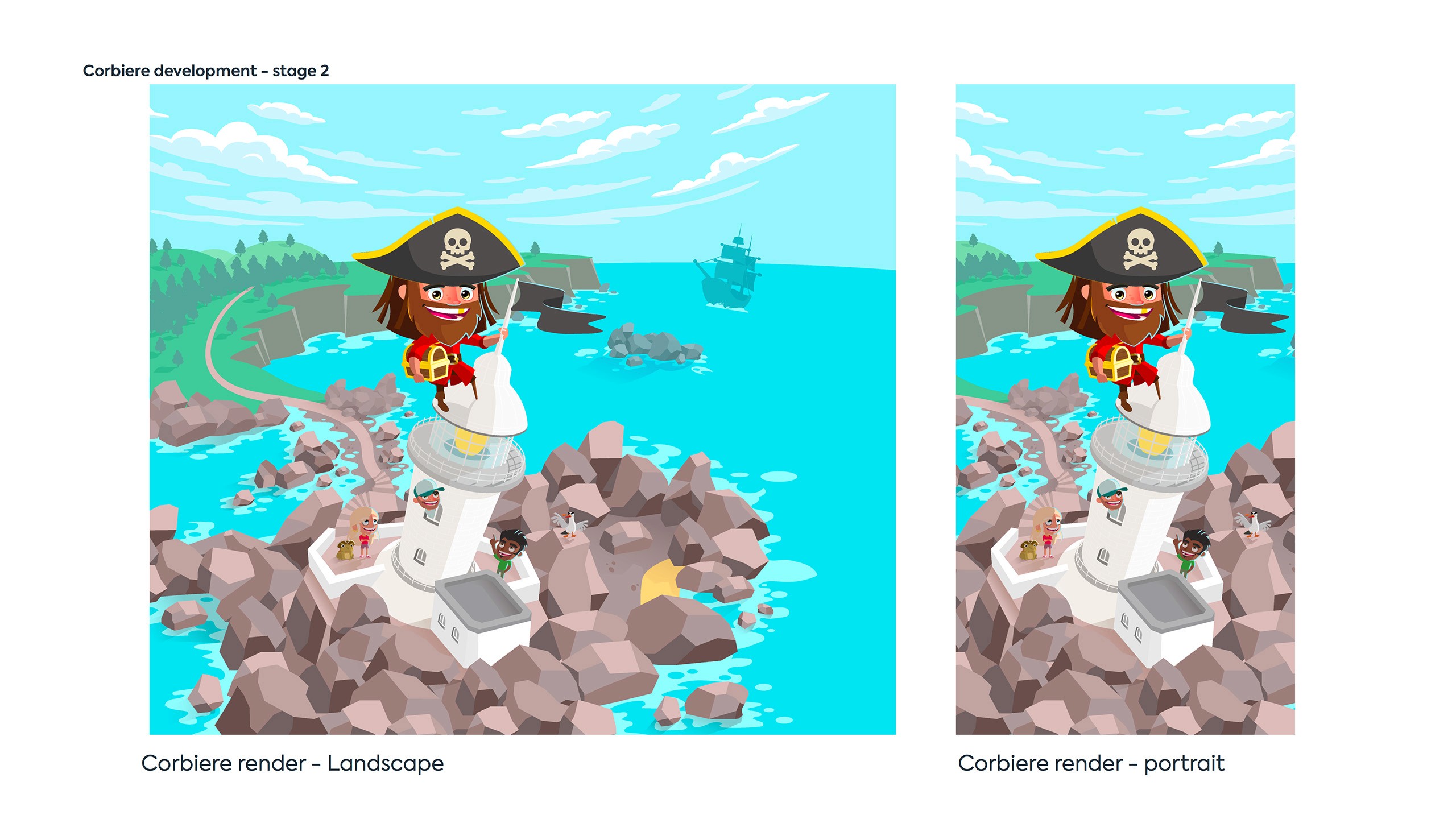
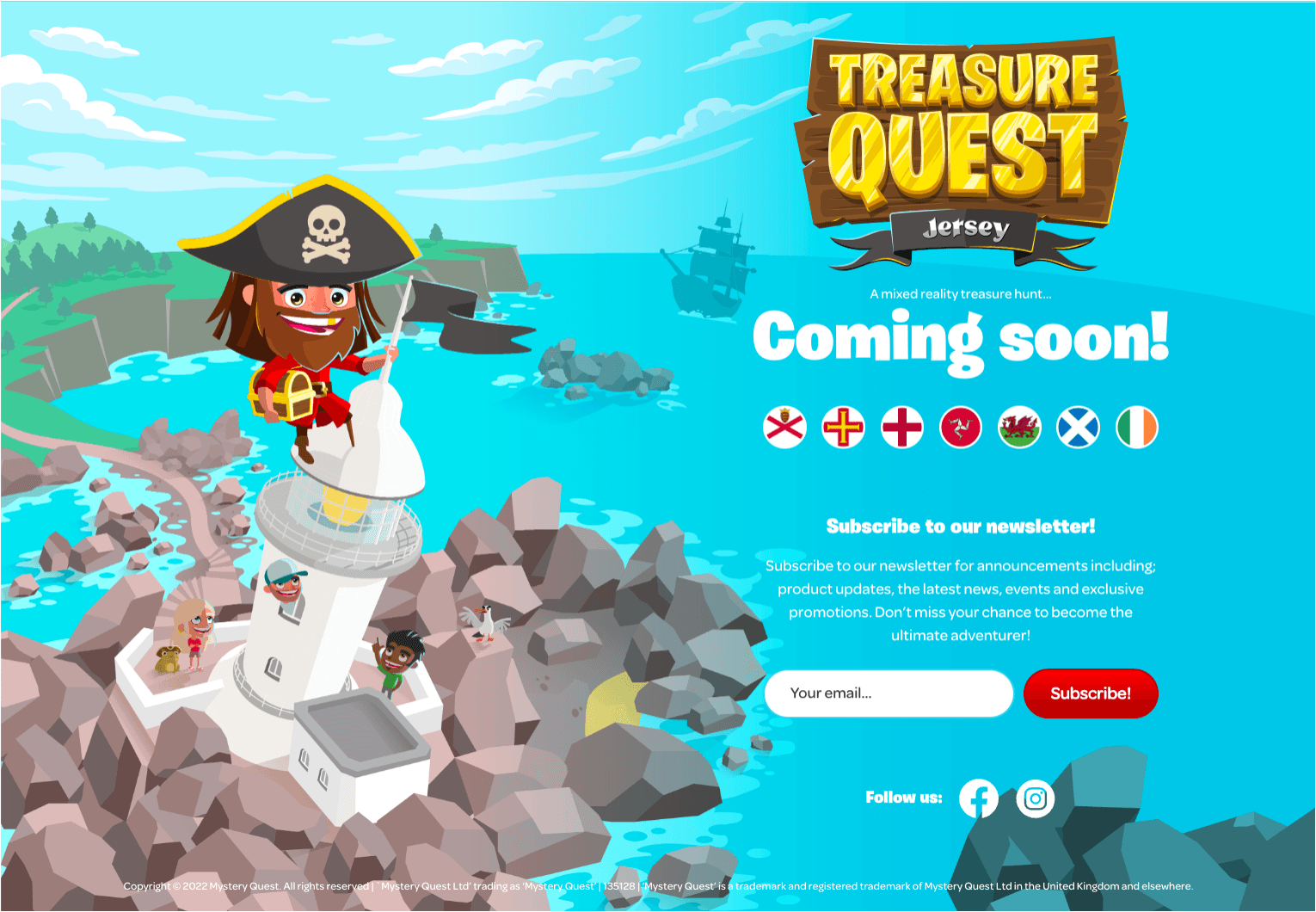
Brand assets in action - holding page
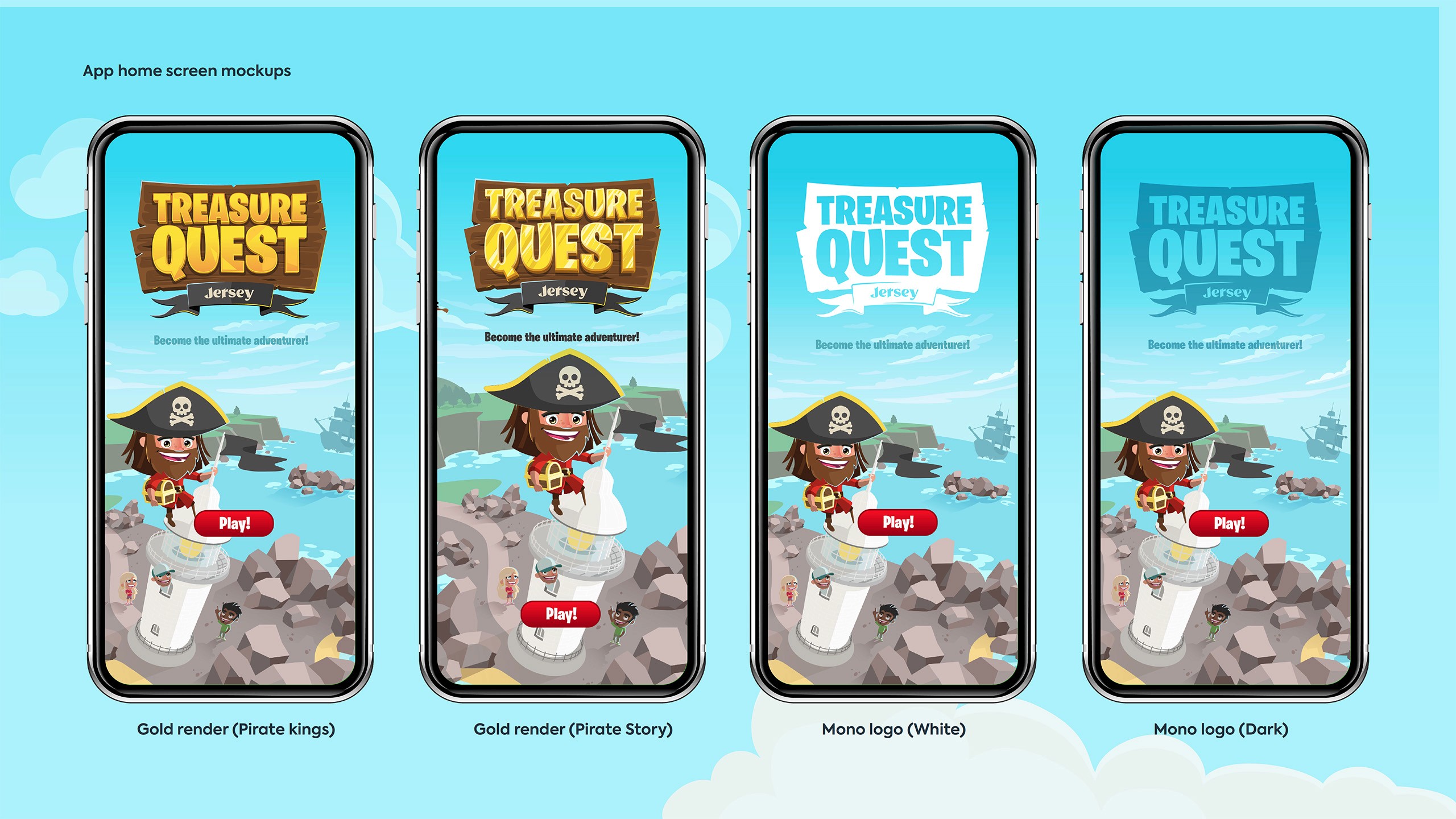
Exploring brand assets in a mobile context
Designing the experience
Designing for the real world introduced constraints rarely present in controlled digital products.
Private testing showed that outdoor, location-based use introduced GPS instability, environmental conditions, and interrupted usage that directly influenced interaction design and pacing.
Other considerations:
Variable lighting and weather
GPS accuracy and signal loss
Physical safety and accessibility
Cognitive load while moving
Device battery consumption
Quest duration had to be designed around continuous GPS usage and battery drain, not just narrative pacing.
The core journey included:
Discovering and selecting a quest
Onboarding into narrative and rules
Navigating between real-world locations
Solving clues and challenges sequentially
Receiving feedback, rewards, or hints
Completing (or abandoning) the quest
Each step was designed to minimise friction while maintaining tension and intrigue.
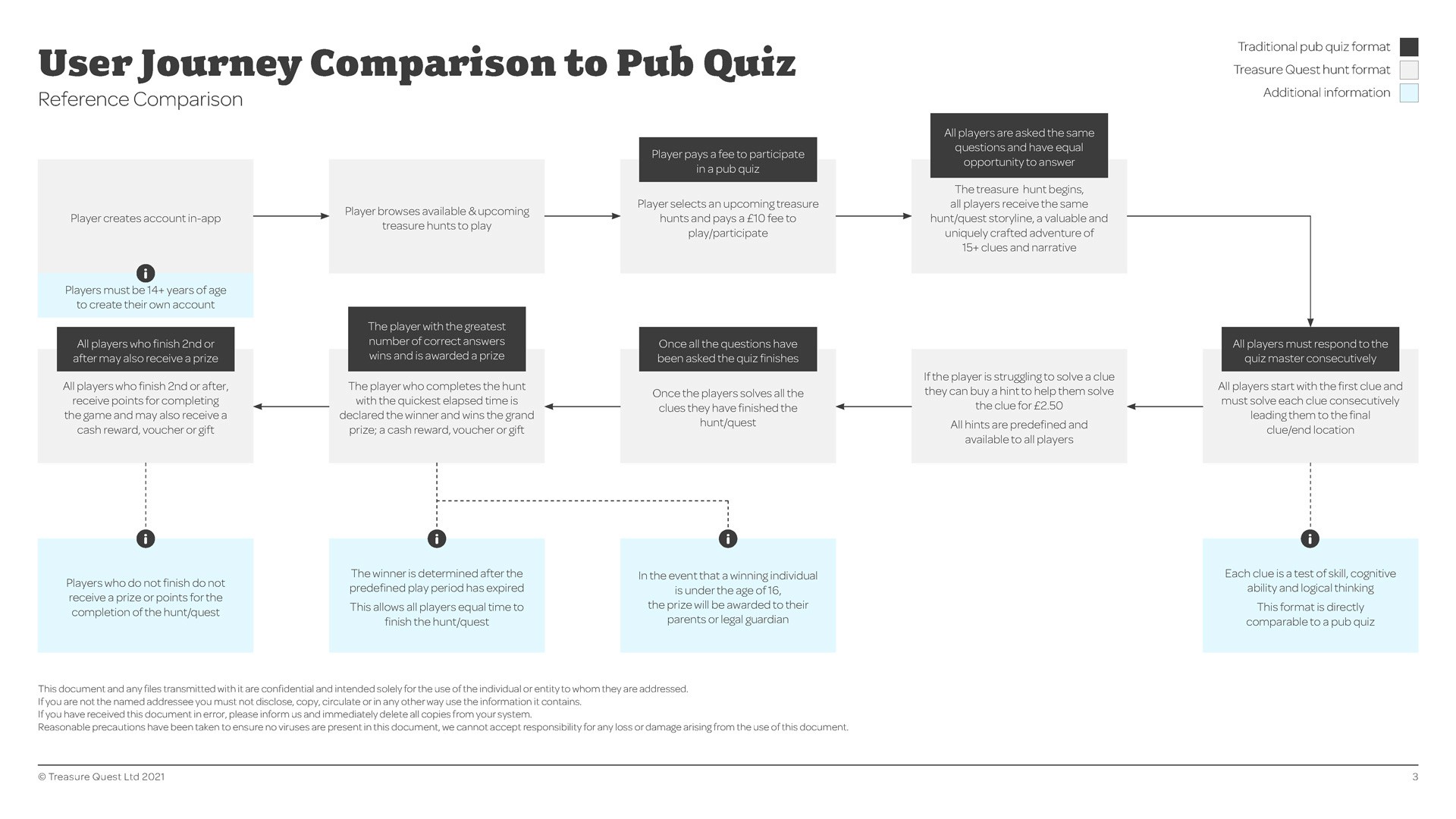
High-level journey - prepared for gambling commission
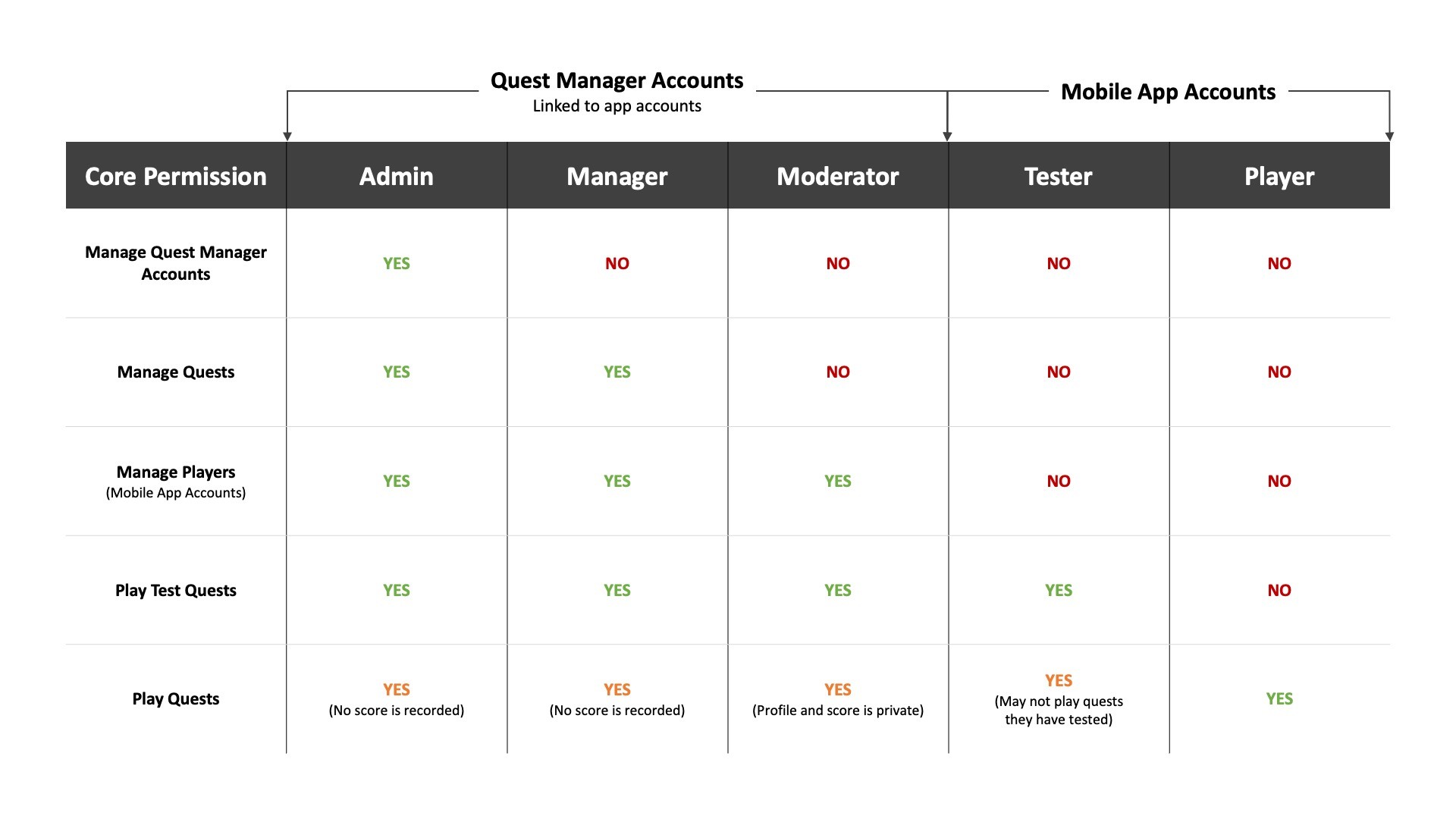
'Quest Manager' permissions table
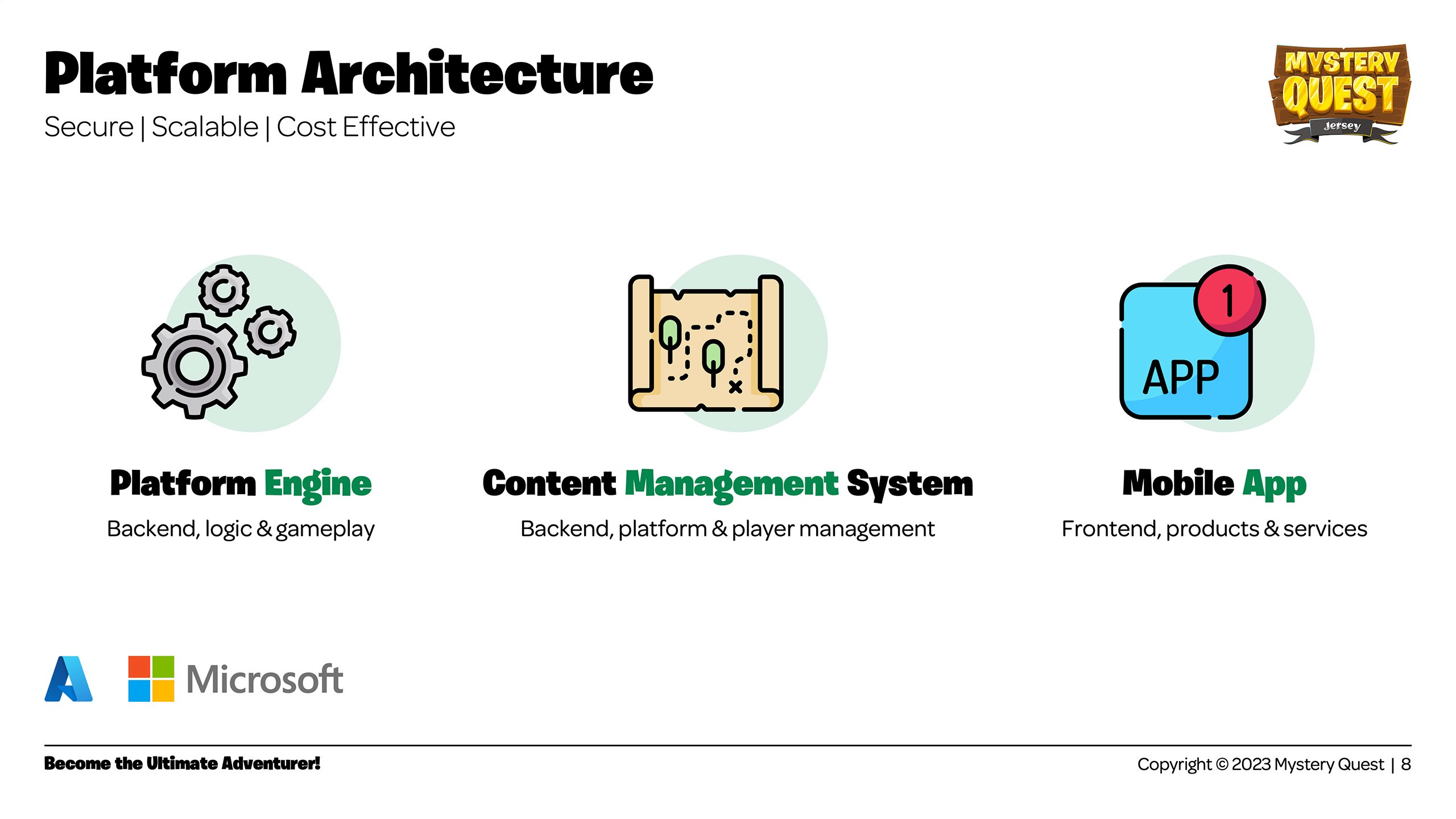
Extensive design iteration
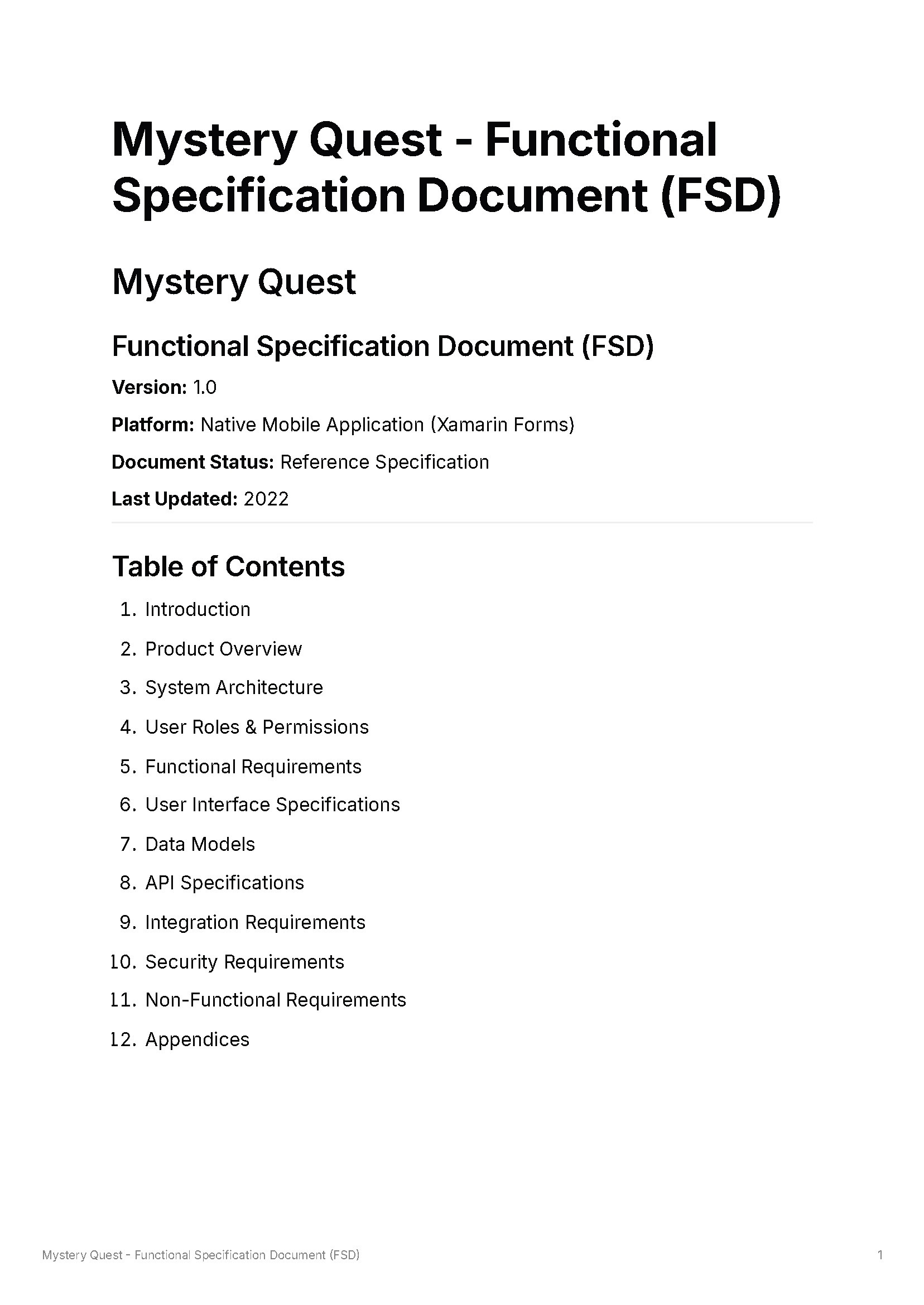
(FSD) Creating functional specifications
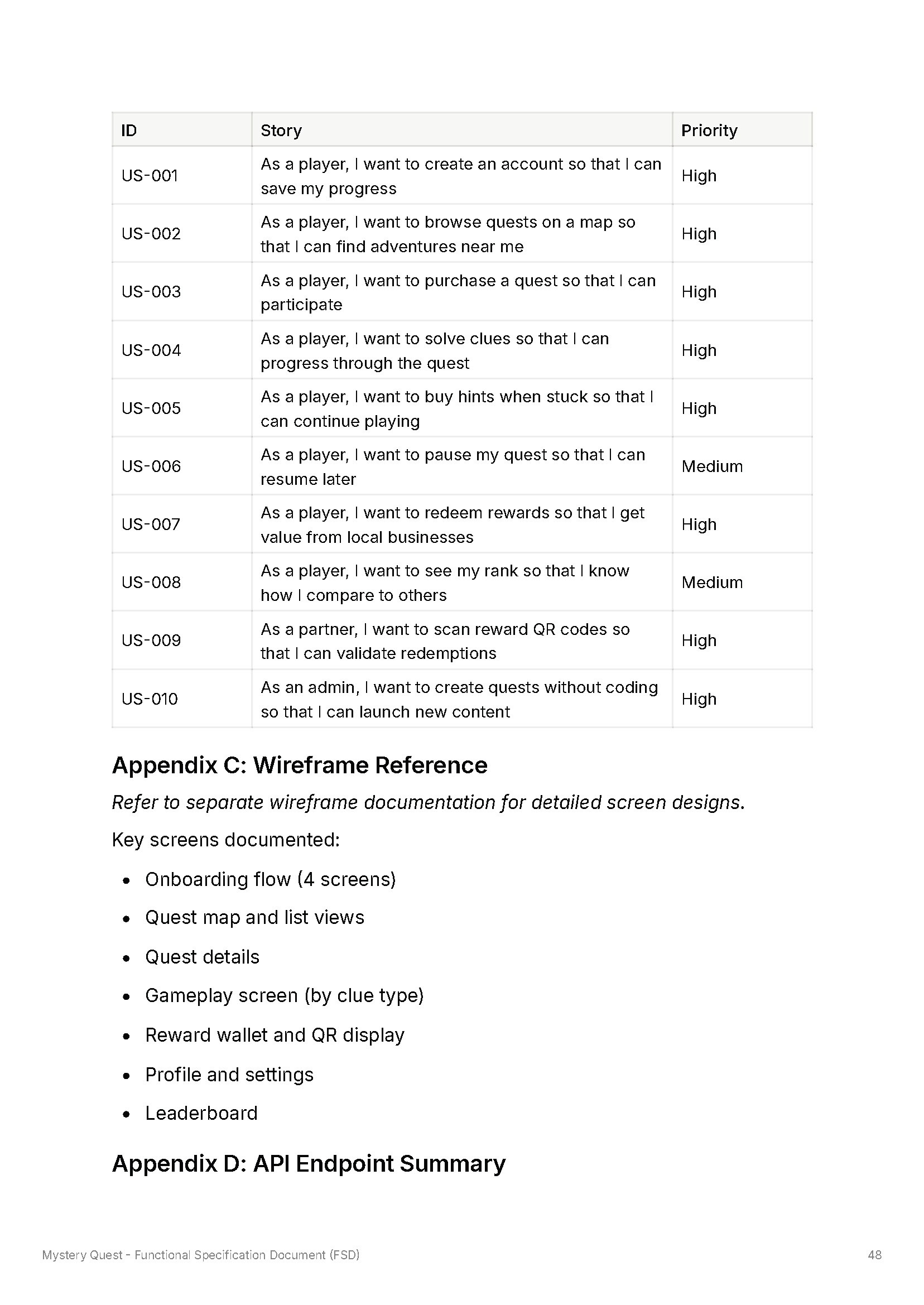
Early user stories
Extensive design iteration
Wireframing & early prototyping
Early work focused on flow clarity rather than visual polish:
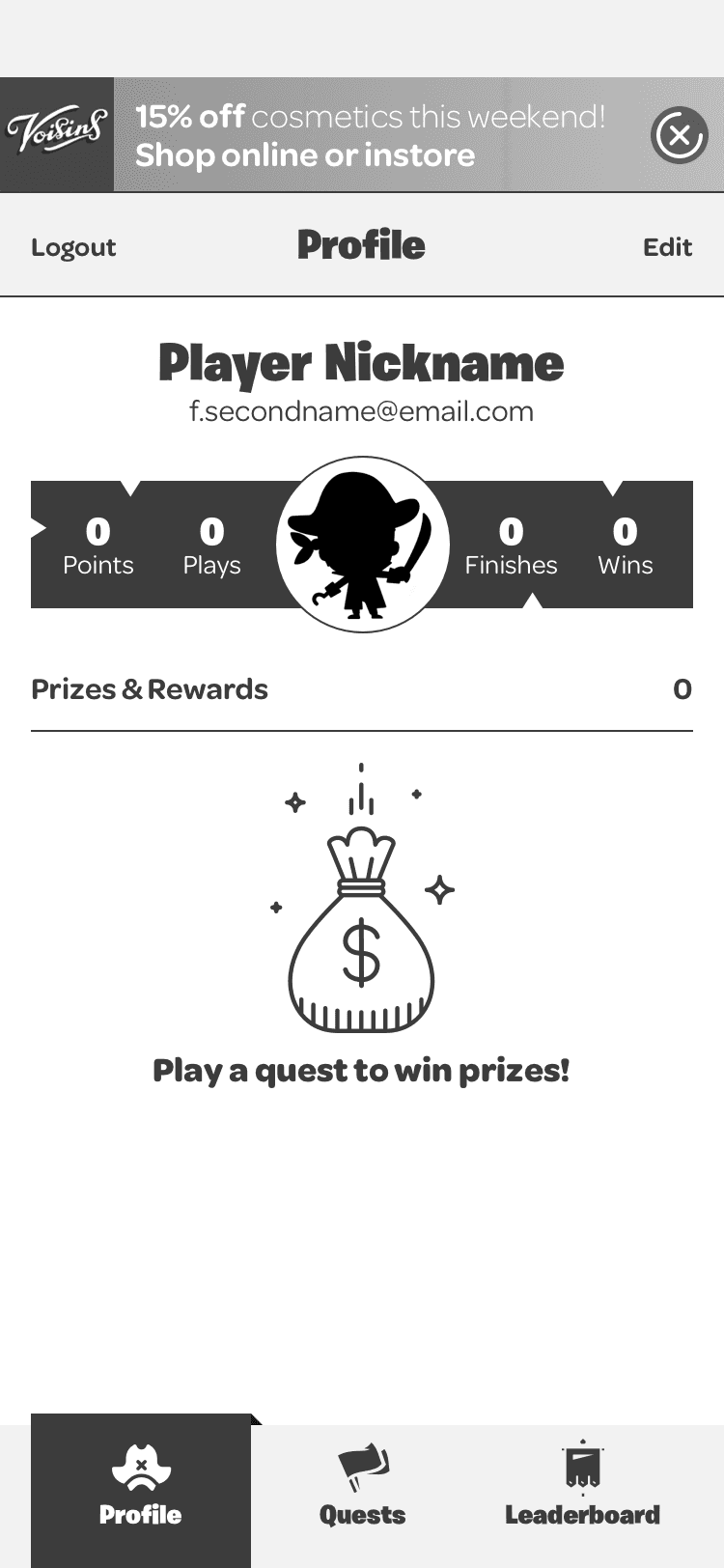
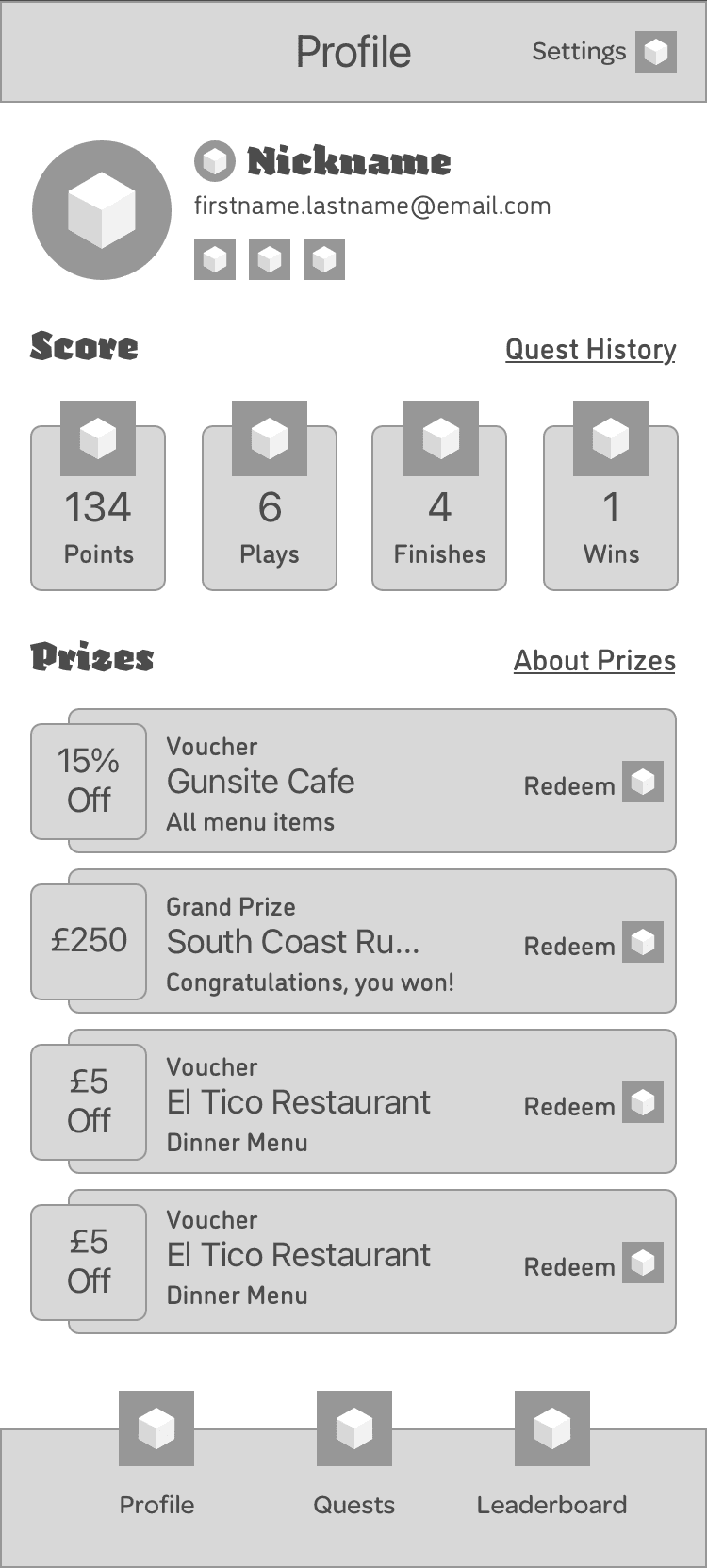
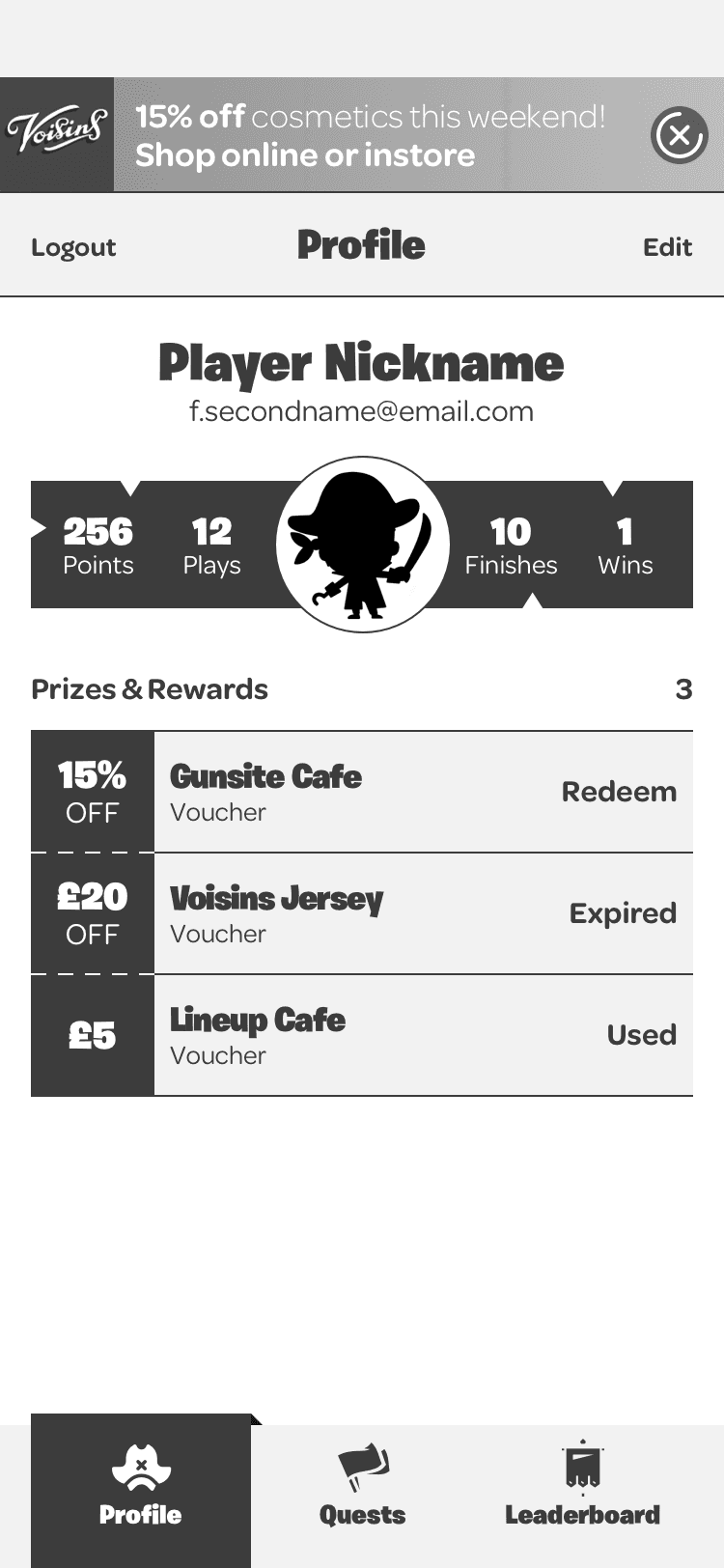
Low-fidelity wireframes mapped end-to-end journeys
Edge cases were identified during design and resolved through targeted technical and UX solutions (e.g. degraded play when GPS was lost, hints for unclear clues, and controlled pause mechanics)
Failure states were treated as first-class scenarios
These wireframes were used in walkthroughs and early tests before committing to full UI design.
Many behaviours initially treated as edge cases, such as pausing, losing signal, or unclear clues, proved to be normal patterns in real use.
v1 Wireframes
v2 Wireframes
Early wireframes
Early wireframes
Early wireframes
Early wireframes
Early wireframes
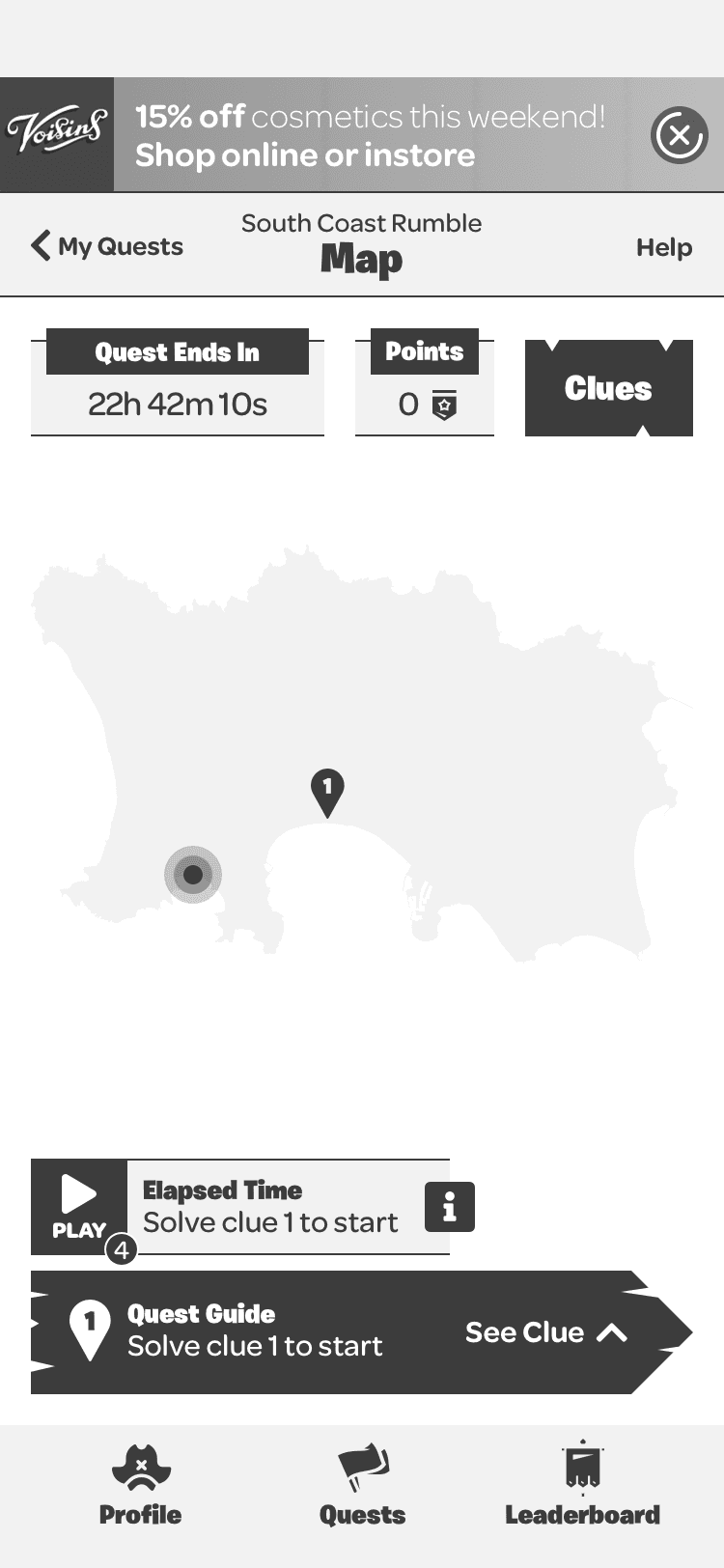
Early wireframes
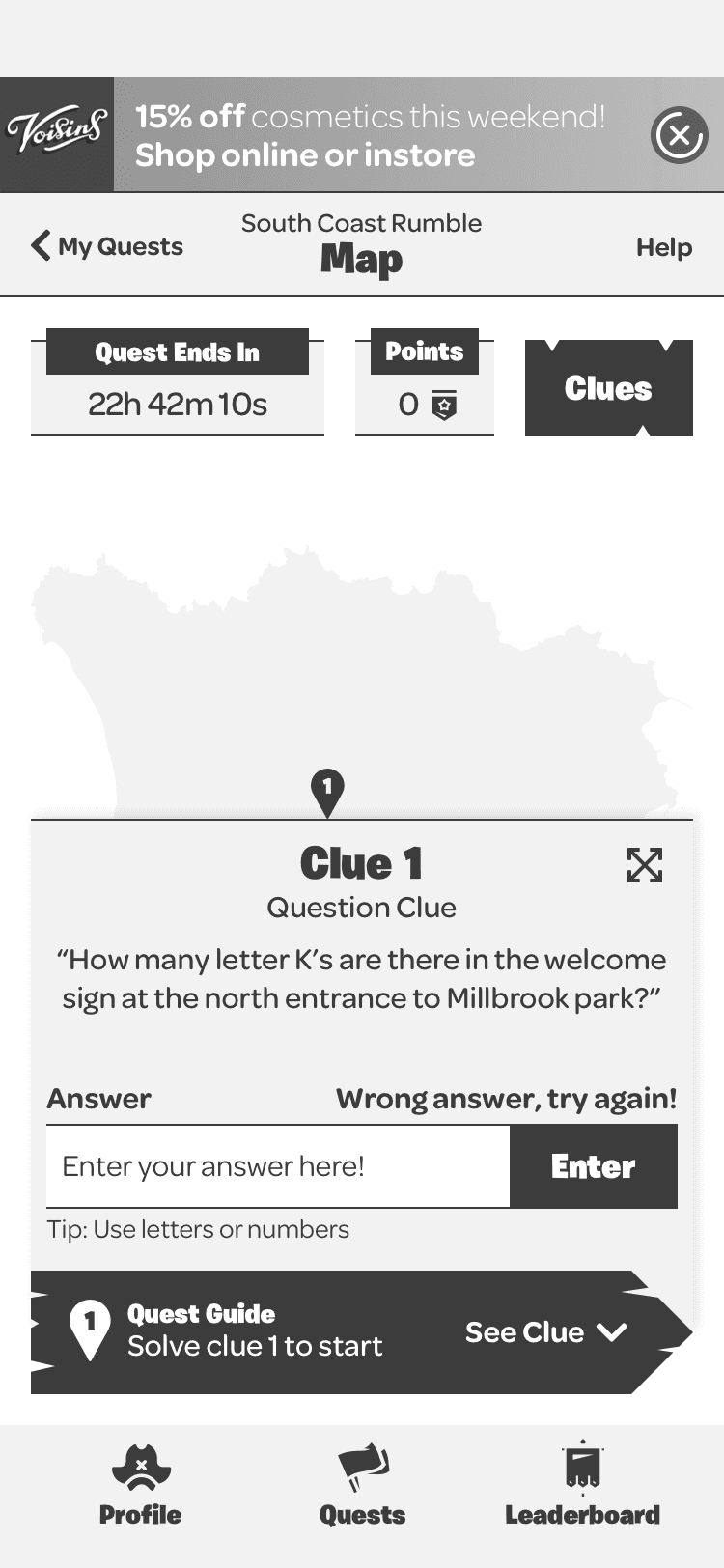
Early wireframes
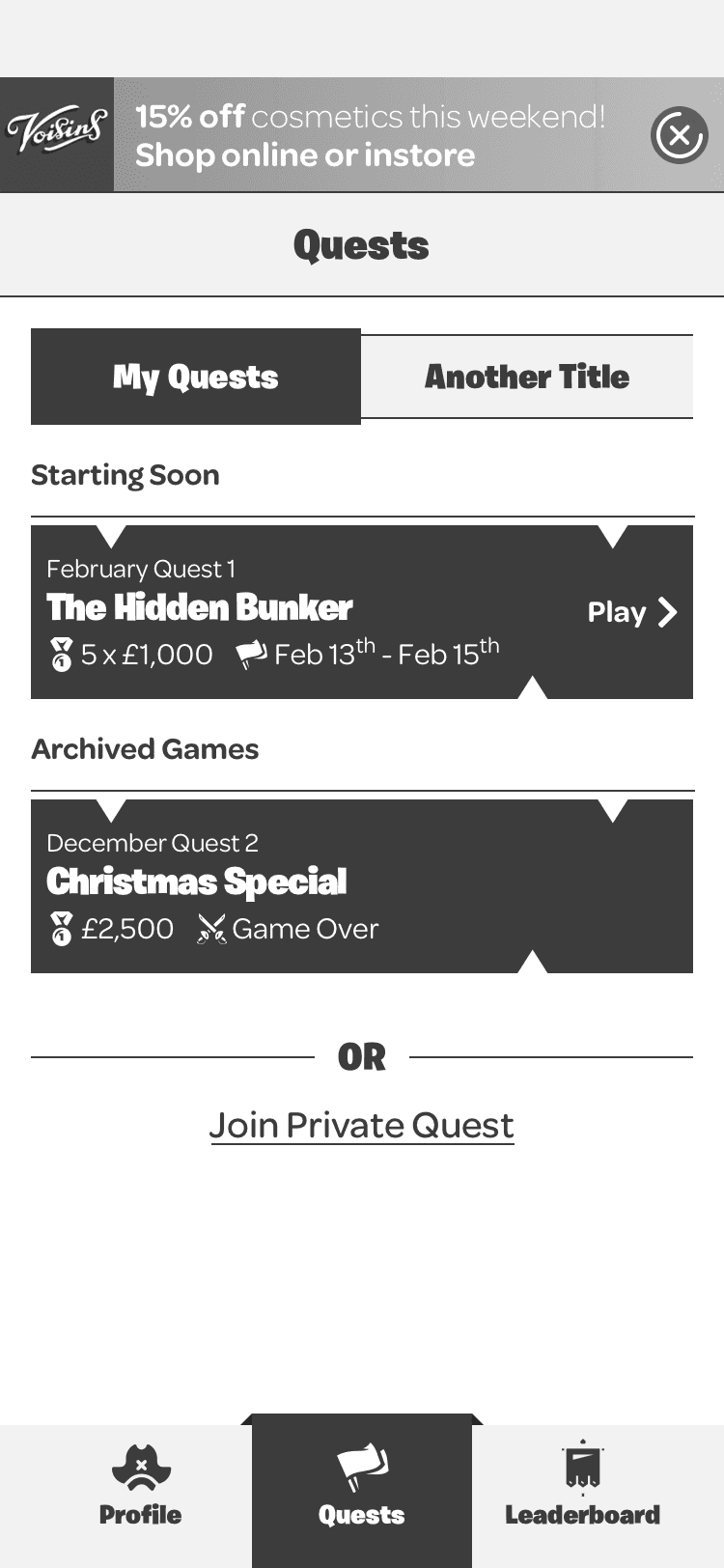
Early wireframes
UI Design & iteration
Version 1
The first UI pass prioritised:
Clear navigation
Strong narrative framing
Visual differentiation between map, clue, and reward states
Private and internal testing revealed issues with:
Information density while on the move
Over-reliance on visual detail in bright outdoor conditions
Insufficient feedback when players were stuck
Development difficulty engineering overly complex UI
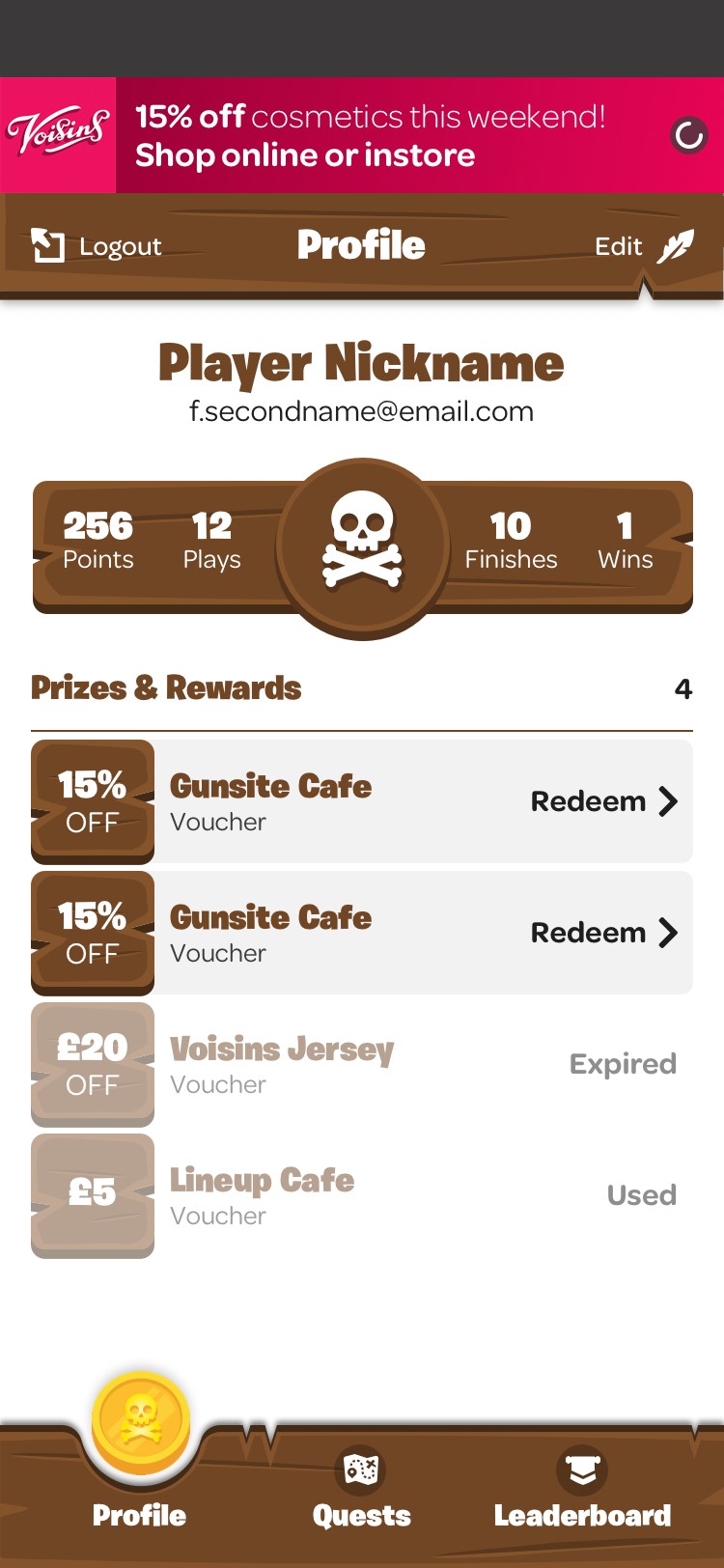
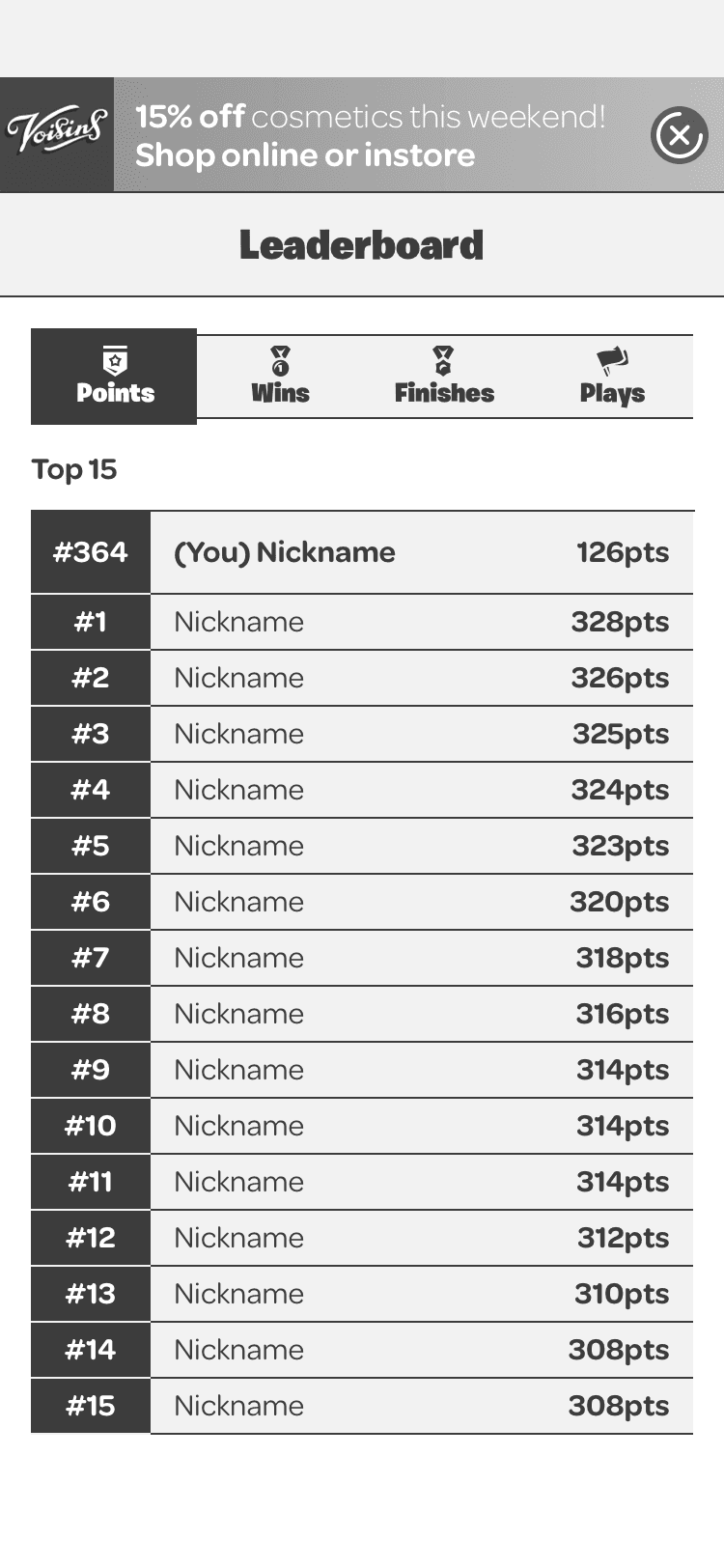
Profile
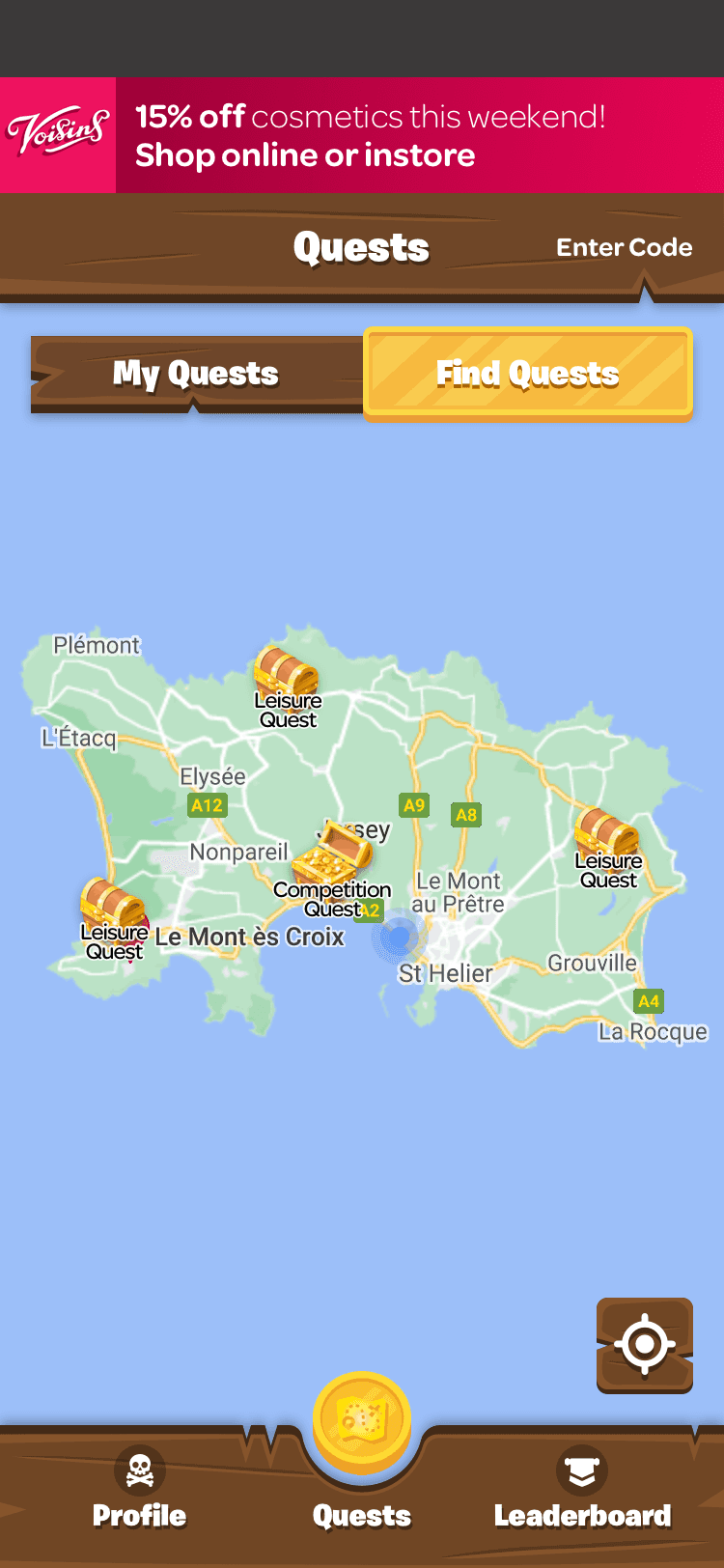
Quests
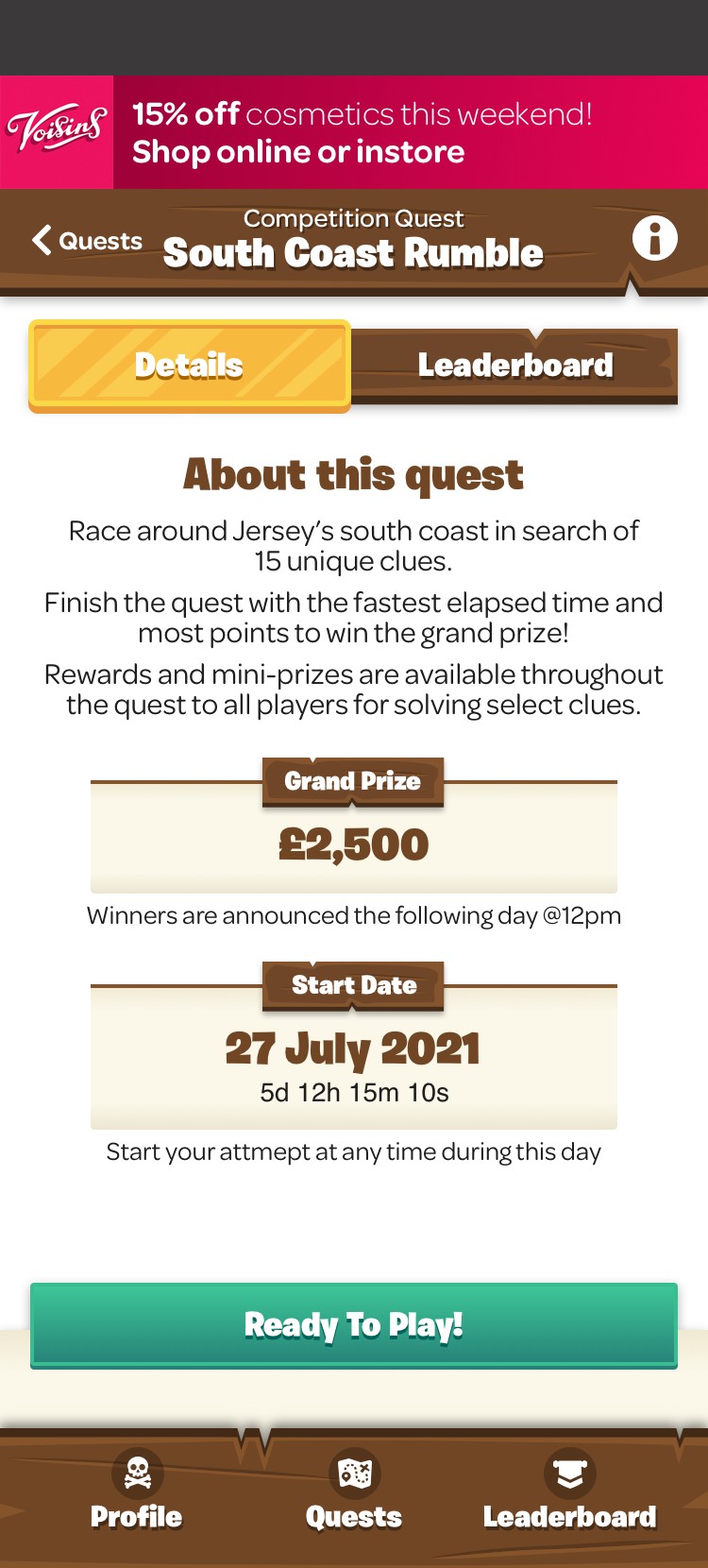
Quest details
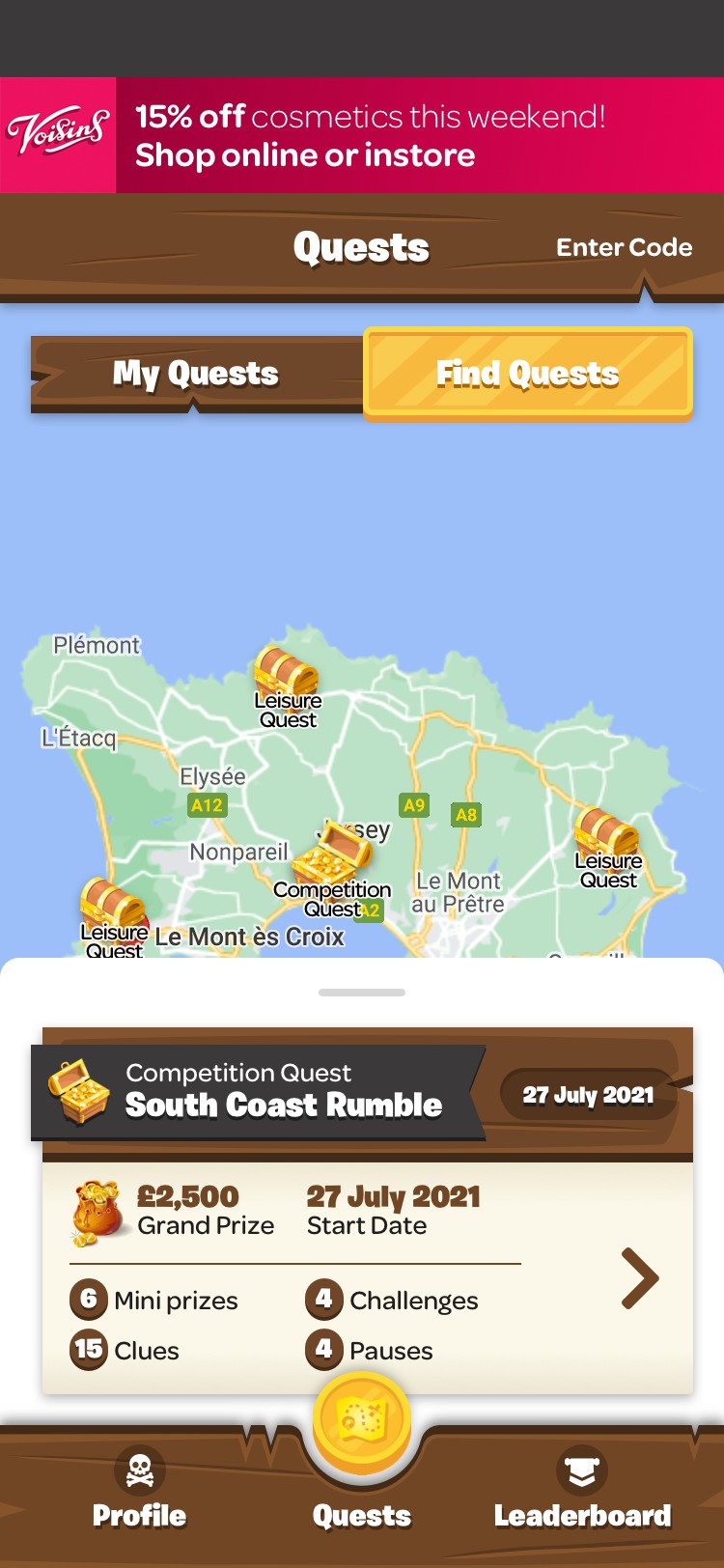
Map, quest disclosure
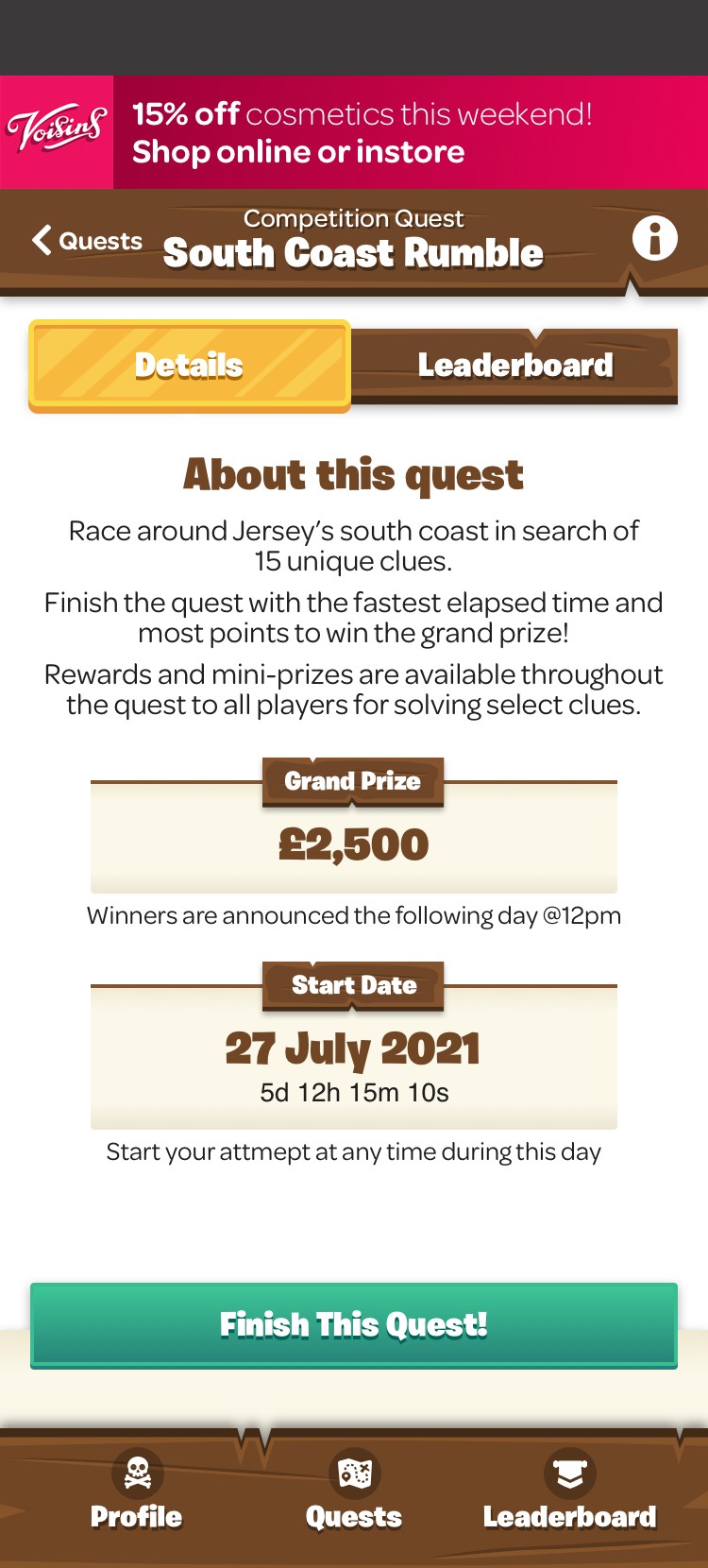
Continue quest
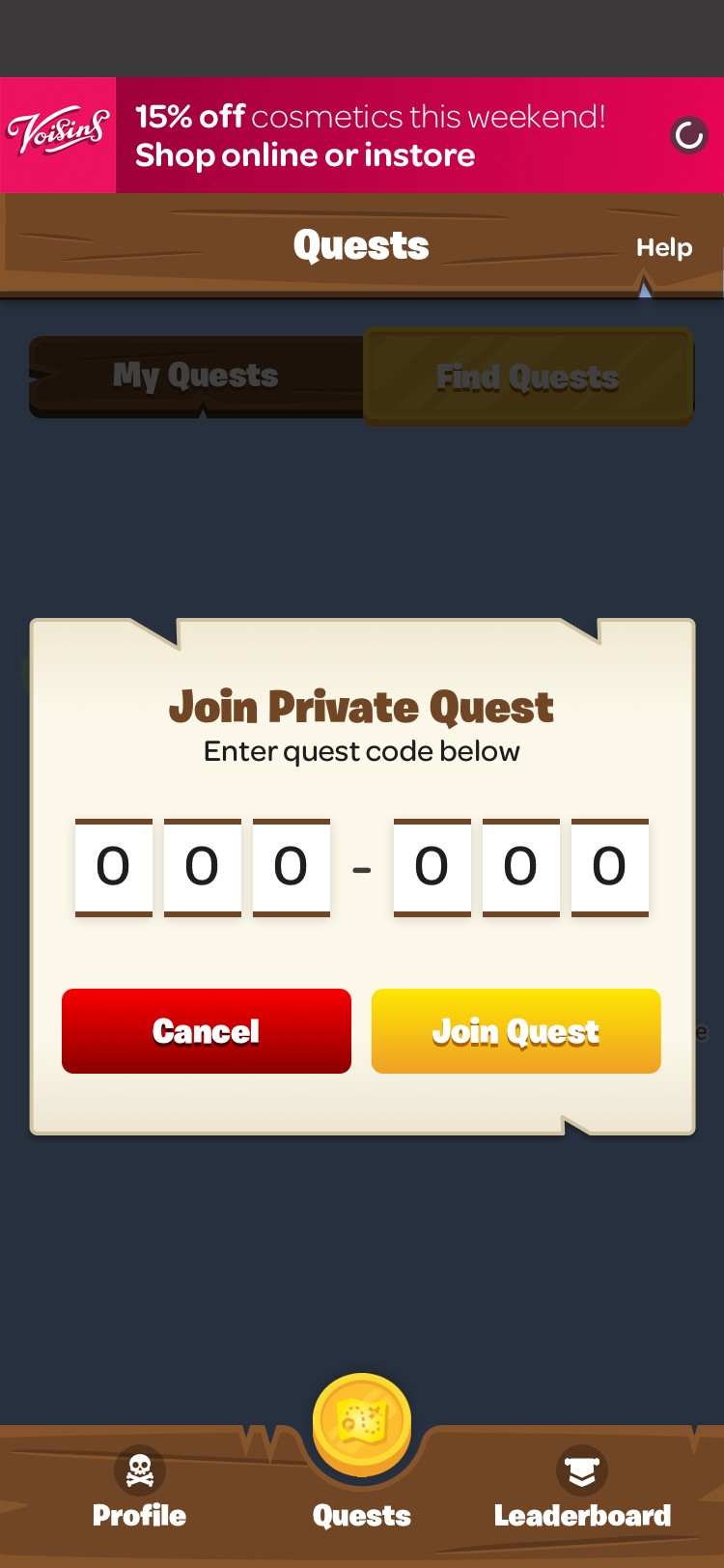
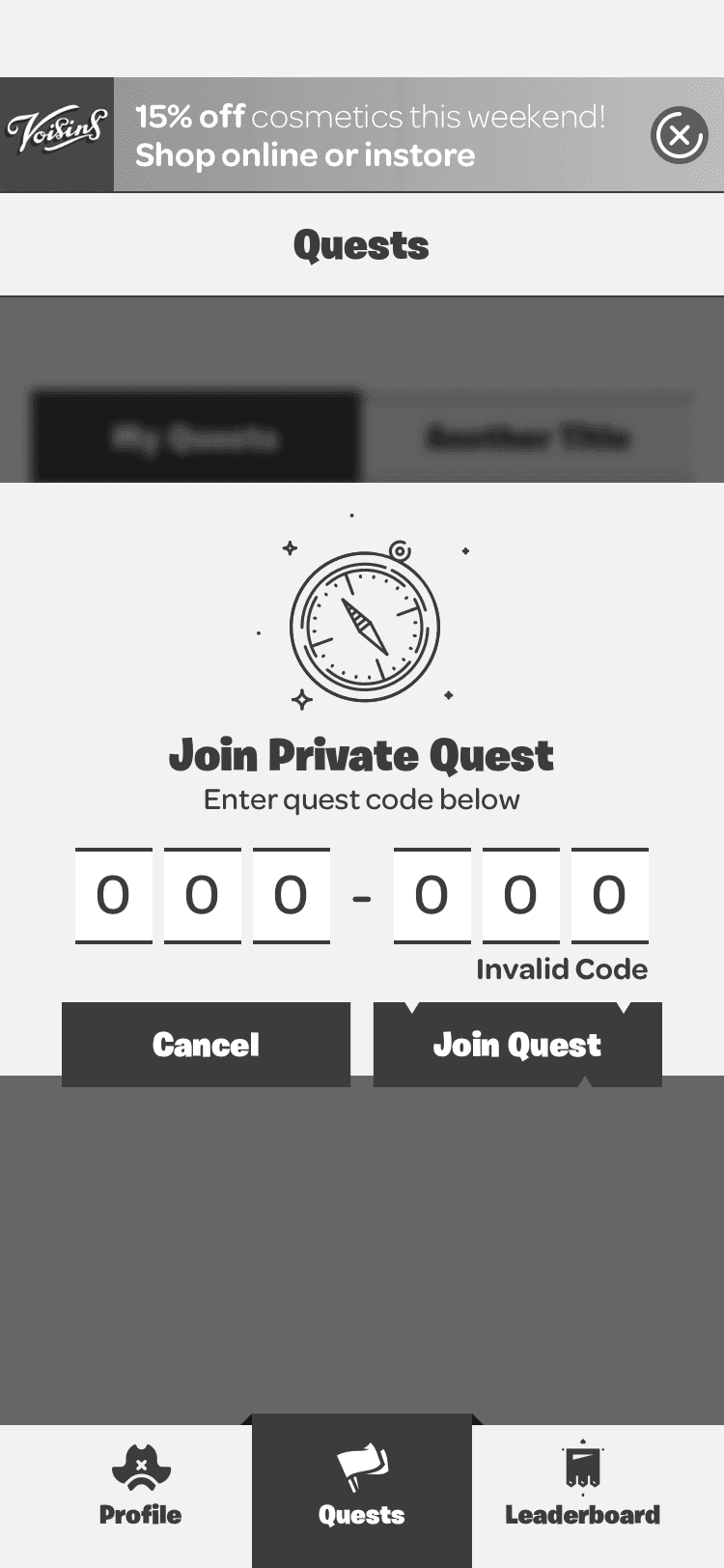
Join private quest
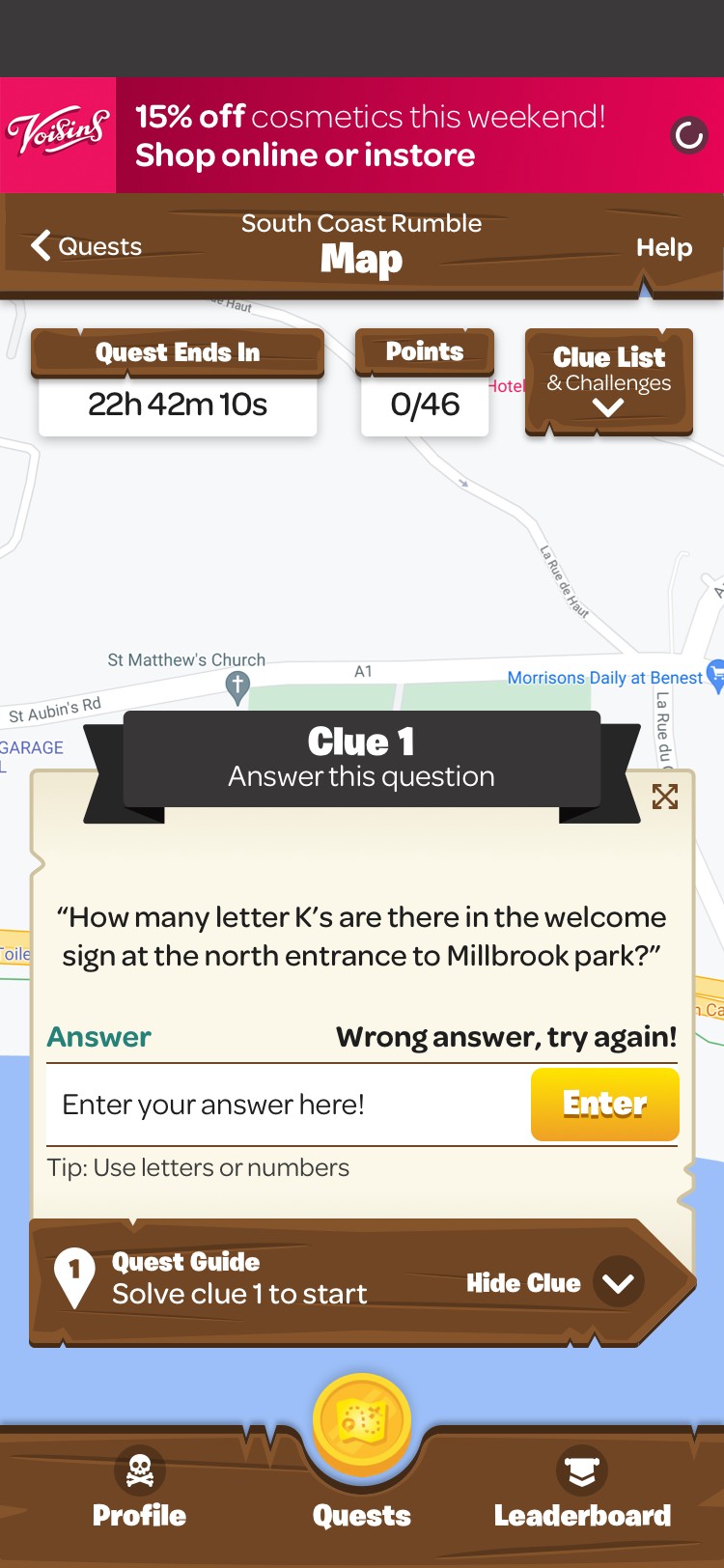
Solve clue
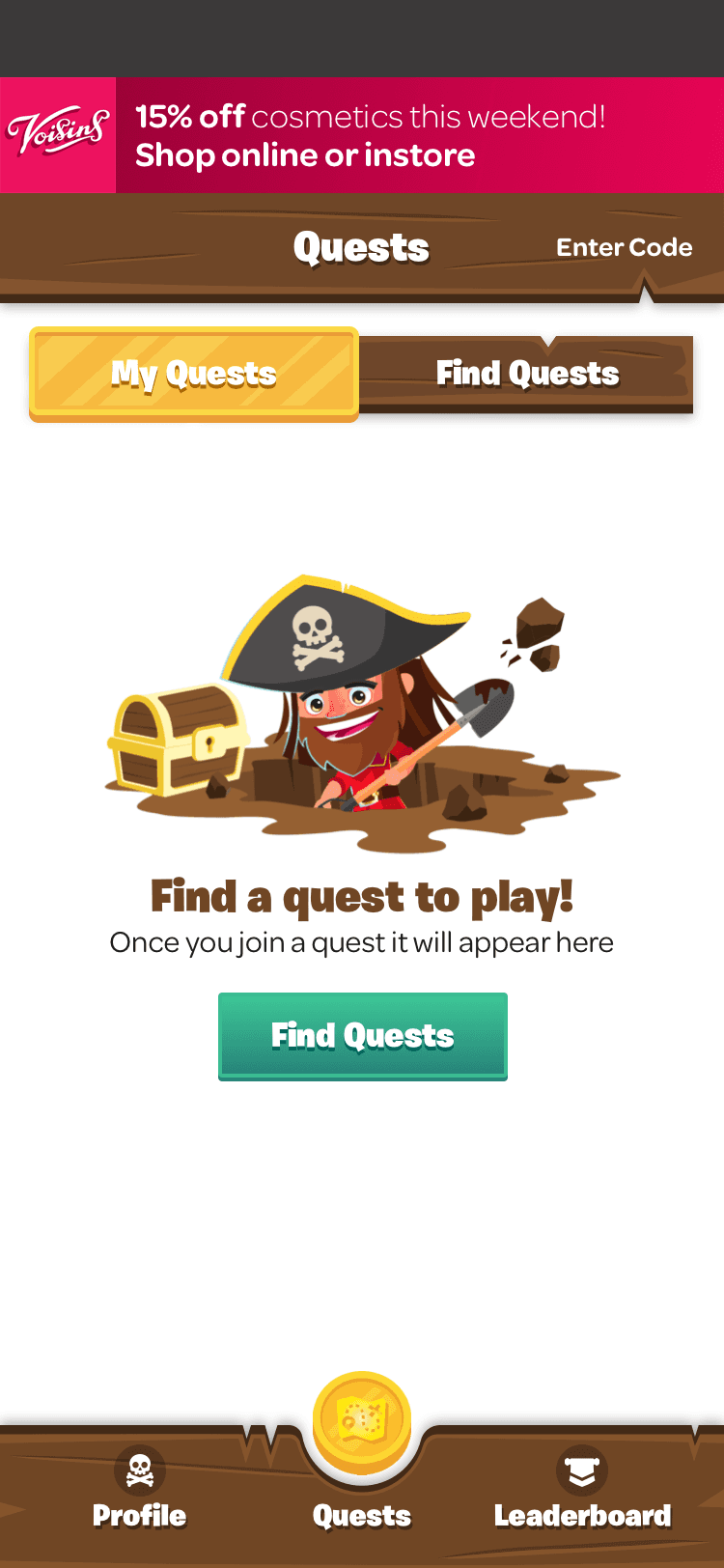
My quests
Version 2
Design changes included:
Simplified layouts and hierarchy
Higher contrast modes for outdoor use
Clearer progress indicators
Improved hint visibility and pacing
This iteration significantly reduced confusion and abandonment during private and internal testing.
UI complexity that felt manageable in design became difficult to engineer and fragile under real-world conditions.
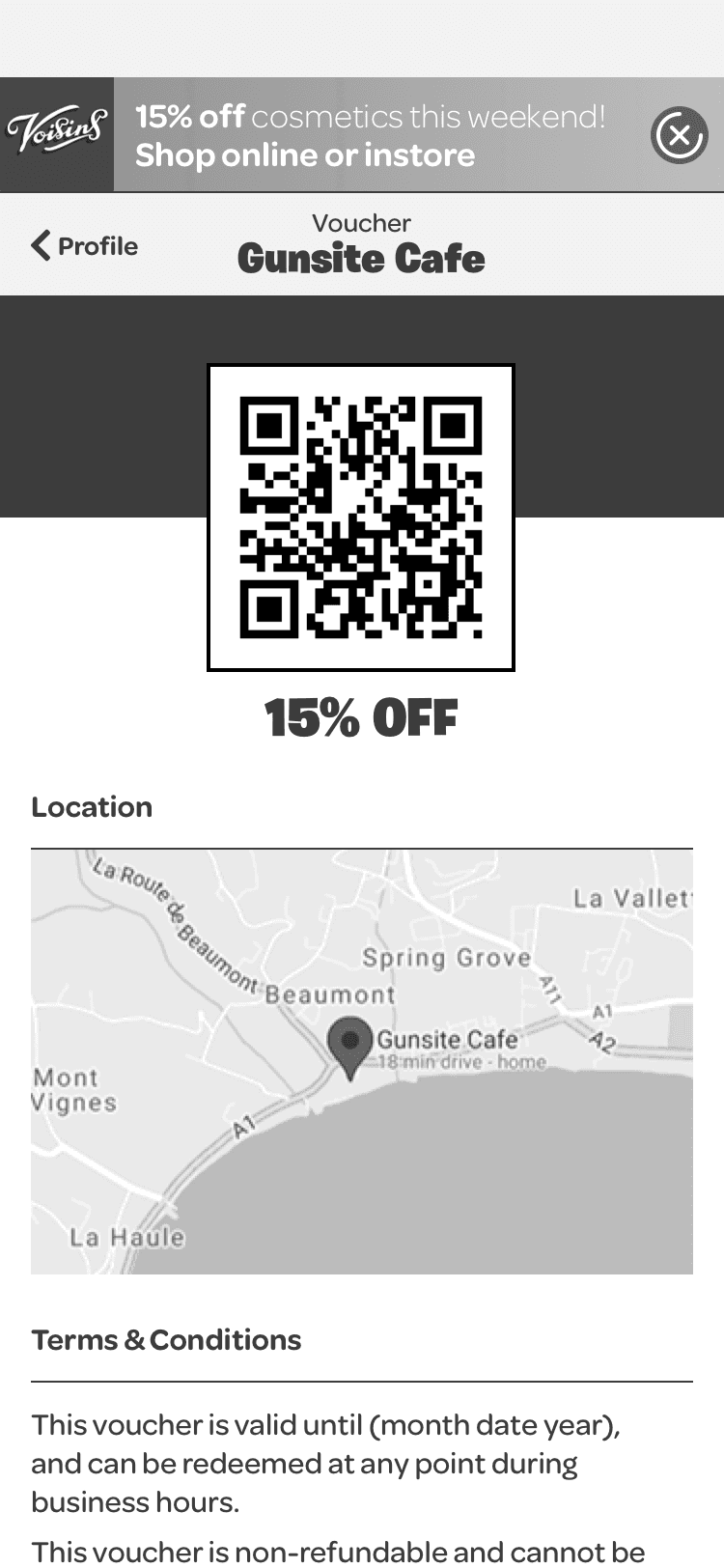
Observing how people paused, hesitated, or abandoned flows during testing led to clearer feedback, simpler layouts, and more forgiving progression mechanics.
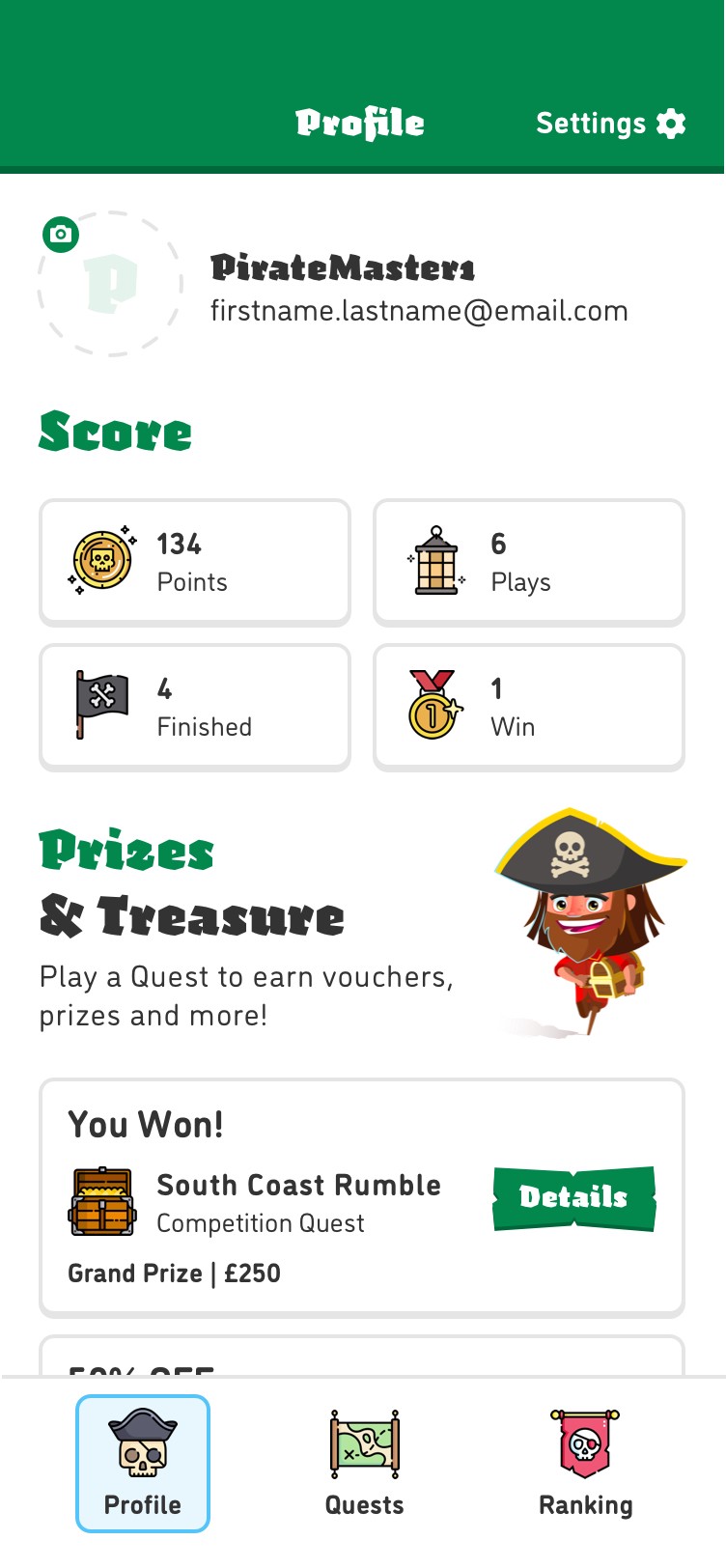
Profile
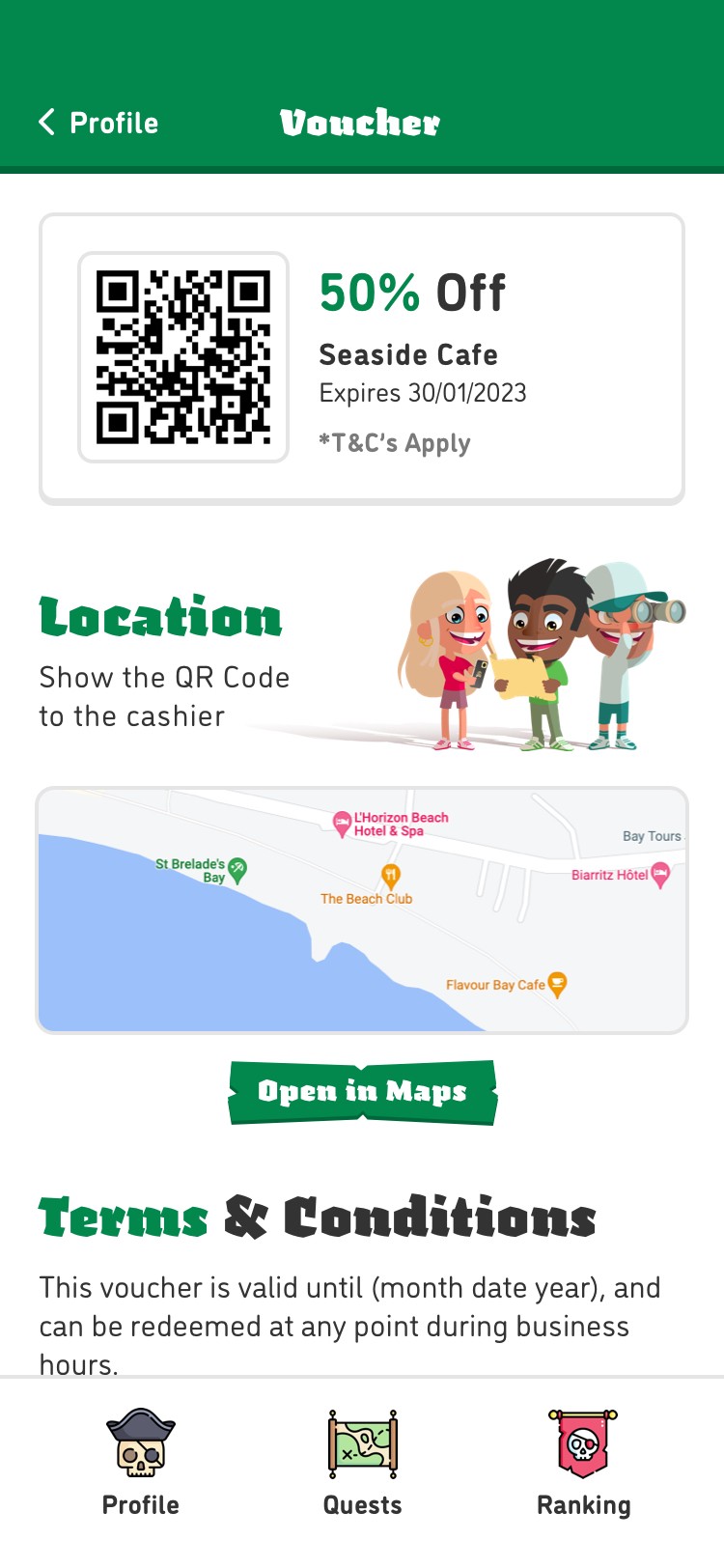
Voucher details
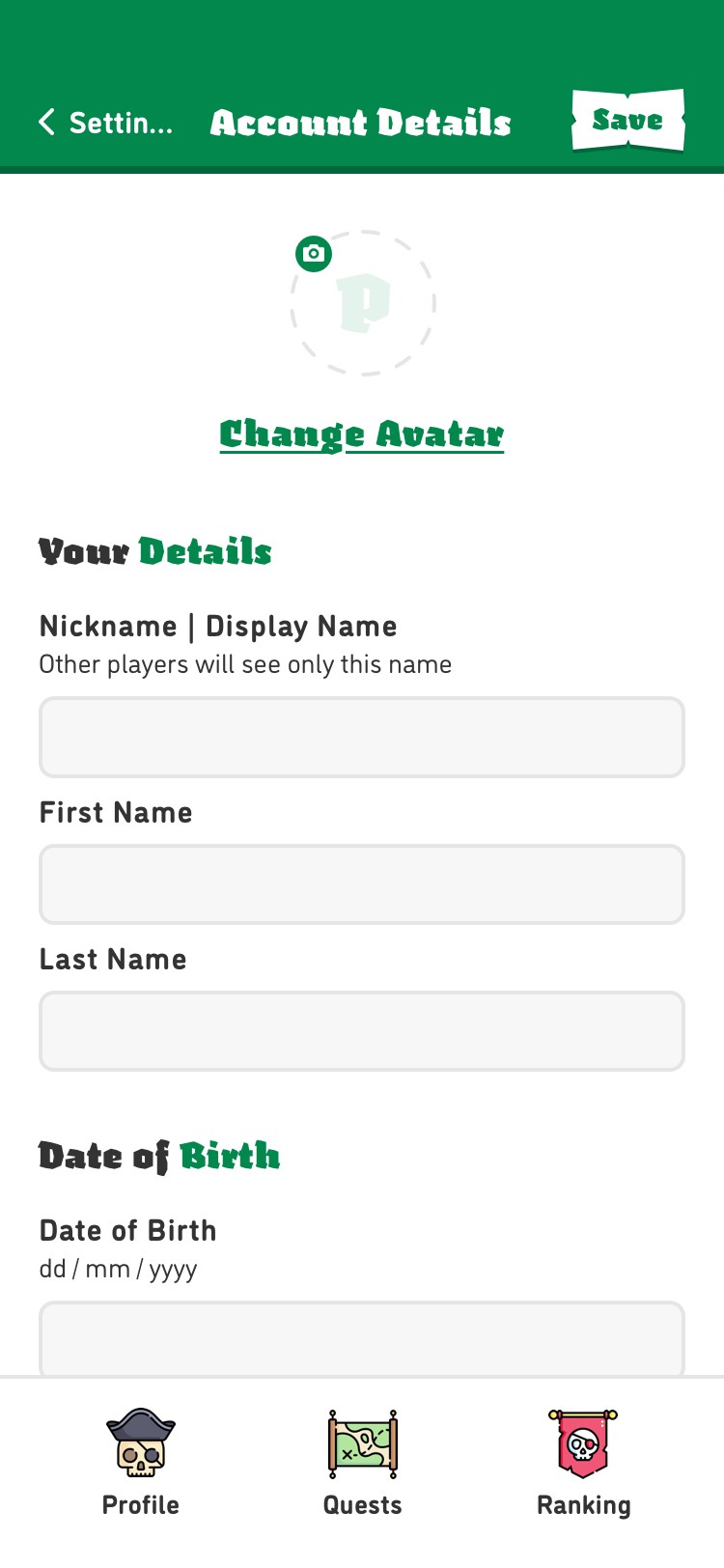
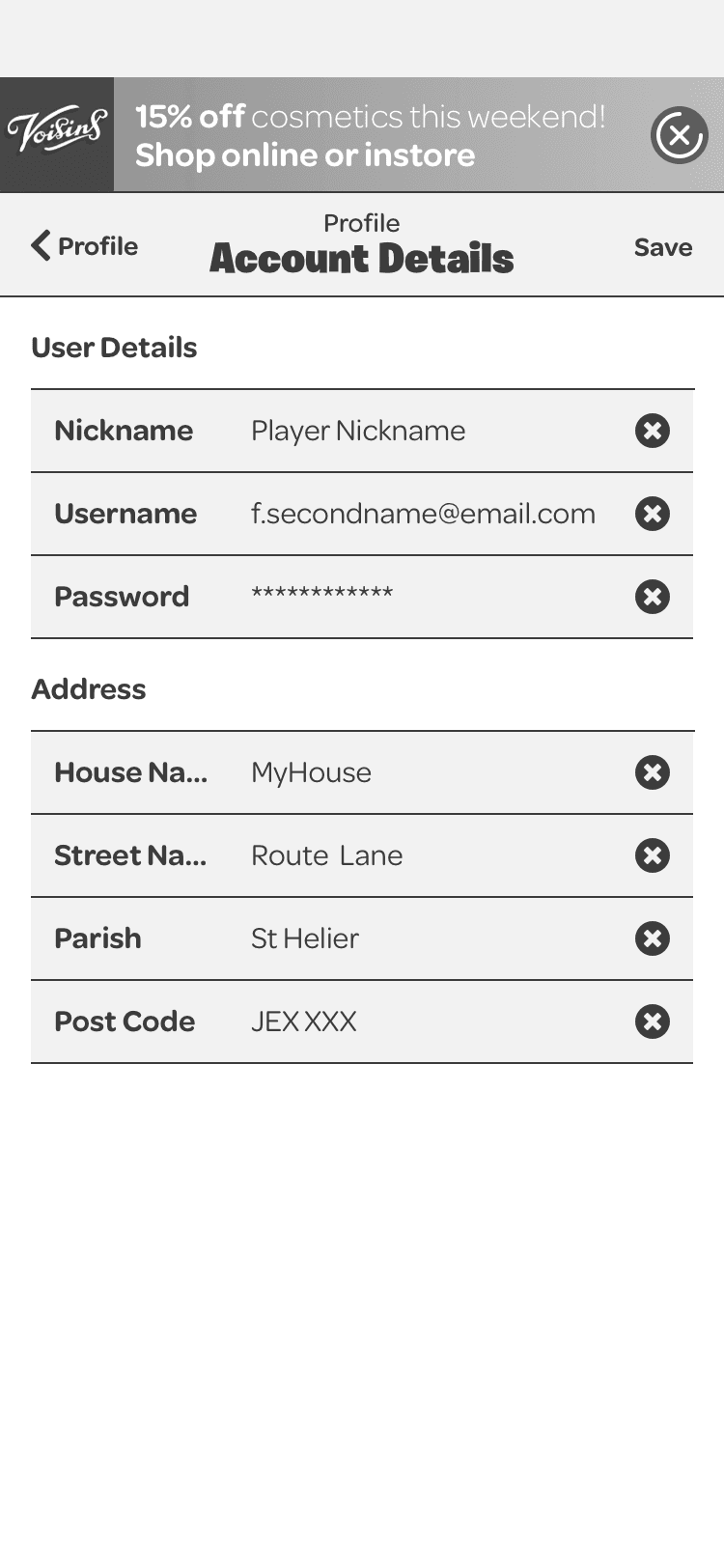
Account details
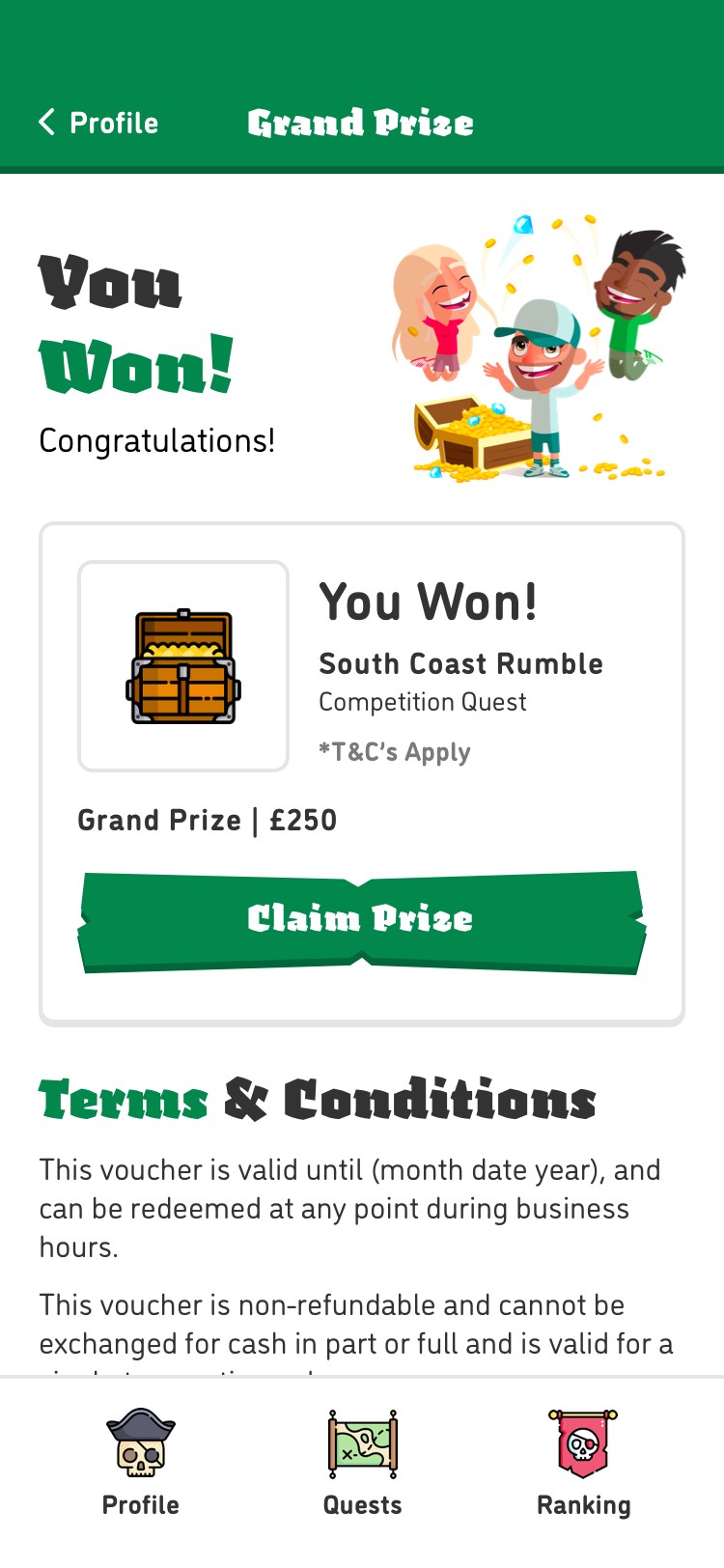
Prize win
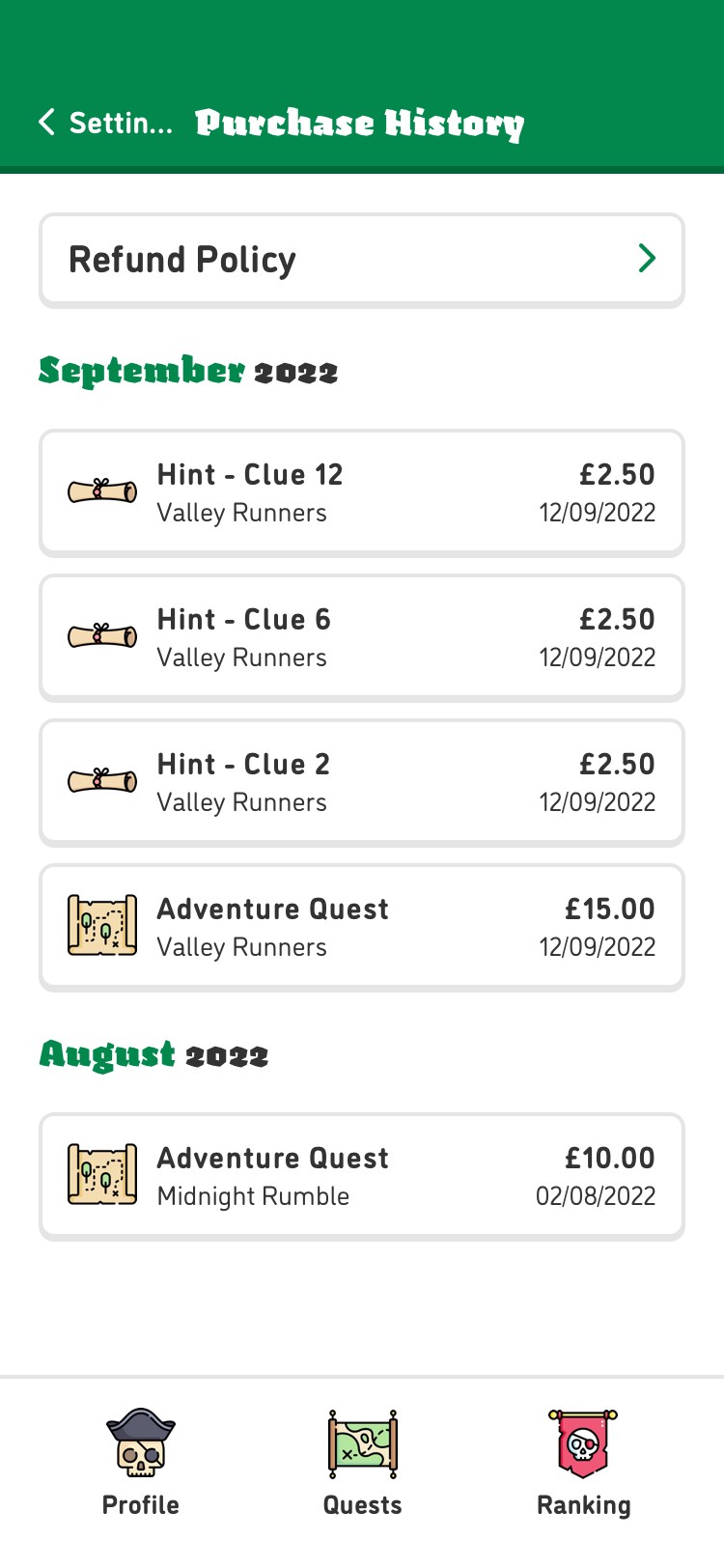
Purchase history
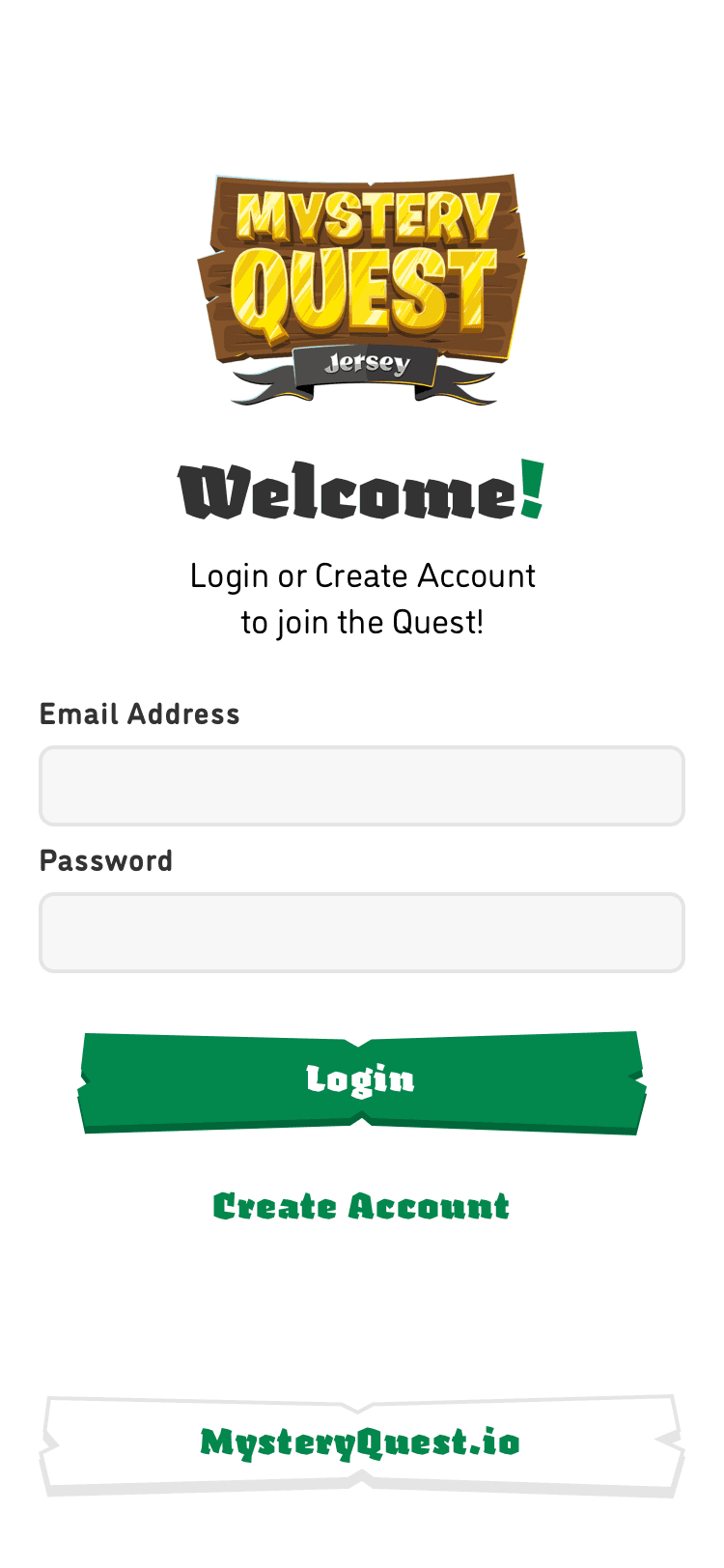
App welcome
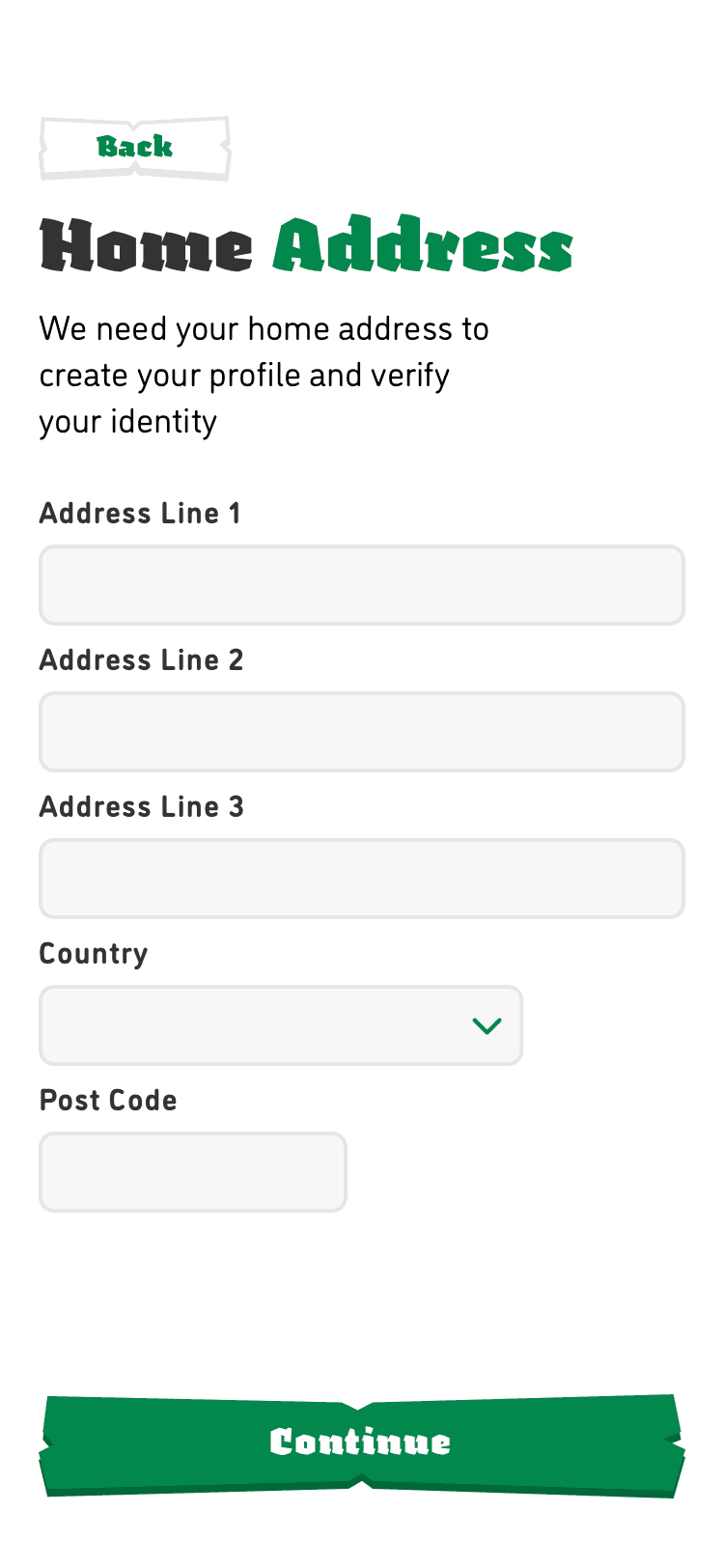
Input home address
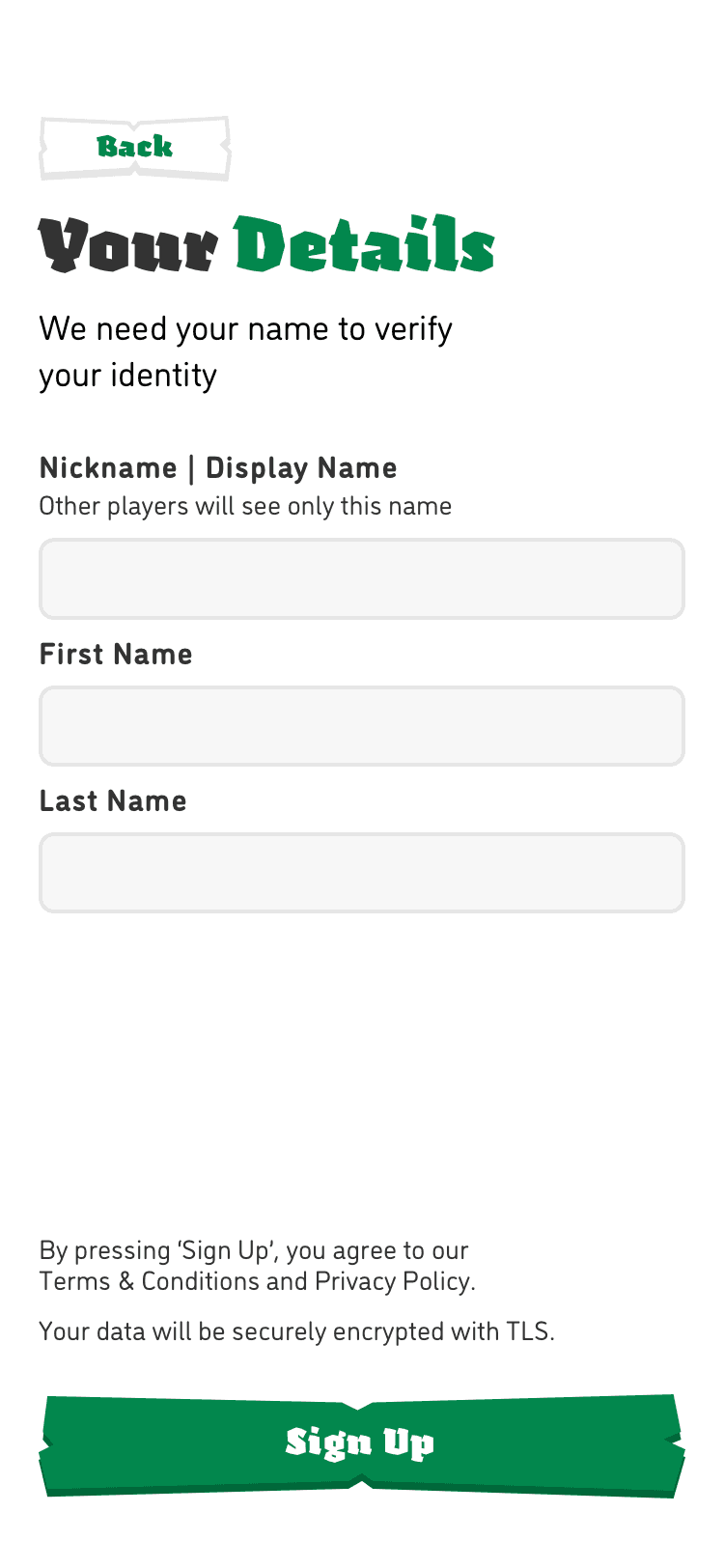
Input your details
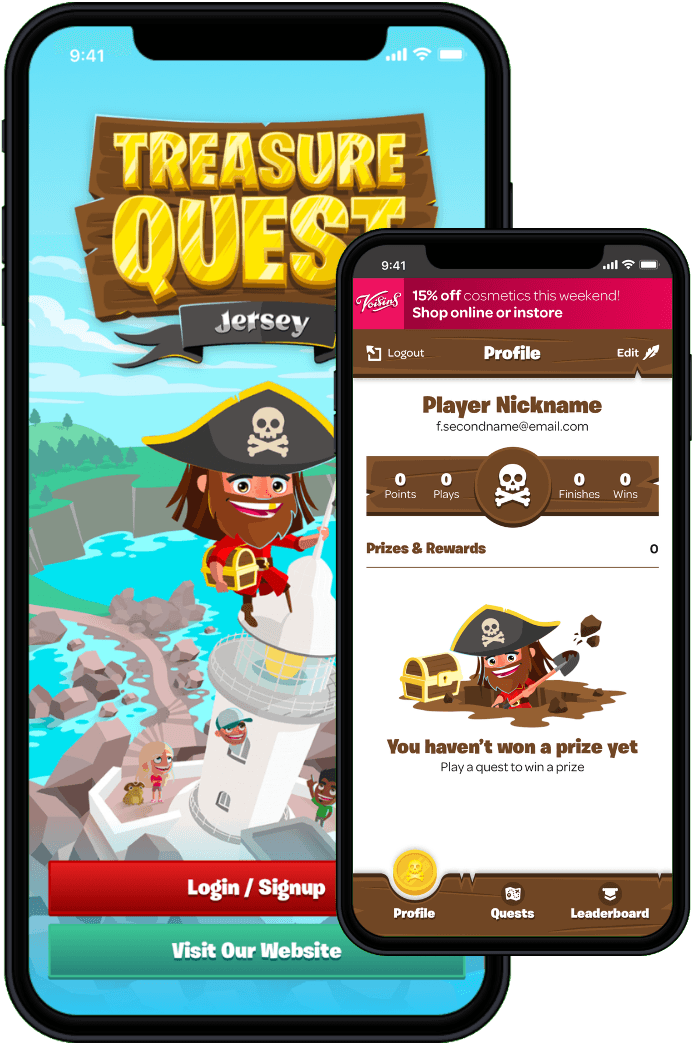
Treasure Quest v1
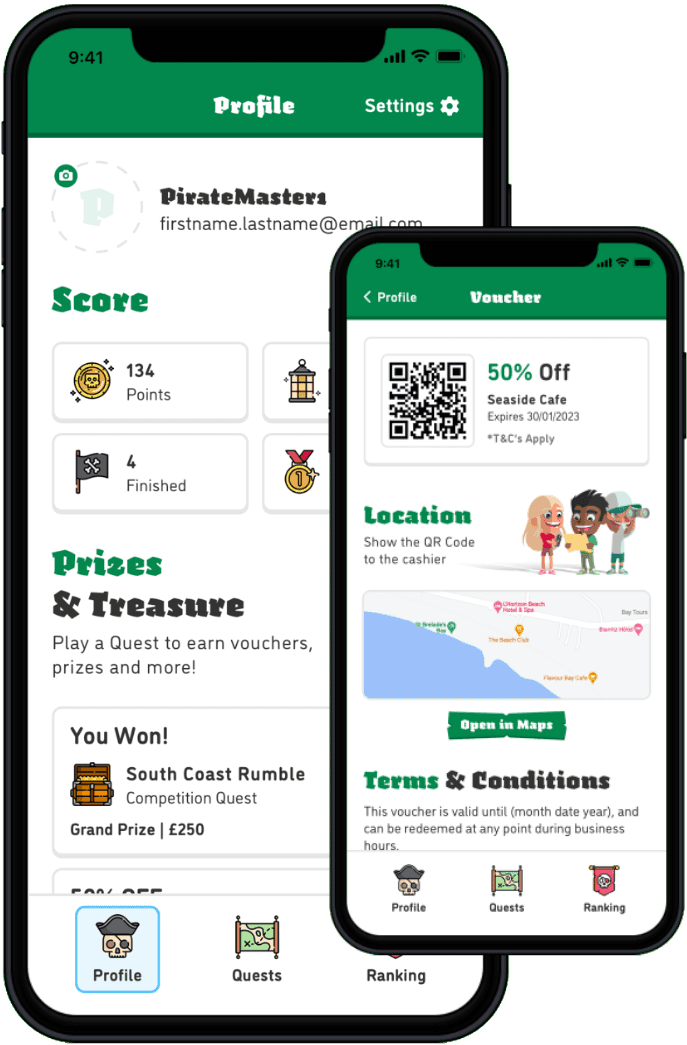
Mystery Quest v2
Accessibility & inclusion
Accessibility was considered from the start.
Accessibility needs surfaced through play-testing, not requirements documents.
Key considerations included:
WCAG AA-aligned design system
High-contrast UI for sunlight visibility
Identified during play-tests but not included:
Quest difficulty and accessibility ratings
Terrain and mobility indicators
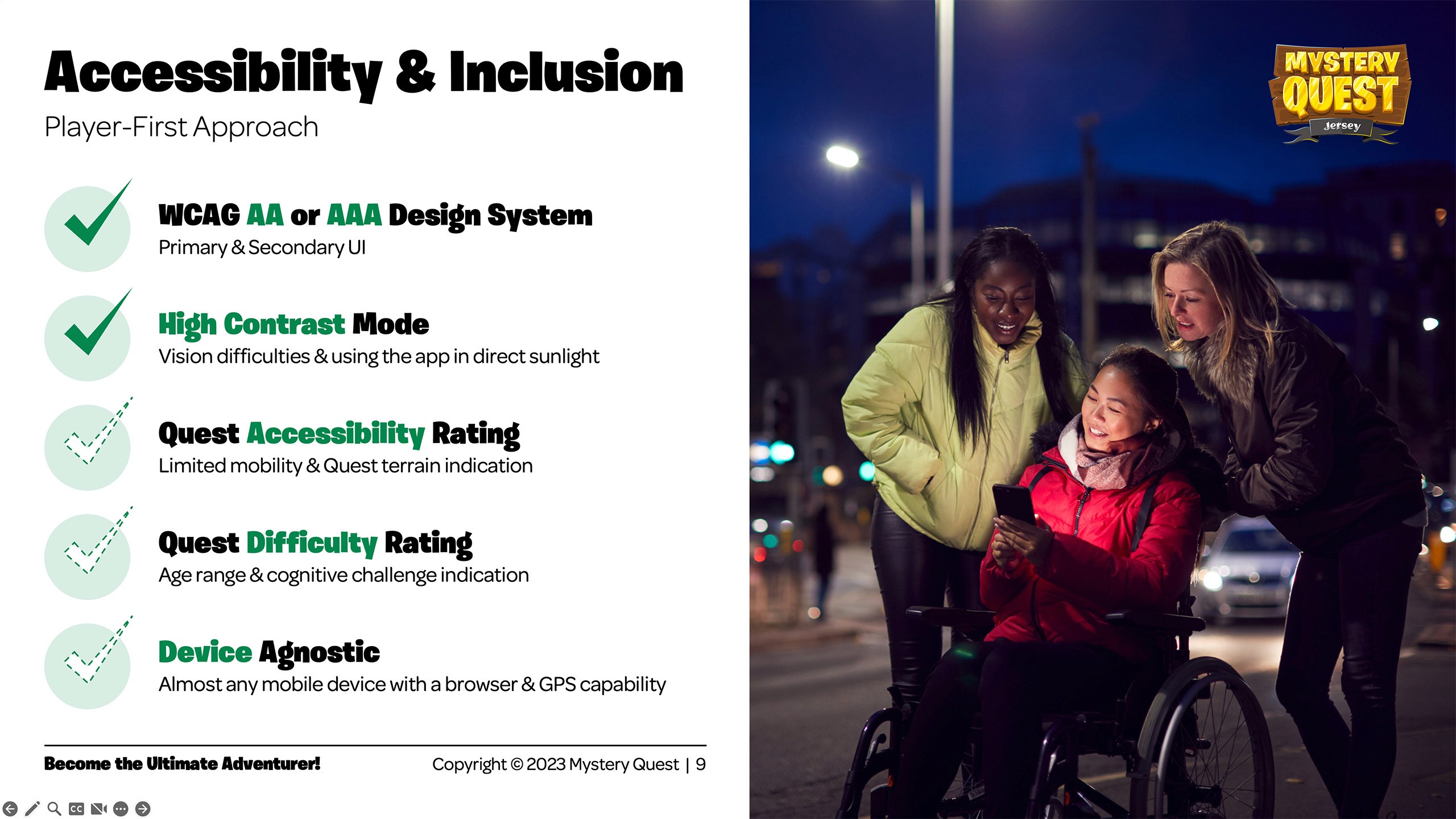
Accessibility & inclusion pitch slide
Marketing website
The marketing website was explored conceptually but never built.
Early wireframes and content design were used to:
Clarify the value proposition for investors and partners.
Test narrative framing and positioning.
Align brand, product, and commercial messaging.
Although the site was not taken to production, this work informed pitch materials, public-facing marketing assets, and overall go-to-market thinking.
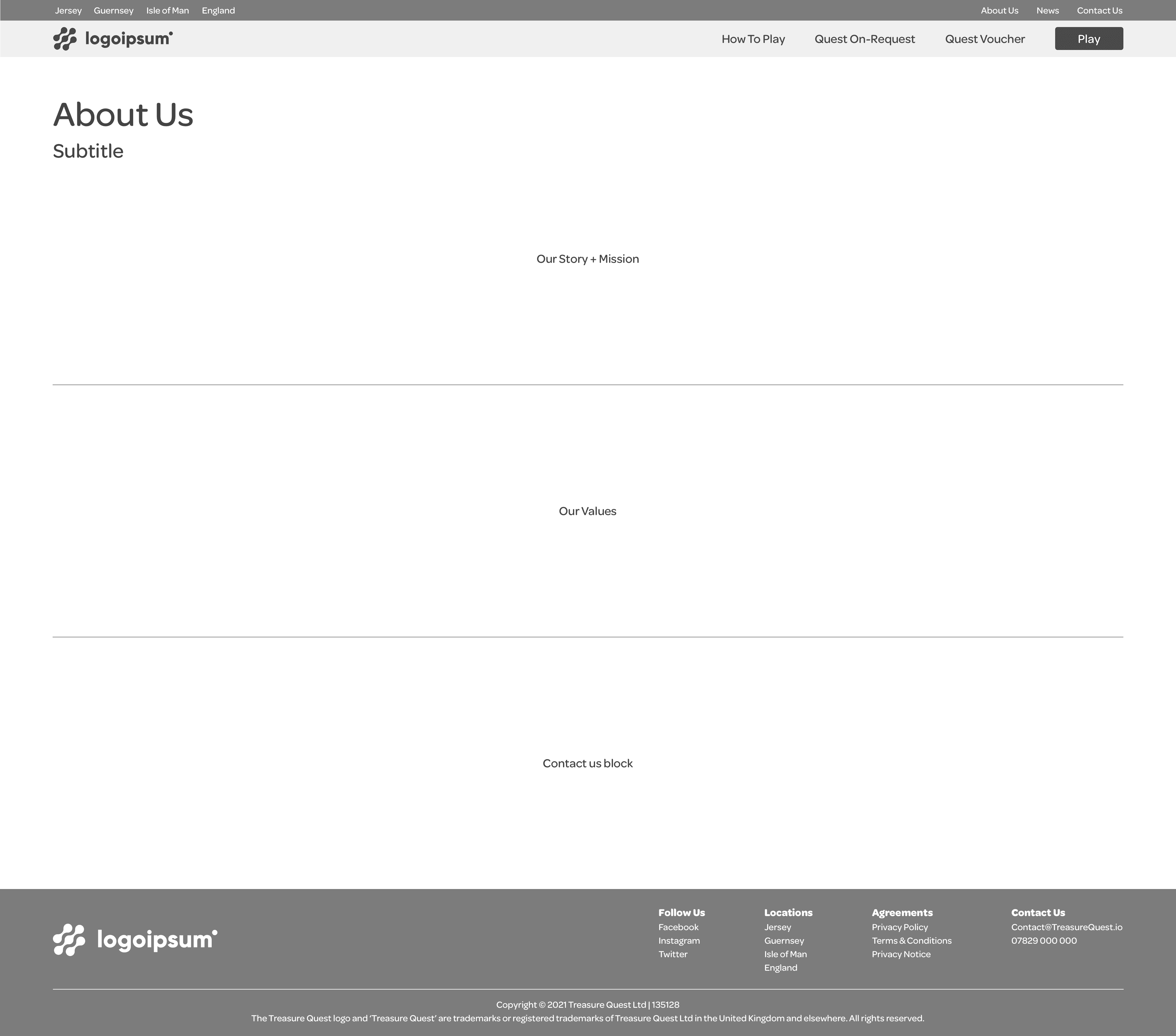
About us
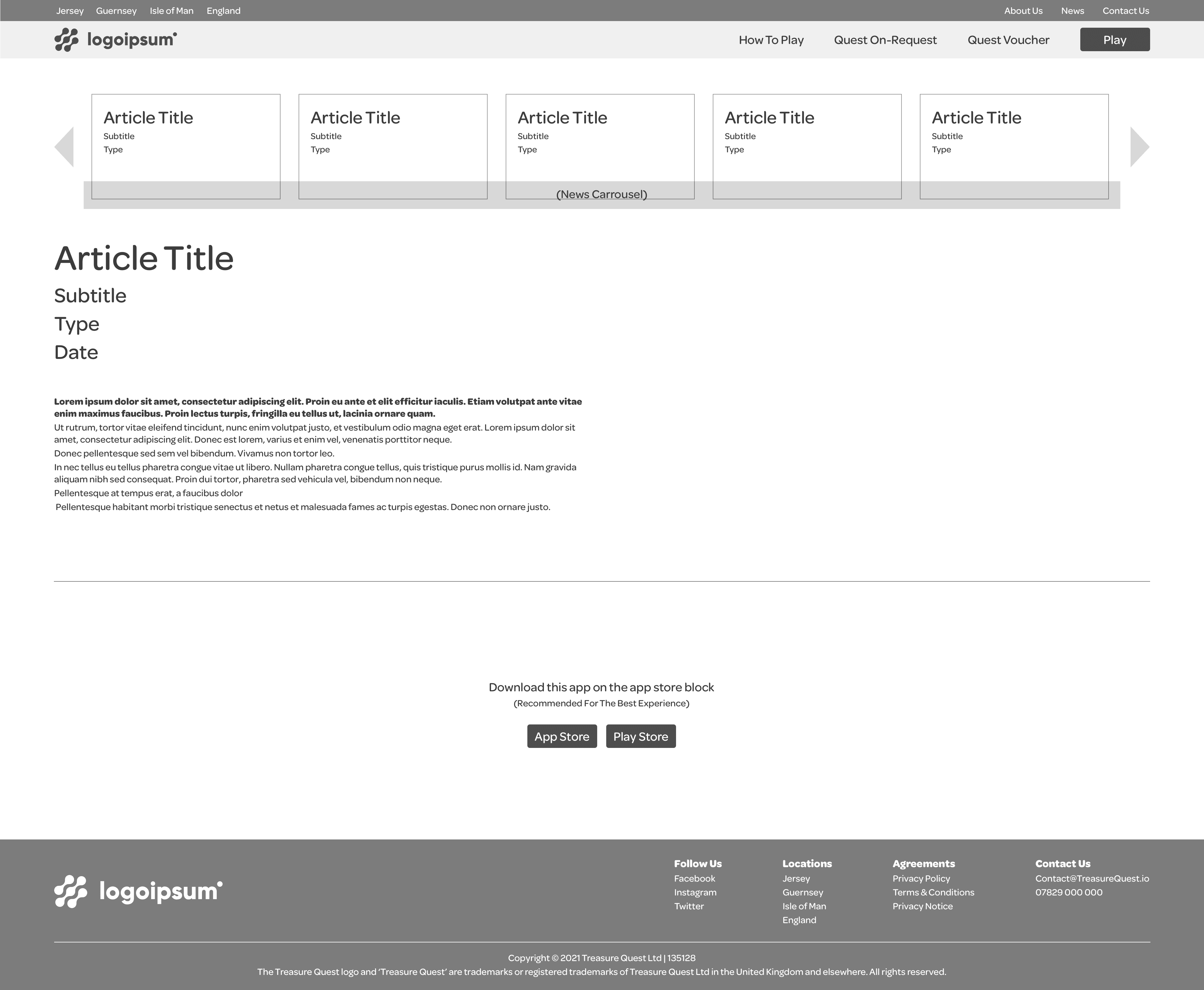
Marketing article
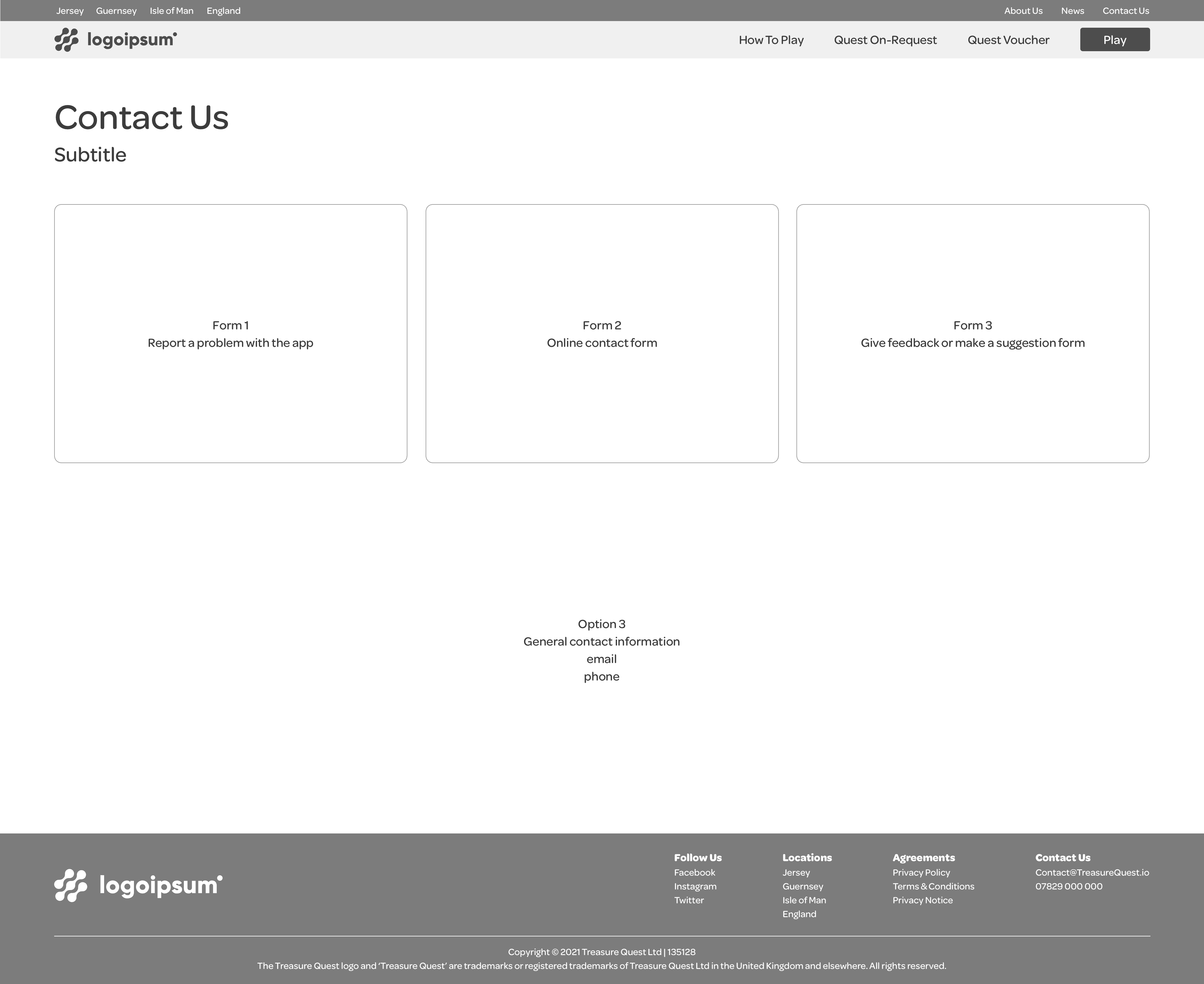
Contact us
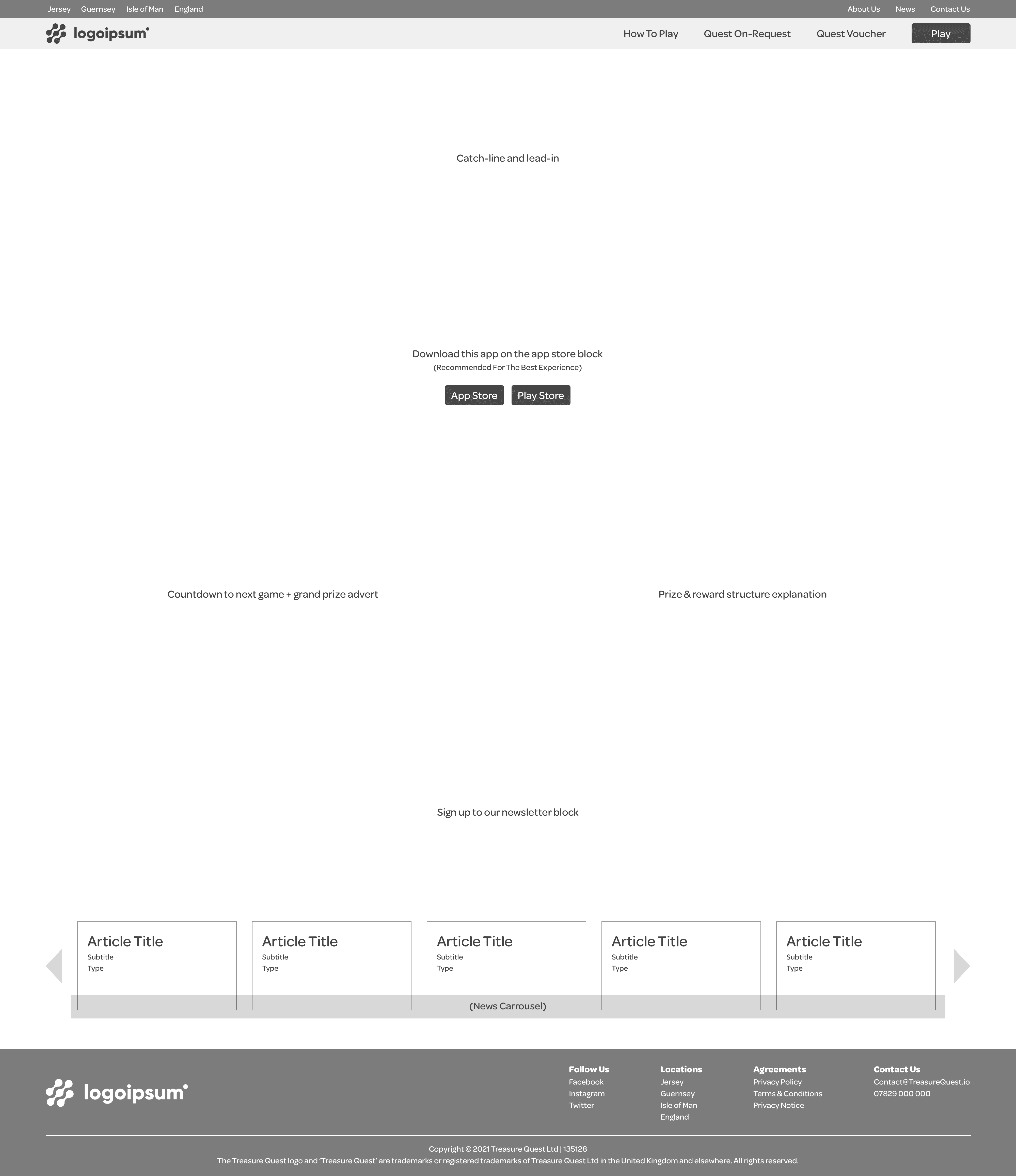
Homepage
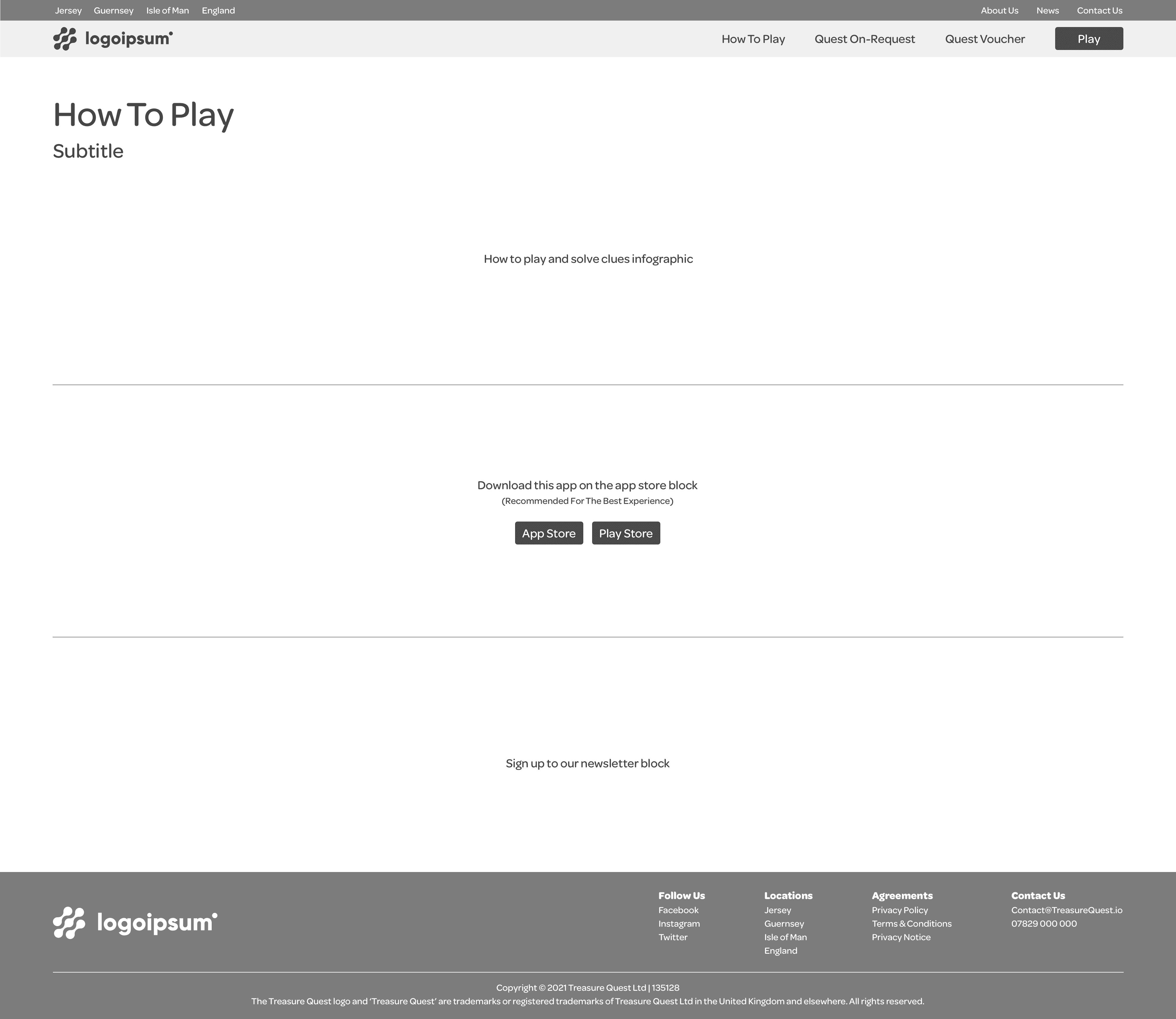
How to play
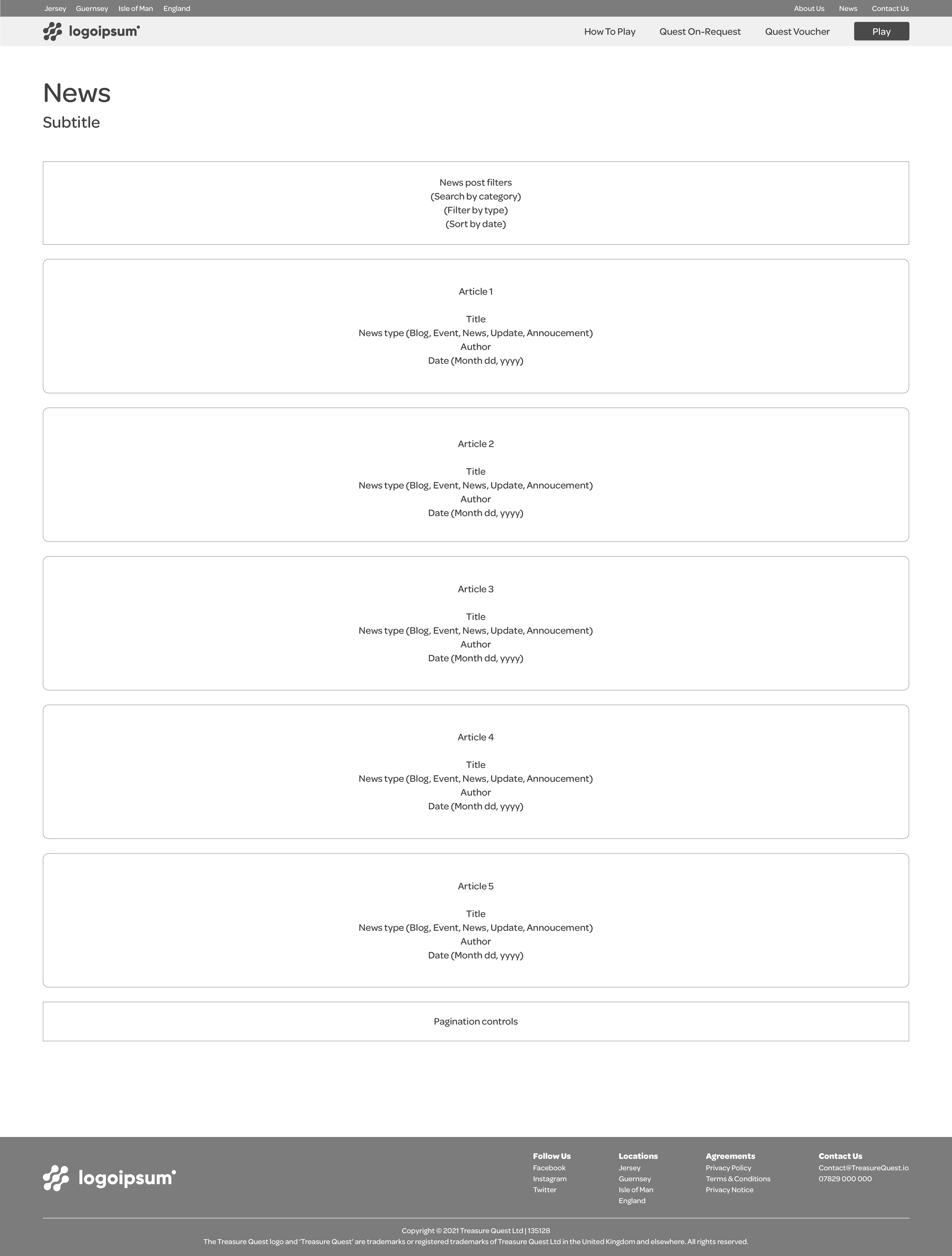
News
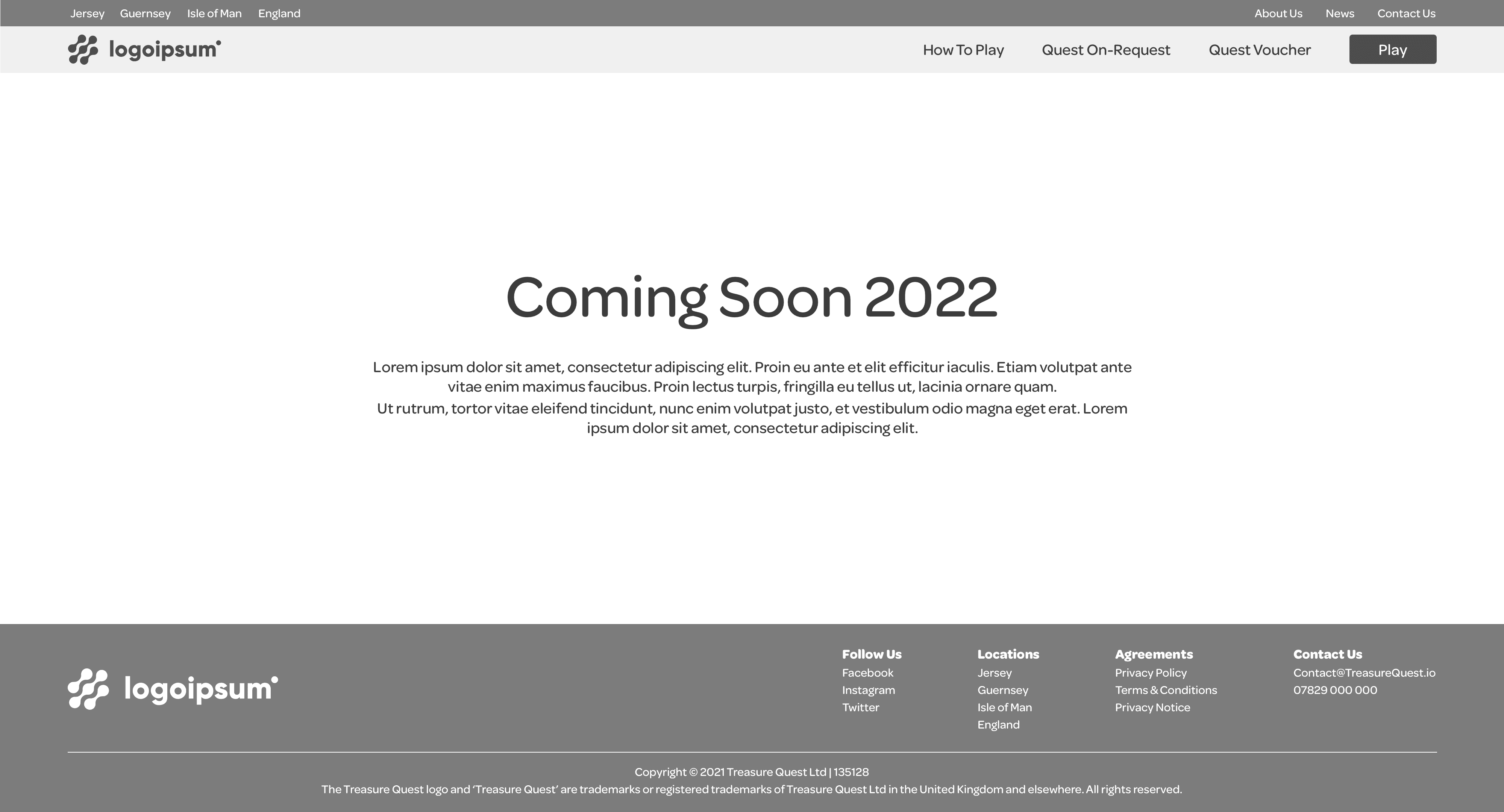
Coming soon holding page
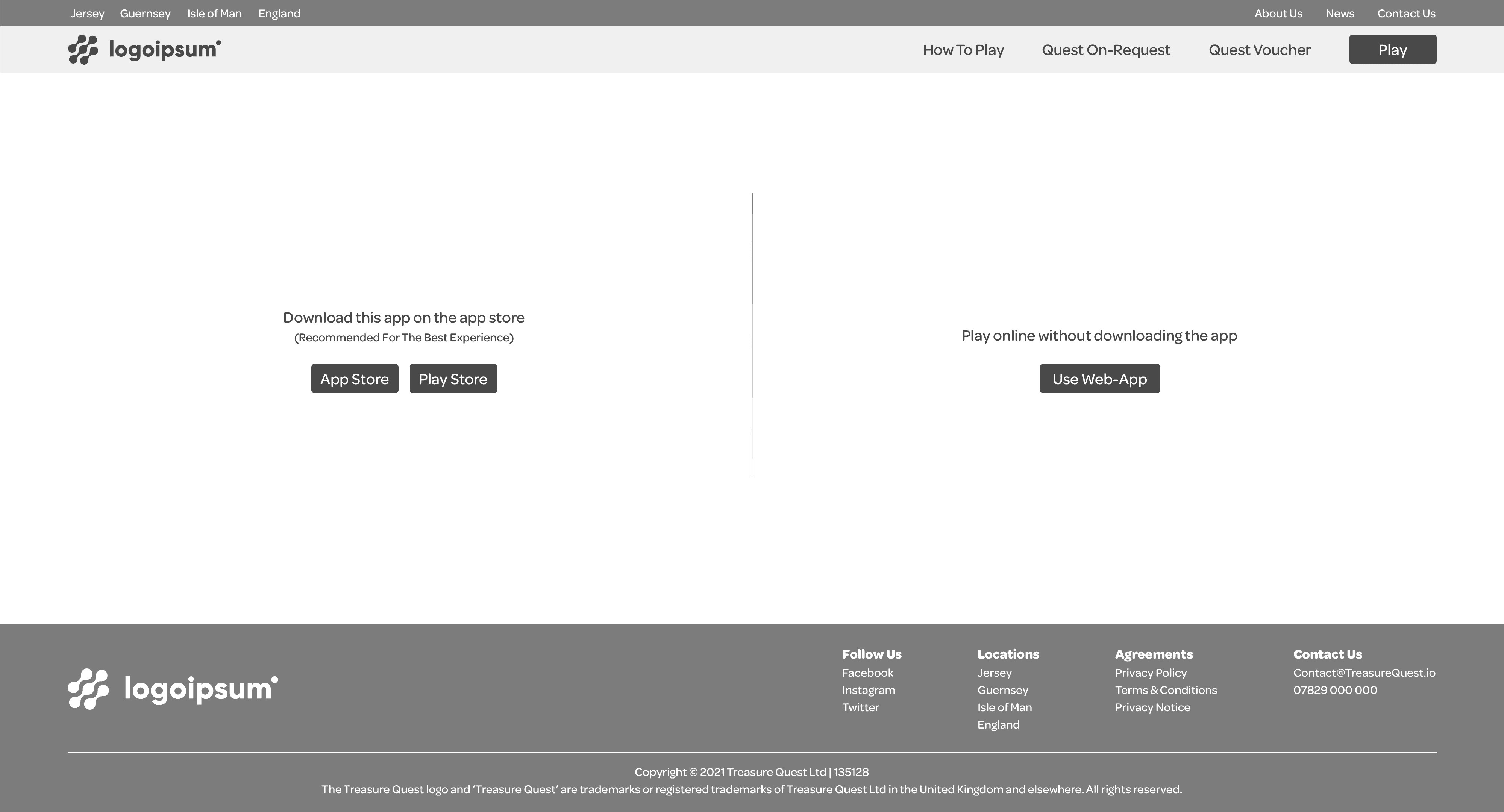
Play
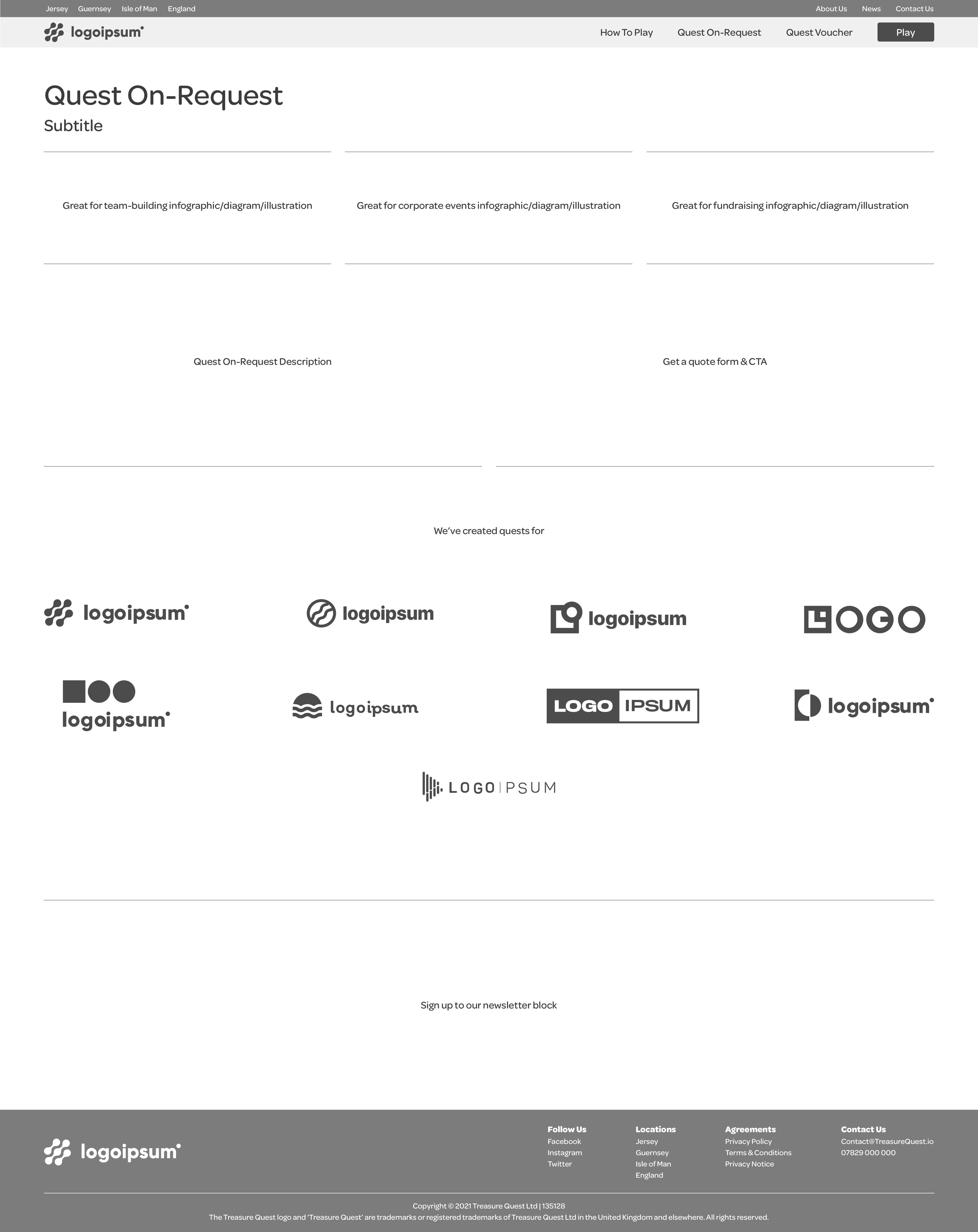
Request a 'Quest'
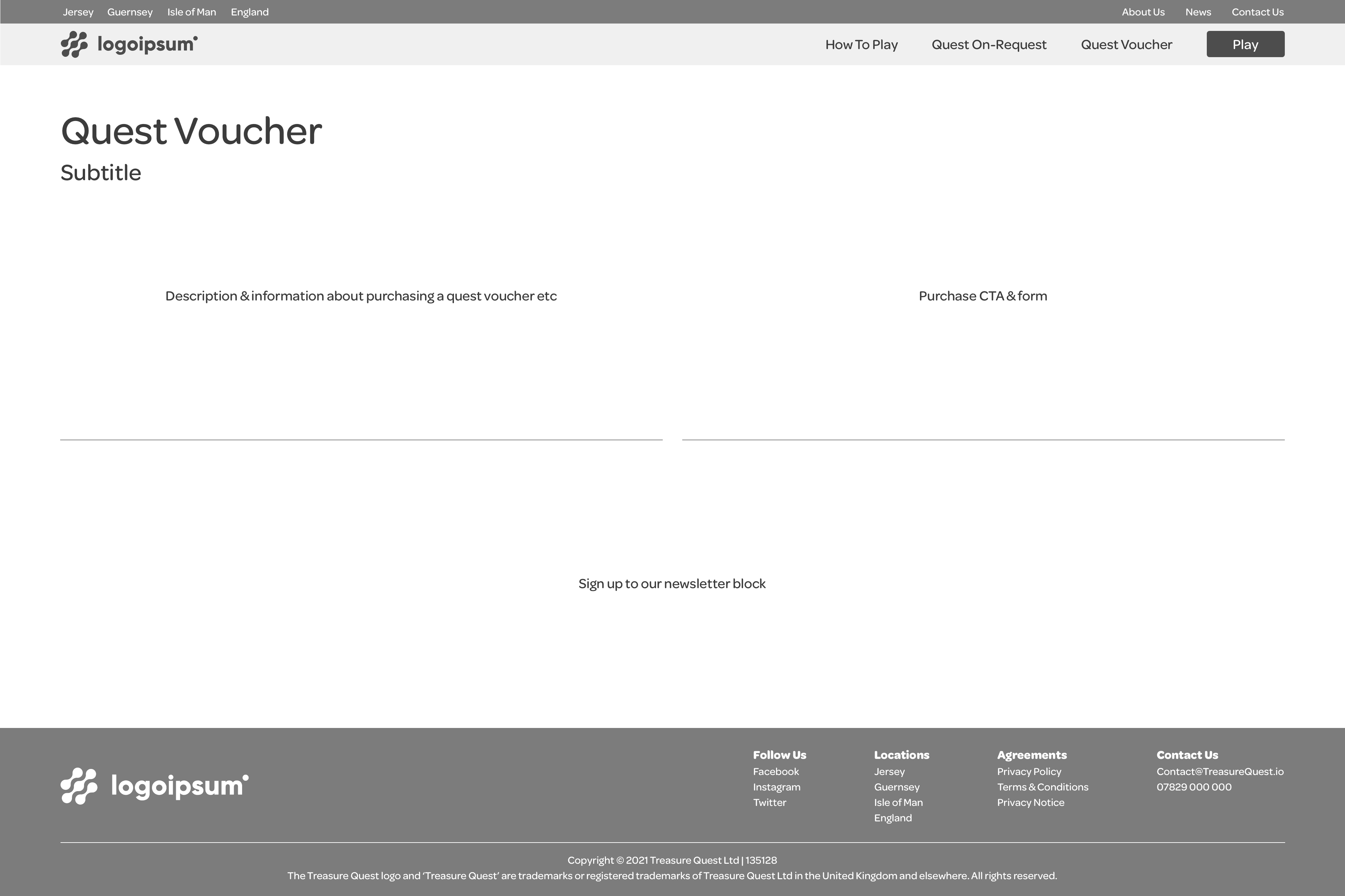
Buy quest voucher
Delivery & technical reality
I worked closely with external developers to translate UX intent into a scalable platform.
Key constraints that influenced design:
Cross-platform delivery using a single codebase.
Backend-driven quest logic and content management with micro-services.
Performance and battery considerations for location tracking.
Delivery and ways of working were the weakest part of the project. We did not have agile ceremonies, a structured backlog, or sufficient product ownership around design and development, which led to open-ended work and slower learning.
This experience directly influenced my decision to train as a Product Owner and Scrum Master and to work in disciplined agile environments.
Business & startup foundations
Alongside product and UX work, I was responsible for establishing the legal, structural and financial foundations of the business.
Working closely with a law firm we prepared:
Shareholders’ agreement.
Memorandum and articles of association.
Working independently, with support from mentors and structured online training:
I prepared and iterated on multiple versions of the company’s financial model, covering:
Revenue assumptions across different quest types and pricing models
Cost structures including COGS, SG&A, and platform operating costs
Investment cash inflows and runway modelling
Profit and loss statements
Cash flow forecasting and scenario planning
While not a UX deliverable, this work reflects a practical understanding of how startups operate, including equity structures, governance, director responsibilities, and long-term incentives. It also informed how I approach product ownership, risk, and decision-making.
Memorandum and articles of association - cover
Shareholders’ agreement - cover
Testing & validation
Mystery Quest was validated through:
Private testing sessions.
Internal playtests.
Paper play-tests with stakeholders.
These sessions provided qualitative feedback on clarity, pacing, usability, and narrative comprehension, helping surface issues that would not appear in purely screen-based testing.
Outcomes & reflection
Mystery Quest was not just a startup. It was a real-world product lab.
It strengthened my ability to lead ambiguous work, design complex systems, and ground UX decisions in real human behaviour beyond the screen.
What Worked
Strong engagement during guided experiences.
Appetite for narrative-driven, location-based play.
Validation of hybrid digital-physical mechanics.
What Didn’t
Iteration speed under startup constraints.
Proprietary tech-stack and vendor lock-in.
Early over-investment in brand, platform robustness and advanced features.
Key Learnings
Mystery Quest fundamentally shaped how I approach:
Lean UX and fast validation.
Designing for uncontrolled environments.
Balancing ambition with delivery reality.
Product-market fit under uncertainty.
Trying to validate too much at once slowed down learning.
These lessons now inform every product I lead, from early-stage concepts to regulated, large-scale platforms.