
Introduction
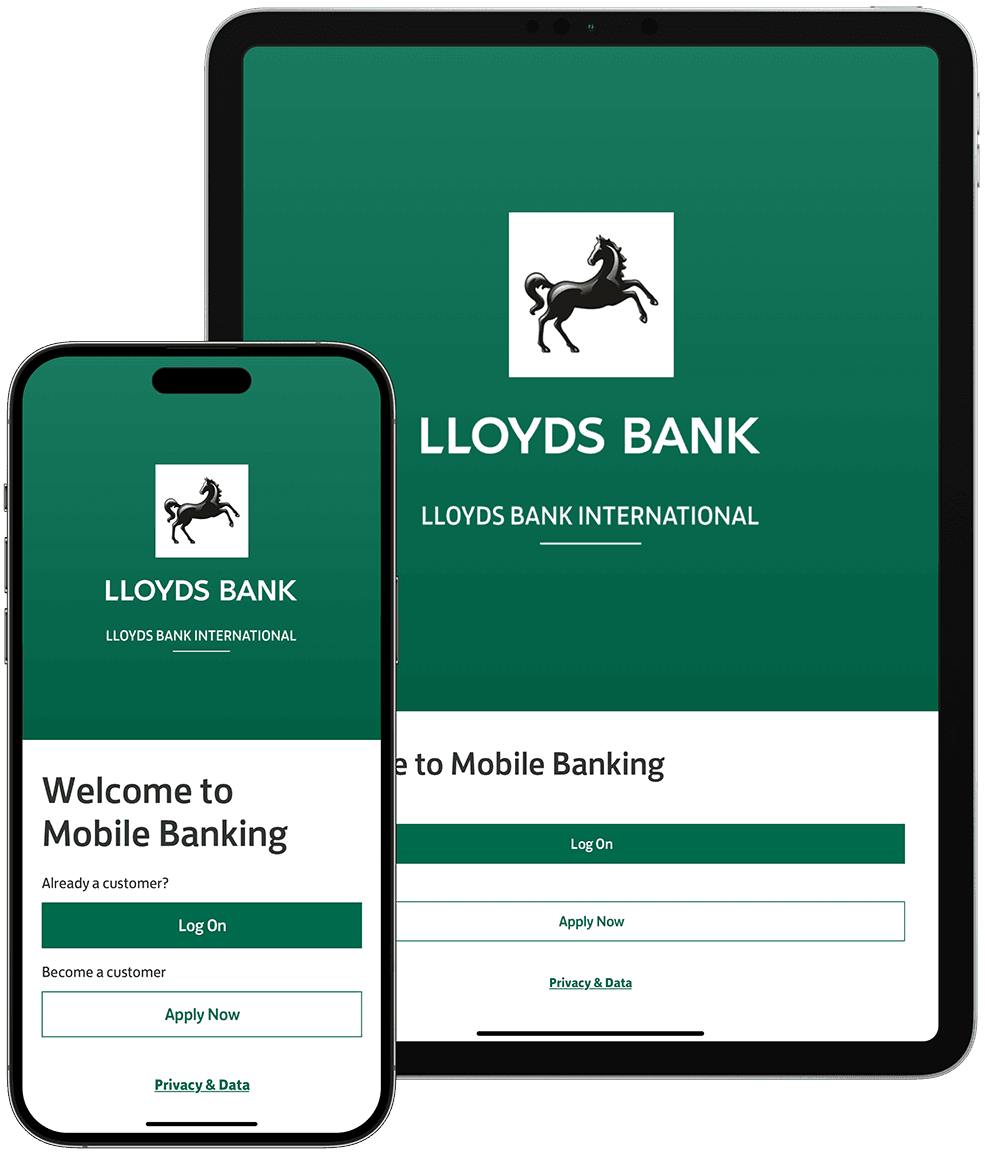
This project focused on delivering Lloyds Bank International’s first native mobile banking application across iOS and Android. It was undertaken within a tightly regulated environment, with legacy platforms, fixed delivery timelines, and limited internal design capability.
The value of the work lay less in visual refinement and more in judgement: deciding what not to change, how to preserve trust across channels, and how to deliver something durable in an environment with low design maturity and limited scope for change.
This work was not an opportunity to deliver a mobile-first redesign or a modernised banking experience.
Given the regulatory, organisational, and technical constraints, success was defined as delivering a stable, usable, and accessible mobile product that the organisation could support and evolve over time.
Context & constraints
Lloyds Bank International operates with a degree of separation from Lloyds Banking Group UK, using different technology stacks and delivery models. While the UK group provided oversight and sign-off on areas such as brand and architecture, it did not directly support implementation, and its existing mobile app could not be reused or extended by Lloyds Bank International.
The organisation had historically delivered digital banking through a desktop-first, responsive web platform designed many years earlier, shaped by legacy security models and regulatory assumptions. There was no established design system, limited reuse of assets, and minimal internal design capability.
While the UK group provided governance and sign-off, delivery responsibility sat entirely with Lloyds Bank International, with no ability to reuse the existing UK mobile app or its underlying systems.
Key constraints shaped the work from the outset:




Existing web platform (For visual context)
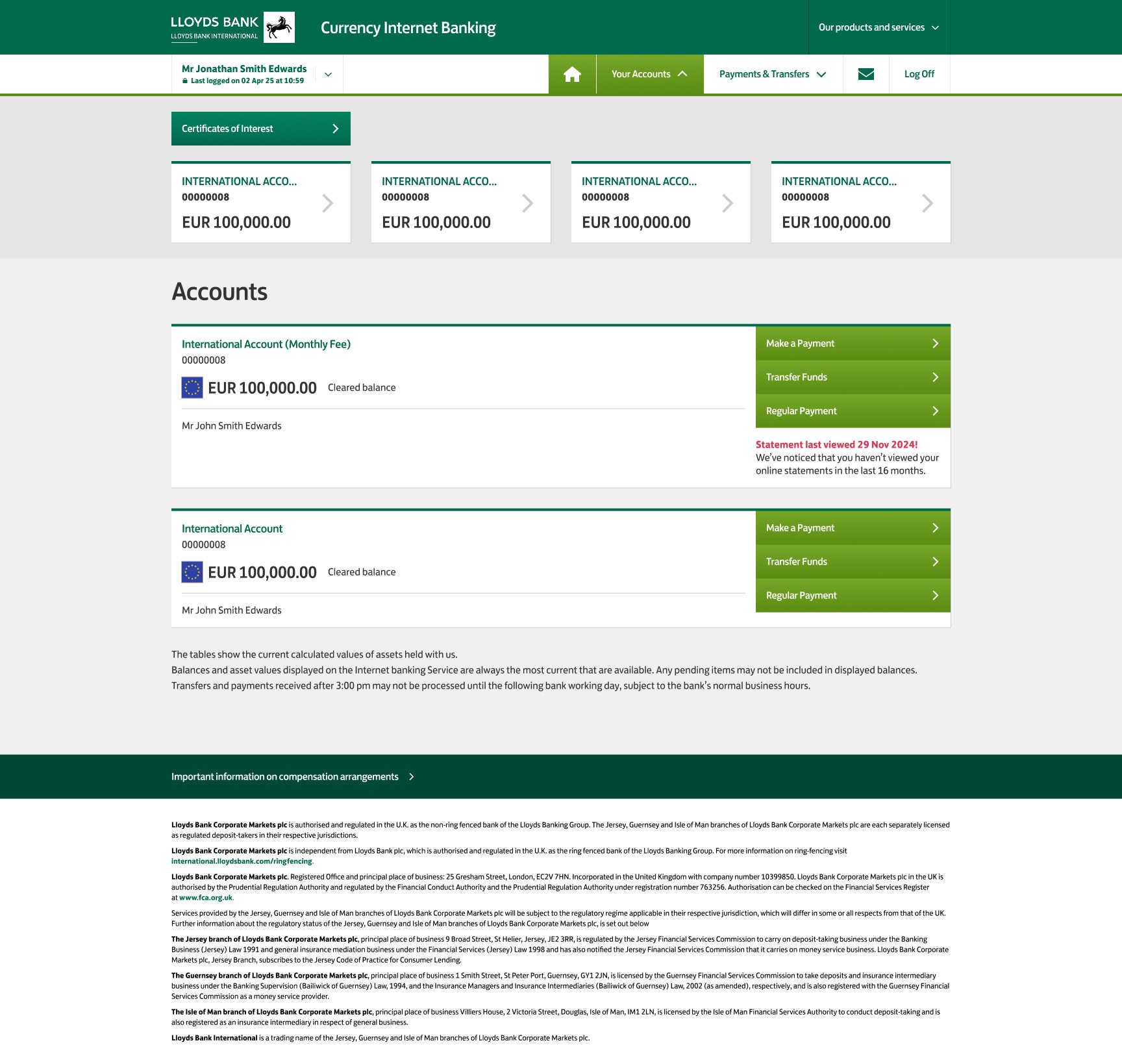
Exisiting online banking experience

Primary button

Secondary button

Tertiary button
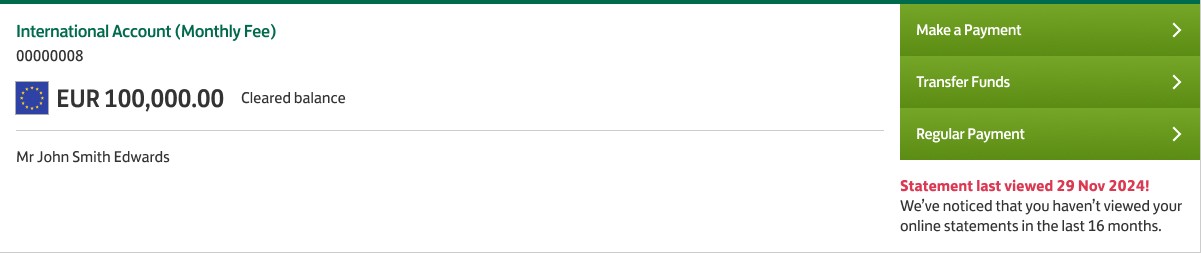
Account card
My Role & responsibility
I was brought onto the project several months into development, once it became clear that attempting to “map” a desktop banking experience directly into native mobile screens without design support was not working.
As Lead Product Designer, I was responsible for:
End-to-end UX and UI design for the mobile banking app.
Designing a full onboarding journey embedded within the app.
Establishing consistent interaction patterns across iOS and Android.
Defining accessibility intent and addressing audit findings at design level.
Supporting launch through App Store and limited marketing assets.
I worked largely independently, collaborating with internal business analysts, product specialists, and engineering teams where technical or historical context was needed.
Users & stakeholders
The primary users were Lloyds Bank International customers, typically aged 50–70, many of whom were retired or semi-retired and managing international finances accumulated through careers abroad.
Their needs centred on reliability, familiarity, and clarity over speed or novelty.
Secondary stakeholders included:
Internal operations and support teams
Compliance and regulatory reviewers.
Engineering teams responsible for native delivery.
Senior business stakeholders accountable for launch.
These groups often had competing priorities: risk mitigation, delivery certainty, and customer trust frequently outweighed optimisation or modernisation.
The challenge
The original assumption was that a mobile app could be delivered by replicating the existing desktop experience, with minimal design input. In practice, this led to fragmented layouts, inconsistent components, and poor usability once development began.
The real challenge was not designing a better mobile experience, but deciding how to deliver a credible one under conditions where:
Journeys could not be materially changed.
Content could not be rewritten.
Approval cycles were expensive and slow.
The organisation needed something it could support and evolve.
Strategy & approach
Early on, I reframed the objective with stakeholders:
Deliver a stable, usable, and accessible mobile app that mirrors the existing desktop experience closely enough to be trusted, supported, and scaled after launch. This led to a deliberately conservative strategy.
Key design decisions
The direction of this work was shaped by a small number of deliberate decisions made in response to the context and constraints:
1
I prioritised cross-channel alignment over mobile-first optimisation to reduce approval risk and maintain internal confidence in the product.
2
I preserved existing content and journey structures wherever possible to avoid introducing regulatory and governance delays.
3
I focused design effort on stabilising interaction patterns rather than visual refinement, recognising that the product needed to be supportable before it could be optimised.
4
Where trade-offs conflicted, I favoured long-term maintainability and organisational feasibility over short-term usability gains.
These decisions established the boundaries within which the work could progress and were revisited throughout delivery as constraints evolved.
More ambitious mobile-first concepts were explored early to test boundaries, but were ultimately rejected due to delivery and approval risk.
Validation
Given time and regulatory constraints, formal discovery was limited. Instead, validation was embedded pragmatically through:
Close review of existing desktop usage patterns and support pain points.
Continuous collaboration with internal project and department experts.
Regular design walkthroughs with engineering to surface feasibility issues early.
Formal accessibility auditing later in the project.
Insights largely confirmed that familiarity and predictability were more valuable to this user base and technical/project constraints than optimisation or novelty.
Designing the experience
Information architecture & navigation
The first step was mapping the full feature set and information architecture of the desktop platform, then translating this into a coherent mobile structure. The goal was not simplification, but stabilisation: ensuring that features appeared in predictable locations and followed consistent patterns.
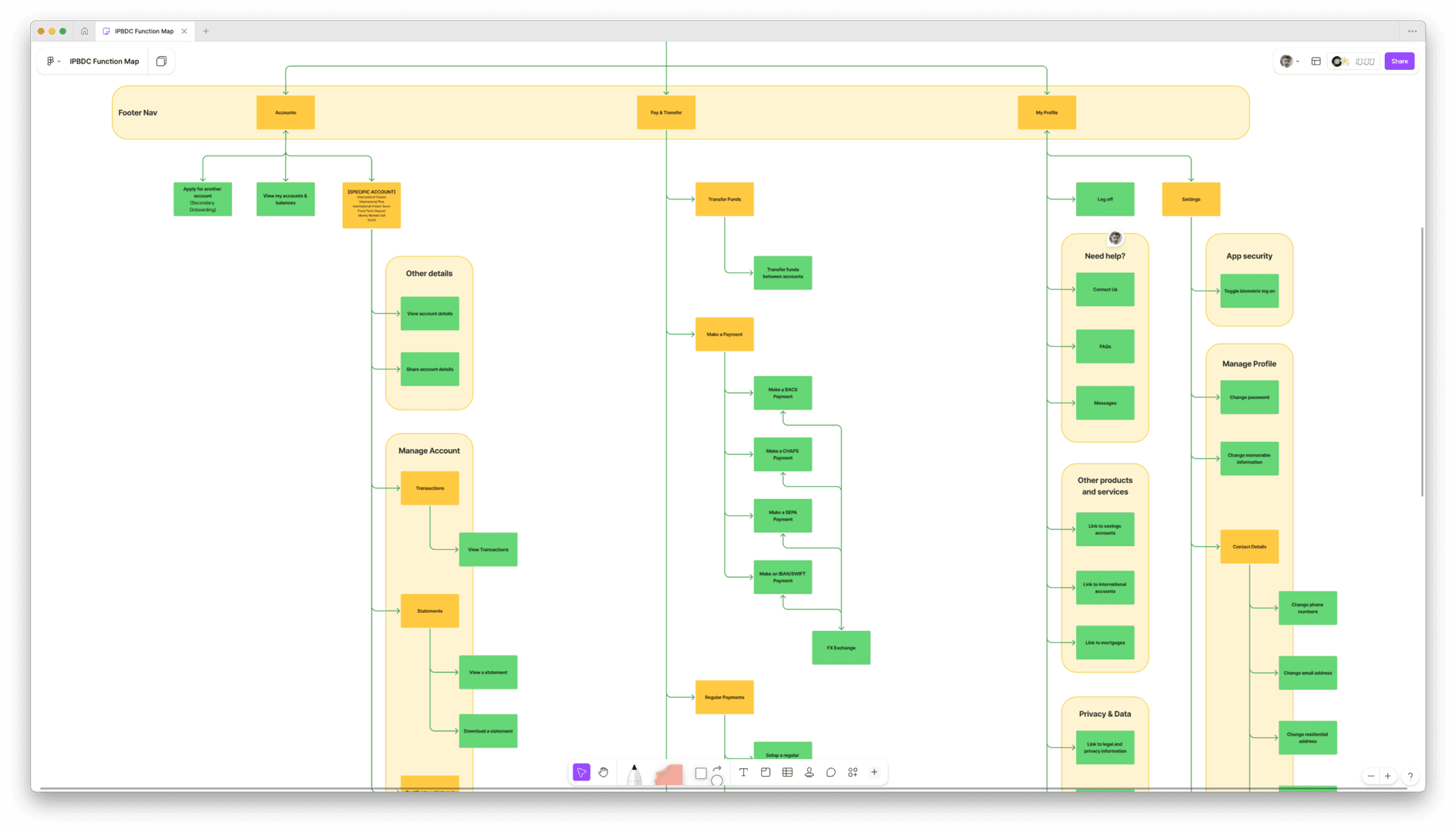
High-level IA showing desktop-to-mobile translation of features and journeys.

Linear desktop navigation
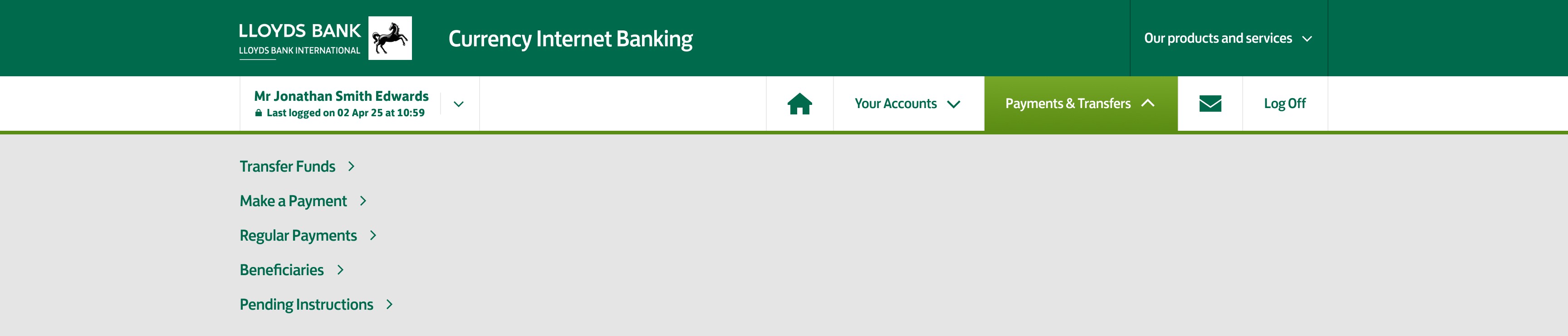
Linear desktop navigation
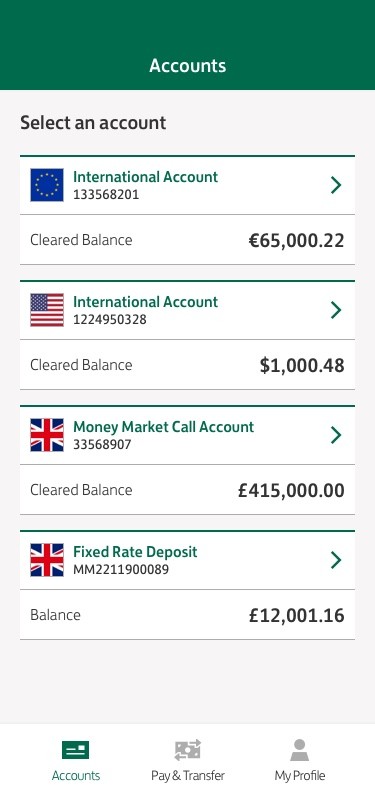
Accounts
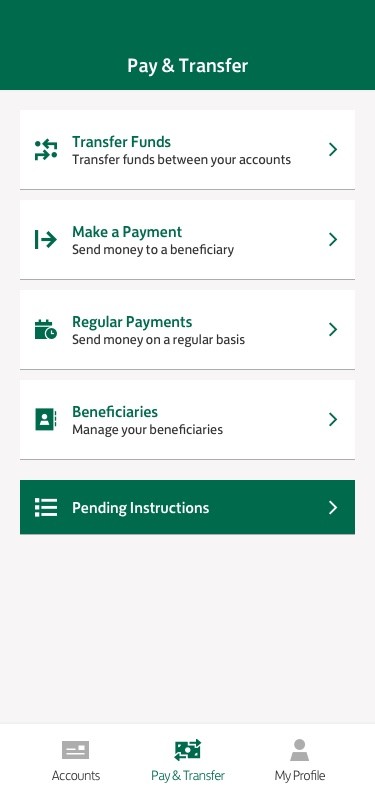
Pay & Transfer
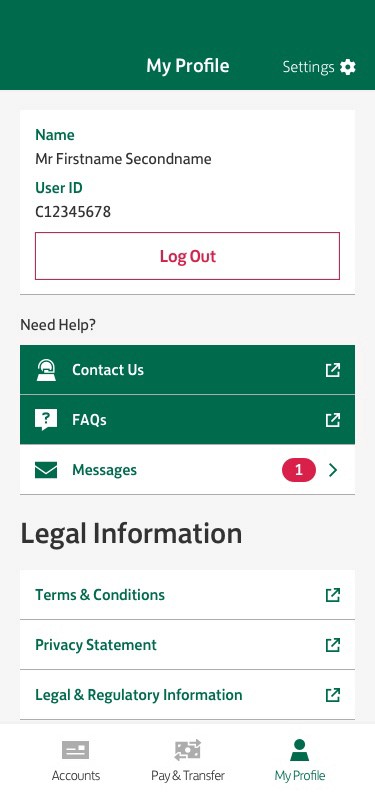
My Profile
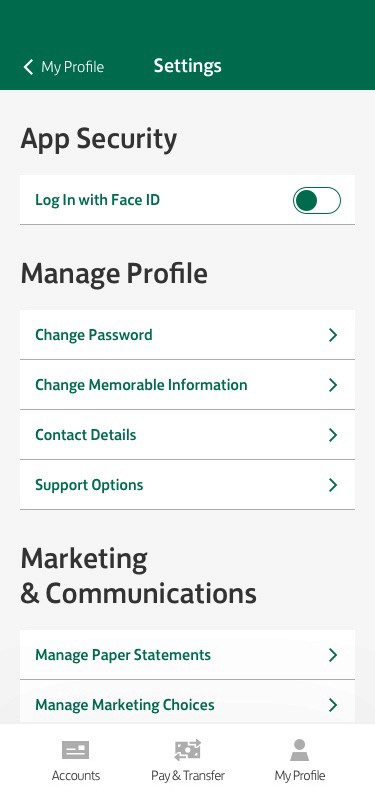
Settings
Design & interaction patterns
Early in the project, several core banking interactions and journeys had already been implemented without design oversight.
Similar actions such as viewing balances, initiating transfers, or confirming transactions were presented with inconsistent hierarchy, layout, and interaction behaviour across the app.
This fragmentation increased cognitive effort for users and introduced unnecessary complexity for engineering teams maintaining multiple variations of the same pattern.
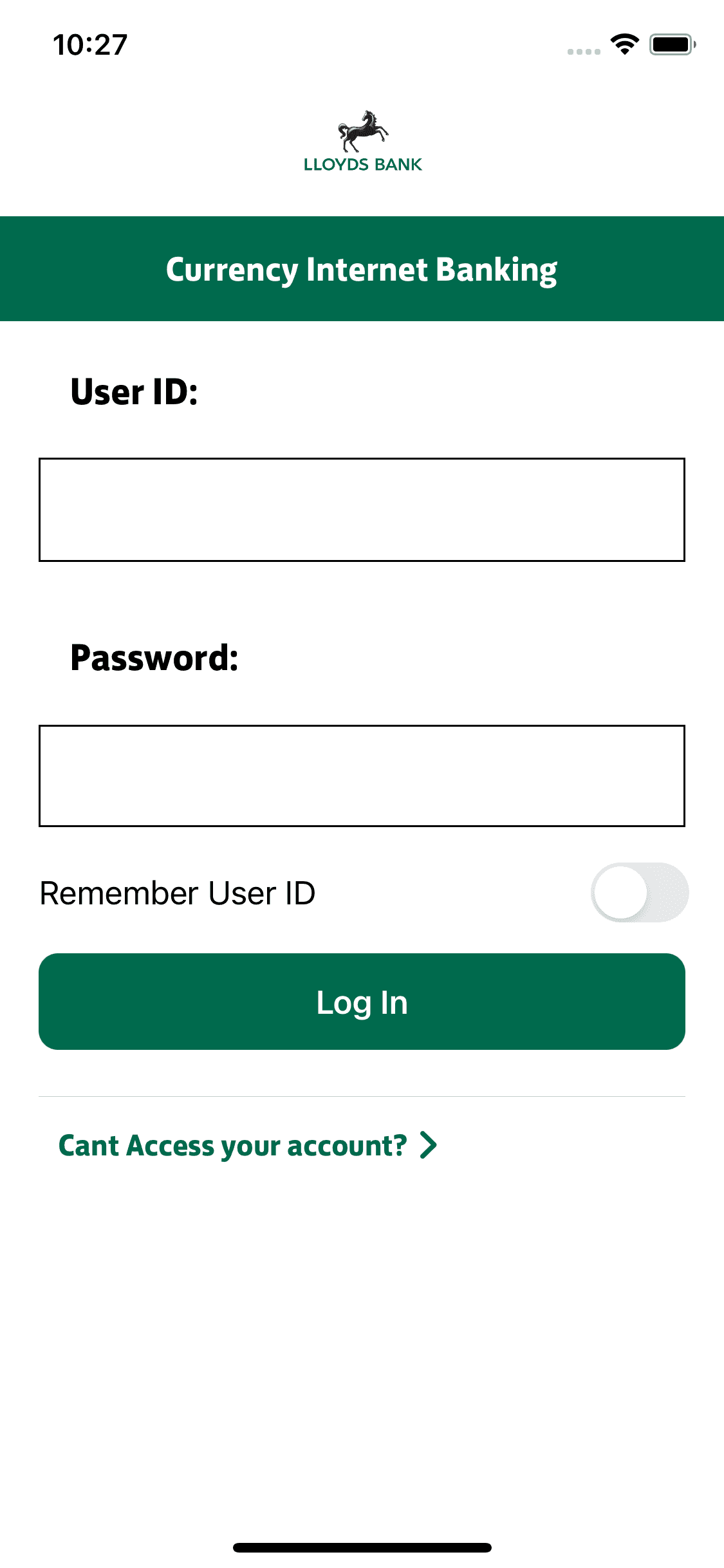
Log on - before design
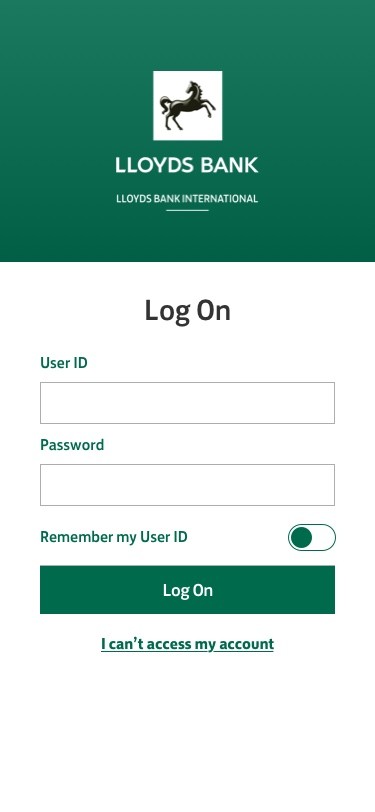
Log on - after design
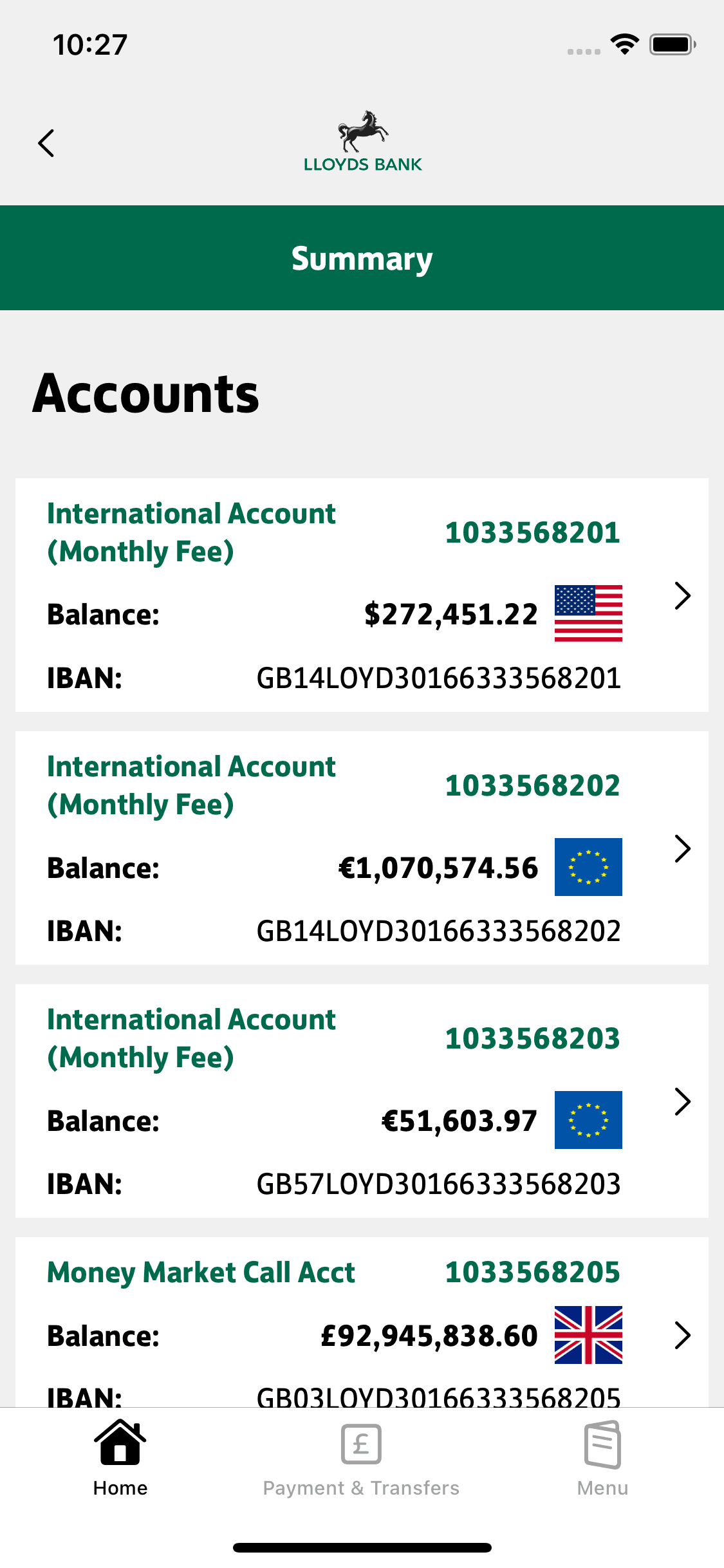
Accounts - before design
Accounts - after design
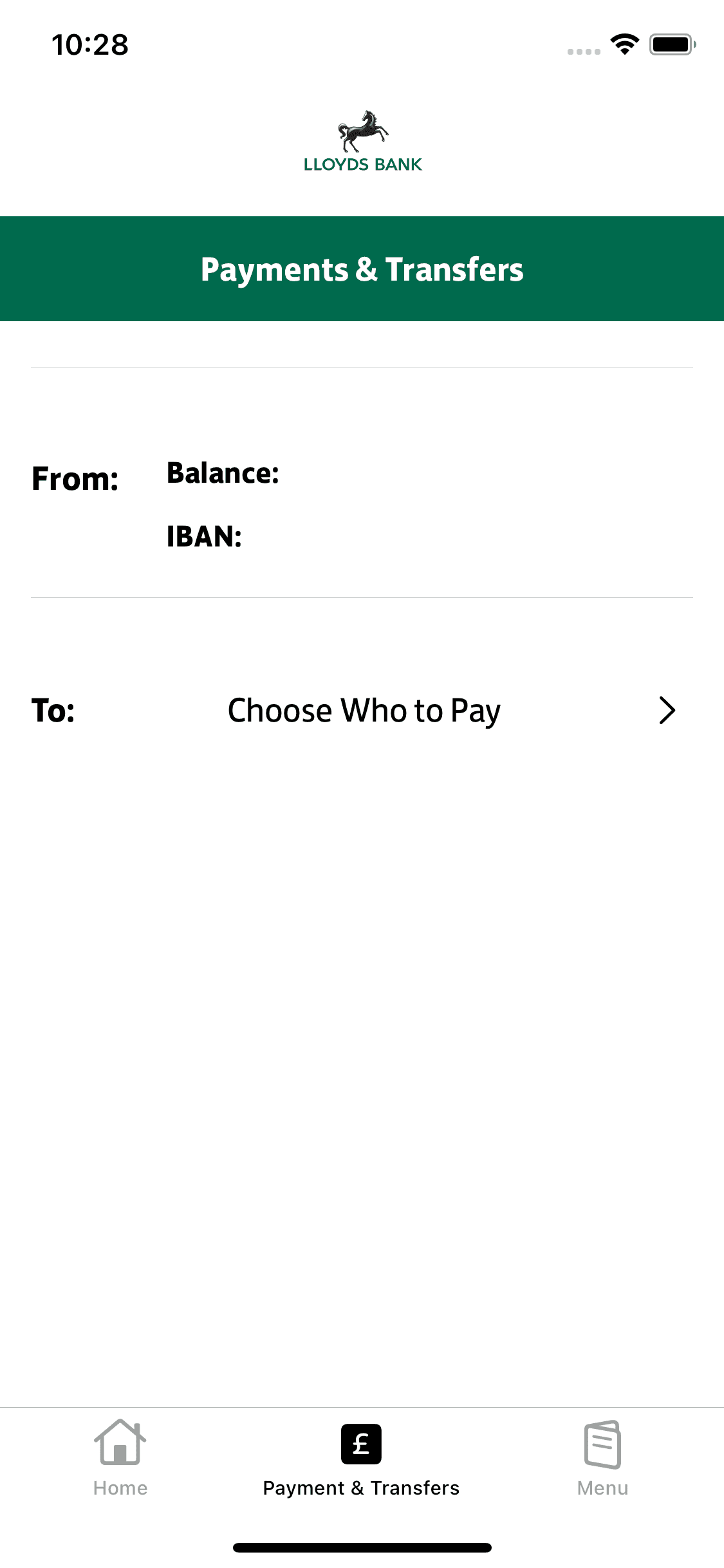
Payment - before design
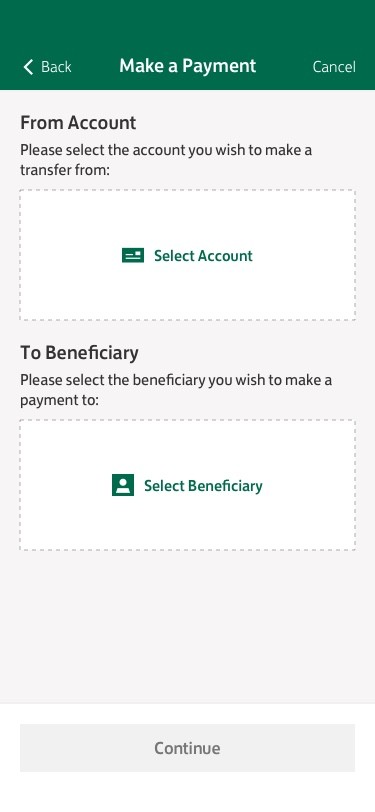
Payment - after design
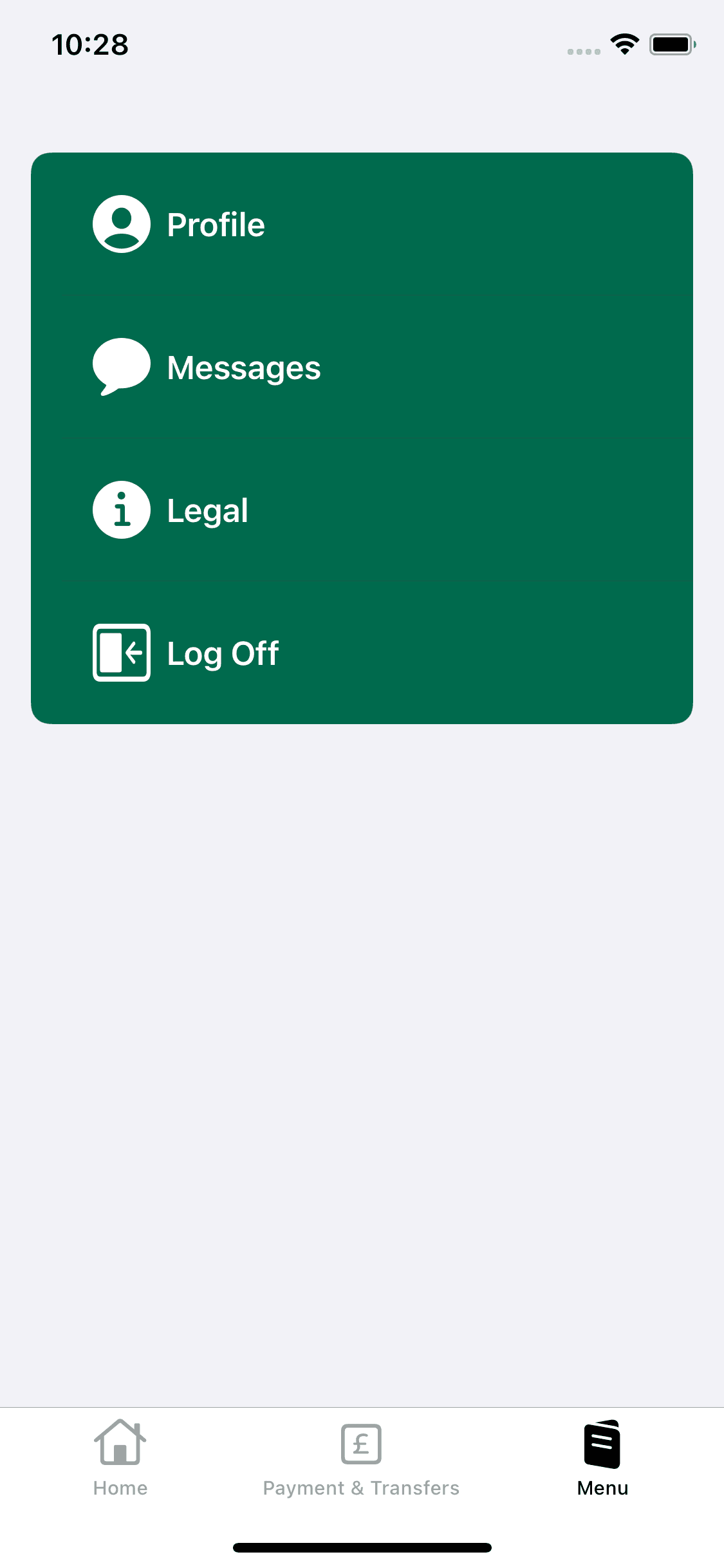
Profile - before design
Profile - after design
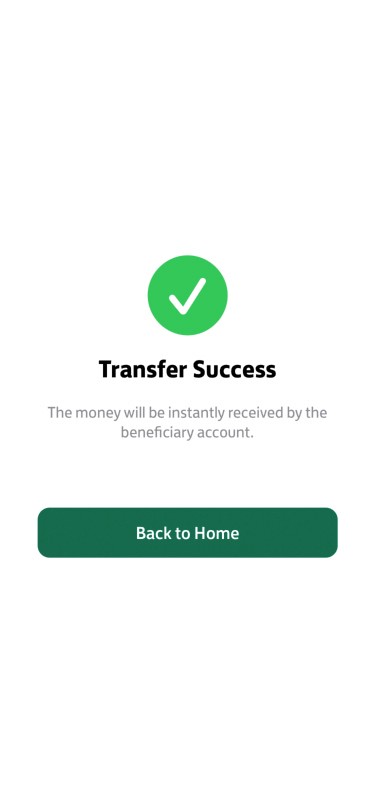
Success message - before design
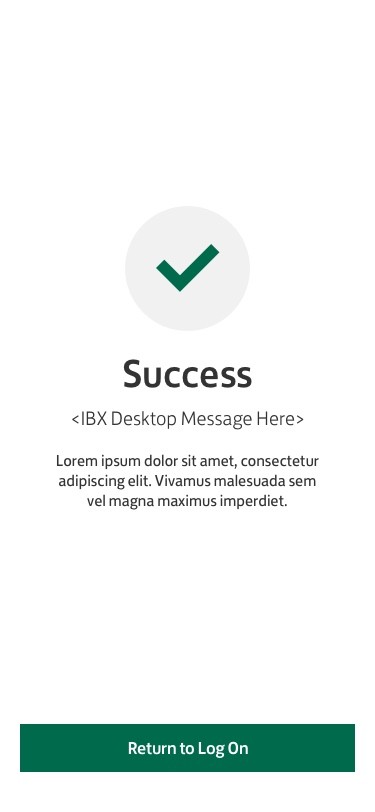
Success message - after design
I consolidated these into a small number of repeatable patterns that could be applied consistently across features and platforms, improving predictability for users and reducing implementation ambiguity.
The mobile app deliberately mirrored the desktop information architecture and feature set. Structural changes were made only where mobile usage required it. For example, adapting linear web navigation into a hub-and-spoke model to better support core mobile interaction patterns.
Design scope & coverage
The work extended well beyond individual screens, requiring consistent application of interaction patterns and design decisions across the entire product experience.
Journeys
36
Coverage of key customer journeys across everyday banking tasks.
Screens
180+
Production UI across core banking, onboarding, and supporting states.
Months delivery
3
Delivered end-to-end within a fixed three-month window.
Platforms
2
Designed and delivered with full parity across iOS and Android.
Coming soon…
This asset isn't ready yet,
but it will be soon!
Sketch canvas
Coming soon…
This asset isn't ready yet,
but it will be soon!
Prototype video
Assets & icons
Due to the inability to reuse Lloyds Banking Group iconography or extract assets from the legacy platform, I introduced Font Awesome as an interim icon system. This was chosen for its developer familiarity, clear documentation, broad coverage, and ease of future replacement.
The decision prioritised delivery velocity and system coherence over brand purity.
Accessibility audit
The app was audited against WCAG 2.1 by the Digital Accessibility Centre. Findings fell into two categories:
Design-level issues
Labels, affordances, error clarity, focus intent were resolved directly in the designs.
Implementation-level requirements
ARIA roles and screen reader announcements were documented as accessibility intent through annotations and acceptance criteria.
This separation ensured clarity of responsibility while maintaining accessibility outcomes.
Coming soon…
This asset isn't ready yet,
but it will be soon!
Annotated design example showing accessibility intent
Final outputs
Within the constraints, the project delivered:
End-to-end UX and UI designs for the native mobile banking app.
A complete onboarding journey embedded within the app.
iOS and Android alignment.
App Store launch assets.
Supporting marketing materials for go-live.
The onboarding experience itself was largely predefined by the client; design effort focused on improving usability within that structure.
App Store launch assets
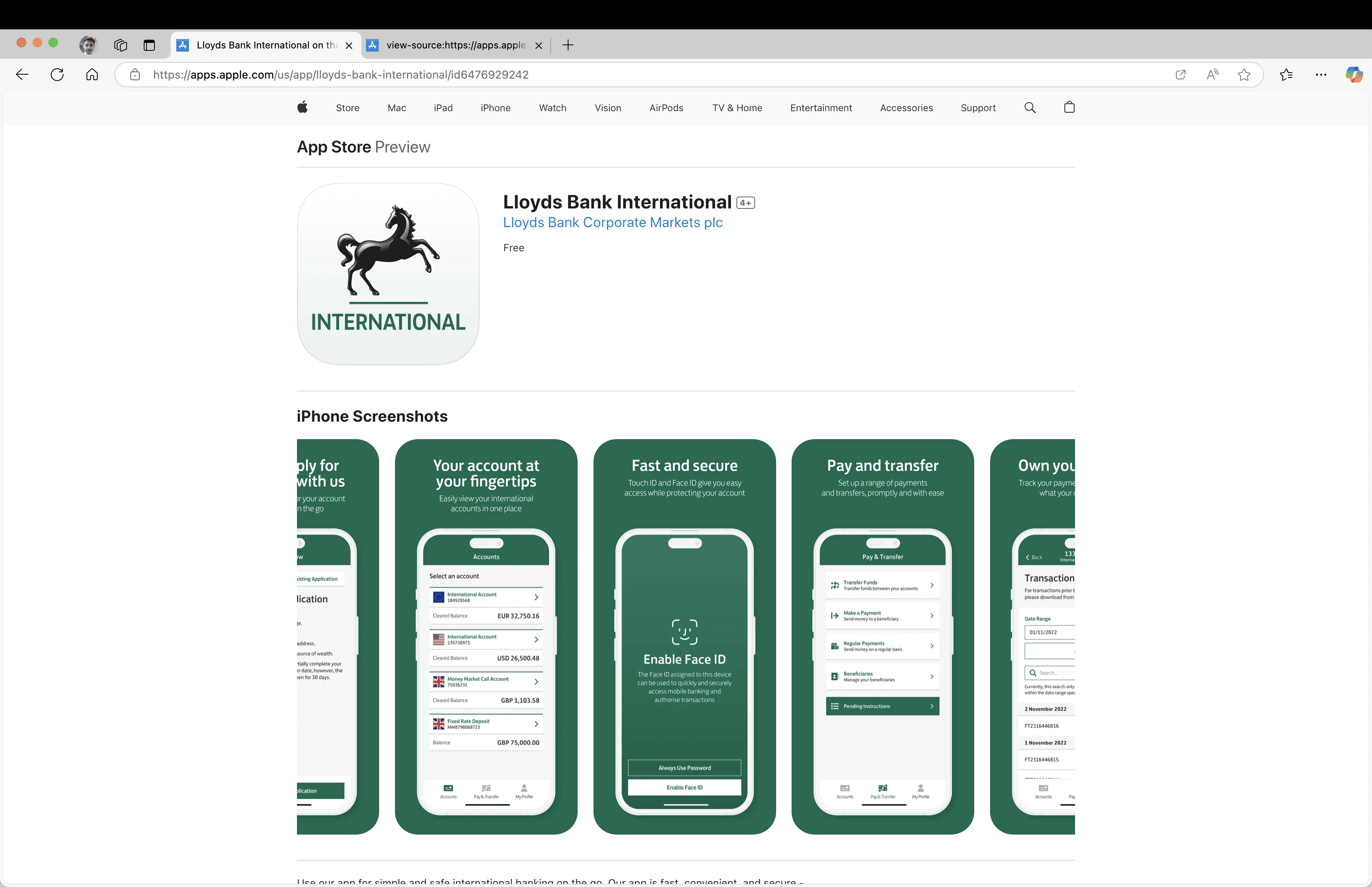
App store presence on Go-Live
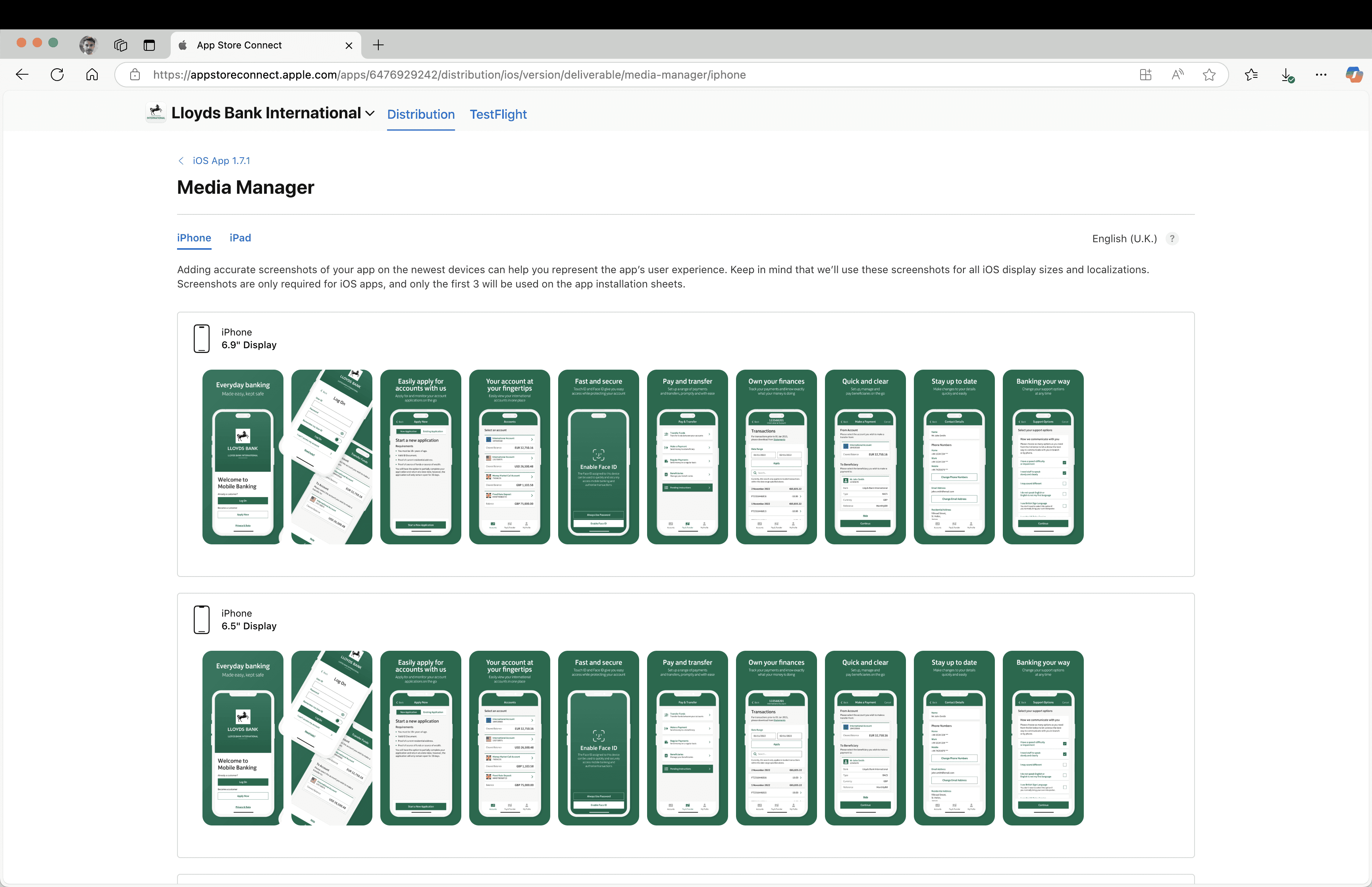
Working with Apple 'App Store Connect'
Supporting marketing materials for go-live
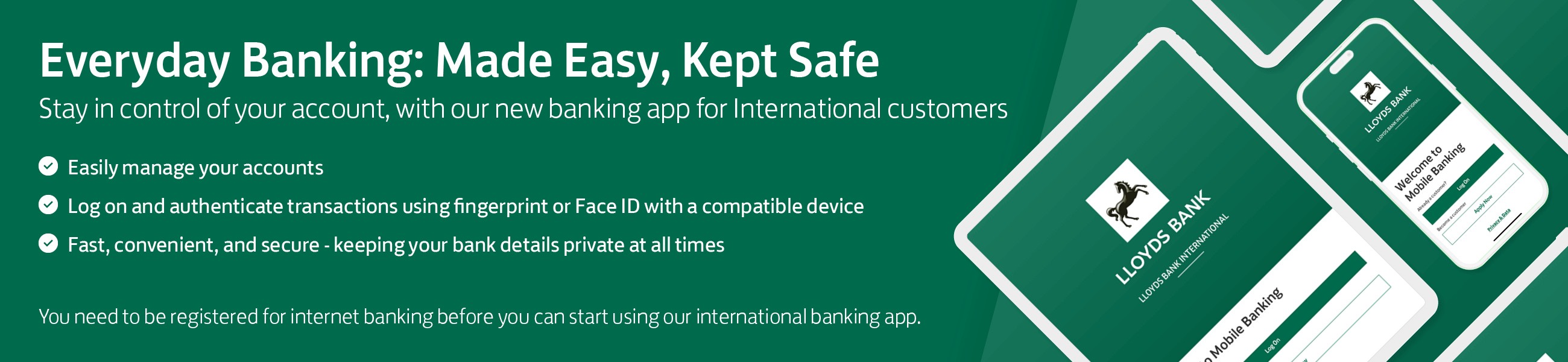
Marketing banner for lloydsbank.com

Email signature advert for colleagues